
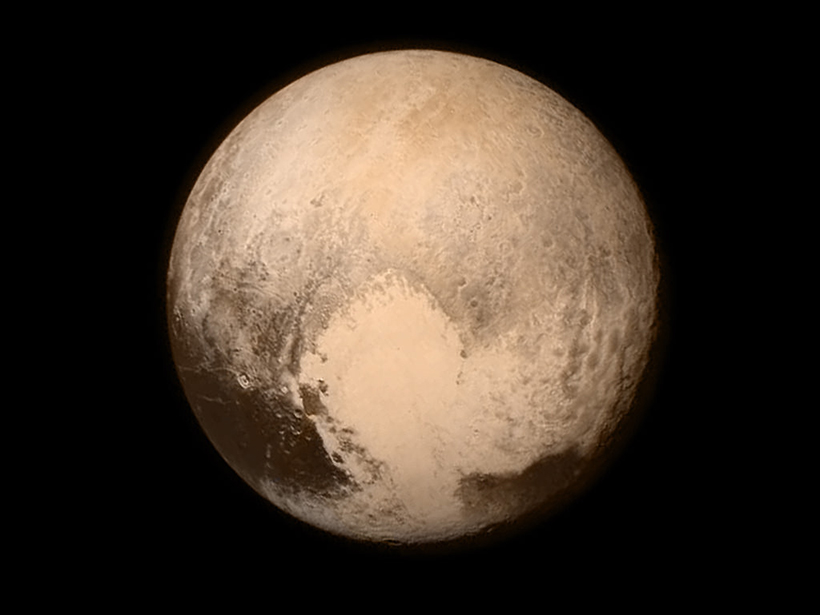

It's been 10 years since Pluto was reclassified as a dwarf planet. But no matter the label, it and its dwarf planet cousins continue to stun researchers with their complexity.
solar system

Posted inNews
New-Found Dwarf Planet Points to Solar System's Chaotic Past

Astronomers have discovered an icy ball in the dark and frigid regions of the outer solar system, which they suspect harbors secrets to the solar system's formation and evolution.

Posted inNews
Comet with Stunted Tail Hints at How Solar System Formed
Finding out whether just a few or many of this newfound type of rocky object roam deep space should help scientists sort among contrasting scenarios of the solar system's infancy.
Posted inScience Updates
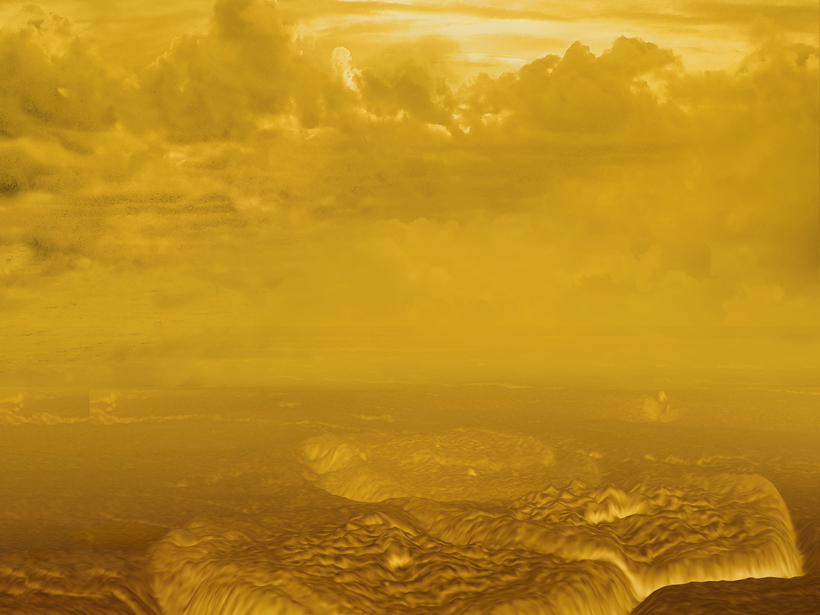
Comparing Planetary Climates to Investigate Climate Systems
Comparative Climates of Terrestrial Planets II (CCTP2 ): Understanding How Climate Systems Work; Moffett Field, California, 8–11 September 2015
Posted inResearch Spotlights
What Causes the Strange Pulses in Saturn's Magnetosphere?

A new model shows that a spiral wave may explain why many phenomena in the gas giant's magnetosphere undergo periodic cycles.
Posted inResearch Spotlights
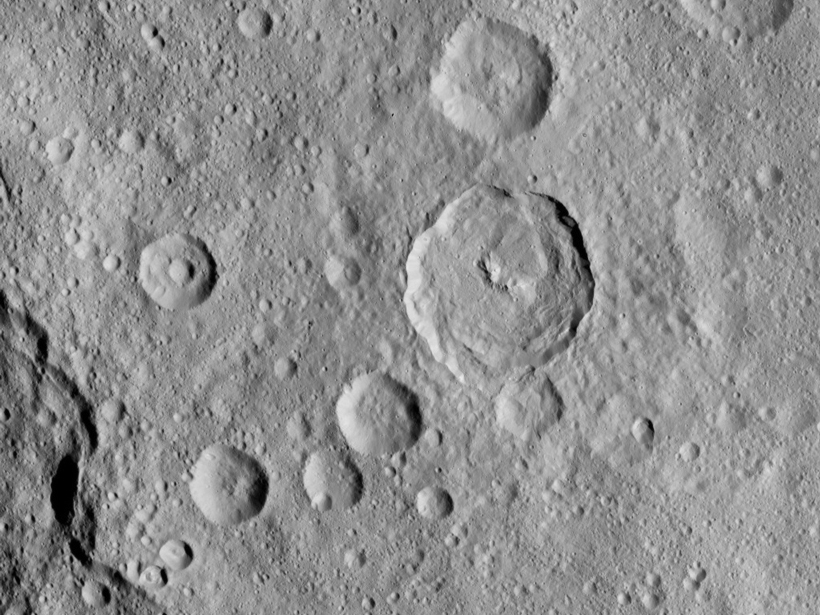
Objects That Slam into Ceres Remain on Its Surface

Hypervelocity impact experiments shed new light on the composition and evolution of the largest dwarf planet's little-known surface.

Posted inNews
Proposed Planet Nine Elicits Cheers, Yawns, Hunt for Proof
Evidence of a large, unseen planet at the solar system's margins prompted a flurry of scientific paper downloads, as well as oodles of skepticism. There's no sighting yet of the purported body.

Posted inNews
World Without Time
On New Year's Day 2019, a spacecraft known for its historic flyby of Pluto will take an unprecedented look into the distant past by flying right up to a frozen remnant of the original solar system.

Posted inNews
The Dwarf Planet That Came in from the Cold—Maybe
The presence of ammonia-rich clay on much of the surface of Ceres suggests that this dwarf planet—the largest object in the asteroid belt—may have formed far out in the solar system, then wandered in.

Posted inEditors' Vox
Pluto Is Just the Beginning
Pluto is the most distant object visited by a spacecraft, yet exploration of the Solar System is far from complete.