• About
  • Special Reports
  • Topics
    • Climate
    • Earth Science
    • Oceans
    • Space & Planets
    • Health & Ecosystems
    • Culture & Policy
    • Education & Careers
    • Opinions
  • Projects
    • Postcards From the Field
    • ENGAGE
    • Editors’ Highlights
    • Editors’ Vox
    • Eos en Español
    • Eos 简体中文版
    • Print Archive: 2015–2025
  • Policy Tracker
  • Blogs
    • Research & Developments
    • The Landslide Blog
  • Newsletter
  • Submit to Eos
  • AGU.org
  • Career Center
  • Join AGU
  • Give to AGU
  • About
  • Special Reports
  • Topics
    • Climate
    • Earth Science
    • Oceans
    • Space & Planets
    • Health & Ecosystems
    • Culture & Policy
    • Education & Careers
    • Opinions
  • Projects
    • Postcards From the Field
    • ENGAGE
    • Editors’ Highlights
    • Editors’ Vox
    • Eos en Español
    • Eos 简体中文版
    • Print Archive: 2015–2025
  • Policy Tracker
  • Blogs
    • Research & Developments
    • The Landslide Blog
  • Newsletter
  • Submit to Eos
Skip to content
  • AGU.org
  • Career Center
  • Join AGU
  • Give to AGU
Eos

Eos

Science News by AGU

Support Eos
Sign Up for Newsletter
  • About
  • Special Reports
  • Topics
    • Climate
    • Earth Science
    • Oceans
    • Space & Planets
    • Health & Ecosystems
    • Culture & Policy
    • Education & Careers
    • Opinions
  • Projects
    • Postcards From the Field
    • ENGAGE
    • Editors’ Highlights
    • Editors’ Vox
    • Eos en Español
    • Eos 简体中文版
    • Print Archive: 2015–2025
  • Policy Tracker
  • Blogs
    • Research & Developments
    • The Landslide Blog
  • Newsletter
  • Submit to Eos

United States

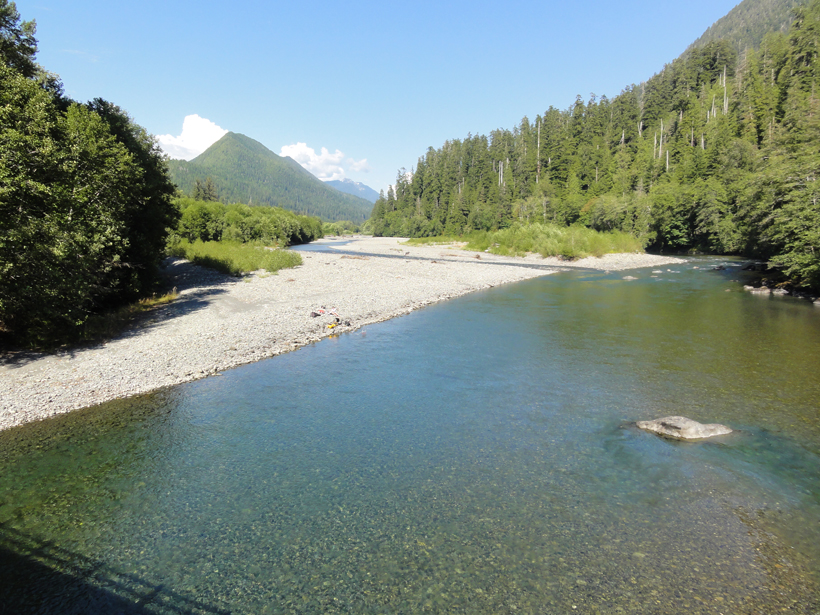
Streams and rivers play an important role in the exchange of carbon dioxide between terrestrial ecosystems, atmosphere, and ocean.
Posted inResearch Spotlights

Why Is There So Much Carbon Dioxide in Rivers?

by S. Witman 19 May 20176 March 2023

Observations of carbon dioxide oversaturation in the freshwater of the world led scientists to study its underlying causes at more than 100 field locations across the nation.

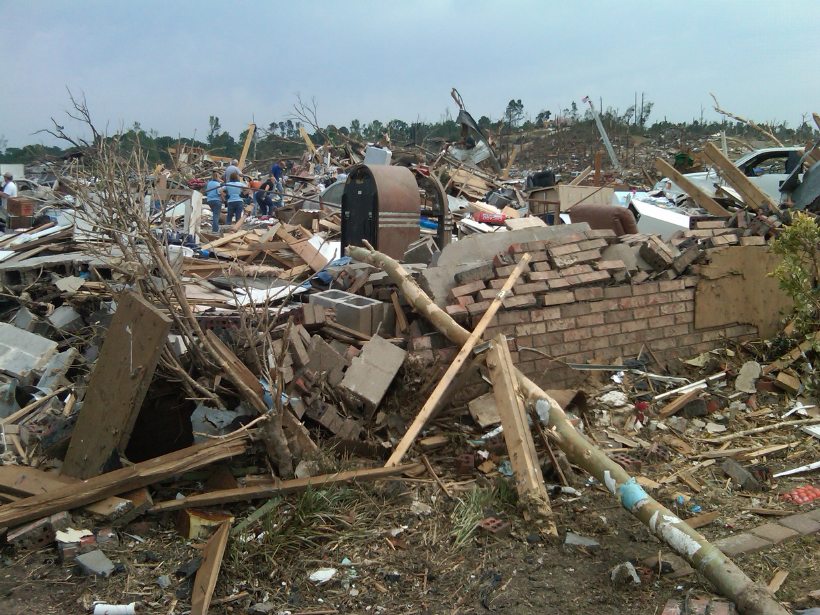
Destruction after the 2011 Tuscaloosa-Birmingham tornado.
Posted inNews

Tornado Casualties Depend More on Storm Energy Than Population

Katherine Kornei, Science Writer by Katherine Kornei 18 May 20172 February 2022

National Weather Service data from nearly 900 tornadoes and a principle of economics reveal the relationship between storm energy, population, and casualty count.
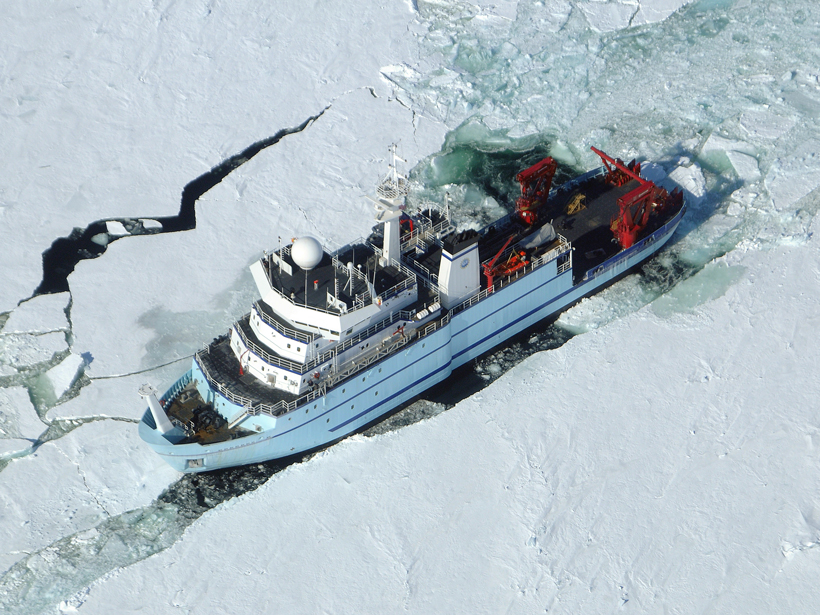
NSF’s global-class research vessel Sikuliaq in February 2014.
Posted inNews

With 2017 Budget Signed into Law, Eyes Turn to 2018 Battle

by Randy Showstack 9 May 201719 April 2023

Analysts hope that Congress will continue to support science programs in next year’s budget as well.
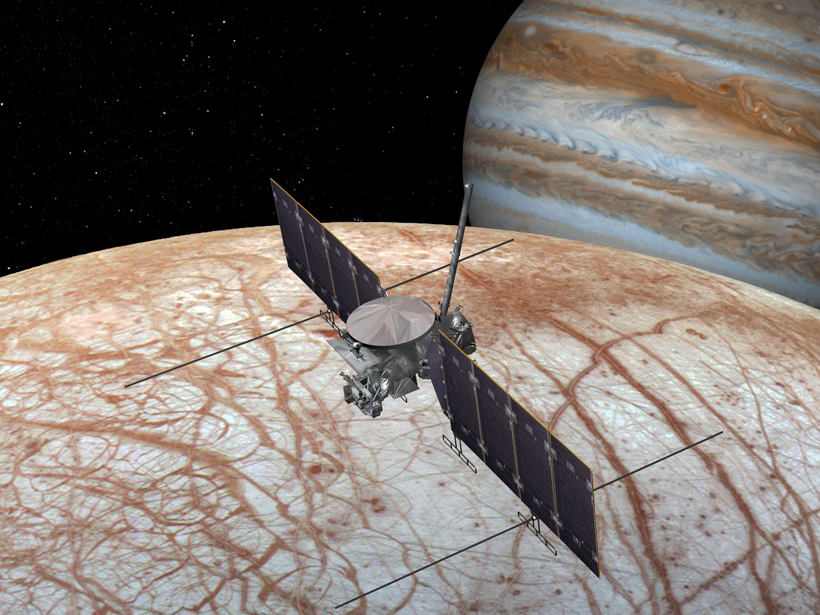
Artist’s rendition of a future NASA spacecraft visiting Jupiter’s moon Europa.
Posted inNews

Newly Signed Federal Budget Is Favorable to Science

by Randy Showstack 5 May 201719 April 2023

Budget bill signed by Trump this afternoon shows bipartisan congressional support for Earth and space sciences despite the administration’s initial goal of cutting nondefense discretionary spending.

National Academy of Sciences president Marcia McNutt speaks at the NAS annual meeting.
Posted inNews

Academy President Warns of “Storm Clouds” on the Horizon

by Randy Showstack 3 May 201731 March 2022

McNutt says that business as usual “is not a viable option” for the academy in the near term to fulfill its mission and remain a relevant institution.
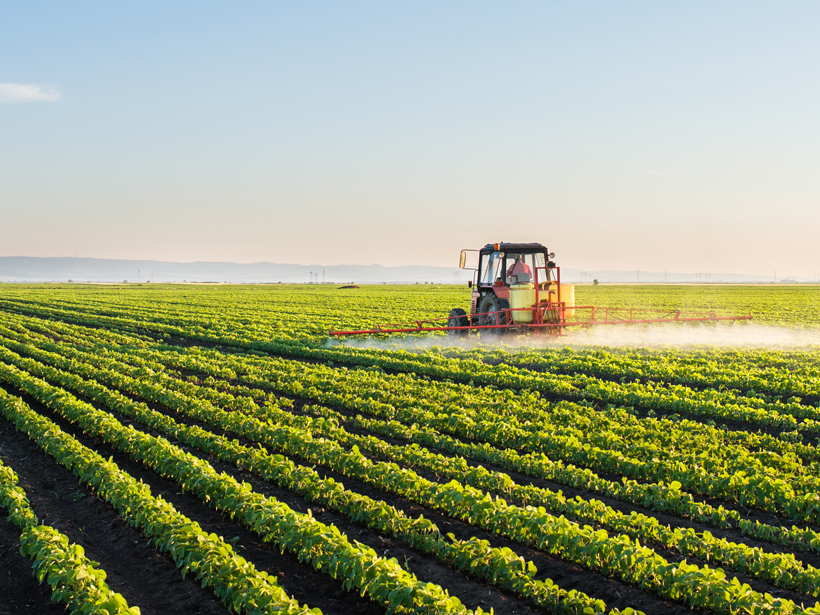
A tractor sprays a soybean field.
Posted inNews

More Intense Rains in U.S. Midwest Tied to Farm Mechanization

Bas den Hond, Science Writer by Bas den Hond 28 April 201720 October 2021

Replacement of horses by machines since the 1940s allowed central U.S. farmers to change the crops they planted, which may have altered regional climate.

The first 100 days, White House.
Posted inNews

Trump’s Early Actions Target Science, Environment

by Randy Showstack 27 April 201720 April 2023

Although the administration declares “historic accomplishments” during its first 100 days, a look back at Earth and space science impacts sees funding threats, rollbacks, and controversial appointees.

california-drought-agricultural-lake-tahoe-summit
Posted inScience Updates

Management Strategies for Sustainable Western Water

by S. Tyler, S. Chandra and Gordon Grant 25 April 20179 May 2022

U.S. National Science Foundation Workshop: Quenching a Thirsty West; Lake Tahoe, Nevada/California, 29–30 August 2016
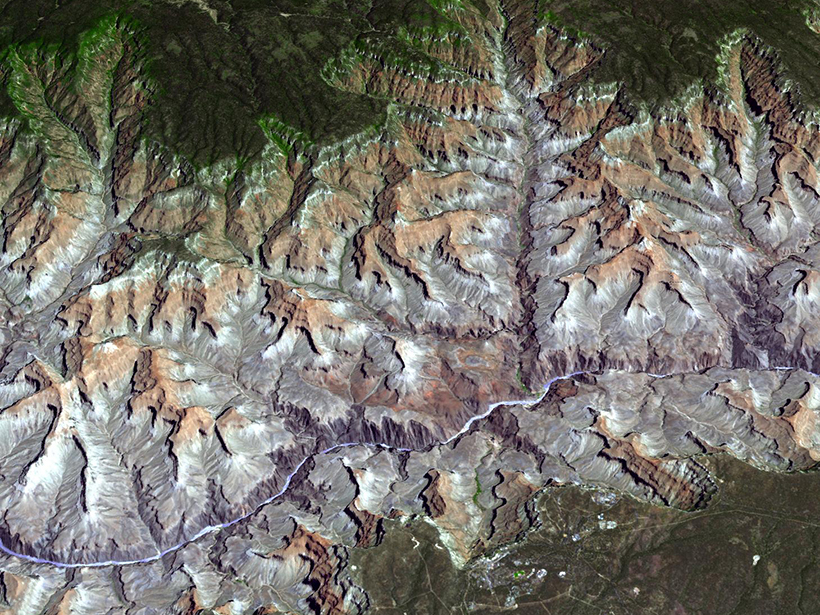
Grand canyon aerial view showing dendritic drainage.
Posted inResearch Spotlights

Stream Network Geometry Correlates with Climate

by Terri Cook 6 April 20176 June 2022

A "big data" analysis of nearly 1 million river junctions in the contiguous United States shows that branching angles in dendritic drainages vary systematically between humid and arid regions.
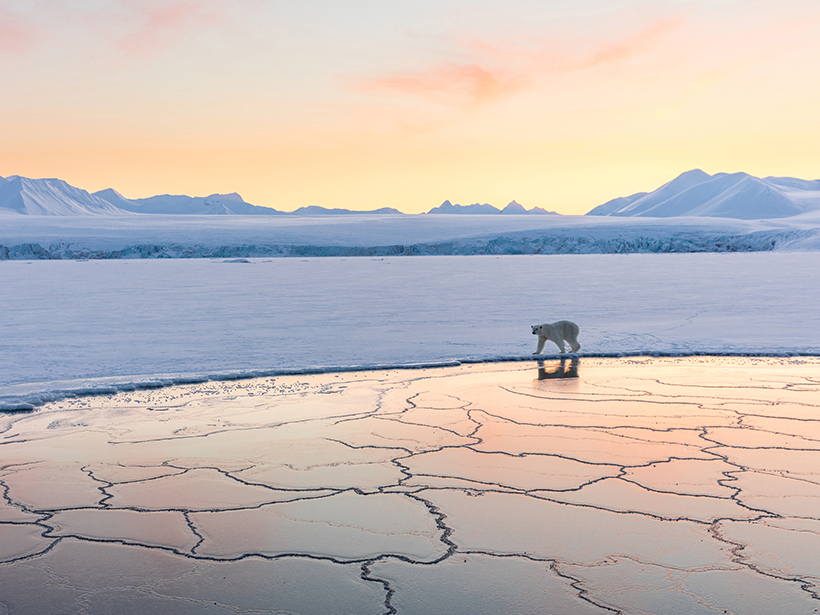
Polar bear walks on Arctic sea ice.
Posted inNews

White House Mum on Arctic Priorities as Key Meeting Approaches

by Randy Showstack 29 March 201710 March 2023

Arctic experts are watching to see whether U.S. Secretary of State Rex Tillerson will attend the Arctic Council meeting in May as a sign of how engaged the Trump administration will be in the region.

Posts pagination

Newer posts 1 … 33 34 35 36 37 … 46 Older posts
Over a dark blue-green square appear the words Special Report: The State of the Science 1 Year On.

Features from AGU Publications

Research Spotlights

Mapping Childhood Lead Exposure Risk in the United States, Neighborhood by Neighborhood

8 October 20268 October 2026
Editors' Highlights

Limits of Satellite Detection of Extreme Carbon Cycle Events

7 October 20267 October 2026
Editors' Vox

Where Fire Ends, Chemistry Begins

30 September 202630 September 2026
Eos logo at left; AGU logo at right

About Eos
ENGAGE
Awards
Contact

Advertise
Submit
Career Center
Sitemap

© 2026 American Geophysical Union. All rights reserved Powered by Newspack