• About
  • Special Reports
  • Topics
    • Climate
    • Earth Science
    • Oceans
    • Space & Planets
    • Health & Ecosystems
    • Culture & Policy
    • Education & Careers
    • Opinions
  • Projects
    • Postcards From the Field
    • ENGAGE
    • Editors’ Highlights
    • Editors’ Vox
    • Eos en Español
    • Eos 简体中文版
    • Print Archive: 2015–2025
  • Policy Tracker
  • Blogs
    • Research & Developments
    • The Landslide Blog
  • Newsletter
  • Submit to Eos
  • AGU.org
  • Career Center
  • Join AGU
  • Give to AGU
  • About
  • Special Reports
  • Topics
    • Climate
    • Earth Science
    • Oceans
    • Space & Planets
    • Health & Ecosystems
    • Culture & Policy
    • Education & Careers
    • Opinions
  • Projects
    • Postcards From the Field
    • ENGAGE
    • Editors’ Highlights
    • Editors’ Vox
    • Eos en Español
    • Eos 简体中文版
    • Print Archive: 2015–2025
  • Policy Tracker
  • Blogs
    • Research & Developments
    • The Landslide Blog
  • Newsletter
  • Submit to Eos
Skip to content
  • AGU.org
  • Career Center
  • Join AGU
  • Give to AGU
Eos

Eos

Science News by AGU

Support Eos
Sign Up for Newsletter
  • About
  • Special Reports
  • Topics
    • Climate
    • Earth Science
    • Oceans
    • Space & Planets
    • Health & Ecosystems
    • Culture & Policy
    • Education & Careers
    • Opinions
  • Projects
    • Postcards From the Field
    • ENGAGE
    • Editors’ Highlights
    • Editors’ Vox
    • Eos en Español
    • Eos 简体中文版
    • Print Archive: 2015–2025
  • Policy Tracker
  • Blogs
    • Research & Developments
    • The Landslide Blog
  • Newsletter
  • Submit to Eos

United States

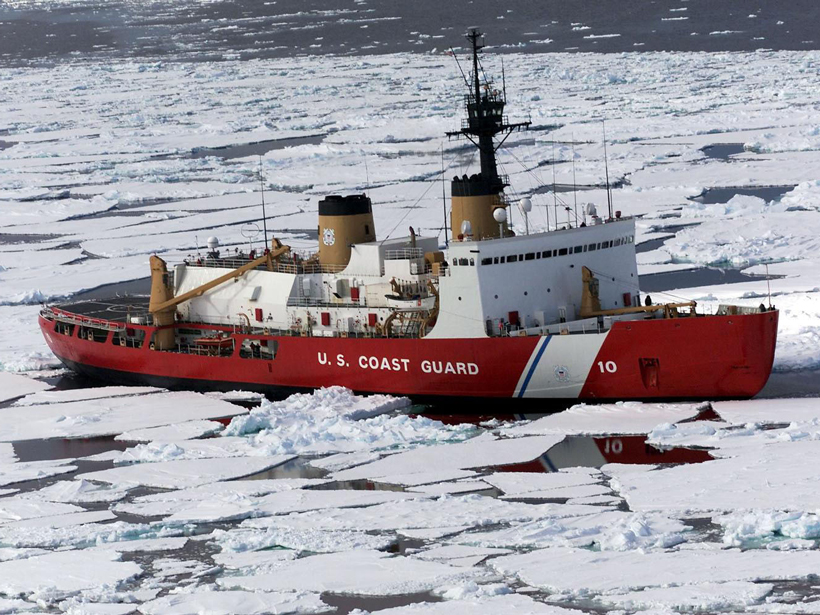
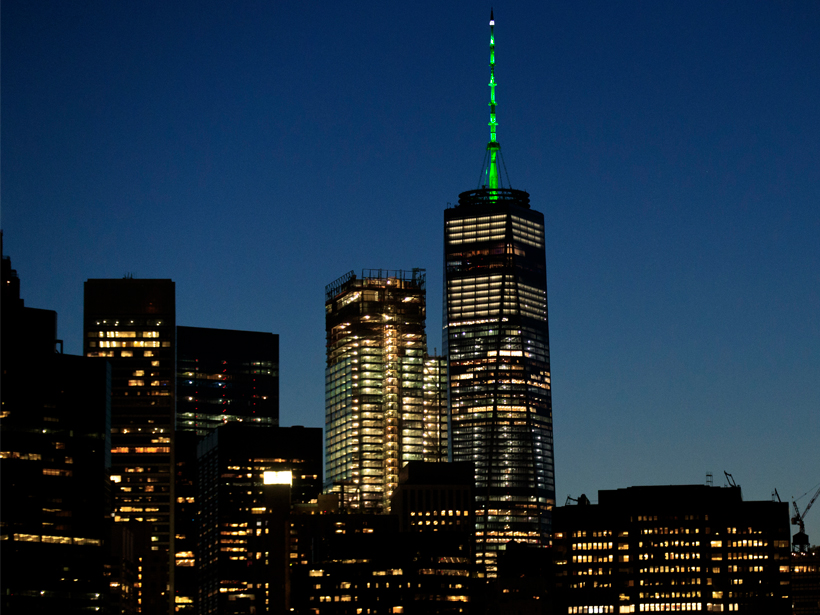
The Polar Starbreaks a path for ships that supply McMurdo Station.
Posted inNews

Build Four New U.S. Polar Icebreakers, Report Urges

by Randy Showstack 14 July 201711 April 2023

All of the ships should be “science ready,” whereas one should be “fully science capable,” according to new recommendations from the National Academies of Sciences, Engineering, and Medicine.
Posted inNews

State and Local Officials Push for Continued Climate Action

by Randy Showstack 28 June 201724 October 2022

Governors, mayors, citizen groups, and others are moving ahead with regional and smaller-scale efforts to counteract climate change in the wake of the U.S. decision to pull out of the Paris climate agreement.
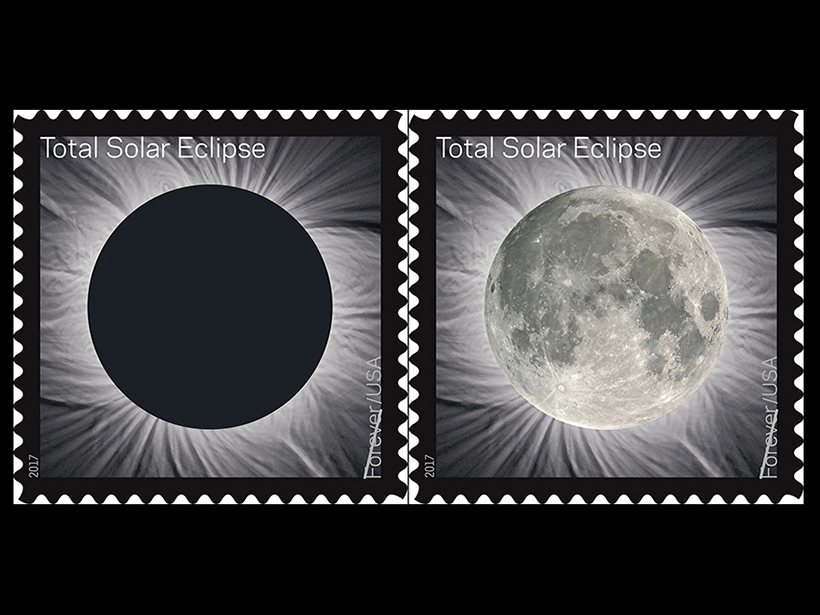
Two views of a new stamp that when warmed by a person’s finger, switches from showing the black disk of the Moon’s silhouette covering the Sun to an illuminated view of the Moon in place of the black disk.
Posted inNews

Innovative Postage Stamp Celebrates Upcoming Total Solar Eclipse

by Randy Showstack 20 June 201719 April 2023

The eclipse expert whose photographs appear on the stamp said he is thrilled about the opportunities that the stamp and the eclipse afford to excite people about science.
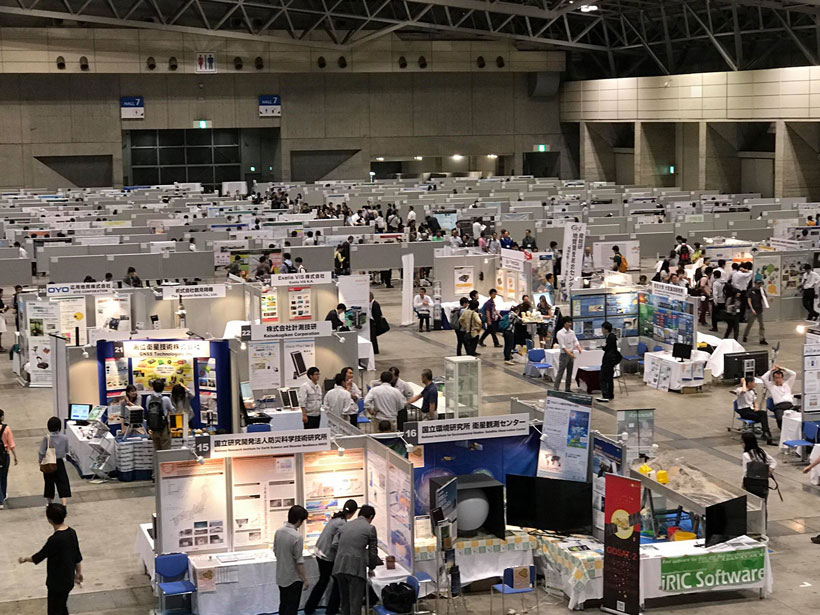
Exhibits and poster hall at the joint JpGU
Posted inAGU News

Japan-U.S. Joint Meeting: Geoscience for a Borderless World

by L. Parr 12 June 20176 December 2021

The groundbreaking conference included sessions in Japanese, sessions in English, and sessions in which presenters used English language slides but could speak in Japanese.

Posted inNews

Trump Says United States Will Withdraw from Paris Climate Accord

by Randy Showstack 2 June 201719 April 2023

Scientists and others decry the decision, arguing that it will slow efforts to address the risks of climate change.

The Eiffel Tower was illuminated in green on 4 November 2016 to celebrate the ratification of the Conference of the Parties Climate Conference (COP21) climate change agreement.
Posted inAGU News

What Does U.S. Withdrawal from the Paris Climate Agreement Mean?

Chris McEntee, executive director and CEO of AGUEric Davidson, president-elect of AGU by Chris McEntee, Eric Davidson and R. Bell 1 June 201719 April 2023

The Trump Administration has pulled the United States out of a landmark climate accord. But withdrawal does not change the science of how our planet works.

Winds of more than 100 mph stream through palm trees as Hurricane Wilma makes landfall at Miami Beach, Fla., in 2005.
Posted inOpinions

Proposed Federal Budget Heightens Hurricane Risk

Chris McEntee, executive director and CEO of AGU by Chris McEntee 1 June 201727 October 2022

The health, welfare, and livelihood of millions depend upon our elected officials’ continued and robust support for hurricane research.

Streams and rivers play an important role in the exchange of carbon dioxide between terrestrial ecosystems, atmosphere, and ocean.
Posted inResearch Spotlights

Why Is There So Much Carbon Dioxide in Rivers?

by S. Witman 19 May 20176 March 2023

Observations of carbon dioxide oversaturation in the freshwater of the world led scientists to study its underlying causes at more than 100 field locations across the nation.

Destruction after the 2011 Tuscaloosa-Birmingham tornado.
Posted inNews

Tornado Casualties Depend More on Storm Energy Than Population

Katherine Kornei, Science Writer by Katherine Kornei 18 May 20172 February 2022

National Weather Service data from nearly 900 tornadoes and a principle of economics reveal the relationship between storm energy, population, and casualty count.

NSF’s global-class research vessel Sikuliaq in February 2014.
Posted inNews

With 2017 Budget Signed into Law, Eyes Turn to 2018 Battle

by Randy Showstack 9 May 201719 April 2023

Analysts hope that Congress will continue to support science programs in next year’s budget as well.

Posts pagination

Newer posts 1 … 32 33 34 35 36 … 46 Older posts
Over a dark blue-green square appear the words Special Report: The State of the Science 1 Year On.

Features from AGU Publications

Research Spotlights

Did Ocean Motion Carve Enceladus’s Tiger Stripes?

26 August 202626 August 2026
Editors' Highlights

Long-Term Datasets are Essential to Understanding Coastal Change

26 August 202618 August 2026
Editors' Vox

Climate Model Benchmarking: Building Trust and Advancing Science

24 August 202624 August 2026
Eos logo at left; AGU logo at right

About Eos
ENGAGE
Awards
Contact

Advertise
Submit
Career Center
Sitemap

© 2026 American Geophysical Union. All rights reserved Powered by Newspack