• About
  • Special Reports
  • Topics
    • Climate
    • Earth Science
    • Oceans
    • Space & Planets
    • Health & Ecosystems
    • Culture & Policy
    • Education & Careers
    • Opinions
  • Projects
    • Postcards From the Field
    • ENGAGE
    • Editors’ Highlights
    • Editors’ Vox
    • Eos en Español
    • Eos 简体中文版
    • Print Archive: 2015–2025
  • Policy Tracker
  • Blogs
    • Research & Developments
    • The Landslide Blog
  • Newsletter
  • Submit to Eos
  • AGU.org
  • Career Center
  • Join AGU
  • Give to AGU
  • About
  • Special Reports
  • Topics
    • Climate
    • Earth Science
    • Oceans
    • Space & Planets
    • Health & Ecosystems
    • Culture & Policy
    • Education & Careers
    • Opinions
  • Projects
    • Postcards From the Field
    • ENGAGE
    • Editors’ Highlights
    • Editors’ Vox
    • Eos en Español
    • Eos 简体中文版
    • Print Archive: 2015–2025
  • Policy Tracker
  • Blogs
    • Research & Developments
    • The Landslide Blog
  • Newsletter
  • Submit to Eos
Skip to content
  • AGU.org
  • Career Center
  • Join AGU
  • Give to AGU
Eos

Eos

Science News by AGU

Support Eos
Sign Up for Newsletter
  • About
  • Special Reports
  • Topics
    • Climate
    • Earth Science
    • Oceans
    • Space & Planets
    • Health & Ecosystems
    • Culture & Policy
    • Education & Careers
    • Opinions
  • Projects
    • Postcards From the Field
    • ENGAGE
    • Editors’ Highlights
    • Editors’ Vox
    • Eos en Español
    • Eos 简体中文版
    • Print Archive: 2015–2025
  • Policy Tracker
  • Blogs
    • Research & Developments
    • The Landslide Blog
  • Newsletter
  • Submit to Eos

unsolved mysteries

Posted inScience Updates

Dispelling Clouds of Uncertainty

by E. R. Lewis and J. Teixeira 15 June 20153 February 2022

How do you build a climate model that accounts for cloud physics and the transitions between cloud regimes? Use MAGIC.

Posted inResearch Spotlights

What Causes Sunspot Pairs?

JoAnna Wendel, freelance science writer and illustrator by JoAnna Wendel 5 May 201518 January 2023

Analysis of magnetic fields on the Sun's surface offers a new clue on why sunspots appear.

Posted inResearch Spotlights

Conquering Uncertainties in Tropical Climate Forecasts

by E. Betz 17 April 20157 July 2025

The key to better predictions of atmospheric temperature trends in the tropics may lie in more accurate measurements of sea surface temperatures.

Posted inFeatures

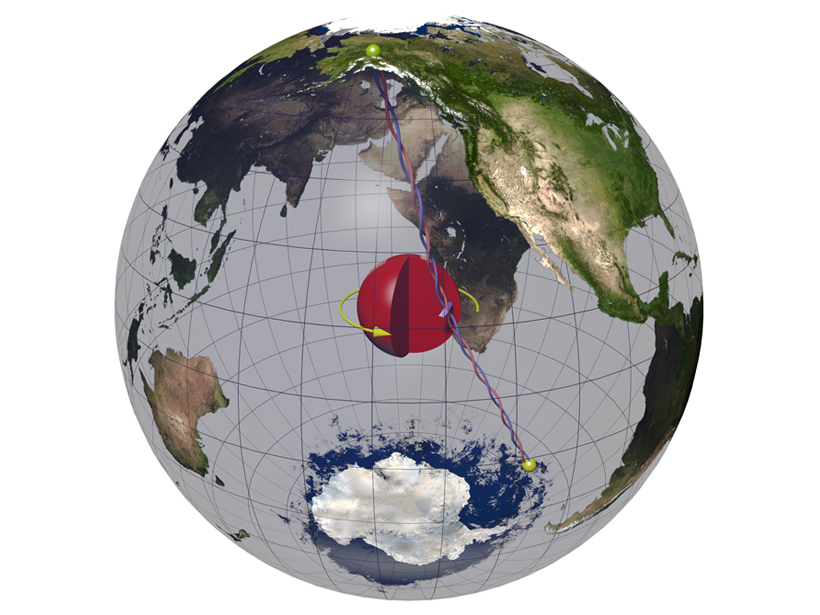
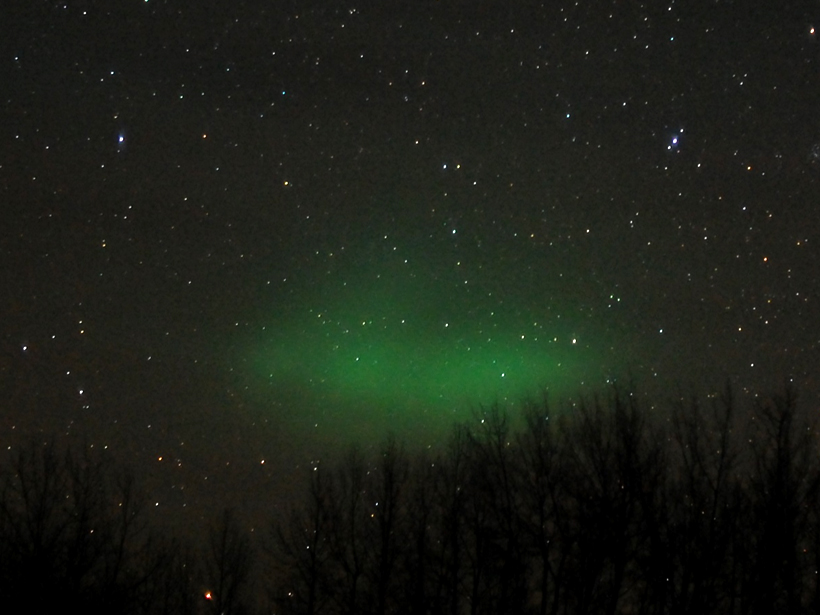
Why Does the Aurora Flare Up?

by S.-I. Akasofu 14 April 201518 July 2023

The spectacular auroras that circle Earth's geomagnetic poles and burst with colorful displays during geomagnetic storms have mystified humanity for millennia. Now scientists are uncovering their secrets.

Posted inResearch Spotlights

Satellite Data Yield Detailed Picture of the Lunar Wake

by J. Rosen 9 March 20157 July 2025

Researchers use satellite data to characterize the physical properties of the lunar wake and the processes that govern it.

Posted inNews

Tiny Mineral Grains Could Drive Plate Tectonics

JoAnna Wendel, freelance science writer and illustrator by JoAnna Wendel 24 February 20157 July 2025

Scientists turn to granular scales to explain how plate tectonics may have evolved billions of years ago.

Posted inResearch Spotlights

Exploring How Wind Blows Sand on Dunes

by S. Palus 16 February 201511 February 2022

Sand dunes migrate—so why haven’t some budged in 60 years?

Posted inNews

Research Shines Light on Asthenosphere's Contribution to Hot Spots

JoAnna Wendel, freelance science writer and illustrator by JoAnna Wendel 16 December 20149 November 2022

What role does the asthenosphere play in midplate volcanism?

Posted inResearch Spotlights

A Dearth of Hurricanes Cannot Explain Maya Collapse

by C. Schultz 2 December 201429 September 2022

Mud layers in a stalagmite from a cave on the Yucatán Peninsula show hurricane activity was steady or elevated throughout the Maya collapse.

Posted inResearch Spotlights

Thin Precollision Crust Can Explain Aspects of Indo-Asian Convergence

JoAnna Wendel, freelance science writer and illustrator by JoAnna Wendel 30 September 201416 August 2022

The paradoxical thickness of the Tibetan Plateau has puzzled scientists for decades. Now new research offers up an explanation for this mystery.

Posts pagination

Newer posts 1 … 28 29 30 31 Older posts
Over a dark blue-green square appear the words Special Report: The State of the Science 1 Year On.

Features from AGU Publications

Research Spotlights

What Makes Mars’s Magnetotail Flap?

20 April 202620 April 2026
Editors' Highlights

Choice of Glen’s n Leads to Differing Projections of Ice Sheet Mass Loss

20 April 202616 April 2026
Editors' Vox

Synergistic Integration of Flood Inundation Modeling Methods

10 April 202610 April 2026
Eos logo at left; AGU logo at right

About Eos
ENGAGE
Awards
Contact

Advertise
Submit
Career Center
Sitemap

© 2026 American Geophysical Union. All rights reserved Powered by Newspack