
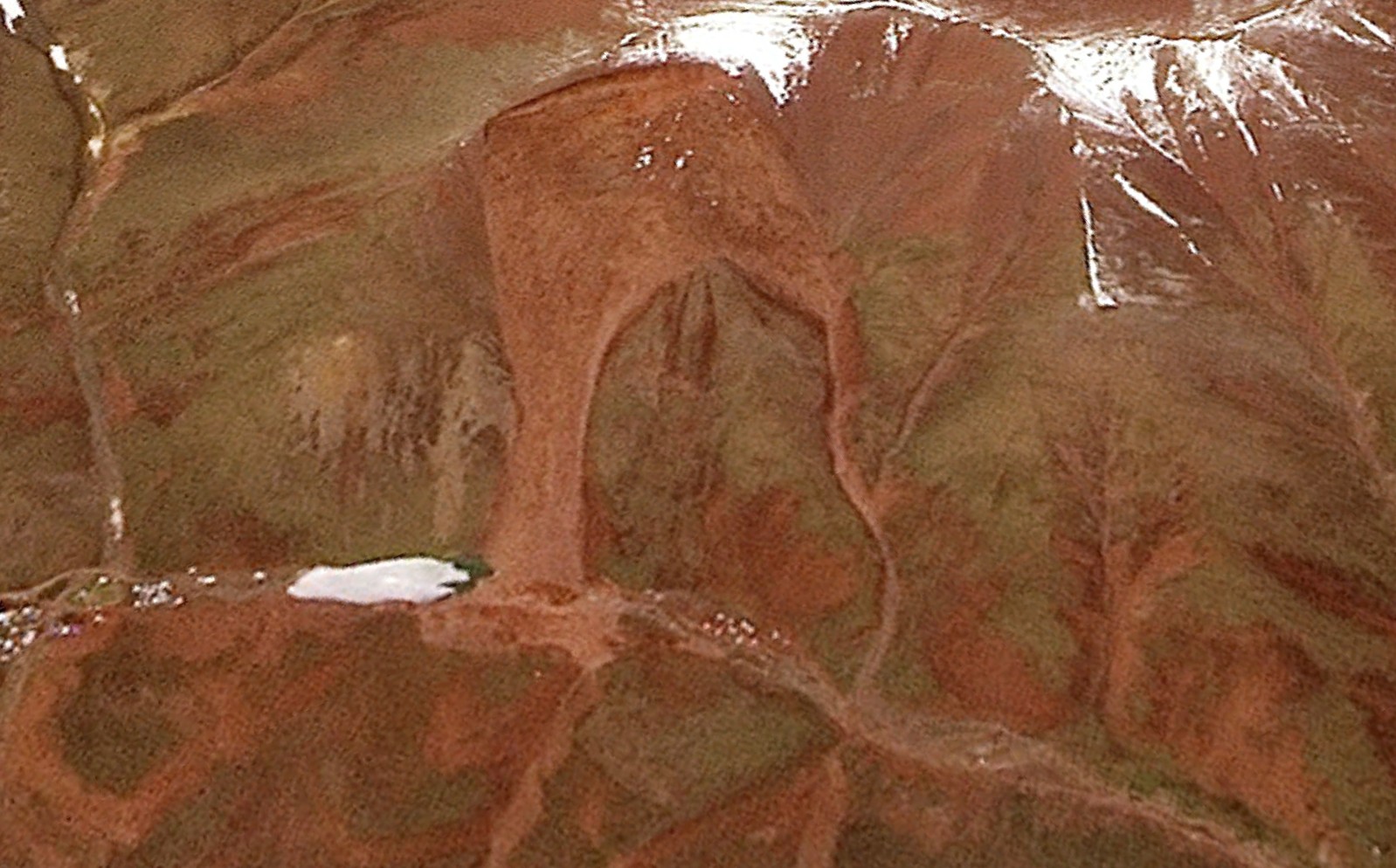
A new paper (Yunjian et al. 2026) in the journal Landslides discusses a 2 million cubic metre landslide that was triggered by freeze-thaw processes.

On 1 June 2025, the Dingqing landslide occurred on the Tibetan Plateau. The landslide struck a temporary encampment being used by collectors of medicinal fungus, killing ten people. This landslide has been analysed in a new paper (Yunjian et al. 2026) published in the journal Landslides. It is quite an unusual example.
The location of the landslide is helpfully given by Yunjian et al. (2026) as [95.219465, 32.268166] (well done to them for providing the location in digital format, which is so much more useful). This Planet Labs image was taken a few days after the failure – I’ve draped it onto the Google Earth DEM for ease of viewing:-
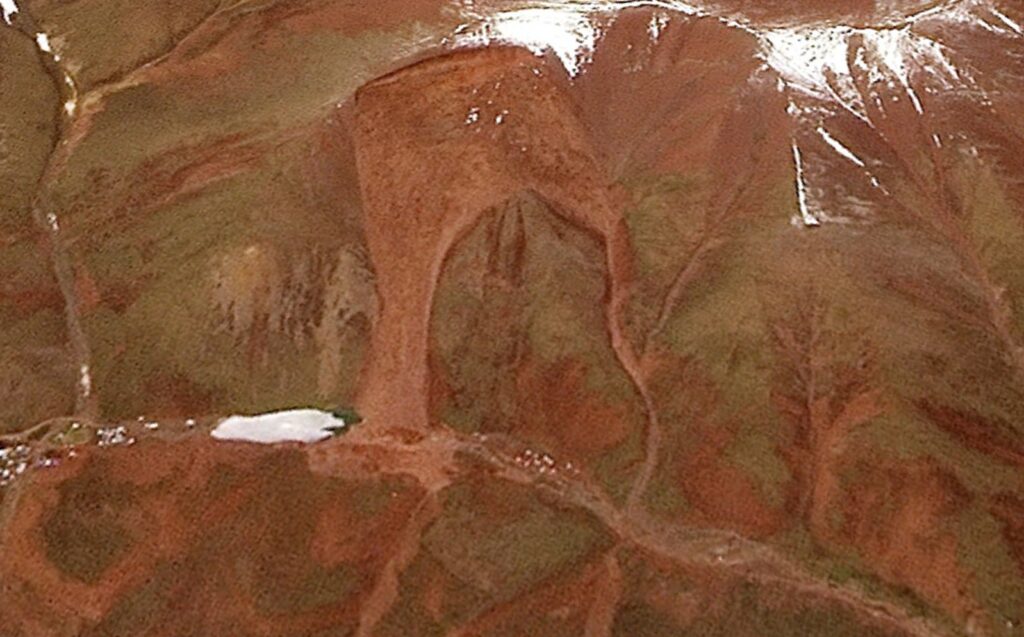
The landslide is about 1 km long with a volume of about 2 million cubic metres, and a maximum depth of about 24 metres. The movement occurred on a dip slope, but the slope straddles a major fault and there is folding in the source area. But the most interesting aspect of this landslide is the mechanism of failure. Yunjian et al. (2026) note that the source area is in a seasonally frozen zone, and of course the timing of the landslide corresponds with the main period of thaw. Thus, the authors conclude that this was a landslide triggered by the freeze-thaw cycle.
Yunjian et al. (2026) note that this is just the latest of a series of landslides of this type on the Tibetan Plateau. They note that this area is undergoing rapid climate change associated with anthropogenic greenhouse gas emissions. The climate has warmed markedly since 1981 and annual precipitation has also increased. This is shrinking the area of permafrost and promoting more rapid and extensive thawing in the spring and early summer, triggering these landslides. It is likely that more are to follow.
Reference
Yunjian, G., Yongbo, T., Zongliang, L. et al. 2026 Dingqing catastrophic landslide induced by frost heaving on high hillslopes in the southeast Tibetan Plateau, China. Landslides. https://doi.org/10.1007/s10346-026-02739-4
Many thanks to Planet Labs for the use of their amazing imagery.