
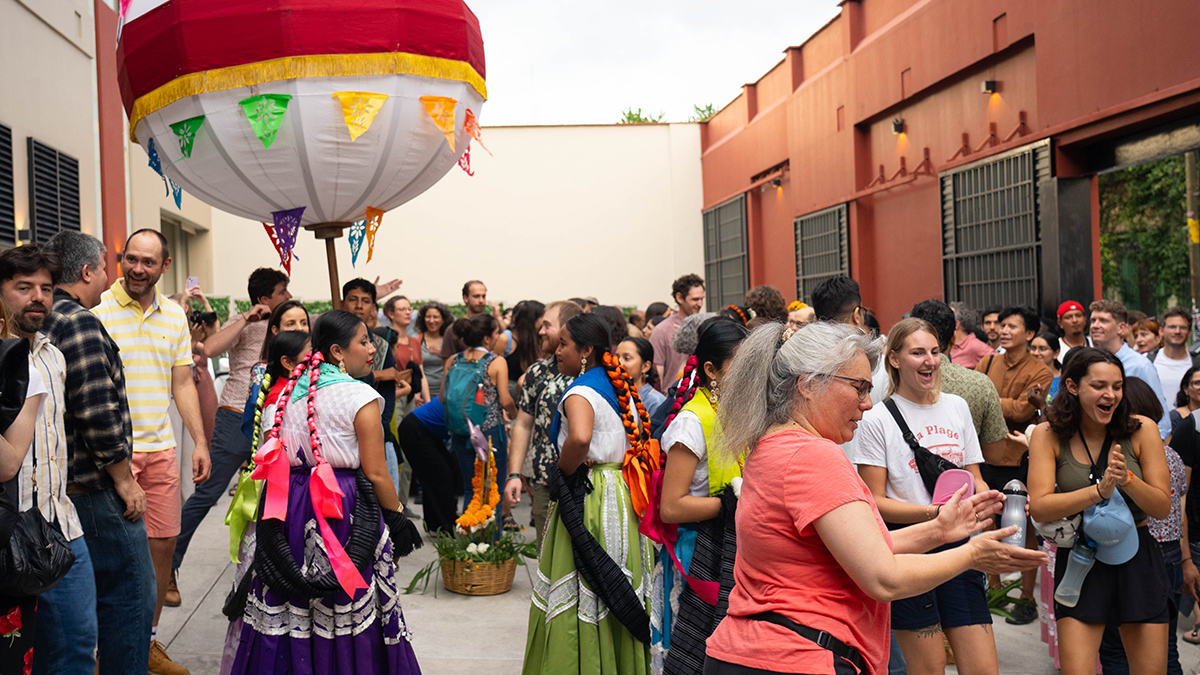
Scientists who work across disciplines often dread the question, “What is your field of expertise?” A geographer working in an environmental science department or a social scientist working in an ecology department might find it difficult to articulate how their research, knowledge, and professional networks fit within established fields to colleagues long accustomed to their institutions’ disciplinary expectations and norms.
Most academic structures are still largely organized around relatively narrow disciplinary perspectives, even as the world’s biggest challenges require interdisciplinary solutions.
These moments of discomfort may seem trivial, but they signal a systemic barrier for many scientists and for scientific innovation and problem-solving: Most academic structures are still largely organized around relatively narrow disciplinary perspectives, even as the world’s biggest challenges require interdisciplinary solutions. Addressing natural hazards, biodiversity loss, poverty, and food insecurity simultaneously, for example, depends on scientists collaborating across fields and engaging with partners in other sectors of society.
This issue is not just one of semantics, especially for younger scientists and others who regularly experience its effects. Departments incentivized to select against interdisciplinary science and the absence of clear institutional “homes” for interdisciplinary scientists can create challenges for hiring, evaluation, and promotion. It can also reduce researchers’ sense of professional belonging and increase their feelings of being an imposter, which can affect their ability to contribute and even lead to the loss of scientific talent to other career paths.
Experiences in the field of land system science reflect broader tensions with interdisciplinarity across academic science. Researchers studying land system science, as we do, often find that their work resists neat disciplinary labels. Because this field encompasses the many ways that people and nature interact across Earth’s land surface and how these interactions shape global challenges like biodiversity loss, it can be difficult to describe the field in terms of preexisting academic departments and to identify appropriate funding sources and publication venues.
Here we share experiences navigating tensions that have come with pursuing interdisciplinary science, and we describe how one global interdisciplinary science community, the Global Land Programme (GLP), became a home for our work. Communities such as the GLP not only bring people together but also help create new pathways for turning research into solutions.
Our experiences also suggest practical lessons and actionable steps—especially for early-career scholars—for finding or building supportive communities that span fields and sectors, foster belonging, spark scientific innovation, and connect science to society.
Perceived Deficiencies Versus Demonstrated Proficiencies
As interdisciplinary scientists working across institutions around the world, we’ve seen firsthand the tribulations of bridging silos. Colleagues have often questioned our scientific skills and seen us as outsiders. Some have asked whether our interdisciplinary doctoral degrees “count” as legitimate academic credentials or told us that our research “isn’t science.” Even after establishing our careers, we’ve heard comments such as “Your research doesn’t fit into this science foundation’s remit.”
These critiques can be especially harsh for researchers who already encounter structural barriers within scientific institutions [Liu et al., 2023; Bentley and Garrett, 2023; Woolston, 2021; Carrigan and Wylie, 2023]. Having other people—particularly colleagues around whom you work—define you by perceived deficiencies rather than demonstrated proficiencies is hardly constructive for advancing research into complex challenges.
The scientific literature reveals a disconnect between policy-level acceptance of interdisciplinarity and its practical adoption within academic and research institutions.
National- and international-level policies are increasingly encouraging interdisciplinary research. The European Union, for example, is adopting integrated One Health policy approaches that recognize the interconnections of human, animal, plant, and environmental health and require collaboration across previously distinct disciplines and sectors.
Yet the scientific literature reveals a disconnect between policy-level acceptance of interdisciplinarity and its practical adoption within academic and research institutions, showing that the barriers we’ve faced are widely shared [Andrews et al., 2020; Berkes et al., 2024]. Such obstacles include skepticism from peers, disciplinary prejudice, and funding and department structures that privilege individual, siloed fields. We often must frame research proposals as either social science or natural science, for example, because work that straddles or combines both rarely gets funded.
Unsupportive responses from funding agencies, departments, and colleagues can be demoralizing when added to the background stresses of academia. On the other hand, opportunities to commiserate and trade tips with others can be lifelines. Building communities of interdisciplinary scientists is thus essential, especially for younger scholars who often face the steepest barriers with disciplinary divides [Haider et al., 2018].
Discovering a Global Community
To thrive as an interdisciplinary scientist, one might need to “feel comfortable being uncomfortable” [Marx, 2022]. Achieving such confidence requires mentorship and peer relationships in community. In each of our cases, the GLP provided the professional and emotional support that we greatly needed to feel fulfilled in our careers.
As current or former members of the GLP’s Scientific Steering Committee, we are admittedly biased toward the program’s merits. Nonetheless, having come from different scientific backgrounds, career stages, and geographies, we believe that our collective experiences illustrate how global cross-disciplinary communities can cultivate a supportive culture and amplify the reach and impact of community members’ science.
The GLP emerged in the mid-2000s as a successor to earlier global change research projects focused on land use and land cover, with the goal of bringing together natural and social scientists to study land systems as coupled human-environment systems [de Bremond et al., 2019]. Since then, it has become the reference community for land system science, as well as a home for scientists whose work was falling through disciplinary cracks.
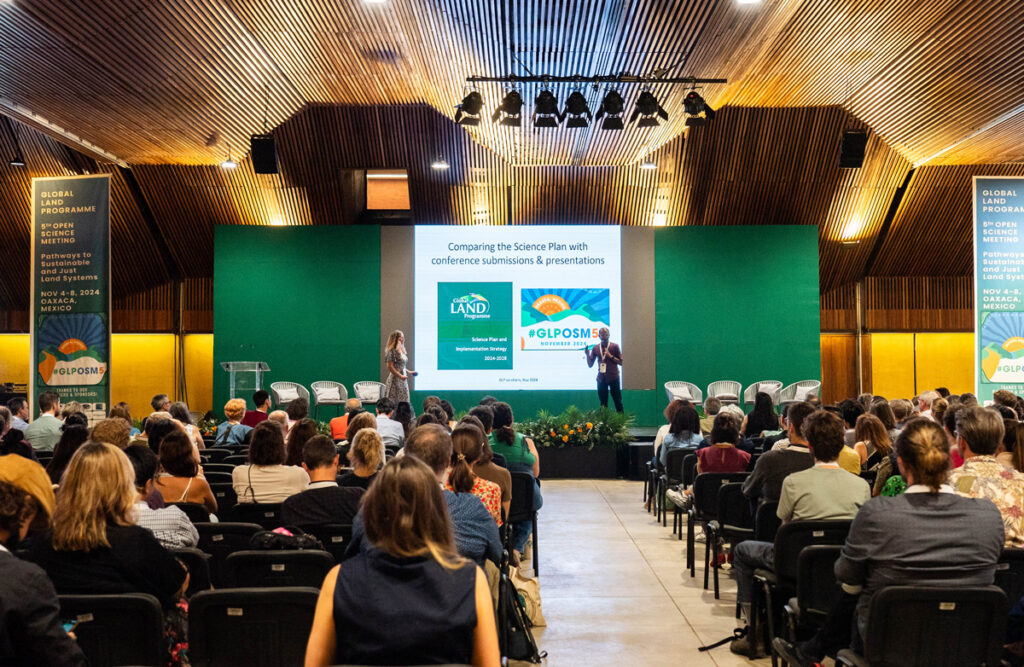
The organization has been guided by a unifying programmatic framework—articulated in its Science Plan—that incorporates knowledge across disciplines to address pressing global challenges (e.g., biodiversity loss, food insecurity, and poverty). The Science Plan, reevaluated and updated every 5 years, offers a living, collaborative road map of interdisciplinary research priorities—a rarity in academia, where competition for resources and rewards often leaves scientists reluctant to share ideas.
This road map enables researchers to orient their work toward impactful cross-disciplinary research themes and projects. It also outlines the GLP’s core priorities and analytical perspectives, drawing on a range of viewpoints and knowledge, which can guide us to develop shared ideas of what is possible.
The Global Land Programme’s activities have built a culture of mutual respect that values ecological and cultural context and encourages engagement with a broad range of perspectives.
Over time, the collaborative spirit of the GLP’s members has resulted in a rich interdisciplinary community of land system scientists that provides a space for them to reflect on dimensions of academic life other than research (as exemplified, e.g., by this article). Besides offering a supportive professional environment, apart from the skepticism we often encounter in more discipline-specific settings, the GLP’s activities have built a culture of mutual respect that values ecological and cultural context and encourages engagement with a broad range of perspectives.
The GLP has also delivered tangible results for science and society. GLP scientists have advanced modeling of land use going back millennia, contributed to global biodiversity assessments (e.g., in support of the Intergovernmental Science-Policy Platform on Biodiversity and Ecosystem Services), codeveloped new visions for land systems, and made datasets that help track land use changes, such as deforestation, publicly available. The GLP also works to translate land system science into forms relevant for policy and practice. For example, GLP scientists authored “Ten Facts About Land Systems for Sustainability,” a framework intended to inform both research and policy understandings of sustainable land governance.
What began as a space for researchers from across disciplines to connect around land system challenges has become an engine for both scientific innovation and societal relevance. This success adds to our trust in the GLP’s approach to supporting researchers in the often-challenging space of interdisciplinary science.
If You Don’t Have a Community, Make One
For interdisciplinary scientists lacking a home, one path forward is to build a new community of researchers with shared interests.
We were fortunate to find the GLP early in our careers, as not all scientists have access to such communities. But the comfort and confidence that come with belonging should not—and need not—depend on luck. For interdisciplinary scientists lacking a home, one path forward is to build a new community of researchers with shared interests.
Establishing a community of practice within a broader existing organization or research community or even creating a new forum for social networking can provide a space that empowers scientists, including early-career researchers, to navigate interdisciplinary work by connecting with peers who share related interests and challenges.
Experiences from existing communities of practice suggest that these spaces tend to work best when they grow organically [Watkins et al., 2018]. Making it easy for people to join, observe, and participate at their own pace helps create welcoming entry points and encourages such growth. Allowing people to gradually step in, share perspectives, and assume roles and responsibilities strengthens the common dynamic that often develops in these communities, in which a core of more active members is surrounded by a larger group of less active, though still involved, members.
In practice, many scientific communities thrive by communicating through simple and familiar platforms, such as mailing lists, online forums and channels, and recurring online meetups, which lower barriers to participation across institutions and regions. Reaching out to existing societies or research networks—AGU or FLARE (Forests & Livelihoods: Assessment, Research, and Engagement), for example—for guidance on coordination or to help gain visibility or seed funding can also help burgeoning communities avoid reinventing the wheel.
Furthermore, mentorship from people who have built research communities from the ground up in adjacent fields can be valuable for advising groups on how to grow and address challenges. Knowledgeable mentors can also help groups understand how to sustain a community, an aspect that is often critical to long-term viability.
The GLP was initiated as researchers working on different issues related to land began to connect, forging collaborations that eventually grew into a global network, which itself now comprises a variety of smaller networks, including working groups and regional (nodal) offices. The recently created Early Career Network, launched through webinars and other online communications, is providing a space where young scholars are encouraged to create their own governance structures and articulate what they need in terms of capacity building from the larger community.
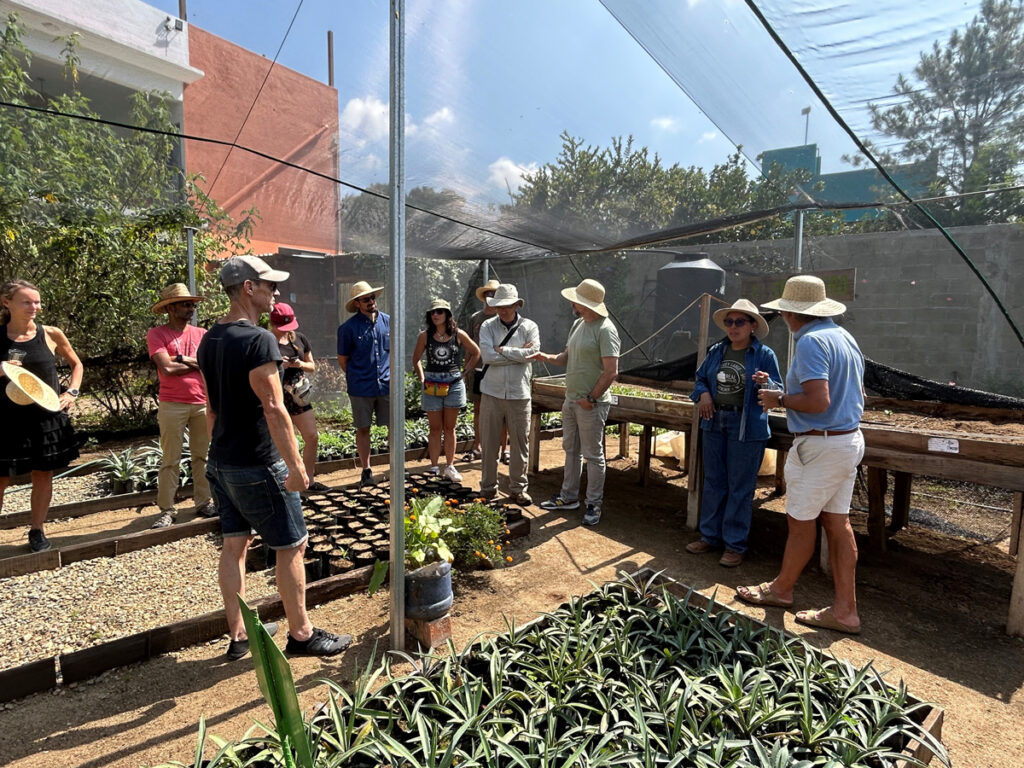
Growing the GLP has not always been an easy process, however. Sustaining the community has required continually maintaining support and funding from multiple institutions. To date, much of the growth has relied on volunteer work, with members of the GLP’s Scientific Steering Committee, working groups, and nodal offices providing unpaid service above and beyond their existing professional responsibilities. This arrangement of distributed labor underscores the importance of effective coordination for maintaining connections and momentum across the network.
The experiences of the GLP and other groups show that new interdisciplinary communities can start small and run largely on volunteer energy, which we recognize is not something all researchers—especially those early in their career—have to spare. If the communities can then reach a critical mass of participants, they may be able to secure institutional support and professional coordination to help them thrive over the long term.
Harnessing Interdisciplinarity
We came to realize that with our expertise, we can generate innovative ideas that advance science at the intersections between disciplines.
Earlier in our careers, we used to internalize criticisms about not belonging or excelling in any one discipline. Then we came to realize that with our expertise, we can generate innovative ideas that advance science at the intersections between disciplines. Indeed, people with interdisciplinary profiles can fill critical research gaps—and should be seen as assets, not liabilities. Many universities and funders understand this truth at the leadership level, but challenges remain in how interdisciplinarity is evaluated within departments and by hiring, promotion, and grant review panels.
To help move the needle, we actively characterize ourselves as interdisciplinary land system scientists in our tenure and promotion documents, preferring to own the position and emphasize its strengths, rather than to shy away from it. Individuals acting on their own, however, may have only limited influence. That is why building and sustaining communities is so important: They create the collective weight needed to demonstrate value, shift norms, and motivate institutional change.
Within community-building efforts, it is key to create space for participation from researchers with varied backgrounds and experiences. The GLP supports this approach through its distributed subnetworks, including working groups and regional nodes, and by convening international Open Science Meetings on different continents that bring together hundreds of scientists every few years. GLP members frequently present on the program’s work as well as strategies and approaches at other conferences, helping spread the word about the value of growing interdisciplinary communities.
As more researchers connect across disciplinary and geographic boundaries, the scientific enterprise will be better positioned to pursue sustainable solutions that address complex, urgent problems to secure livelihoods and food security for the global population and to safeguard our planet’s biodiversity and environmental health.
References
Andrews, E. J., et al. (2020), Supporting early career researchers: Insights from interdisciplinary marine scientists, ICES J. Mar. Sci., 77(2), 476–485, https://doi.org/10.1093/icesjms/fsz247.
Bentley, A., and R. Garrett (2023), Don’t get mad, get equal: Putting an end to misogyny in science, Nature, 619, 209–211, https://doi.org/10.1038/d41586-023-02101-x.
Berkes, E., et al. (2024), Slow convergence: Career impediments to interdisciplinary biomedical research, Proc. Natl. Acad. Sci. U. S. A., 121(32), e2402646121, https://doi.org/10.1073/pnas.2402646121.
Carrigan, C., and C. D. Wylie (2023), Introduction: Caring for equitable relations in interdisciplinary collaborations, Catalyst Feminism Theory Technosci., 9(2), 1–16, https://doi.org/10.28968/cftt.v9i2.41070.
de Bremond, A., et al. (2019), What role for global change research networks in enabling transformative science for global sustainability? A Global Land Programme perspective, Curr. Opinion Environ. Sustainability, 38, 95–102, https://doi.org/10.1016/j.cosust.2019.05.006.
Haider, L. J., et al. (2018), The undisciplinary journey: Early-career perspectives in sustainability science, Sustainability Sci., 13, 191–204, https://doi.org/10.1007/s11625-017-0445-1.
Liu, M., et al. (2023), Female early-career scientists have conducted less interdisciplinary research in the past six decades: Evidence from doctoral theses, Humanit. Soc. Sci. Commun., 10(1), 918, https://doi.org/10.1057/s41599-023-02392-5.
Marx, V. (2022), Cross-disciplinary ways to connect and blend, Nat. Methods, 19(10), 1149, https://doi.org/10.1038/s41592-022-01622-z.
Watkins, C., et al. (2018), Developing an interdisciplinary and cross‐sectoral community of practice in the domain of forests and livelihoods, Conserv. Biol., 32(1), 60–71, https://doi.org/10.1111/cobi.12982.
Woolston, C. (2021), Discrimination still plagues science, Nature, 600(7887), 177–179, https://doi.org/10.1038/d41586-021-03043-y.
Author Information
Laura Vang Rasmussen ([email protected]), Department of Geosciences and Natural Resource Management, University of Copenhagen, Copenhagen, Denmark; Rachael Garrett, Department of Geography and Conservation Research Institute, University of Cambridge, Cambridge, U.K.; A. Sofia Nanni, Instituto de Ecología Regional, Horco Molle, Yerba Buena, Argentina; also at Facultad de Ciencias Naturales e Instituto Miguel Lillo, Universidad Nacional de Tucumán, San Miguel de Tucumán, Argentina; Navin Ramankutty, School of Public Policy and Global Affairs and Institute for Resources, Environment and Sustainability, University of British Columbia, Vancouver, Canada; and Ariane de Bremond, Global Land Programme, Department of Geographical Sciences, University of Maryland, College Park