
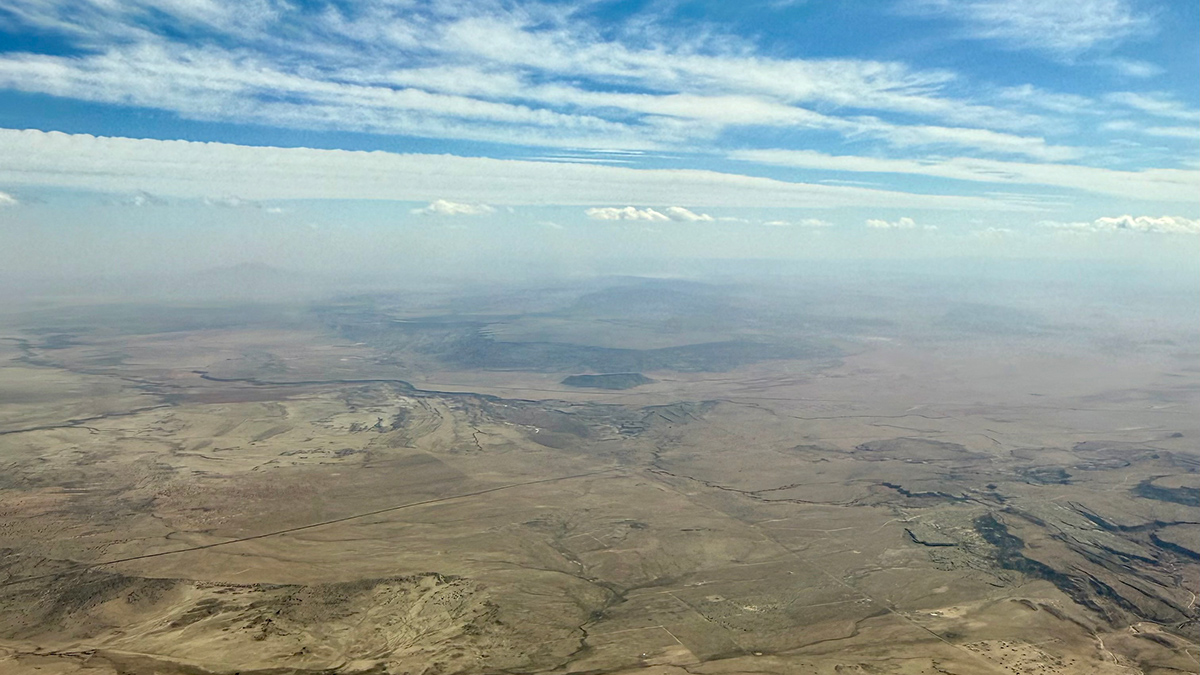
Like Earth’s ocean, surface, and soils, the atmosphere is an ecologically active system. Its distinctive and dynamic conditions—involving turbulent winds, clouds, pollutants, nutrients, ultraviolet light exposure, and more—redistribute microbes and affect numerous processes in ways we’re only beginning to understand.
The hypothesized “bioprecipitation feedback cycle,” for example, suggests that vegetated landscapes emit bioaerosols that act as atmospheric ice nuclei, inducing the formation of rain or snow that, in turn, enhances the growth of vegetation and associated microbes. Long-range dust transport, meanwhile, is known to deposit nutrients to distant ecosystems, although the ecological roles of the microbes transported with the dust remain unclear.
Our ability to study these processes, as well as the multiscale biological effects of rapid and extensive changes in the Earth system, has advanced considerably in recent decades. But lately, researchers have called for holistic approaches that can help tie our understanding together.
A 2025 consensus report from the National Academies of Sciences, Engineering, and Medicine [2025], for instance, recommended integrating tools, infrastructure, and workforce to support a new framework described as continental-scale biology (CSB). The report articulates opportunities for advancing study of ecosystem diversity, resilience, sustainability, and connectivity. And it states that CSB “offers the wide lens needed to address the urgent challenges of declining biodiversity, changing climate, emerging infectious diseases, the spread of invasive species, food security, and environmental justice” [National Academies of Sciences, Engineering, and Medicine, 2025, p. 2].
The vision outlined in the report is compelling and urgent, but it is not complete. It underrepresents a key component of ecosystem interconnectivity: the microbes, viruses, fungi, pollen, allergens, and other biological particles in the air, collectively called the aerobiome.
Though the report highlights the importance of teleconnections as part of CSB, the dynamics of the aerobiome are largely underexplored. Filling critical gaps in our knowledge of the aerobiome by establishing new monitoring capabilities and transdisciplinary research efforts is key to a comprehensive understanding of Earth’s biology and to predicting its responses to—and influences on—natural and anthropogenic processes.
A Need for New Strategies
We lack the basic understanding to map and predict aerobiome composition, much less to detail its roles in Earth system functioning.
The aerobiome not only links near and distant systems through the exchange of biological materials but is also itself a dynamic Earth subsystem. Unfortunately, we lack the basic understanding to map and predict aerobiome composition, much less to detail its roles in Earth system functioning. Such large-scale questions cannot be addressed without implementing new strategies to study the aerobiome.
Measuring and monitoring bioaerosol presence and behavior in indoor environments are critical to public health. Aerosol particles, after all, are the main transmission route for various pathogens, including the virus that causes COVID-19. Similarly, understanding the conditions conducive to the emission and atmospheric transport of allergenic and pathogenic bioaerosols through outdoor environments has been central to mitigating their impacts on health and agriculture.
However, commensurate measurement, monitoring, and interdisciplinary research strategies have not been applied to other aspects of the aerobiome ecosystem. We urgently need integrative approaches to advance discovery and to address persistent knowledge gaps with respect to the entire aerobiome.
Such gaps include characterization of the full biologic diversity in the air: “who” is present, why, and where in the atmosphere. Further, better methods for assessing cell viability (i.e., whether cells can continue to live and grow while airborne) are foundational for determining whether the aerobiome represents a metabolically active microbial ecosystem, with the potential for key roles in biogeochemical dynamics (e.g., uptake and transformation of volatile organic carbon compounds). On the other hand, some roles of bioaerosols, such as in the precipitation cycle, may not require viability, and the major gaps to be addressed are the measurement and prediction of spatial and temporal variations in aerobiome composition.
Momentum Has Been Building, but Many Questions Remain
The advent of modern molecular analysis techniques, such as metagenomics and metatranscriptomics, has greatly improved what is known about microbial populations in the environment, although characterization of the aerobiome has lagged far behind that of terrestrial and aquatic biomes [Martinez-Rabert et al., 2025]. The atmosphere, with its ultralow biomass, presents unique challenges to sampling, analysis, and contamination control. These challenges have, however, spurred innovations [e.g., Mainelis, 2020] and the call for standardizing data, metadata, and bioinformatics workflows [e.g., Wood-Charlson et al., 2020].
Accordingly, the number of reports on the composition of bioaerosol samples from around the globe has increased dramatically over the past several decades. Air samples analyzed for the presence of bacteria, fungi, archaea, viruses, and pollen have enabled significant strides in understanding taxa that appear to be nearly ubiquitous in the atmosphere and factors (e.g., desiccation) affecting airborne transformation of biological particles.
Neither national nor international coordinated efforts exist yet to establish regular, standardized sampling and analysis of atmospheric bioaerosols and the aerobiome system.
Unlike for terrestrial and some aquatic systems, however, neither national nor international coordinated efforts exist yet to establish regular, standardized sampling and analysis of atmospheric bioaerosols and the aerobiome system. Thus, many questions regarding the role of the aerobiome in the Earth system cannot currently be answered.
Even mechanisms and magnitudes of bioaerosol emissions remain unclear [Martinez-Rabert et al., 2025]. Aerosolization routes, such as via wildfire emissions [Adhikari et al., 2026], have not been fully investigated. Some studies have confirmed that microbes remain viable even after long-range transport at high altitudes [Rodó et al., 2024], but this key characteristic is not consistently assessed and reported.
Long-term, high-resolution spatiotemporal measurements and monitoring of the aerobiome continue to be lacking. Such monitoring, combined with contextual environmental data on, for example, local meteorological conditions and the biodiversity of the surrounding terrestrial ecosystems, could reveal drivers of aerobiome composition, how bioaerosols affect physical and chemical processes in the atmosphere, and how these processes affect the biodiversity and function of the aerobiome.
How to Accelerate Aerobiome Understanding
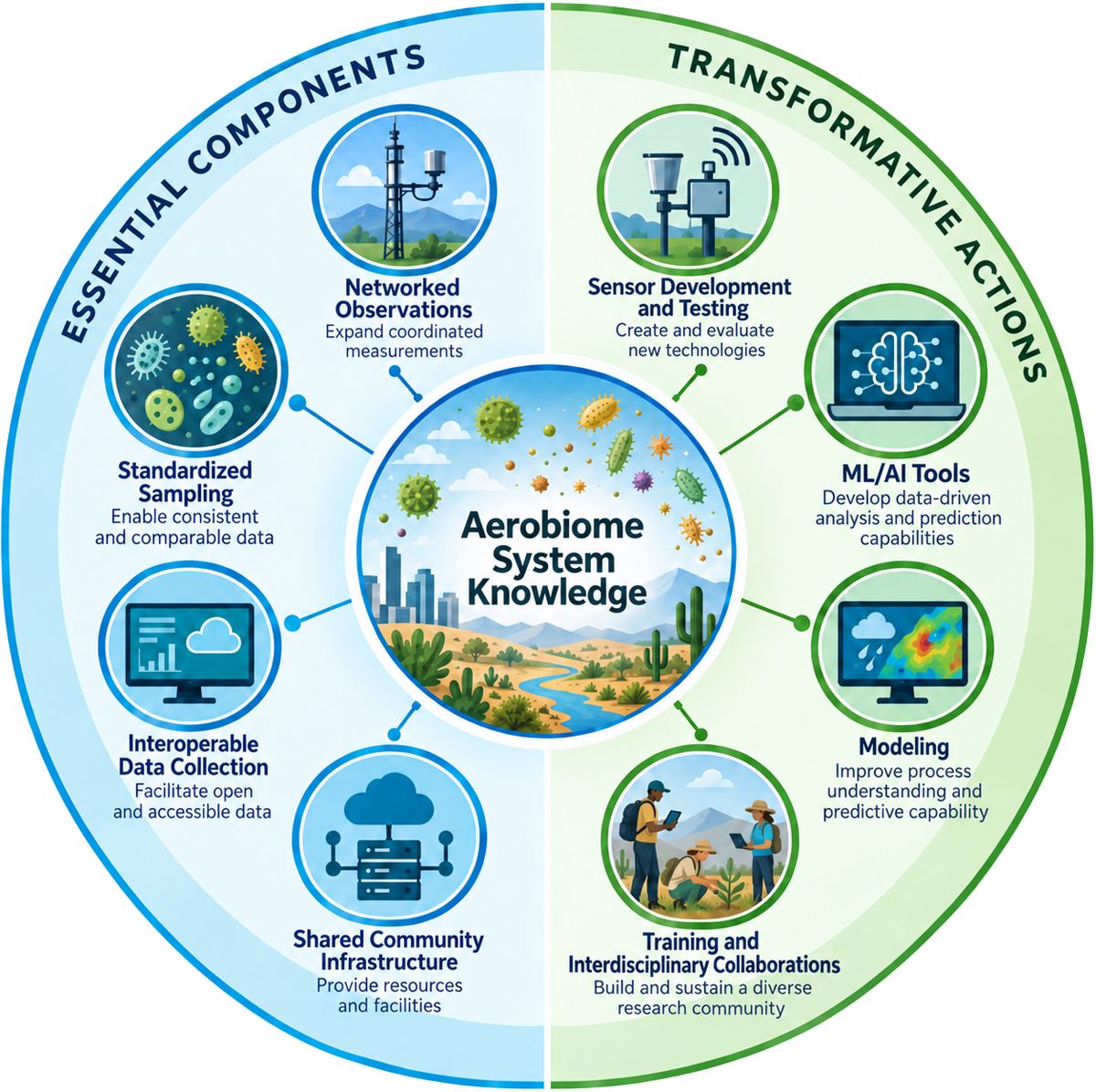
Accelerating the discovery of the aerobiome system and quantifying the crucial roles of bioaerosols require several essential components and transformative actions (Figure 1). These components and actions collectively represent a paradigm shift toward measuring, mapping, and predicting the dynamics of the aerobiome in its entirety—harmful and helpful constituents alike—and toward understanding it as a unique and interconnected ecosystem in the Earth system [Breed et al., 2025].
Collaborative, interdisciplinary networks of both infrastructure and researchers in Earth system science, microbiology, chemistry, aerosol science, and engineering are needed to unravel the aerobiome system’s complex dynamics. Such networks, which have been established to study lake ecosystems, for example [Hanson et al., 2018], can best be catalyzed and supported through a consistent national aerobiome observational approach integrated and embedded within broader CSB strategies.
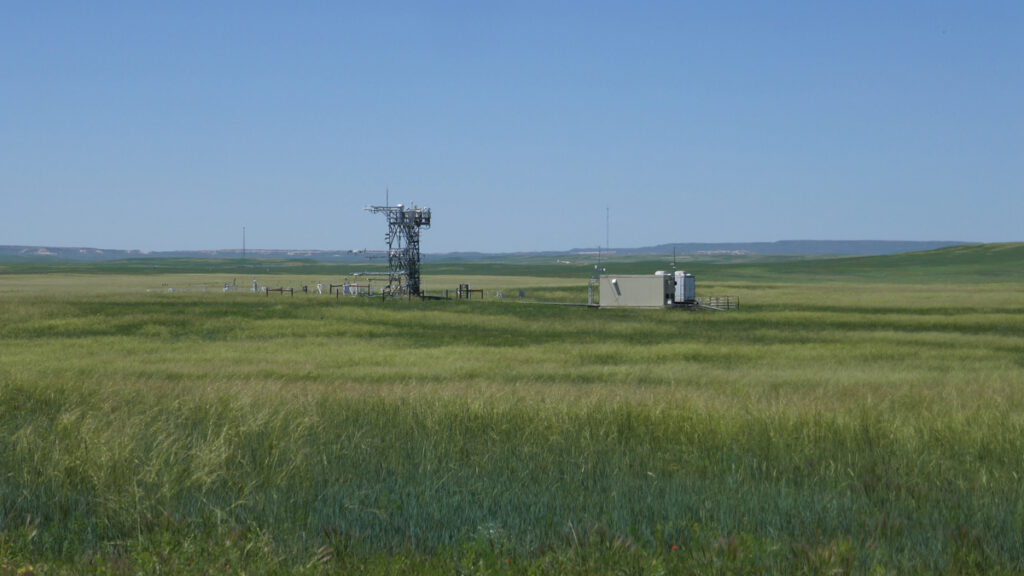
This observational strategy must include the standardization of baseline methods, measurements, and experiments so that data collected are consistent and interoperable, as well as the establishment of monitoring efforts spanning wide geographic areas. Such an effort could be piloted by leveraging established infrastructure and processes in existing programs. For example, the sample collection sites and infrastructure and the data curation and sharing workflows already developed for the National Ecological Observatory Network could be applied to demonstrate and refine the addition of aerobiome measurements to the network sites.
It may be possible to leverage ongoing, parallel sampling efforts as valuable resources for aerobiome discovery.
At the same time, it may be possible to leverage ongoing, parallel sampling efforts as valuable resources for aerobiome discovery. For example, recent work demonstrated the recovery of useful environmental DNA from filters used during routine national air quality monitoring activities in the United Kingdom [Littlefair et al., 2023], a concept that could be applied to monitoring networks in the United States and elsewhere. Community agreement on the best instrumentation, techniques, and methods to apply as they evolve is necessary and is an opportunity for innovation.
The data collected, curated, and shared through this observational strategy must be FAIR (findable, accessible, interoperable, and reusable). These new spatially and temporally extensive data not only are the foundation on which existing advanced statistical methods can be applied but are also necessary to the application of evolving machine learning and artificial intelligence (AI) tools and agents. Combining interoperable observations and mechanistic models with AI can enable predictive modeling capacity that links bioaerosol sources and sinks to simulate the dynamic aerobiome composition and its effects on the Earth system [Han et al., 2023].
Transformational actions that would advance aerobiome knowledge include building open-source tools to streamline bioinformatics workflows and model nonlinear system dynamics, as well as innovative training programs to expand the interdisciplinary research community engaged in aerobiome system research. They also include developing and testing novel sensing technologies and creating and utilizing shared experimental facilities.
Shared experimental facilities for aerobiome research would expand access to more investigators and would accelerate progress.
Rapid advances in next-generation sequencing and atmospheric chemistry research over the past 4 decades—for example, the elucidation of stratospheric ozone loss and the international cooperation to find and implement solutions—exemplify the value of an interdisciplinary, collaborative network that leverages knowledge and effort across academic, government, and private institutions [O’Brien et al., 2026]. Many advances were enabled by the availability of unique shared infrastructure, such as instrumented aircraft, in situ and spaceborne observations, and specialized lab facilities.
Shared experimental facilities for aerobiome research would similarly expand access to more investigators and would accelerate progress. For example, cloud chambers could be designed to facilitate controlled lab studies of microbial activity in cloud and fog droplets. Dispersion of bioaerosols into droplets sized to mimic clouds would more realistically simulate exchanges of gases between the microbe-containing drop and the air surrounding it and would allow the study of processes that may affect viability, such as droplet evaporation and resuspension of the bioaerosol.
Other types of facilities can be designed for testing new sensor and collector technologies, including low-cost samplers that can preserve cell viability during collection, against standards and established techniques. Building shared infrastructure for purpose, with community input and expert staff, not only is cost-effective but also ensures consistency of results.
Catalyzing Research to Reveal a Complex System
Aerobiome science, like Earth system science and microbial ecology, must be viewed within a complex systems framing “where nonlinearities arise from multidimensional interactions and feedbacks across multiple scales” [Han et al., 2023]. This framing is fundamental to the comprehensive measurement, monitoring, and experimental infrastructure that we suggest is needed to advance aerobiome system knowledge and to predict real-world effects.
Building the necessary infrastructure and networks will require substantial investment of both financial and human resources. In addition to the needed investments, catalyzing transdisciplinary collaborations around aerobiome research will likely involve several community-building mechanisms [Romera et al., 2025]. For example, workshops, training schools, and early-career cohort groups could be organized around cutting-edge, complex science questions to expand and strengthen research networks.
Amid discussions of the emerging concept of CSB, such efforts demand immediate attention. With thriving transdisciplinary research networks, novel measurement and monitoring capabilities, and a paradigm shift in our approach to knowledge generation, scientists will be well positioned to understand the aerobiome as part of the broader Earth system and to predict its important effects and feedbacks on weather and climate and human, environmental, and agricultural health.
Acknowledgments
The perspectives in this article are based, in part, on the findings of a workshop on Bioaerosols in the Earth System (https://doi.org/10.25675/10217/244742) that was supported by the National Science Foundation, award 2434615.
References
Adhikari, A., et al. (2026), Pathogens on fire: A scoping review of smoke-borne pathogen ecology in the One Health framework, PeerJ, 14, e20605, https://peerj.com/articles/20605/.
Breed, M. F., et al. (2025), Opportunities, challenges, and policy implications of the aerobiome paradigm shift, Bacteriology, 10, e00203-25, https://doi.org/10.1128/msphere.00203-25.
Han, B. A., et al. (2023), A synergistic future for AI and ecology, Proc. Natl. Acad. Sci. U. S. A., 120(38), e2220283120, https://doi.org/10.1073/pnas.2220283120.
Hanson, P. C., K. C. Weathers, and T. K. Kratz (2018), Networked lake science: How the Global Lake Ecological Observatory Network (GLEON) works to understand, predict, and communicate lake ecosystem response to global change, Inland Waters, 6(4), 543–554, https://doi.org/10.1080/IW-6.4.904.
Littlefair, J. E., et al. (2023), Air-quality networks collect environmental DNA with the potential to measure biodiversity at continental scales, Curr. Biol., 33(11), R426–R428, https://doi.org/10.1016/j.cub.2023.04.036.
Mainelis, G. (2020), Bioaerosol sampling: Classical approaches, advances, and perspectives, Aerosol Sci. Technol., 54(5), 496–519, https://doi.org/10.1080/02786826.2019.1671950.
Martinez-Rabert, E., et al. (2025), Investigating the atmospheric microbial ecosystem through theory, bioenergetics, and numerical modeling: A breath of fresh air for aeromicrobiology, J. Geophys. Res. Biogeosci., 130(8), e2025JG00907, https://doi.org/10.1029/2025JG009071.
National Academies of Sciences, Engineering, and Medicine (2025), A Vision for Continental Scale Biology: Research Across Multiple Scales, Natl. Acad. Press, Washington, D.C., https://doi.org/10.17226/27285.
O’Brien, R., et al. (2026), Support for collaborative science in atmospheric chemistry, ACS EST Air, 3(6), 1,447–1,448, https://doi.org/10.1021/acsestair.6c00174.
Rodó, X., et al. (2024), Microbial richness and air chemistry in aerosols above the PBL confirm 2,000-km long-distance transport of potential human pathogens, Proc. Natl. Acad. Sci. U. S. A., 121(38), e2404191121, https://doi.org/10.1073/pnas.240419112.
Romera, A. J., et al. (2025), Freeing transdisciplinarity from the project straightjacket: Reframing the problem, Soc. Sci. Humanit. Open, 11, 101483, https://doi.org/10.1016/j.ssaho.2025.101483.
Wood-Charlson, E. M., et al. (2020), The National Microbiome Data Collaborative: Enabling microbiome science, Nat. Rev. Microbiol., 18, 313–314, https://doi.org/10.1038/s41579-020-0377-0.
Author Information
Allison C. Aiken ([email protected]), Earth and Environmental Sciences, Los Alamos National Laboratory, N.M.; Sonia Kreidenweis, Department of Atmospheric Science, Colorado State University, Fort Collins; now at School of Sustainable Engineering and the Built Environment, Arizona State University, Tempe; and Kathleen C. Weathers, Cary Institute of Ecosystem Studies, Millbrook, N.Y.