
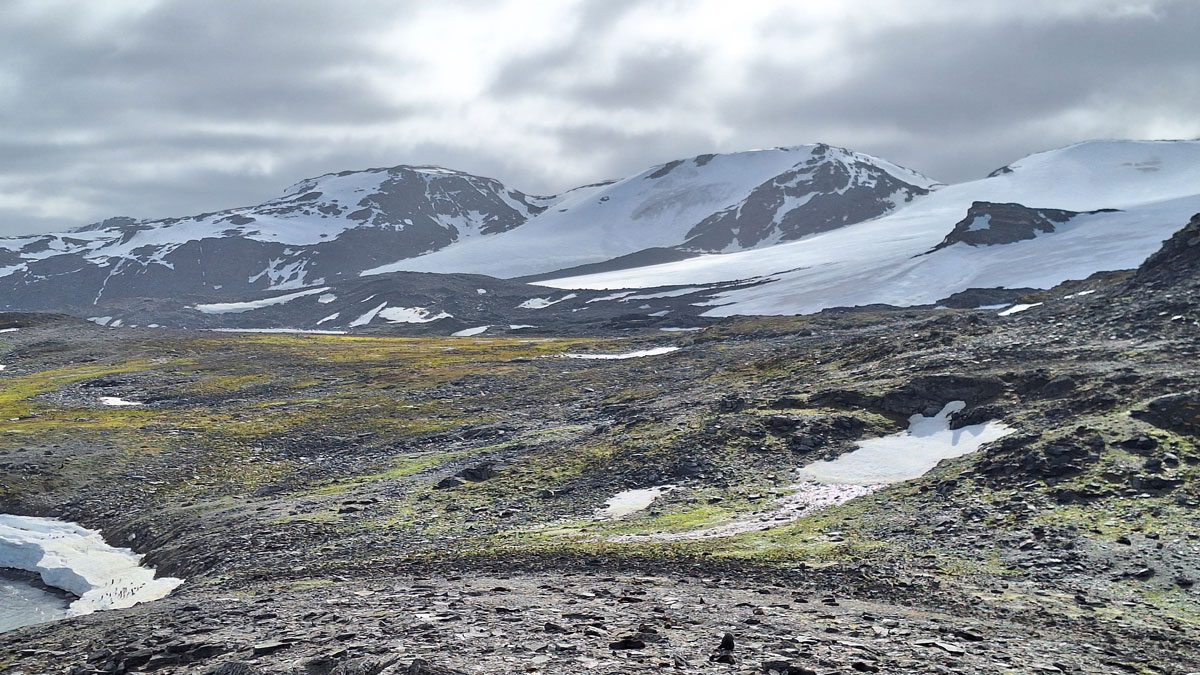
As one of the fastest-warming regions on Earth, the Antarctic Peninsula faces an uncertain future. A new study in Frontiers in Environmental Science examines how physical and ecological changes may unfold in the region under varying emissions scenarios.
The findings underline how the choices we make in the next decade will have dramatic long-term consequences extending far beyond Antarctica.
Small Region, Global Implications
The Antarctic Peninsula, the continent’s northernmost region, snakes into the Southern Ocean, about 965 kilometers (600 miles) south of Chile. Despite making up less than 4% of Antarctica, the peninsula is the most accessible region for enterprises such as fisheries, scientific research, and tourism.
Its marine and terrestrial climates are distinct from the rest of Antarctica, and we know it has experienced rapid environmental change in the past, such as during the early Holocene warm period. Today, change is accelerating once more. The peninsula’s western side is warming at 0.45°C per decade, more than twice the global average. We have sometimes seen the consequences in real time, with events like the 2002 collapse of the Larsen B ice shelf.
“This is worth fighting for.”
The region’s destiny will be shaped by complex interactions between land, sea, and atmosphere. As melting ice freshens the Southern Ocean, changes in oceanic circulation might drive climatic impacts across the Southern Hemisphere and beyond.
“This is worth fighting for,” said Bethan Davies, a glaciologist at Newcastle University in the United Kingdom, who led this research. “When we warm the planet more than 2 degrees centigrade, we see real damage to this pristine environment, in a way that would also affect people living in Europe and North America.” For instance, sea level rise associated with Antarctic ice retreat can intensify storm damage globally.
A Comprehensive, Systems Approach
The team examined how interconnected components—ice, ecosystems, ocean, atmosphere, and extreme events—respond under three Shared Socioeconomic Pathways: low (1.8°C), medium-high (3.6°C), and very high (4.4°C) levels of warming by 2100 compared with preindustrial levels.
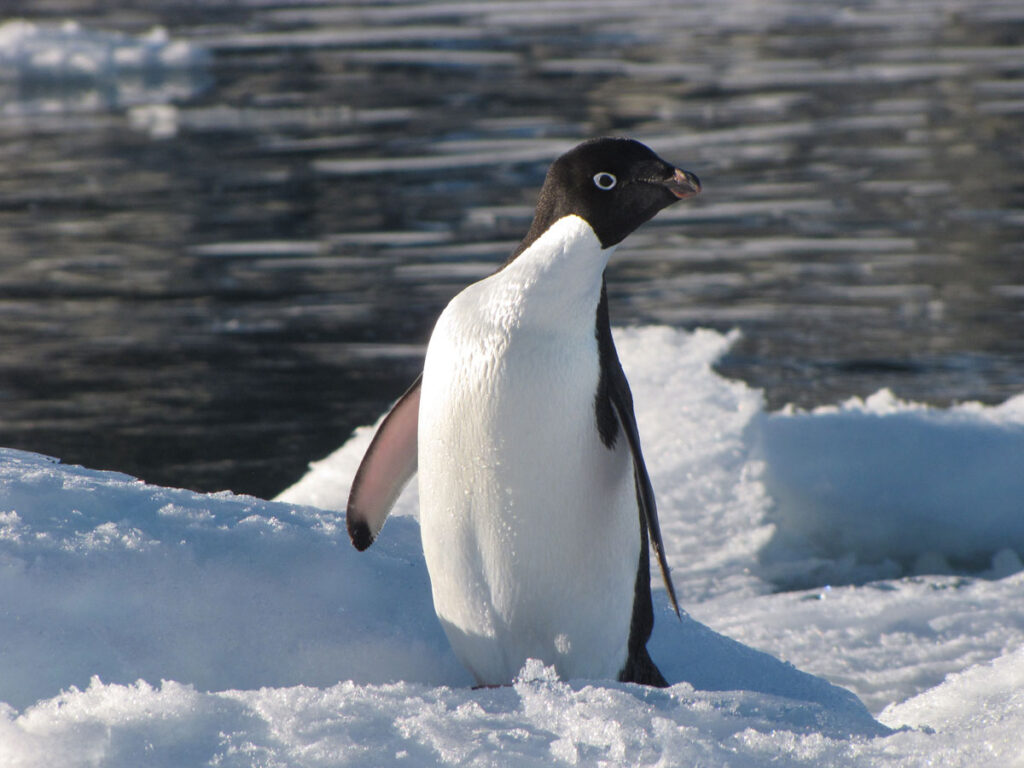
In the low-emissions case, many glaciers and ice shelves remain largely intact, sea level contributions are modest, and species such as penguins retain much of their habitat. Under the highest-emissions scenario, sweeping changes occur that would be irreversible over human timescales. Sea ice could shrink by 20%, exposing darker waters that absorb more heat and accelerate glacier loss. Krill would shift southward, reducing the food supply for whales, penguins, and seals, in turn affecting the fishing industry.
“Changes will span from the smallest microbes to whales and seabirds.”
Antarctic wildlife and ecosystems are already under pressure today. Mass penguin chick deaths have been documented, as melting sea ice soaks their nonwaterproof feathers, causing the birds to freeze. Meanwhile, nutrient supplies are altered by warming seas and changing light conditions, affecting the phytoplankton that form the base of the food web. Oscar Schofield, a biological oceanographer at Rutgers University who was not involved in this research, said the changes projected by this study under the medium-high and very high warming pathways could have far-reaching consequences.
“Changes will span from the smallest microbes to whales and seabirds,” he said. “These changes have significant implications for the ecology and biogeochemistry of this region.”
Emerging Hazards for Antarctic Science
The research also outlines how a warming Antarctic Peninsula presents new challenges for fieldwork. Antarctic bases and clothing are designed to withstand cold, high winds, and snow. More rain and other liquid precipitation will make it hard to cope with such a range of extreme conditions, and icy runways will be more difficult for aircraft to land on.
Melting sea ice will open new shipping routes, but it also presents hazards for Antarctic teams that use stable sea ice to transport cargo to research bases. Researchers who walk across these ice platforms to fieldwork locations also face higher risks.
A warming Antarctica will make it easier for tour companies to reach the peninsula. Rising tourism brings a greater risk of contamination and non-native species. But Davies said the tourism question is a difficult one. “The counterargument is that people who visit Antarctica as tourists tend to come back as advocates,” she said.
Geopolitical interest in the peninsula will likely rise, as it may be home to minerals including molybdenum, gold, and silver. But commercial mining is prohibited under the Madrid Protocol of the Antarctic Treaty.
Eyes on the Fifth International Polar Year
Edward Doddridge, a physical oceanographer at the University of Tasmania’s Institute for Marine and Antarctic Studies who was not involved in this new research, said the changes both observed and projected by this study are “deeply concerning and should motivate us to limit warming as much as we can.”
Doddridge believes the study would be stronger if it included an emissions pathway more aligned with current policies, which would fall somewhere between the low and medium-high pathways used in the study. He also said that presenting the Antarctic changes relative to the current day, rather than to preindustrial times, hides the substantial changes we have already experienced.
Study coauthor Martin Siegert, a polar scientist at the University of Exeter, hopes the Fifth International Polar Year in 2032–2033 can be a focal point for similar, interdisciplinary studies. “Antarctica is still largely a continent that’s in many places unexplored. But we know enough to understand that things are changing, and we must comprehend the system a lot better,” he said.
—James Dacey, Science Writer