

Want more information from expert scientists about how the Arctic is changing? Preference Eos in your searches!
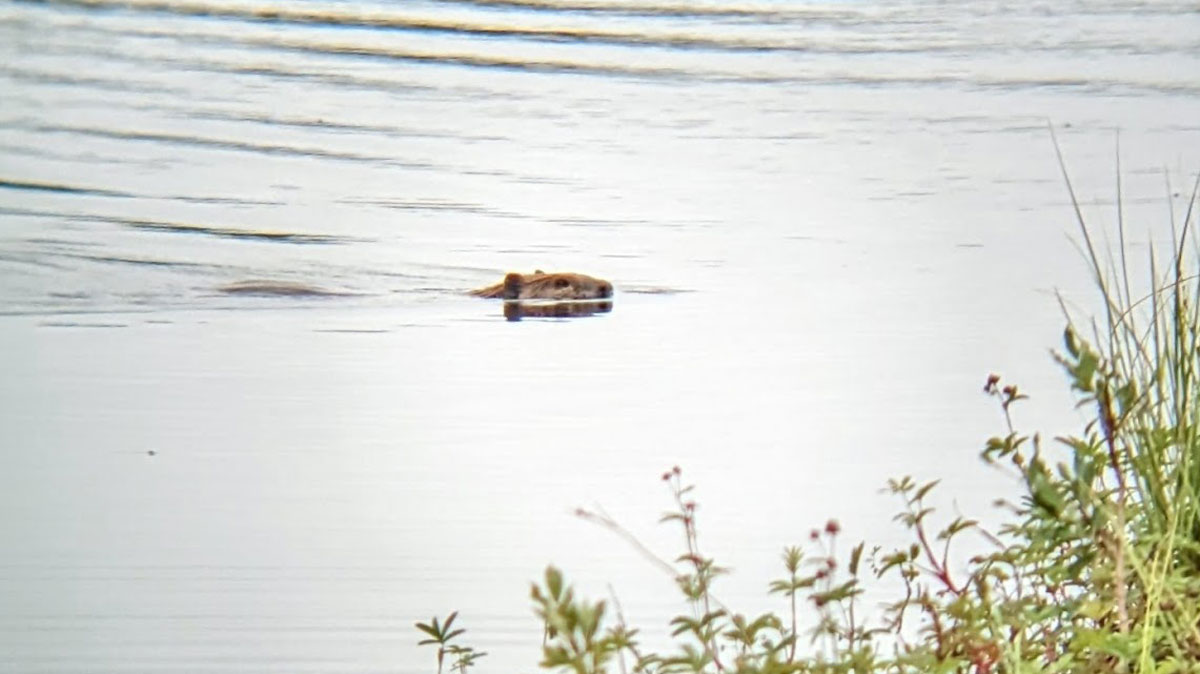
As a warming climate alters the Arctic landscape, beavers are moving northward, building dams as they go, creating new ponds, and even accelerating permafrost thaw. The rodents have moved so far north that reports exist of beavers swimming in the Arctic Ocean.
These changes create challenges for human communities, many Indigenous, that live in the Arctic: Beaver dams alter how water flows, in some cases creating environments for waterborne diseases to thrive or obstructing normal transportation routes.
“It’s really important to have this kind of baseline data.”
Scarce observational records mean scientists and land managers don’t have much information about beavers’ past ranges, so it’s hard to tell exactly how quickly the creatures are moving or which changes to the Arctic landscape are related to beaver activity.
A new study published in Ecosphere uses information stored in tree ring records to reconstruct part of the past expansion of the animal’s species range, showing that beavers have occupied one of the northernmost parts of Canada since at least 2008. The study paves the way for future research to reconstruct beavers’ movement elsewhere in the Arctic and offers land managers important information for decisions about land use and conservation.
“It’s really important to have this kind of baseline data,” said Georgia Hole, a biogeoscientist at Durham University in England and lead author of the new study. The study was completed while Hole was at Anglia Ruskin University.
Shrubs, Stems, and Science
The research was completed as part of a much larger collaborative project led by the Imaryuk Monitors, an organization of community patrollers that observes environmental conditions along the Tuktoyaktuk Highway in the Inuvialuit Settlement Region in Arctic Canada, a remote area in the Northwest Territories and the Yukon.
In 2020, the monitors realized a large amount of beaver activity was beginning to affect nearby creeks and lakes. Kirt Ruben, an Imaryuk monitor and program manager for community-based monitoring at the Joint Secretariat Inuvialuit Settlement Region, sought a research collaboration that would “provide some answers about how to mitigate beaver activity” and began to work with Hole and her collaborators to gather those answers.
To reconstruct beavers’ expansion in the Inuvialuit Settlement Region, Hole and the research team gathered 94 willow and alder stems showing evidence of beaver bite marks. The stems were collected near dams and lodges at three focal sites, along with 99 untouched stems for comparison.
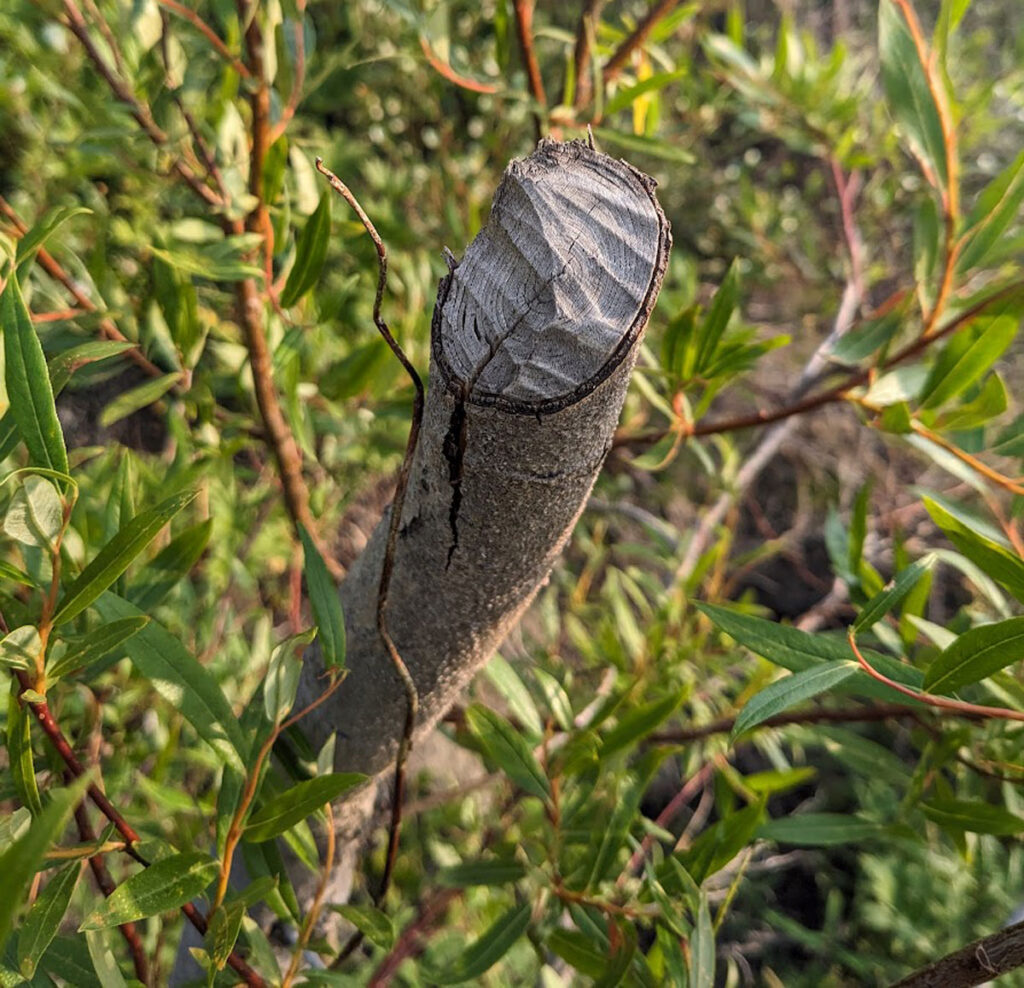
Researchers determined the ages of the bite marks by matching the ring growth patterns of bitten and unbitten stems and then compared their findings with Landsat satellite imagery showing how surface water had changed from 1984 to 2022.
The results showed that continuous beaver colonization in the region had started by at least 2008. The northernmost site showed evidence of beaver occupancy between 2008 and 2022, the central site showed evidence of beaver occupancy between 2015 and 2022, and the southernmost site showed evidence of beaver occupancy between 2011 and 2023.
The findings provide the first timeline of beaver expansion in the Inuvialuit Settlement Region.
“It’s great that there’s research coming out of [a relatively] new region for our understanding of beavers in the Arctic,” said Tom Glass, an ecologist at the University of Alaska Fairbanks who studies beaver expansion but was not involved in the new study. In Glass’s study area in northwestern Alaska, researchers are “beginning to get a handle on some of these questions about when beavers arrived, but a lot of those questions still need to be answered elsewhere,” he said.
Although beavers may have occupied each of the study sites before 2008, Hole’s results match observations of a rise in beaver populations in the mid-2010s. The observations were made by residents of the Inuvialuit Settlement Region and also align with other research teams’ estimates of beaver expansion into the Arctic.
Management and Mitigation
Having historical data on beaver movement helps scientists predict how quickly these animals may move north in the future and attribute landscape changes to them. Such evidence is also useful for land management in the Inuvialuit Settlement Region. Indigenous communities and land managers need documented evidence of both changes to the landscape and the presence of beaver populations to inform management and adaptation decisions, Hole said.
Beavers are “little engineers—they’re incredible, but at the same time, they create so much damage,” Ruben said. “With [Hole’s] research and publication, we now have something that we can give as a reference for mitigation measures.”
“We showed that these methods can be a useful way of understanding past beaver presence in some of these remote, hard to access, and hard to understand regions.”
The research team’s new methods may open more possibilities to gather data as well. In very remote areas such as the Inuvialuit Settlement Region, it’s particularly difficult to deploy scientific equipment like camera traps or complete expensive aerial surveys of beaver activity, necessitating the new, low-cost methods that the research team used. “We showed that these methods can be a useful way of understanding past beaver presence in some of these remote, hard to access, and hard to understand regions,” Hole said.
“If you can collect these browsed shrubs and undertake this cross dating, you could potentially replicate this on quite a large scale, throughout many different watersheds and areas of the tundra,” she added.
Glass agreed. He said seeing the alignment of the stem ring data with satellite imagery gives researchers tracking beaver expansion using only satellite imagery more evidence that they’re measuring what they think they’re measuring. “It shows us that using Landsat imagery to look at wetness associated with beaver ponds…is picking up beaver-induced changes,” he said. “It provides the potential to apply [the method] elsewhere and potentially scale up our understanding of the extent to which [beavers are changing the landscape].”
Ruben and the Imaryuk Monitors want to collect more information on how beavers are affecting their landscape, including waterways and waterborne illnesses. As one example, Ruben would like to see more data on the link between beavers and giardia. “We have so many connections with scientific researchers that we feel that mitigation measures are almost reachable,” he said.
—Grace van Deelen (@gvd.bsky.social), Staff Writer
30 June 2026: This story has been updated to reflect a researcher’s correct affiliation.