Source: GeoHealth
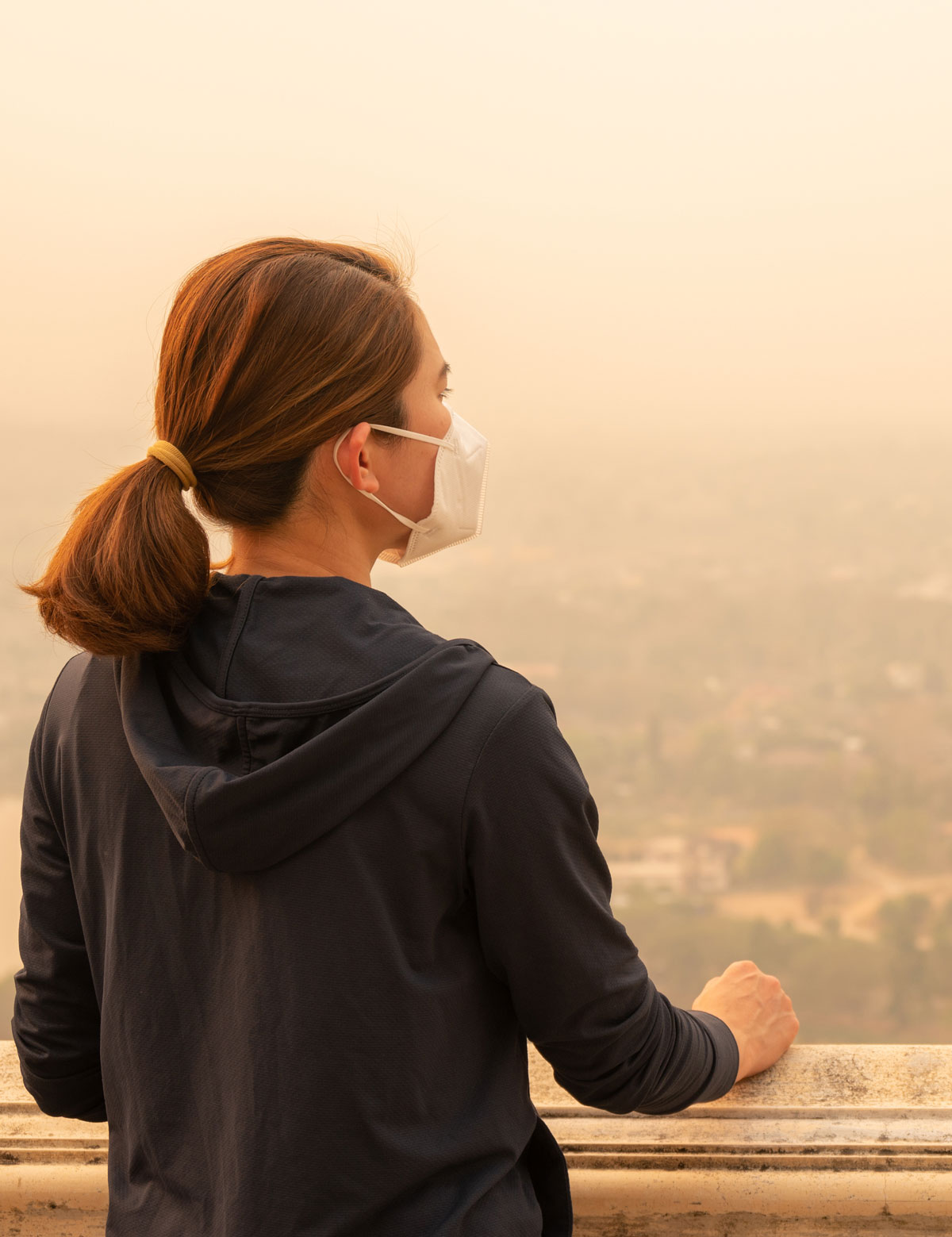
A changing climate increases the health risks posed by extreme weather. However, according to the 2024 Yale Climate Opinion Maps, only 47% of U.S. survey participants believed that global warming would harm them personally.
Poor risk communication can leave affected populations underprepared to face the health dangers that can accompany extreme heat and cold, flooding, wildfire smoke, and severe drought. Manware et al. compared mortality risk estimates with public perception of climate risk to establish “risk perception gaps.” They found that a belief in anthropogenic climate change was associated with smaller gaps between perceived and actual risk, suggesting that a greater public understanding of climate change could help communities better prepare for the health effects that come alongside extreme weather.
Researchers used climate risk perception data from the 2024 Yale Climate Opinion Maps, which are derived from 31 nationally representative surveys of nearly 35,000 participants, with demographic and political information estimated to predict county-level opinions. The study defined climate risk perception as the percentage of adults in each county who believe that global warming will directly harm them.
Then, by comparing climate risk perception with estimates of mortality caused by wildfire smoke, flooding, drought, and extreme temperatures, the researchers identified where the greatest risk perception gaps exist. Accounting for differences in age, income, education, racial demographics, and location, researchers then built a statistical model to examine the relationship between this perception gap and awareness of climate change. The results can be viewed in a publicly available dashboard.
The percentage of adults who believed that climate change would personally harm them ranged by county from 28.5% to 60.5%, with an average of 37.7%. The gap between perceived and actual risk varied across the country and by hazard, but it was generally smaller in counties where more residents agreed that “global warming is happening.”
Residents in the midwestern and northern United States showed an underawareness of the health risks of wildfire smoke and flooding, and residents in the western and southern United States showed an underawareness of drought. The study suggested that the same regions with higher risk perception gaps show higher climate-related mortality rates. Improving public awareness and understanding of climate change may help communities better prepare for the health risks associated with extreme weather, the researchers suggest. (GeoHealth, https://doi.org/10.1029/2025GH001782, 2026)
—Rebecca Owen (@beccapox.bsky.social), Science Writer