
With every work commute or grocery store run, a car’s tires wear down, causing tiny fragments of rubber to break away from the tire surface. That microscopic debris can be washed into streams, waterways, and estuaries when it rains.
“Driving a car or even riding in a bus is a bit like dragging an eraser across the planet, except the crumbs are microplastics. Toxic microplastics,” said Britta Baechler, director of ocean plastics research at the Ocean Conservancy.
Products like packaging materials and microbeads might come to mind long before tires when thinking of microplastics. But rubber hitting the road is actually a major contributor of marine plastic pollution, with some studies showing tire wear particles account for nearly half of the microplastics in terrestrial and aquatic systems. And tire fragments have only recently been classified as nano- and microplastic particles in various environmental studies, meaning the presence of these toxic, tiny particles has likely been underreported.
Tires contain a blend of natural and synthetic rubber as well as other chemicals, additives, and metals. As a tire breaks down and enters the environment, small slivers can make their way into the diets of fish and other marine life. Many studies tend to focus on particles or chemicals from unused tires rather than actual road-worn tire debris.
To better understand how tire particles affect aquatic ecosystems, researchers exposed a pair of estuarine species to a mixture of both weathered and pristine tire particles. By assessing how the study’s fish and shrimp consumed the tire particles and how both particles and the chemicals they release into the water affected the species’ growth and behavior, researchers aimed to capture the ecological risks of tire pollution under more realistic conditions. They published their findings in Environmental Pollution.
A Taste for Tires
In the environment, the tire particles that creatures interact with naturally vary in size. The smallest are often emitted directly into the air right as they’re generated. “You’re going to see higher [tire particle] contamination along roadsides, for example, and not just in waterways,” said Susanne Brander, an ecotoxicologist and courtesy faculty at Oregon State University and one of the study authors.
“These tire particles are small, they’re able to move, some are airborne, some are waterborne, and that’s how they become so pervasive.”
Rain washes those particles off road surfaces and into storm drains, which may lead to freshwater sources. “That’s where the cycle begins. These tire particles are small, they’re able to move, some are airborne, some are waterborne, and that’s how they become so pervasive,” said Baechler, who was not part of the study.
Tires are constructed with complex materials and contain thousands of potential toxins. 6PPD is one such ingredient. It is used to keep rubber from cracking but can be extremely toxic to salmon even in small concentrations.
Researchers used a standard mix of tire types that might be found driving along U.S. roads—14% from light trucks, 41% from passenger cars, and 45% from trucks and buses. They weathered the tire particles by suspending them in water with organic matter and then mechanically processing them with glass beads, shaking, and autoclaving. This broke them down into microparticles between 1 and 20 micrometers in diameter and nanoparticles less than 1 micrometer in diameter. Another portion of the samples was processed even further to isolate the chemical compounds released from the tire particles, representing the leachate.
Researchers exposed inland silverside fish (Menidia beryllina) and mysid shrimp (Americamysis bahia) in their early life stages to a range of tire particles and leachate concentrations to mimic varying levels of environmental contamination.
“We observed significantly higher ingestion rates in both species when they were exposed to weathered tire particles” compared to pristine particles, said lead author Clarissa Raguso, a marine scientist and postdoctoral fellow at Portland State University.
Though neither fish nor shrimp experienced significant mortality, weathered tire particles reduced growth in both species, and it took lower amounts of tire particles for shrimp to be affected. The shrimp also ingested more tire particles overall, likely because of their bottom-feeding style.
“I was surprised by the species-specific responses,” Raguso said. “We expected weathered tire particles to consistently have the strongest effects across both species and all end points.”
Tire particles affected the behavior of both species, though the fish were more affected by pristine particles and shrimp were more affected by weathered ones.
“While we did see stronger effects on growth and ingestion in both species, the increase in behavioral alterations associated with weathering was only observed in [mysid shrimp], suggesting that vulnerability to tire pollution varies by species,” said Raguso.
Behavioral effects related to stress altered the animals’ neurological function—some exposures caused hyperactivity and reduced stress responses, whereas others led to decreased activity. In the wild, these behavioral shifts could make the creatures easier targets for predators or disrupt breeding and feeding. This change could lead to a cascade of effects on the food web.
“Mysid shrimp are a really important food item for critical species,” Brander said. “Gray whales, for example, eat millions of those types of organisms per day. The larger fish that we catch as seafood eat mysids. Even though we’re looking at these small larval fish and shrimp that humans don’t eat, they’re a pathway to get to what we do eat.”
Taming Tire Pollution
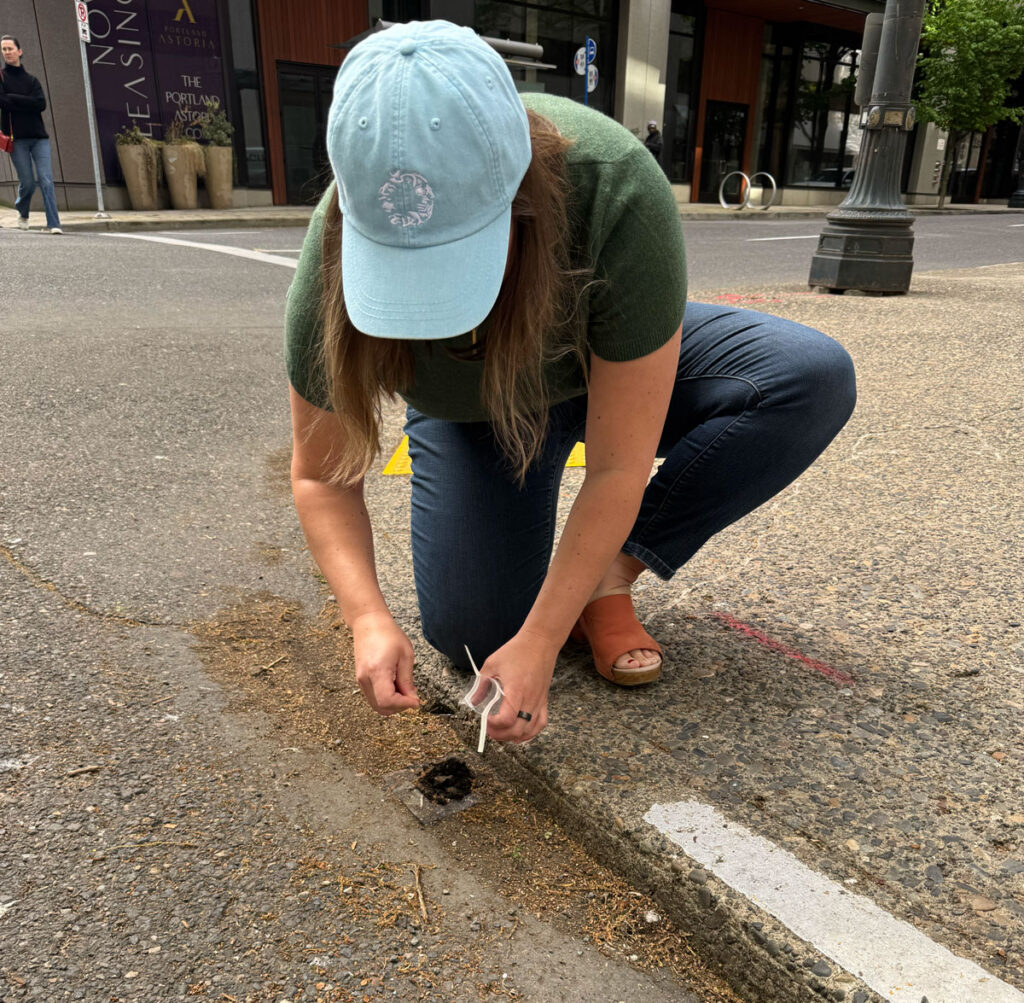
Though tires are a leading source of microplastic pollution, potential solutions to ensure that fewer particles end up in waterways are in the works. One possibility is to change tires’ chemical composition so they shed fewer harmful microparticles while in use. Other research is being conducted at Portland State University installing traps to catch tire particles in stormwater runoff before they enter marine environments. Another project aims to attach devices to vehicles that capture tire dust before it even hits the road.
“This study is important because it moves microplastics research closer to real-world conditions, the kind of particles that organisms are actually exposed to in nature,” Baechler said. “And understanding how those particles behave after weathering is really critical for assessing ecological risk and informing future prevention and mitigation strategies.”
—Rebecca Owen (@beccapox.bsky.social), Science Writer