
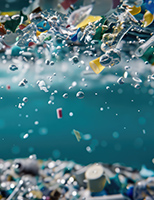
From Antarctica’s frozen wilderness to the heights of Mount Everest, microplastics have been found in some of the most remote places on Earth. And their reach continues to expand.
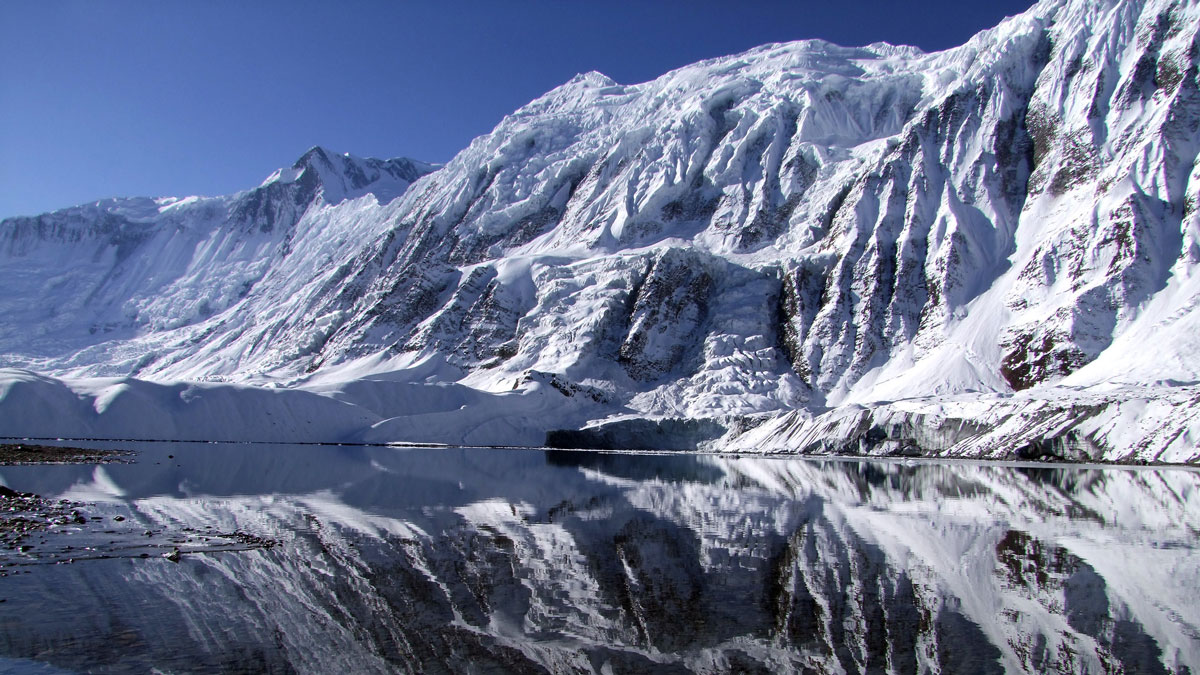
A recent study published in iScience found that one of Nepal’s highest snow-fed lakes, situated at an altitude of 4,917 meters (16,132 feet) in the Himalayas, contains a significant amount of microplastic pollution. Researchers detected an average of 42 microplastic particles per liter of water, highlighting how microscopic plastic contamination has reached even some of the world’s most remote environments.
“It is yet another piece of evidence that our massive consumption of plastic in countries across the Global South is coming back to harm us,” said Tista Prasai Joshi, a water scientist at the Nepal Academy of Science and Technology in Kathmandu. “We are basically hitting an axe on our own foot.” Joshi, who was not involved in the new research, added that plastic use is so deeply woven into daily life that many people fail to recognize its effect on ecosystems. Rising tourism in countries like Nepal is only accelerating the spread, carrying microplastic pollution to remote corners of the Himalayas.
In 2019, marine scientist Imogen Napper and colleagues at the University of Plymouth reported a significant presence of microplastics in snow and stream water around the Everest Base Camp region, about 5,300 meters (17,388 feet) above sea level. The findings made headlines around the world.
Despite the publicity given the Everest Base Camp research, very few studies have examined microplastic pollution in highland lakes. Such studies are particularly important because water stays in these lakes much longer than in rivers, making them valuable archives of pollution, able to preserve evidence of contamination over years or even decades.
A Trip to Tilicho
To help address this gap in research, Sahil Shrestha, an environmental researcher at Tribhuvan University’s Institute of Engineering, Pulchowk Campus, and a colleague turned a couple of days of Himalayan trekking into a field expedition. Shrestha selected six accessible shoreline locations around Tilicho Lake for sampling. At each location, using his bare hands to prevent microplastic pollution from gloves, he submerged a stainless steel bottle about 20 centimeters below the water surface, opened the cap, filled the bottle, and resealed it before bringing the sample back for analysis.
Shrestha was particularly concerned about environmental contamination, as transporting samples from a remote lake to a laboratory in Kathmandu takes time, and contamination can occur en route. To account for possible contamination scenarios, he implemented several control measures.
“We carried a trip blank for this,” he said. “Essentially, in a rinsed and cleaned steel bottle, I carried distilled water throughout the trip.”
Because he knew the water was uncontaminated at the start of the trip, Shrestha could measure it again upon returning to the lab to see whether it became contaminated during the trip (for example, by being carried in a backpack). If the trip blank showed signs of contamination, the scientists could assume the collected samples were similarly contaminated and could subtract the known level of contamination from their analysis. Trip blanks and field blanks are standard quality assurance practices used in environmental chemistry research.
Shrestha also carried field blanks to account for possible microplastics in the air. At the field site, he poured distilled water from the laboratory into another bottle. The idea was to account for possible airborne microplastics that could later be subtracted to calculate the net microplastics in the water alone.
The sampling experience left a lasting impression on Shrestha, in part because he and his colleague had to carry up to 15 liters of water between sampling sites. “For two individuals, carrying so many liters of water around each site was a challenging yet fun part of the process,” he said.
Plastics Aplenty
Polyester, polyethylene, and polypropylene are commonly used in hiking gear, jackets, tents, plastic bottles, and bags, all of which can shed microplastics while visitors explore the area.
Once in the lab, Shrestha’s team carried out further analyses, including the removal of organic material, filtration, and microscopy to categorize the types of microplastics. They found that microplastic contamination was higher in areas of the lake more easily accessible to tourists. Polyester, polyethylene, and polypropylene were the main types detected. These materials are commonly used in hiking gear, jackets, tents, plastic bottles, and bags, all of which can shed microplastics while visitors explore the area, suggesting tourism was the most likely source of contamination.
Shrestha noted that there is not yet evidence that Tilicho Lake drains into rivers, but many Himalayan lakes do drain into rivers that, in turn, feed communities downstream. The findings hint that microplastic contamination at the water’s source has a far-reaching ripple effect on human health and downstream ecosystems.
Shrestha stressed the need for such research to inform policy and regulatory decisions.
“Tilicho Lake is situated in the Annapurna Conservation Area Project (ACAP) region, and these conservation programs should restrict trekkers from carrying plastic bottles and polyethylene bags,” he said. “Overall, the trekking gear industry is [contributing] significantly to microplastic pollution in remote regions, and this should be addressed through international collaboration.”
—Saugat Bolakhe, Science Writer