• About
  • Sections
  • Topics
    • Climate
    • Earth Science
    • Oceans
    • Space & Planets
    • Health & Ecosystems
    • Culture & Policy
    • Education & Careers
    • Opinions
  • Projects
    • ENGAGE
    • Editors’ Highlights
    • Editors’ Vox
    • Eos en Español
    • Eos 简体中文版
    • Print Archive
  • Science Policy Tracker
  • Blogs
    • Research & Developments
    • The Landslide Blog
  • Newsletter
  • Submit to Eos
  • AGU.org
  • Career Center
  • Join AGU
  • Give to AGU
  • About
  • Sections
  • Topics
    • Climate
    • Earth Science
    • Oceans
    • Space & Planets
    • Health & Ecosystems
    • Culture & Policy
    • Education & Careers
    • Opinions
  • Projects
    • ENGAGE
    • Editors’ Highlights
    • Editors’ Vox
    • Eos en Español
    • Eos 简体中文版
    • Print Archive
  • Science Policy Tracker
  • Blogs
    • Research & Developments
    • The Landslide Blog
  • Newsletter
  • Submit to Eos
Skip to content
  • AGU.org
  • Career Center
  • Join AGU
  • Give to AGU
Eos

Eos

Science News by AGU

Support Eos
Sign Up for Newsletter
  • About
  • Sections
  • Topics
    • Climate
    • Earth Science
    • Oceans
    • Space & Planets
    • Health & Ecosystems
    • Culture & Policy
    • Education & Careers
    • Opinions
  • Projects
    • ENGAGE
    • Editors’ Highlights
    • Editors’ Vox
    • Eos en Español
    • Eos 简体中文版
    • Print Archive
  • Science Policy Tracker
  • Blogs
    • Research & Developments
    • The Landslide Blog
  • Newsletter
  • Submit to Eos

News

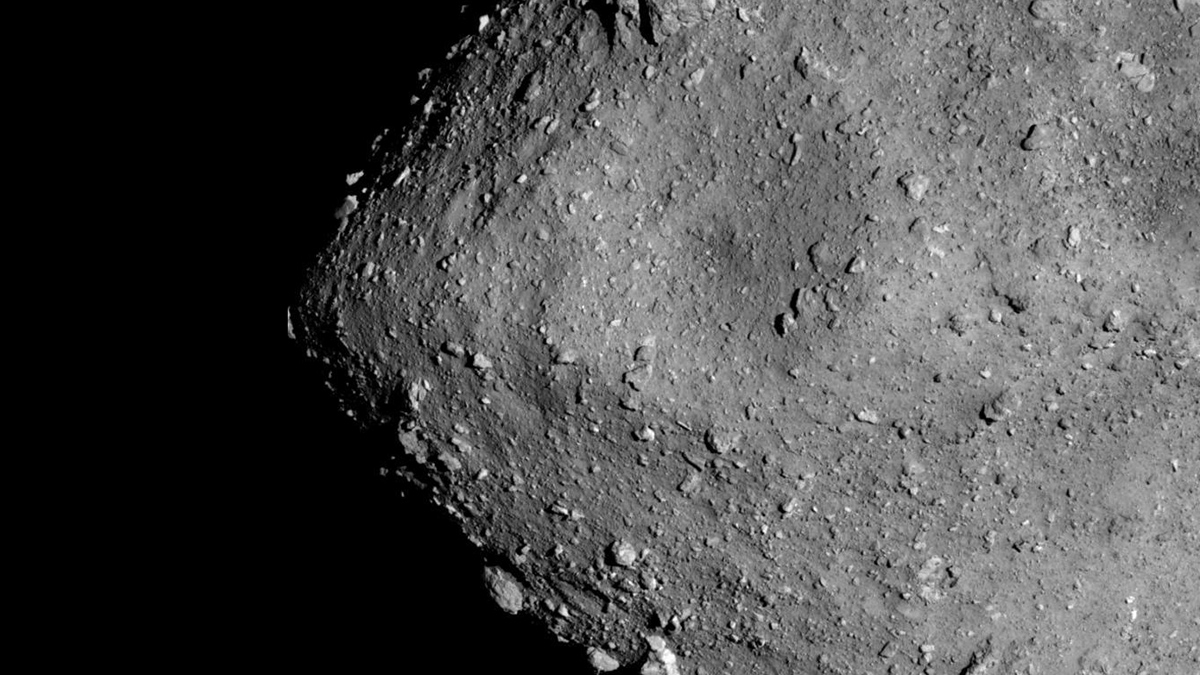
Illustration of a small diamond-shaped asteroid with a spacecraft perched on top.
Posted inNews

Hayabusa2’s Final Target is 3 Times Smaller Than We Thought

Kimberly M. S. Cartier, News Writing and Production Intern for Eos.org by Kimberly M. S. Cartier 18 September 202518 September 2025

It also spins twice as fast as previous estimates suggested. A spacecraft touchdown will be challenging, but not impossible.

Drone image of beaver pond complex in Wyoming. A group of around five humans stands on a rock near the pond’s edge on a sunny day. Green wetland vegetation rings the open ponds of water, with beaver dams visible across the stream. Vegetation on either side of the stream is in drier conditions, visible by species and color of soil and plants.
Posted inNews

What Makes Beaver Ponds Bigger?

by Mack Baysinger 18 September 202518 September 2025

For the first time, researchers are able to add hydrologic estimates to find where reintroducing beavers could best benefit a watershed and the humans who live within it.

An illustration of a swirling disk of gas and dust around a small, bright star.
Posted inNews

Tilted Planet System? Maybe It Was Born That Way

Kimberly M. S. Cartier, News Writing and Production Intern for Eos.org by Kimberly M. S. Cartier 17 September 202517 September 2025

New observations could shed light on the degree to which misalignment in a planet-forming disk contributes to skewed planetary orbits.

A view of Vatican City in Rome at sunset, from the far side of the Ponte Sant'Angelo. The Dome of the Basilica of Saint Peter can be seen to the right
Posted inNews

Climate Change May Have Killed 16,469 People in Europe This Summer

by Emily Gardner 17 September 202517 September 2025

Researchers warn that preventable heat-related deaths will continue to rise with continued fossil fuel emissions.

Electrocardiogram demonstrating a major myocardial infarction
Posted inNews

Cyclones Affect Heart Health for Months After They Subside

by Andrew Chapman 16 September 202516 September 2025

In a multicountry study, researchers found that cyclones increase the risk of heart disease–related hospitalizations for up to 6 months.

Gray rocks appear against a dark sky, with a bright star in the background.
Posted inNews

A Survey of the Kuiper Belt Hints at an Unseen Planet

Katherine Kornei, Science Writer by Katherine Kornei 16 September 202516 September 2025

An analysis of more than 150 objects in the far reaches of the solar system suggests that a planet more massive than Mercury could be lurking beyond the orbit of Pluto.

Bees congregate on a tropical tulip ginger flower.
Posted inNews

El Niño May Be Driving Insect Decline in the Tropics

by Roberto González 15 September 202515 September 2025

Stronger and more frequent El Niño events are contributing to a decline in arthropod diversity and population, as well as to a reduction in the ecological services the animals provide.

A person’s hand holds a cup with ice cream near a sidewalk in a city.
Posted inNews

Heat Spurs Unequal Consumption of Sweet Treats

by Grace van Deelen 8 September 20258 September 2025

A new analysis shows warmer weather may drive more added sugar consumption, particularly among already-vulnerable groups.

A layer of clouds seen from overhead from an airplane
Posted inNews

Dust Is the Sky’s Ice Maker

by Saugat Bolakhe 5 September 20255 September 2025

New analysis links desert dust to cloud freezing, with big implications for weather and climate models.

Two people on the deck of a boat around sunset reach for an instrument—almost as tall as they are—being raised up over the side of the ship from underwater.
Posted inNews

Cruise to Measure Gulf Dead Zone Faces Stormy Funding Future

by Elise Plunk 5 September 20258 September 2025

Funding cuts are affecting The Pelican’s annual hypoxia cruise to investigate the environmental conditions off the coast of Louisiana.

Posts pagination

Newer posts 1 … 6 7 8 9 10 … 327 Older posts
A view of a bridge, with the New Orleans skyline visible in the distance between the bridge and the water. A purple tint, a teal curved line representing a river, and the text “#AGU25 coverage from Eos” overlie the photo.

Features from AGU Publications

Research Spotlights

Tiny Turbulent Whirls Keep the Arctic Ocean Flowing

8 December 20258 December 2025
Editors' Highlights

Changes in Slab Dip Cause Rapid Changes in Plate Motion

4 December 20258 December 2025
Editors' Vox

Hydrothermal Circulation and Its Impact on the Earth System

3 December 20253 December 2025
Eos logo at left; AGU logo at right

About Eos
ENGAGE
Awards
Contact

Advertise
Submit
Career Center
Sitemap

© 2025 American Geophysical Union. All rights reserved Powered by Newspack