
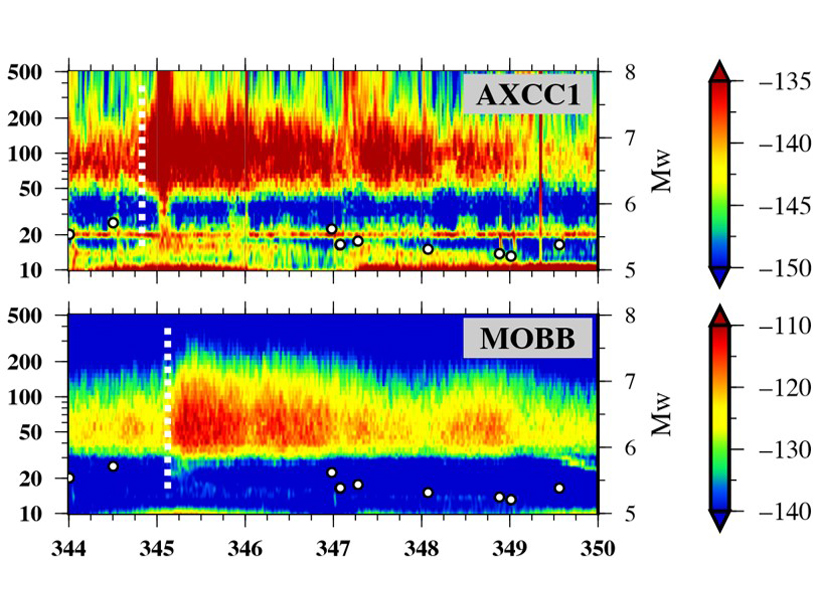
Have you ever noticed that the Earth is humming? Seismologists have! Discover how individual storms in the northern Pacific Ocean generate a long-period seismic signal.
Editors’ Highlights
Posted inEditors' Highlights
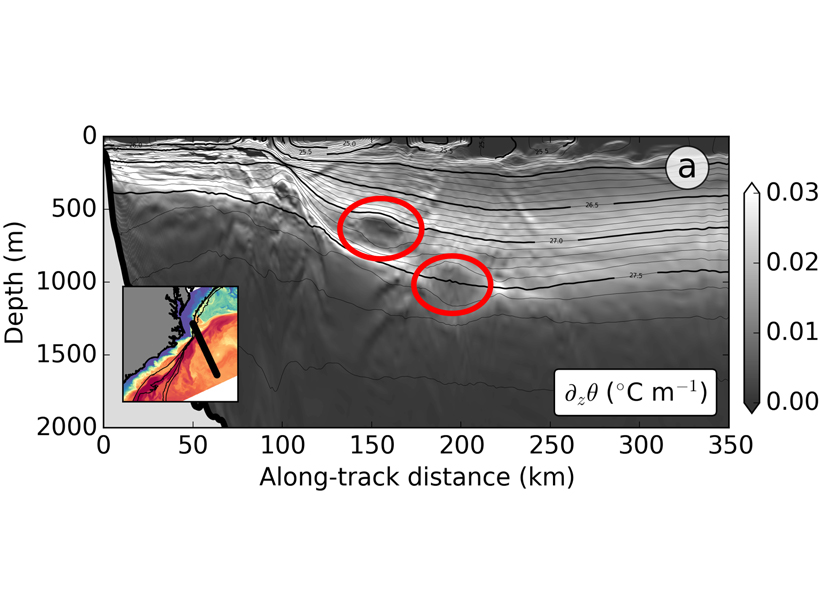
Wrinkles and Bumps in the Gulf Stream
Observations of tiny vortices in the ocean interior provide hints of a dynamic richness of the deep ocean that we are yet to fully appreciate.
Posted inEditors' Highlights
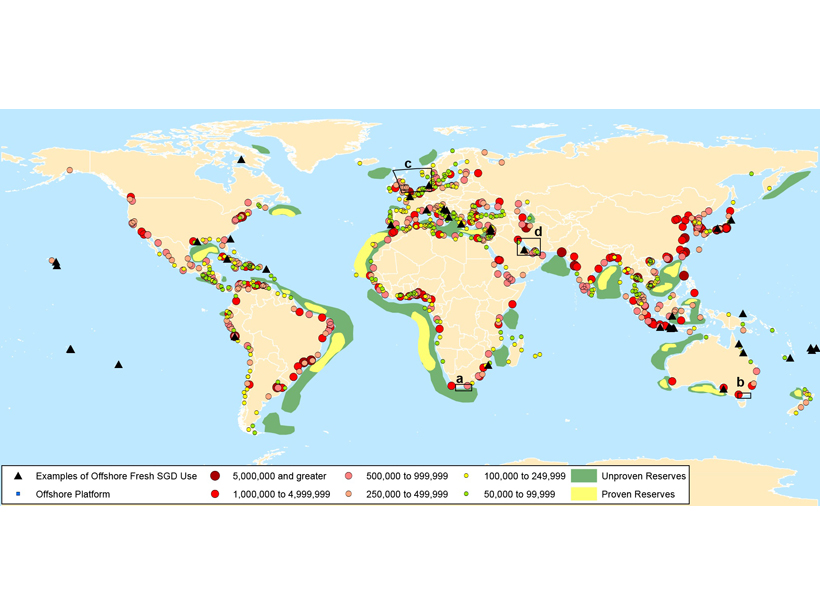
Pumping Offshore Groundwater Resources Has Consequences on Land
While vast volumes of fresh groundwater are located offshore, pumping these reserves can also deplete on-shore aquifers and cause land subsidence.

Posted inEditors' Highlights
Improving Retrievals for Vertically Inhomogeneous Warm Clouds
Cloud droplet size changes with height, but passive sensors are virtually blind to see it; however, combining passive with active sensors helps profile it in vertically inhomogeneous warm clouds.
Posted inEditors' Highlights
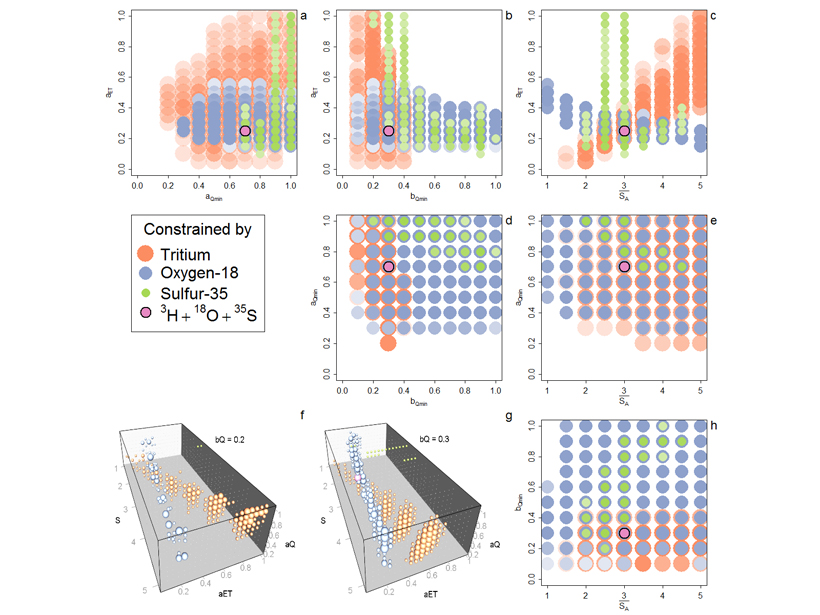
Using Radioactive Tracers to Determine the Ages of Streamflow
Radioactive isotope tracers can be used to determine the relationship between the ages of water that is stored in soil and bedrock, water in streams, and the water used by vegetation.
Posted inEditors' Highlights
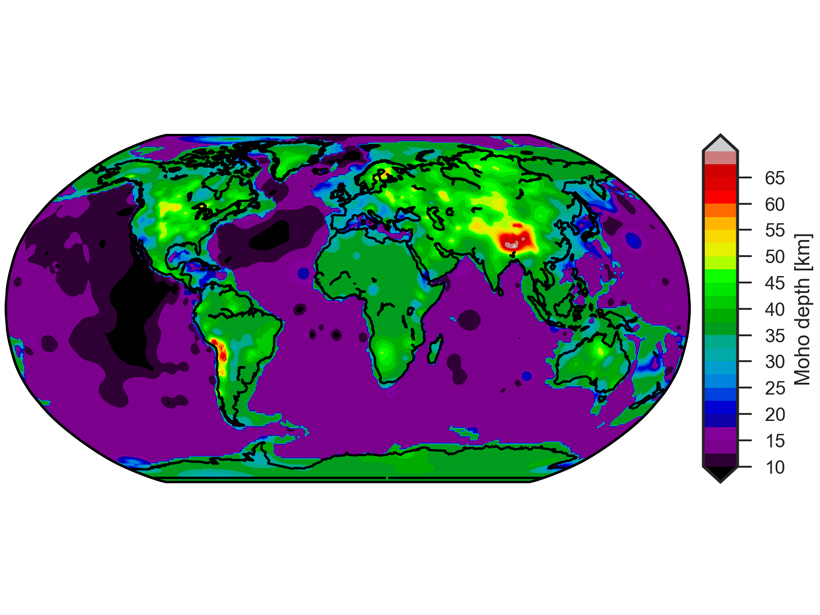
New Global Crustal Model Built as Foundation for Future Studies
A new global crustal model and its corresponding uncertainty were obtained using minimum a priori information and a geostatistical approach.

Posted inEditors' Highlights
A Step Closer to Quantifying Global Photosynthesis in Real Time
High spatial and temporal resolutions of a data set on a proxy for plant photosynthesis, as well as contiguous global coverage, have great utility for a variety of applications.

Posted inEditors' Highlights
Seismic Anisotropy Due to a Compositionally Layered Mantle
Investigating the role of layered rocks and compositional banding on mineral scale in generating seismic anisotropy in the mantle.
Posted inEditors' Highlights
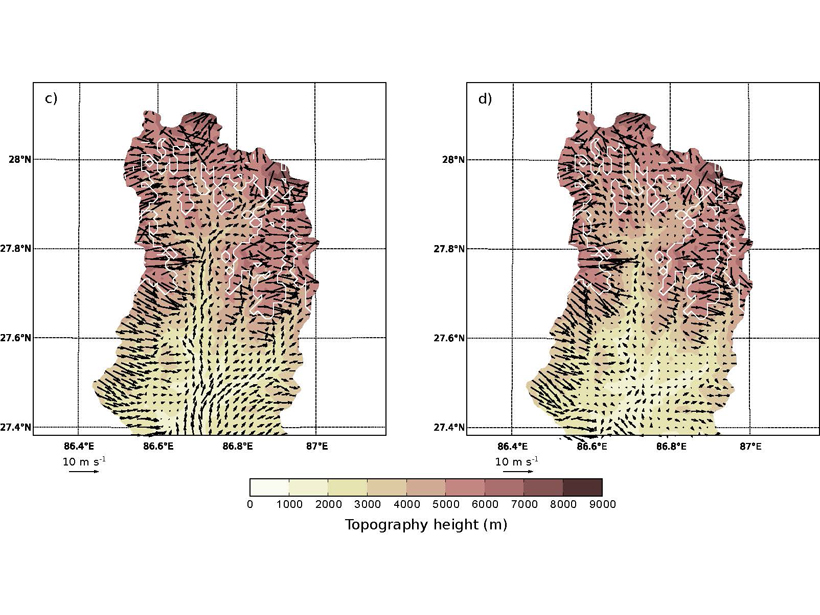
What Drives Surface Winds in a Deep Valley?
Surface winds in a Himalayan valley are found to vary daily and seasonally due to factors including pressure gradient, advection, turbulent vertical mixing, and the presence of glaciers.
Posted inEditors' Highlights
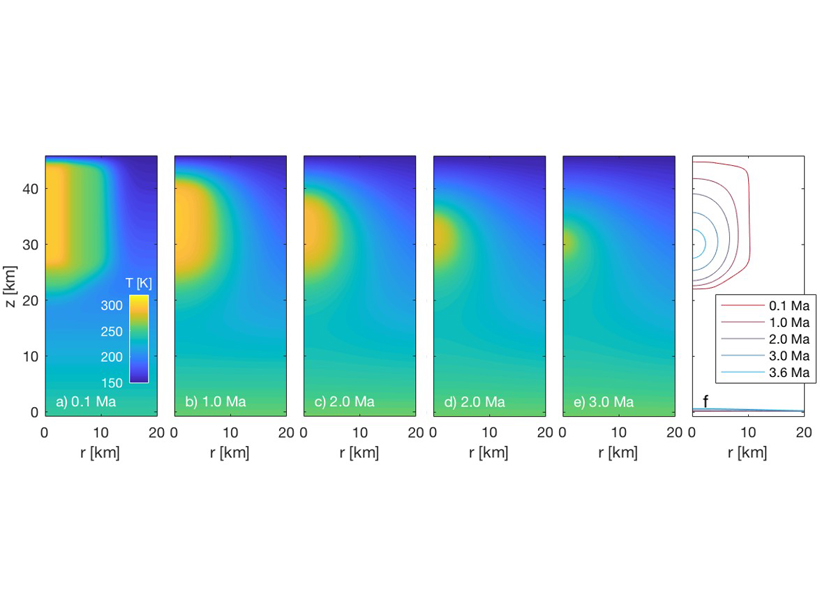
Erupting Saltwater and the Bright Spots in Occator Crater, Ceres
Simulations show that pockets of brine that form from the addition of impact heat to the crust of Ceres could have erupted on the floor of Occator crater, explaining the presence of the bright spots.