
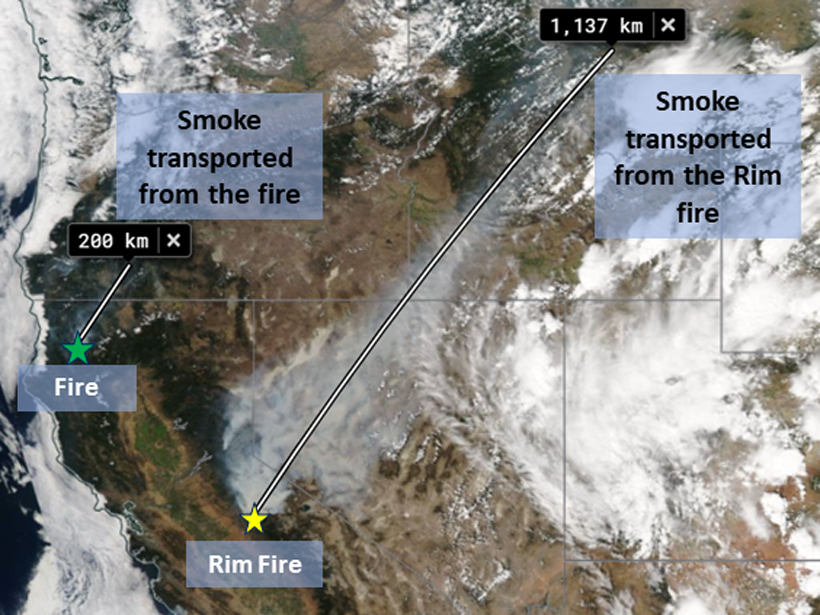

Wildfires release pollutants that harm human health. Quality satellite monitoring can help track these pollutants and predict where they may become health hazards.
Research Spotlights
Research spotlights are plain-language summaries of recent articles published in AGU’s suite of 24 journals.


Posted inResearch Spotlights
Monitoring the Agulhas Current Through Maritime Traffic

Researchers turn to the shipping industry for data on ocean surface currents.


Posted inResearch Spotlights
Las brechas en las redes ambientales en América Latina
A pesar de su notable influencia en los ciclos globales del carbono y el agua, América Latina representa una proporción relativamente pequeña de sitios FLUXNET, lo que limita la representatividad de la red en la región.
Posted inResearch Spotlights
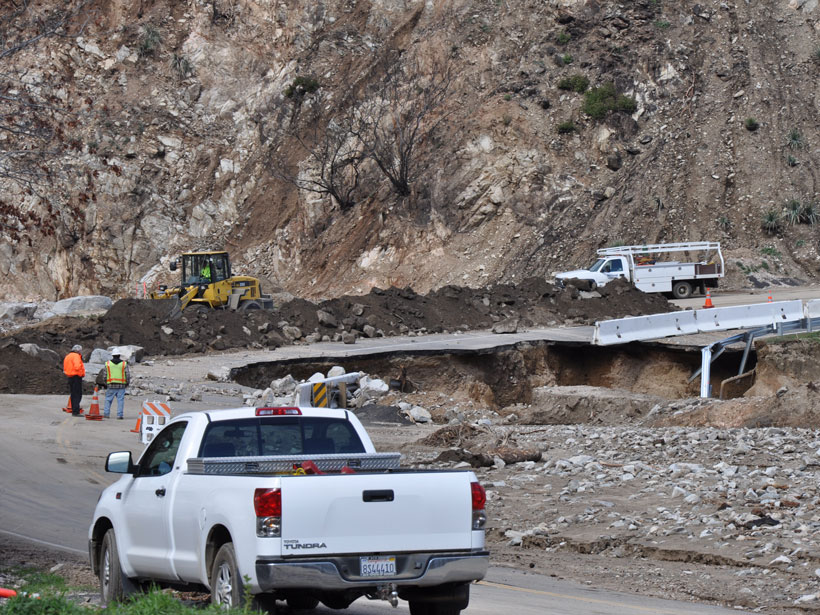
The Wildfire One-Two: First the Burn, Then the Landslides

Severe wildfires strip away plant cover and reduce the soil’s ability to hold water. A new study develops a model to better understand landslide risk following a burn.

Posted inResearch Spotlights
Subduction Initiation May Depend on a Tectonic Plate’s History
New seismic imaging study of the Puysegur Trench aims to solve one of the last major questions in plate tectonics.

Posted inResearch Spotlights
Juno Detects Jupiter’s Highest-Energy Ions
Trapped ions discovered at midlatitudes can have energies exceeding 100 megaelectron volts per nucleon. Their detection adds to our understanding of the powerful radiation environment around Jupiter.
Posted inResearch Spotlights
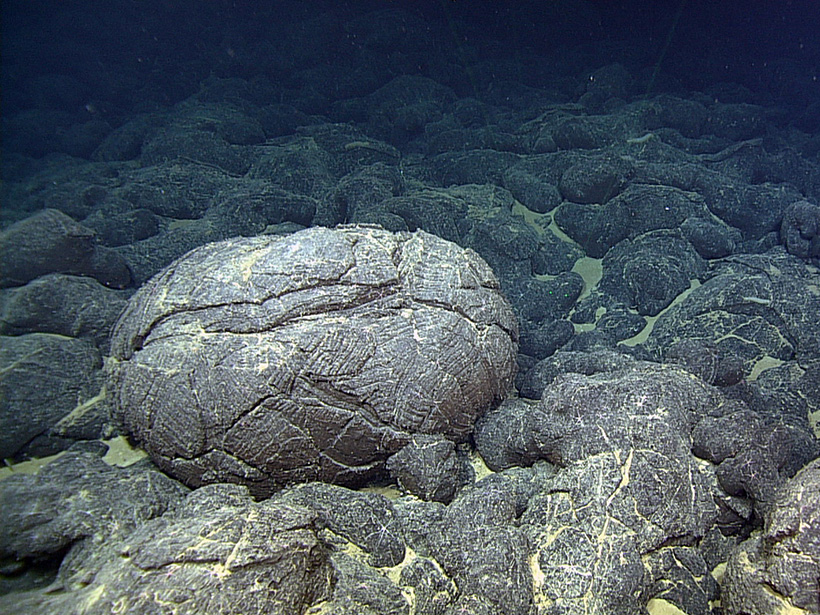
Magma Pockets Lie Stacked Beneath Juan de Fuca Ridge
Analysis of new imaging data suggests that vertically stacked magma chambers are short-lived and contribute to eruptions.