• About
  • Special Reports
  • Topics
    • Climate
    • Earth Science
    • Oceans
    • Space & Planets
    • Health & Ecosystems
    • Culture & Policy
    • Education & Careers
    • Opinions
  • Projects
    • Postcards From the Field
    • ENGAGE
    • Editors’ Highlights
    • Editors’ Vox
    • Eos en Español
    • Eos 简体中文版
    • Print Archive: 2015–2025
  • Policy Tracker
  • Blogs
    • Research & Developments
    • The Landslide Blog
  • Newsletter
  • Submit to Eos
  • AGU.org
  • Career Center
  • Join AGU
  • Give to AGU
  • About
  • Special Reports
  • Topics
    • Climate
    • Earth Science
    • Oceans
    • Space & Planets
    • Health & Ecosystems
    • Culture & Policy
    • Education & Careers
    • Opinions
  • Projects
    • Postcards From the Field
    • ENGAGE
    • Editors’ Highlights
    • Editors’ Vox
    • Eos en Español
    • Eos 简体中文版
    • Print Archive: 2015–2025
  • Policy Tracker
  • Blogs
    • Research & Developments
    • The Landslide Blog
  • Newsletter
  • Submit to Eos
Skip to content
  • AGU.org
  • Career Center
  • Join AGU
  • Give to AGU
Eos

Eos

Science News by AGU

Support Eos
Sign Up for Newsletter
  • About
  • Special Reports
  • Topics
    • Climate
    • Earth Science
    • Oceans
    • Space & Planets
    • Health & Ecosystems
    • Culture & Policy
    • Education & Careers
    • Opinions
  • Projects
    • Postcards From the Field
    • ENGAGE
    • Editors’ Highlights
    • Editors’ Vox
    • Eos en Español
    • Eos 简体中文版
    • Print Archive: 2015–2025
  • Policy Tracker
  • Blogs
    • Research & Developments
    • The Landslide Blog
  • Newsletter
  • Submit to Eos

Science Updates

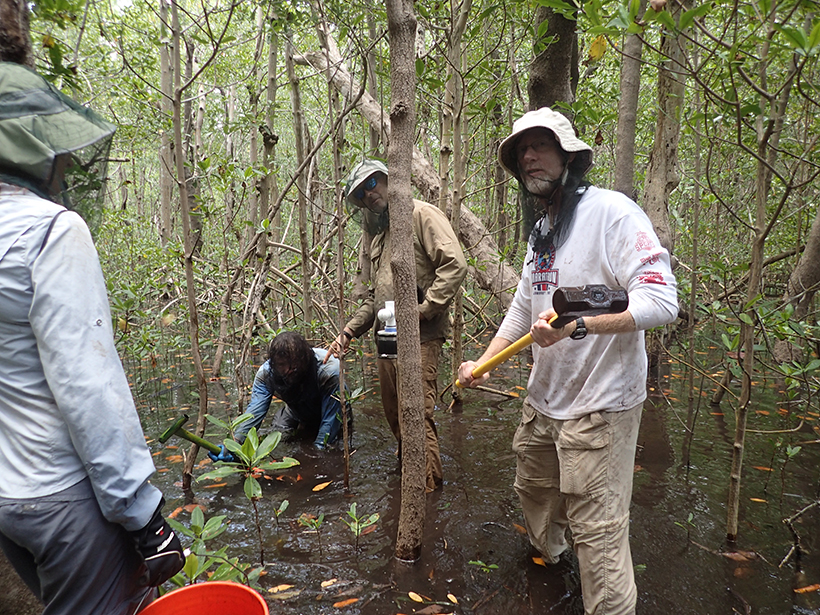
Researchers extract mangrove peat core as part of a USDA project to constrain the carbon budget of coastal ecosystems.
Posted inScience Updates

Turning up the Heat on Organic Matter to Track Carbon

by A. McNichol, B. Rosenheim and V. Galy 19 September 201721 July 2022

Inaugural Workshop on Thermal Analysis of Natural Organic Matter; Woods Hole, Massachusetts, 15–16 September 2016
Posted inScience Updates

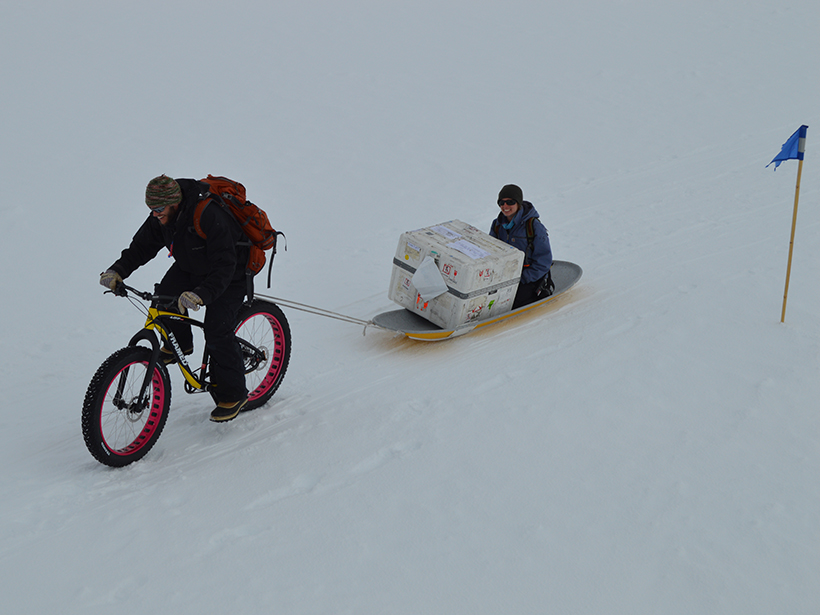
Envisioning and Sustaining Science at Summit Station, Greenland

by L. Koenig, B. Vaughn and J. Dibb 18 September 201710 January 2022

Summit Station Science Summit; Arlington, Virginia, 28–29 March 2017
Posted inScience Updates

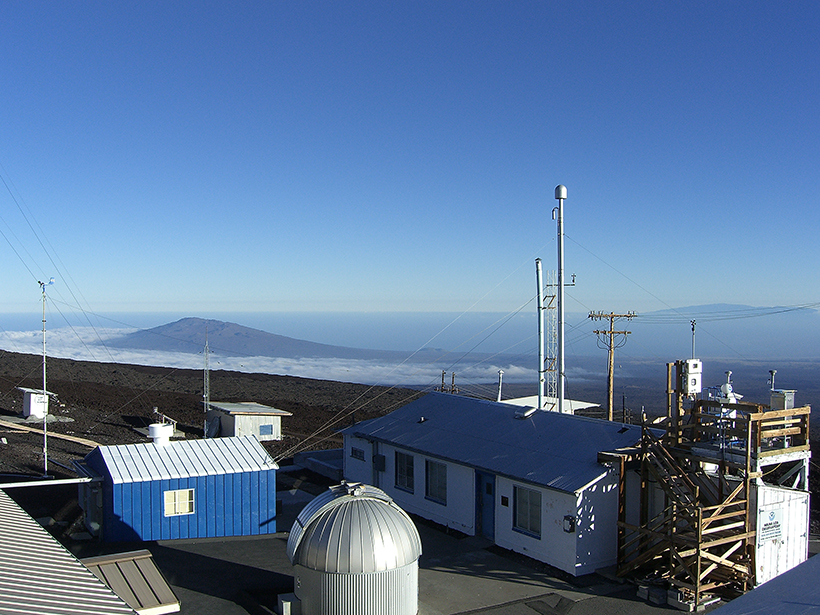
Strengthening the Observational Basis for Carbon Science, Policy

by A. Andrews 12 September 201720 March 2023

Sustained Observations for Carbon Cycle Science and Decision Support Workshop; Boulder, Colorado, 13–14 April 2016

Posted inScience Updates

Coordinating and Communicating Carbon Cycle Research

by M. Tzortziou, M. Litvak and G. Shrestha 7 September 20172 November 2021

2017 Joint NACP and AmeriFlux Principal Investigators Meeting; Bethesda, Maryland, 27–30 March 2017
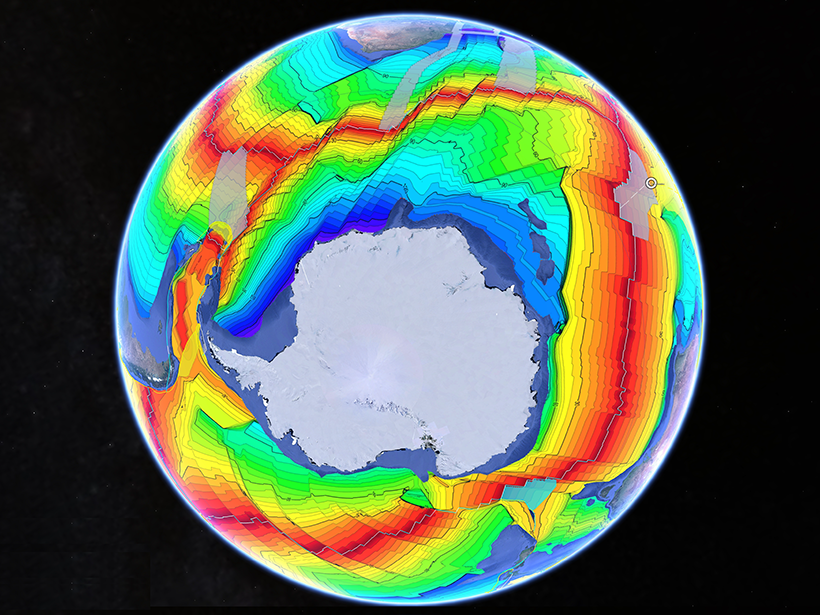
Google Earth image displays data overlays showing ages of the ocean floor, together with tectonic plate boundaries.
Posted inScience Updates

A Grand Tour of the Ocean Basins

by D. G. De Paor 1 September 20174 November 2022

A new teaching resource facilitates plate tectonic studies using a Google Earth virtual guided tour of ocean basins around the world.
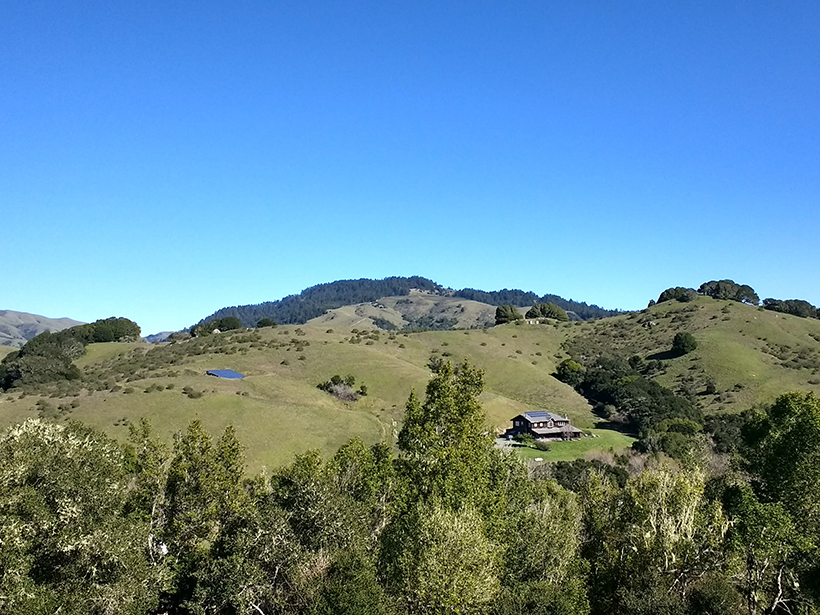
Marin Carbon Project rangeland
Posted inScience Updates

A New Platform for Managing Soil Carbon and Soil Health

by J. Loisel, Avni Malhotra and C. Phillips 25 August 20176 March 2023

International Soil Carbon Network Workshop; Stanford, California, 27 February to 3 March 2017

Giovanni time-averaged satellite map of the March aerosol optical thickness off the coast of western Africa from 2003 to 2016
Posted inScience Updates

Giovanni: The Bridge Between Data and Science

by Z. Liu and J. Acker 24 August 201716 February 2023

Using satellite remote sensing data sets can be a daunting task. Giovanni, a Web-based tool, facilitates access, visualization, and exploration for many of NASA’s Earth science data sets.

Southern Alaska’s Lisianski Inlet, near the site of a systematic survey of the Queen Charlotte-Fairweather Fault.
Posted inScience Updates

A Closer Look at an Undersea Source of Alaskan Earthquakes

by D. S. Brothers, P. Haeussler, Amy E. East, U. ten Brink, B. Andrews, P. Dartnell, N. Miller and J. Kluesner 15 August 20178 November 2021

A systematic survey offers a striking portrait of movement along a 500-kilometer-long undersea section of the Queen Charlotte–Fairweather fault off the coast of southeastern Alaska.

These seawater samples can help scientists track the fate of carbon in the ocean.
Posted inScience Updates

Tracing Carbon’s Fate in the Ocean

by S. A. Morris, R. L. Hansman and J.-C. Miquel 10 August 201729 September 2021

Improving the Application of Radionuclides in Studies of the Carbon Cycle and the Impact of Ocean Acidification; Monaco, 19–21 October 2016

This visualization shows water level changes as Hurricane Georges moves into the Caribbean Sea in 1998.
Posted inScience Updates

A Test Bed for Coastal and Ocean Modeling

by R. A. Luettich Jr., L. D. Wright, C. R. Nichols, R. Baltes, M. A. M. Friedrichs, A. Kurapov, A. van der Westhuysen, K. Fennel and E. Howlett 4 August 201710 December 2022

An ocean modeling program is improving our ability to predict circulation along the U.S. West Coast, dead zones and other coastal ecosystem responses, and storm surges in island environments.

Posts pagination

Newer posts 1 … 37 38 39 40 41 … 71 Older posts
Over a dark blue-green square appear the words Special Report: The State of the Science 1 Year On.

Features from AGU Publications

Research Spotlights

Scientists Zero In on Tiny Particles to Improve Weather and Air Quality Forecasts

2 October 20262 October 2026
Editors' Highlights

Reducing Uncertainty in Groundwater Models Using Airborne Geophysics

28 September 202625 September 2026
Editors' Vox

Where Fire Ends, Chemistry Begins

30 September 202630 September 2026
Eos logo at left; AGU logo at right

About Eos
ENGAGE
Awards
Contact

Advertise
Submit
Career Center
Sitemap

© 2026 American Geophysical Union. All rights reserved Powered by Newspack