
Editors’ Highlights are summaries of recent papers by AGU’s journal editors.
Source: GeoHealth
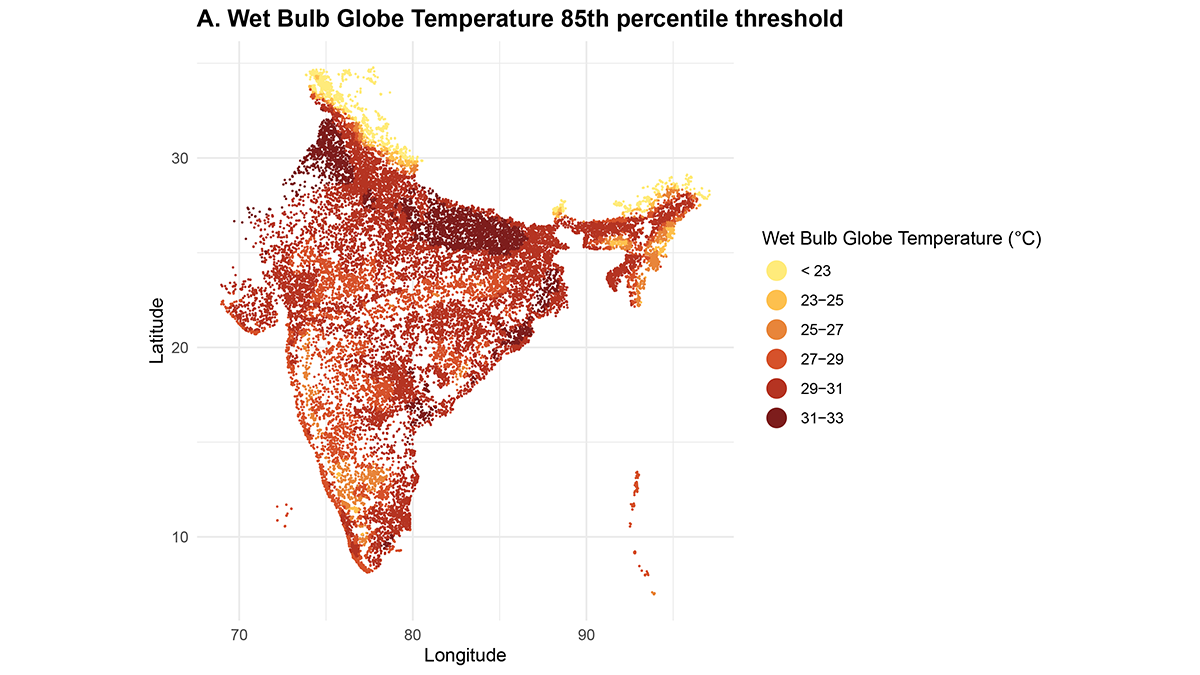
Heatwaves can disrupt many parts of daily life, including access to essential healthcare services. Dey et al. [2025] evaluate how heatwaves are related to where women in India give birth.
The authors analyze data from over 200,000 births during 2019-2021 and find that during periods of heatwaves, women were more likely to deliver at home instead of in a health facility. This association was stronger for warmer regions, regions without government programs supporting facility-based births, and non-Hindu populations. The study indicates that extreme heat may create barriers to healthcare services (e.g., difficulty traveling or strained health services), which makes it challenging to reach a hospital in time for delivery. This brings a major concern because giving birth at home without a skilled medical attendant may lead to higher health risks for both the mother and the newborn.
As the frequency and intensity of heatwaves increases under climate change, these findings emphasize the urgent need for early warning systems and stronger healthcare support to protect vulnerable mothers and newborns.
Citation: Dey, A. K., Dimitrova, A., Raj, A., & Benmarhnia, T. (2025). Heatwaves and home births: Understanding the impact of extreme heat on place of delivery in India. GeoHealth, 9, e2025GH001540. https://doi.org/10.1029/2025GH001540
—Lingzhi Chu, Associate Editor, GeoHealth
