
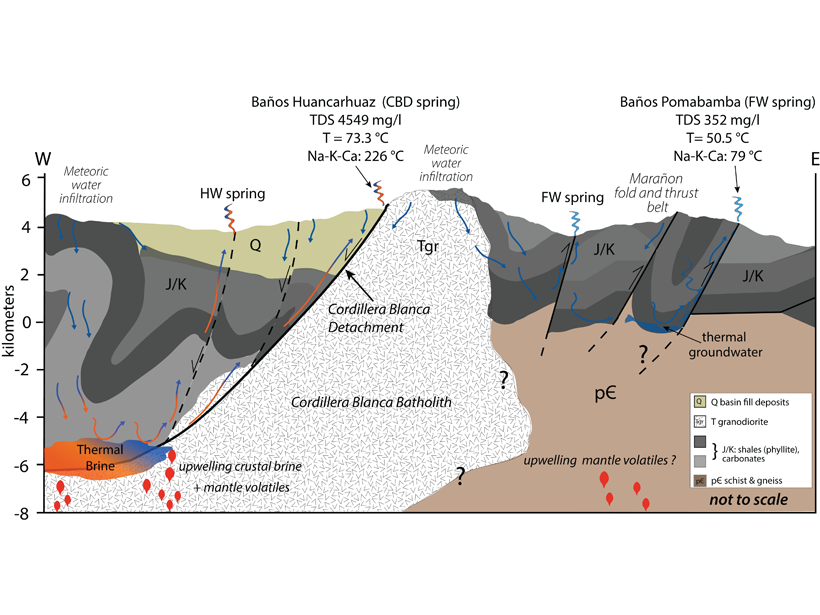
Variations in hot spring geochemistry from adjacent mountain ranges with different styles of faulting highlight the influence of crustal-scale structures on circulating fluids in the Peruvian Andes.
Editors’ Highlights
Posted inEditors' Highlights
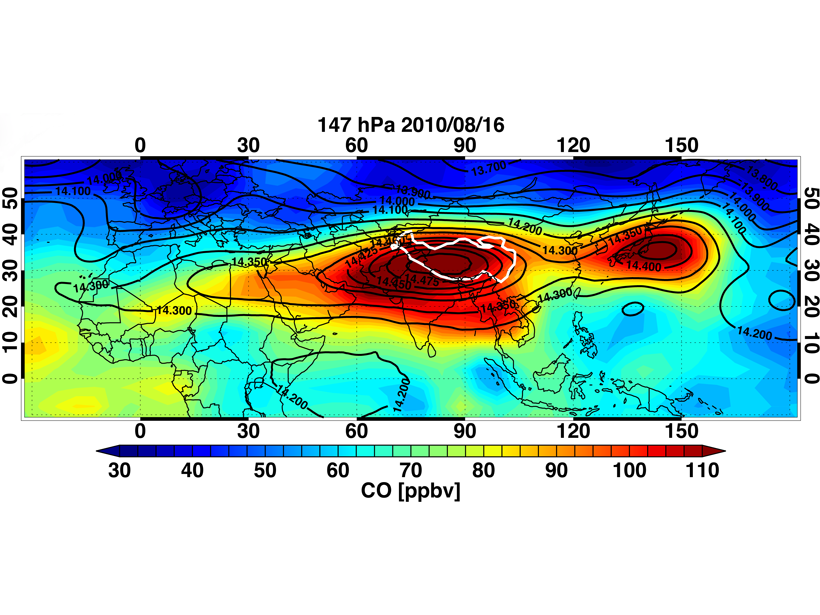
When Chemistry Lends a Hand to Dynamics
Chemical signature and chemical transport analyses help understand the dynamics of the Asian Summer Monsoon.
Posted inEditors' Highlights
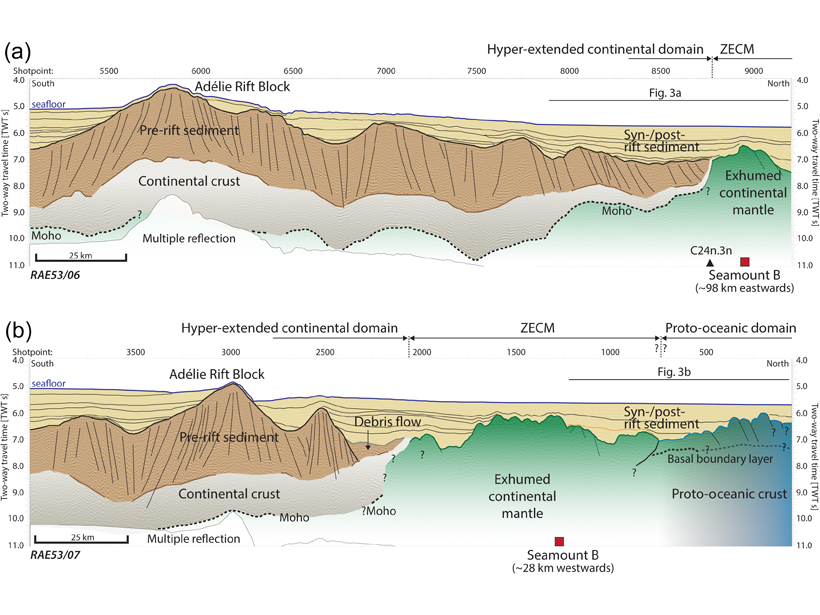
New Data from Earth’s Largest Non-Volcanic Rift Margin
Seismic reflection images combined with petrological data provide new constraints on the nature of the basement in the enigmatic Australia-Antarctic oceanic-continent transition zone.

Posted inEditors' Highlights
Characteristics of Polar Sea Ice in Latest Climate Models
Sea ice area in CMIP6 is similar to previous versions while its sensitivity to external forcing is subtly different and closer to observations, but still not in step with global surface temperature.
Posted inEditors' Highlights
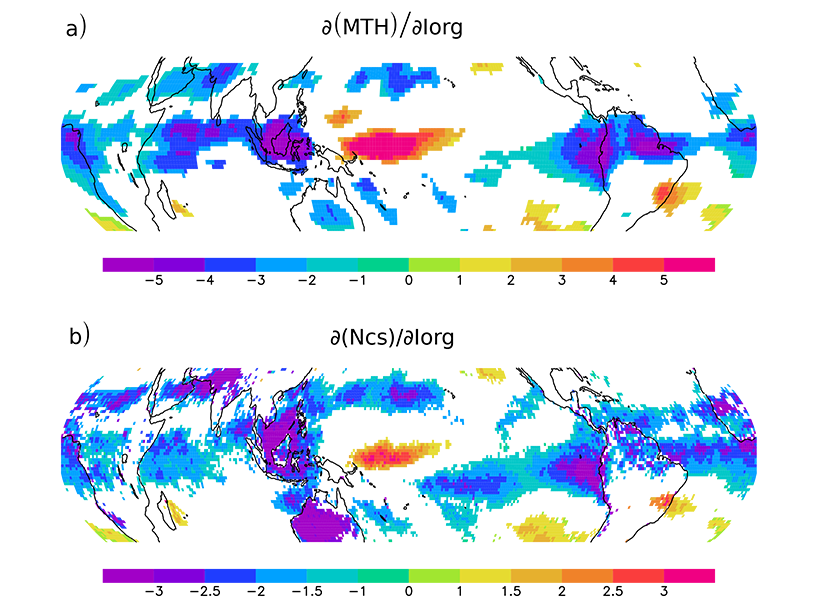
Can We Observe How Cloud Clustering Affects the Radiation Budget?
Satellite observational analysis confirms that lower-atmospheric stability and cloud clustering are major factors modulating the tropical radiation budget that had been suggested by modeling studies.
Posted inEditors' Highlights
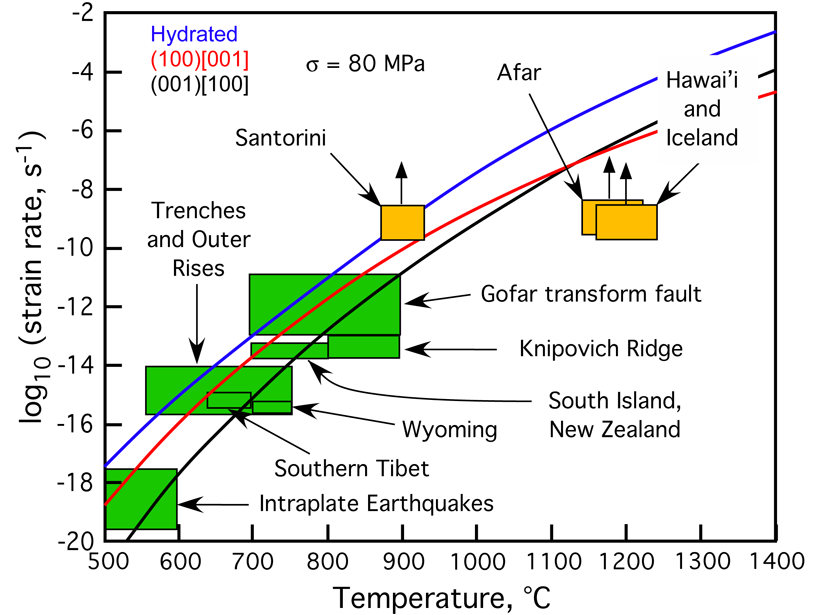
Strain Rate: The Overlooked Control on Earthquake Depth
Regional strain rate may play as significant a role as temperature in governing the depth distribution of earthquakes in mantle lithosphere.
Posted inEditors' Highlights
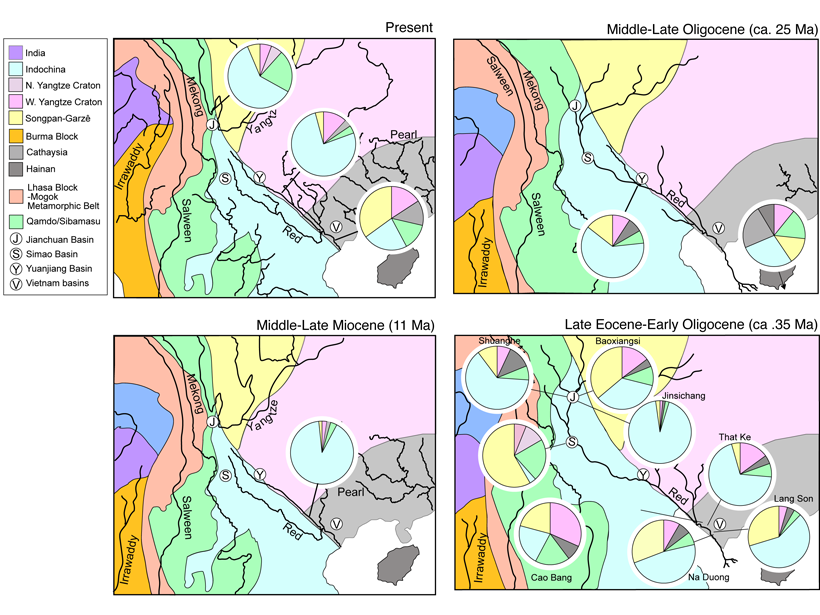
A River Ran Through It
The history of river system in southeast Tibet and Indochina reconstructed using the ages of thousands of zircon sand grains in modern and ancient river sediments.

Posted inEditors' Highlights
Self-Repairing Blemishes on the Surface of Mars
A new study of small impact craters at Mars landing sites suggests that active processes degrade and infill depressions at similar rates in locations separated by thousands of kilometers.

Posted inEditors' Highlights
Machine Learning Predicts Subsidence from Groundwater Pumping
Machine learning and data on aquifer type, sediment thickness, and proxies for irrigation water use has been used to produce the most comprehensive map of land subsidence in the western U.S. to date.
Posted inEditors' Highlights
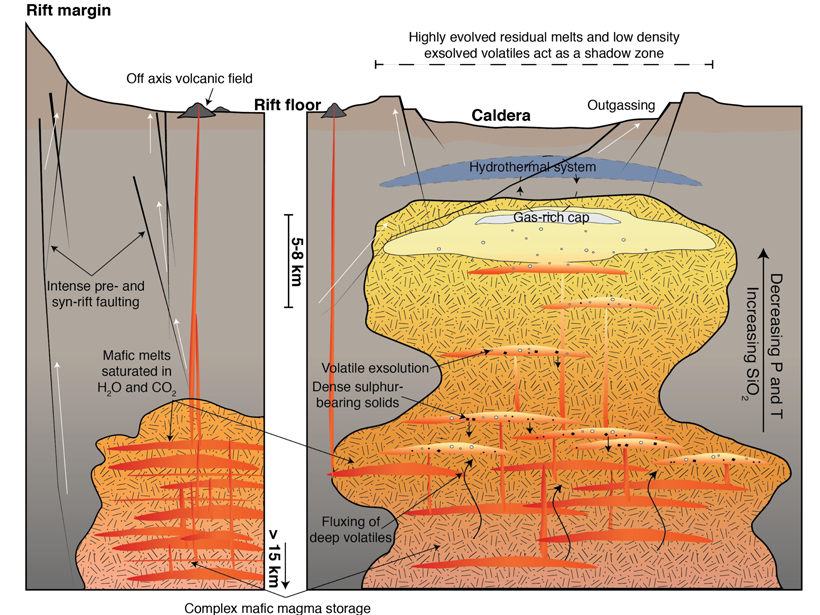
Gas-Rich, Transcrustal Magma Storage in the Main Ethiopian Rift
Increments of melt trapped in crystals reveal upper crustal magmas in the Main Ethiopian Rift are rich in water and other volatiles, leading to extensive diffuse degassing and hydrothermal systems.