
Part 3 of “The State of the Science 1 Year On,” a report from Eos and AGU
The State of the Science 1 Year On

• Executive Summary
• Climate Change and Energy
• Health and Safety
• The Federal Workforce
• Academia and Research
• Environment
• Concluding Remarks
• Joint Report
• Joint Report PDF
• Tracking Science Policy Decisions and Approaches
Since President Donald Trump took office a year ago, he’s made a series of executive orders, policy changes, and announcements that directly affect the health and safety of Americans.
One analysis found that Trump’s climate policies alone, which will increase greenhouse gas emissions over the next decade, could lead to as many as 1.3 million additional temperature-related deaths in the 80 years following 2035.
But his cuts to staff and funding to agencies such as the Federal Emergency Management Agency (FEMA), Centers for Disease Control and Prevention (CDC), and National Institute for Occupational Safety and Health (NIOSH), as well as the United States’ withdrawal from the World Health Organization, present their own dangers.
In May, NOAA announced that its Billion-Dollar Weather and Climate Disasters database would no longer be updated. Since 1989, the database had allowed the public, researchers, and the media to track the costs of natural disasters.
Time magazine noted how the retirement of the database would disproportionately affect poorer communities, where flood risk is higher, homes are more likely to be destroyed by wildfires, and people live farther away from emergency services.
Extensive cuts to agencies such as FEMA could mean that the cost of such disasters will also grow. Just days after his inauguration, Trump issued an executive order calling for a full-scale review of the agency, citing concerns about political bias and the agency “spending well over a billion dollars to welcome illegal aliens.” A March executive order declared that much of the responsibility for emergency preparedness should be managed on state, local, and individual levels, and Department of Homeland Security Secretary Kristi Noem, whose department oversees FEMA, went on to say that she is “working so hard to eliminate FEMA as it exists today.”
In a declaration decrying cuts to the agency, nearly 200 current and former staffers said that FEMA’s mission—“to help people before, during, and after disasters”—is being obstructed. (Publicly listed signatories to the declaration were suspended the day after it was released.)
In April, the administration canceled FEMA’s Building Resilient Infrastructure and Communities (BRIC) program, which was designed to reduce damage from weather-related events such as tornadoes and floods. In December, a federal judge ruled that unilateral cancellation of the program was unlawful. However, in-progress projects, such as building a tsunami evacuation zone at Columbia Memorial Hospital in Oregon, were suddenly left without BRIC funding. Other hospitals are facing different challenges, as changes to the Affordable Care Act and Medicaid proposed in Trump’s omnibus One Big Beautiful Bill (OBBB) could leave hospitals with more uninsured patients who can’t pay their medical expenses. One analysis conducted by the University of North Carolina’s Sheps Center for Health Services Research suggested that changes proposed in OBBB could lead to the closure of more than 300 rural hospitals.
FEMA cuts limited many people’s access to federal aid. The agency ended its door-to-door canvassing efforts in May, meaning agency workers are no longer making sure residents are aware of the aid programs available to them. In August, the administration introduced a new policy that requires people to register for federal aid using email addresses, making the process more difficult for people without internet access.
In June, Noem announced that every FEMA contract and grant of more than $100,000 must be approved by her personally, a move an anonymous official described to The Guardian as “bureaucracy to the umpteenth degree.”
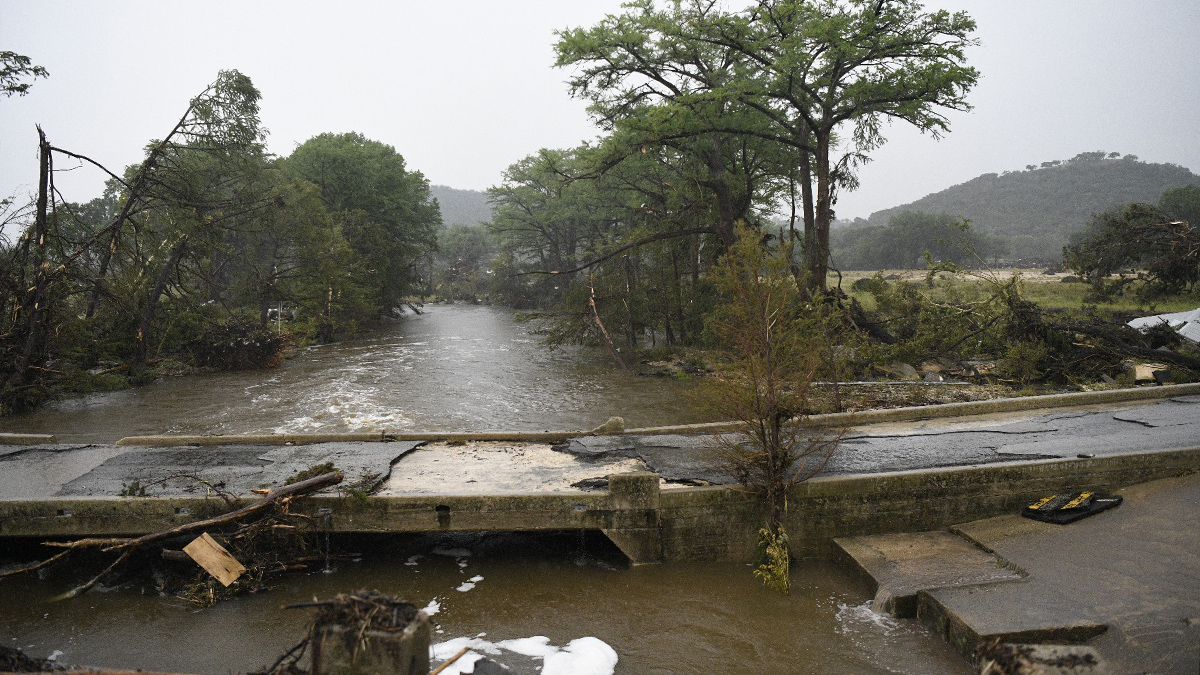
Streamlining the agency has meant assistance for survivors has been delayed. For instance, as of October, only about 22% of those who applied for federal disaster assistance after the devastating July floods in Kerr County, Texas, had been approved for relief, reported the Texas Tribune. To put that in context, about 39% of applicants were approved for aid between 2015 and 2024.
The president flat-out denied aid for Cook County, Ill., following heavy rainfall and flooding, despite an estimated $83.5 million in damage documented by FEMA. The requested funding would have helped repair homes and remove mold.
In North Carolina, some county governments that spent tens of millions on cleanup and recovery after Hurricane Helene in 2024 are still waiting for the government to reimburse them. “To me, personally, this is the most heart-wrenching element of the federal situation right now,” Matt Calabria, the head of the Governor’s Recovery Office for Western North Carolina, told The Washington Post. “They are just waiting, for reasons that no one knows.”
The Washington Post reported that more than 800 Hurricane Helene survivors have applied for FEMA-funded government buyouts of their homes, which are no longer safe to live in. As of December 2025, none had been approved. According to the Revolving Door Project, the president had rejected 15 extreme weather-related requests from states as of early January.
Federal cuts have affected preparedness and recovery efforts beyond FEMA and for more than just storms. Trump’s proposed NASA budget makes severe cuts to the science mission, which could affect efforts to track asteroids on a collision course with Earth. And an October report by Grassroots Wildland Firefighters found that efforts to reduce hazardous fuels on U.S. Forest Service lands (through thinning forests, clearing brush, and conducting prescribed burns) were down 38% in 2025 compared to the previous 4 years.
FEMA and the federal government have not issued blanket denials of assistance, however. The administration has approved some disaster aid, including for tornado recovery in Missouri and typhoon recovery in Alaska.
Air Quality
How has the administration affected the air we breathe?
In March, the administration shut down a web page that reported air quality data at U.S. embassies and consulates. In a post on Bluesky, climate scientist Dan Westervelt said the move erased 17 years of data critical “for the health of thousands of foreign services officers, critical for research, and critical for air quality data availability for many countries that were otherwise lacking high quality data.”
In May, the Interior Department suspended air quality monitoring at 63 national parks. The program monitored pollutants such as ozone and particulate matter, which are linked to health problems ranging from asthma to heart attacks.
The Administration invited public feedback when it announced plans to repeal the EPA’s Endangerment Finding. This landmark review of scientific studies demonstrating that greenhouse gases endanger human health and welfare underlies the government’s ability to regulate climate pollution. At hearings and online, thousands of comments were submitted, with the vast majority opposing the change, although a handful supported the deregulation.
“After decades of living between three major highways in the thick of Arizona air pollution, I am now receiving hospice care due to stage 4 cancer and respiratory issues,” said Hazel Chandler, a member of Elders Climate Action, adding that she was “appalled to see this administration rolling back progress I have spent my life, my career, fighting for.”
Vaccines and Medicine
In May, the government reduced access to the COVID-19 vaccine. The same month, the administration canceled a $766 million project to develop a bird flu vaccine and a $358 million program that was searching for an HIV vaccine.
Secretary of Health and Human Services (HHS) Robert F. Kennedy Jr. fired the CDC’s entire immunization advisory committee. In August, the White House dismissed CDC Director Susan Monarez, and Kennedy announced the termination of $500 million in funding for 22 projects that would have developed vaccines using mRNA technology. He noted that “HHS supports safe, effective vaccines for every American who wants them.”
“I don’t think I’ve seen a more dangerous decision in public health in my 50 years in the business.”
“I don’t think I’ve seen a more dangerous decision in public health in my 50 years in the business,” Mike Osterholm, a University of Minnesota expert on infectious diseases and pandemic preparations, told The Associated Press. A dozen former Food and Drug Administration (FDA) commissioners said they were “deeply concerned” by the stricter vaccine approval plan.
By November, at least 383 clinical trials—investigating issues such as cancer, cardiovascular disease, and sleep disorders—had lost their research funding, according to JAMA Internal Medicine.
In November, the CDC updated its “Autism and Vaccines” web page, which previously stated that there is no link between the two, to read that “studies have not ruled out the possibility that infant vaccines cause autism” and that “studies supporting a link have been ignored by health authorities.”
In December, the Advisory Committee on Immunization Practices removed its longstanding recommendation to administer the hepatitis B vaccine to infants. In December, HHS also cut millions of dollars worth of grants to the American Academy of Pediatrics, and cut funding to hospitals offering gender-affirming care. In January 2026, the CDC stopped recommending all children be vaccinated against rotavirus, influenza, meningococcal disease, and hepatitis A.
Services and Safety
Some policy changes have deeply harmful effects on specific groups concerned with ensuring the health and safety of Americans.
National parks and those who visit them, for example, have been hard hit by financial cutbacks. Wracked by staffing and funding cuts, national parks across the country have seen piles of trash, overflowing bathrooms, unmaintained trails, and even a wildfire. A December report from the Forest Service stated that some districts lost 100% of their trail staff, leaving many trails unmaintained. The National Park Service lost at least 24% of its permanent staff in 2025, a loss that has left fewer rangers available to protect visitors, said a ranger at Joshua Tree National Park in California who spoke to NPR in June on the condition of anonymity.
“This is the time of year when people die in the desert because people’s bodies aren’t adjusted for that heat,” the ranger said. “We’re at risk of having those kinds of tragedies occur because there are fewer people out protecting you.”
ProPublica identified 30 Department of Transportation actions targeting regulations aimed at, among other goals, preventing pipeline failures and keeping bus drivers from falling asleep at the wheel. According to the agency’s own previous estimates, such regulations could save tens of thousands of lives per year.
Ongoing funding cuts and grant delays for NOAA have endangered the Integrated Ocean Observing System, a program for collecting and tracking ocean data that has bipartisan support in Congress. The data helps fishers and cargo ships determine when it is safe to fish and leave port.
“They’re doing everything they can to hurt the working man.”
As another example, the mining industry in particular has undergone significant changes since Trump took office. In September, the Department of Energy announced an intention to invest $625 million in expanding the nation’s coal industry. Though environmental groups decried the move, groups such as the American Coal Council celebrated it. In October, the agency also announced $100 million in funding to refurbish and modernize the nation’s coal plants.
However, the administration has also recommended cutting the budget for NIOSH by 80%. In May, approximately 90% of NIOSH staff were notified they were being laid off, though some positions were reinstated weeks later.
A rule approved by the Mine Safety and Health Administration in 2024 that would limit levels of silica dust exposure for miners has been delayed. Cecil E. Roberts, who retired as president of the United Mine Workers of America in October, compared challenging the rule to murdering people by holding pillows over their faces.
“They’re doing everything they can to hurt the working man,” coal truck driver and former miner Randy Lawrence told The Associated Press. Lawrence voted for President Trump but no longer supports him. “They ain’t worried about the miners or people in West Virginia or coal miners anywhere.”
Finally, the disability community is facing its own set of negative effects, or what the Center for American Progress calls “an all-out war against disabled people.” In July, the Trump administration withdrew a proposal to quash a rule that allows employers to pay workers with disabilities less than minimum wage. In August, the administration ended funding for a program that helped disabled people, particularly those experiencing unstable housing conditions, to access their benefits.
Looking Ahead
Scientists, health professionals, and emergency managers are considering the long-term implications of policy decisions that are still being implemented, including but not limited to the following:
• a hiring freeze at the FDA that left nearly one in five positions at the agency vacant
• the nomination of a chemical industry lobbyist to lead the EPA’s Office of Chemical Safety and Pollution Prevention
• the proposed elimination of an independent agency that investigates the causes of chemical disasters, such as explosions at oil refineries
• the closure of the U.S. Agency for International Development (USAID), affecting programs ranging from measles and rubella surveillance to maternal health (a report in The Lancet suggested that the funding cuts to USAID could result in “a staggering number of avoidable deaths” by 2030)
• the outcome of an open letter signed by more than a thousand current and former HHS staff calling for Robert F. Kennedy Jr. to resign, accusing him of “endangering the nation’s health”
It is important to note that many of the policy changes and budget cuts the president has announced have not yet been implemented. If the president’s proposal of $163 billion in cuts to the federal budget passes in early 2026, experts say property will be damaged, forecast and warning systems will be degraded, and lives will be lost.
Curated Links
Key resources for this report and people interested in this topic:
Cavalcanti, D. M., et al. (2025), Evaluating the impact of two decades of USAID interventions and projecting the effects of defunding on mortality up to 2030: a retrospective impact evaluation and forecasting analysis, Lancet, 406, 283–294, https://doi.org/10.1016/S0140-6736(25)01186-9.
Forester, J., et al. (2025), Katrina Declaration and Petition to Congress, www.standupforscience.net/fema-katrina-declaration
Frank, T. (2025), Trump refused to send disaster aid to Chicago after 2 devastating storms, E&E News, 18 Nov., www.eenews.net/articles/trump-refused-to-send-disaster-aid-to-chicago-after-2-devastating-storms/.
Halpert, M. (2025), RFK Jr cancels $500m in funding for mRNA vaccines for diseases like Covid, BBC, 5 Aug., www.bbc.com/news/articles/c74dzdddvmjo.
Holmes, M., et al. (2025), Response to request for information regarding the house-passed budget reconciliation package and its potential impact on rural hospitals, Cecil G. Sheps Center for Health Services Research, Chapel Hill, N.C., 10 June, www.markey.senate.gov/imo/media/doc/sheps_response.pdf.
Ives-Rublee, M., and C. Doherty (2025), The Trump administration’s war on disability, Center for American Progress, 28 July, https://www.americanprogress.org/article/the-trump-administrations-war-on-disability/.
Lerner, S. (2025), Trump’s anti-green agenda could lead to 1.3 million more climate deaths. The Poorest countries will be impacted most, ProPublica, 19 Nov., www.propublica.org/article/trump-climate-rollbacks-heat-deaths.
Northey, H., and A. Wittenberg (2025), Coal miners rally for Trump to save them from ‘worst kind of death,’ E&E News, 14 Oct., www.eenews.net/articles/coal-miners-rally-for-trump-to-save-them-from-worst-kind-of-death/.
Stancil, K. (2026), Map: Trump Has Often Delayed or Denied Disaster Aid, Revolving Door Project, 7 Jan. https://therevolvingdoorproject.org/trump-disaster-policy-tracker-map/.
van Deelen, G. (2025), Public speaks out against EPA plan to rescind endangerment finding, Eos, 25 Aug., eos.org/research-and-developments/public-speaks-out-against-epa-plan-to-rescind-endangerment-finding.
Waldman, S., and C. Harvey (2025), Flood predictions could worsen when Trump’s cuts take hold, Politico, 8 July, www.politico.com/news/2025/07/08/flood-deaths-trump-agenda-00441859.
—Eos (@eos.org)