
Part 6 of “The State of the Science 1 Year On,” a report from Eos and AGU
The State of the Science 1 Year On

• Executive Summary
• Climate Change and Energy
• Health and Safety
• The Federal Workforce
• Academia and Research
• Environment
• Concluding Remarks
• Joint Report
• Joint Report PDF
• Tracking Science Policy Decisions and Approaches
Overview
Both on the campaign trail and during his time in office, President Donald Trump has spoken about wanting clean air and water for Americans. He even established a Make America Beautiful Again Commission and called himself an environmentalist.
He has also rescinded executive orders from past presidents aimed at protecting the environment, made “drill, baby, drill” one of his catchphrases, and described the concept of a carbon footprint as “a hoax made up by people with evil intentions.”
Since Trump took office in his second term, his administration has worked to roll back environmental protections. This work has included efforts to fast-track permits for mining, oil and gas exploration, and artificial intelligence infrastructure; changing pollution limits and reporting requirements; curtailing protections for public lands; and even narrowing the scope of the Endangered Species Act.
Air and Water Quality
Scientists play an important role in monitoring and protecting the quality of our nation’s air and water. Funding and staffing cuts have made this work increasingly difficult to do.
The One Big Beautiful Bill (OBBB), Trump’s omnibus spending bill for fiscal year 2026, suggests eliminating the research arm of NOAA and closing all weather and climate labs. It also includes a $2.46 billion cut to EPA’s Clean and Drinking Water State Revolving Funds, $1.01 billion in cuts to categorical grants that fund air and water quality efforts, and $721 million in cuts to the Department of Agriculture’s Rural Development Program, which includes support to repair water systems damaged by disasters.
“Trump’s plan to virtually eliminate federal funding for clean, safe water represents a malevolent disregard for public health,” said Food & Water Watch executive director Wenonah Hauter in a statement.
The budget also eliminates the launch of a planned NOAA satellite, part of Geostationary Extended Observations, that would measure pollution, including from wildfire smoke, from space.
Independent of the proposed budget, the Trump administration also ordered the closure of 25 U.S. Geological Survey (USGS) Water Science Centers, which monitor U.S. waters for flooding and drought, as well as manage supply levels.
At NOAA’s Great Lakes Environmental Research Laboratory, funding cuts have made it difficult for staff to purchase equipment. A 35% staff cut reduced scientists’ capacity to monitor the region’s harmful algal blooms, which can cause illness in humans and death in animals.
A common tactic by the Trump administration has been to shift pollution limits (or proposed limits) and to reduce the requirements for some entities to self-report pollution statistics. For instance, in May, the EPA announced that it would reconsider the limits for four per- and polyfluoroalkyl substances (PFAS) in drinking water. PFAS are “forever chemicals” linked to developmental delays in children, cancer, and reduced fertility. Months later, however, the EPA announced that it would uphold a Biden era rule that holds polluters accountable for PFAS and perfluorooctanoic acid contamination.
In September, the administration proposed narrowing the scope of safety review for some chemicals already on the market, including formaldehyde and asbestos, a move praised by the chemical industry.
Also in September, provisions in the House and Senate annual Defense authorization bills sought to delay the phaseout of PFAS in the Pentagon. Jared Hayes, a senior policy analyst at the Environmental Working Group, told The Hill that such a delay would increase contamination, “essentially condemning more defense communities and another generation of service members.” Lawmakers across the country questioned the move in a formal letter to Defense Secretary Pete Hegseth. The Department of Defense (now also known as the Department of War) also changed the timeline for cleanup of PFAS at more than 100 military sites around the country—in some cases by up to a decade, reported The New York Times.
In September, the EPA withdrew a proposed rule that would have tightened water pollution limits for slaughterhouses, which in 2019 released more than 28 million pounds (almost 13 million kilograms) of nutrients that can contaminate drinking water.
The cleanup of an oil spill in Louisiana, which left some residents’ homes and water supply contaminated, faced delays in September, in part because of funding cuts. A letter to the EPA from the Louisiana Environmental Action Network stated that people were reporting negative health effects daily.
In November, the EPA ended a Biden era rule that strengthened regulations on soot. The EPA previously predicted that the change would prevent up to 4,500 premature deaths in 2032, when the rule was scheduled to be fully in effect. Then, in December, the EPA proposed a revision to its assessment of the health risks of formaldehyde that would double the amount of the cancer-causing toxin considered safe to inhale.
Public Lands and Waters
Reorganization of the Department of the Interior, budget cuts to programs intended to protect national parks and federal lands, and narrowing the scope of the Endangered Species Act have threatened public lands, waters, and wetlands in the United States—and the creatures that call them home.
Texas oil executive Tyler Hassen was tasked with reorganizing the Interior Department in May. After leading a massive consolidation effort, he left the department in November, as reported by E&E News. Plans to lay off more than 2,000 workers were temporarily paused by a federal judge in October.
In June, the Department of Justice reversed a 1938 legal opinion by determining that Trump has the authority to abolish protected areas that past presidents designated as national monuments. Also in June, a Republican senator added a proposal to the OBBB that would allow the U.S. Forest Service and Bureau of Land Management to sell off 2 million to 3 million acres (1.2 million hectares) of federal land. The proposal faced widespread backlash and was promptly removed.
In the summer, the U.S. Department of Agriculture proposed rescinding the 2001 Roadless Area Conservation Rule, which protects about 45 million acres of National Forest System lands from road construction, reconstruction, and timber harvests. Nearly 224,000 people and organizations spoke out about the issue during the public comment period. According to the Center for Western Priorities, an environmental group, about 99% of the comments opposed the repeal.
“The Roadless Rule is one of the best ideas the U.S. Forest Service has ever had and repealing it is one of the worst,” said Vera Smith, national forests and public lands program director at Defenders of Wildlife, in a statement.
Interior Secretary Doug Burgum also proposed rescinding a public land management rule that made conservation a “use” of public lands in the same way that drilling and other extractive industries are considered uses.
The government is also transferred 760 acres of public land in California to the Navy to establish a “National Defense Area” in December and is considering giving 775 acres of the Lower Rio Grande Valley National Wildlife Refuge in Texas to SpaceX.
The administration has also aimed to reduce or eliminate protections for U.S. waters and wetlands. In April, Trump signed an executive order opening a protected area of the central Pacific Ocean to commercial fishing. In November, the administration announced a proposal to redefine “waters of the United States” in a way that would eliminate protections for about 85% of the nation’s wetlands and more than 70% of the Colorado River’s flow sources.
Rollbacks in protections for public lands and waters often come with harms for the creatures living in these habitats, but the current administration has also introduced legislation that could have more direct effects on plants and animals. In August, the Department of Homeland Security waived protections provided by the Endangered Species Act and other statues in Texas’s Lower Rio Grande Valley National Wildlife Refuge to expedite construction of a border wall.
In April, the Department of the Interior proposed redefining “harm” under the Endangered Species Act. The new definition would include only taking direct, intentional action to kill or injure endangered or threatened species. It would no longer include “significant habitat modification or degradation” that leads to such ends, which was included in the 1973 passage of the act and upheld in a 1995 ruling. “What they’re proposing will just fundamentally upend how we’ve been protecting endangered species in this country,” Noah Greenwald, codirector of endangered species at the Center for Biological Diversity, told The Los Angeles Times.
Fast-Tracking Permits
The Trump administration has reduced or eliminated many existing procedures meant to limit the environmental harm of development projects.
The 1970 National Environmental Policy Act (NEPA) requires federal agencies to assess the environmental effects of potential projects. Environmental impact statements are required if a proposed action is expected to have a “significant effect” on the environment. The act includes a public comment period, but 2025 changes to NEPA procedures have shortened notice and public comment periods.
“This disastrous decision to undermine our nation’s bedrock environmental law means our air and water will be more polluted, the climate and extinction crises will intensify, and people will be less healthy.”
In January, the administration finalized plans to rescind NEPA-related regulations.
In May, the Supreme Court limited the scope of environmental reviews with a ruling about a proposed railway in Utah.
“This disastrous decision to undermine our nation’s bedrock environmental law means our air and water will be more polluted, the climate and extinction crises will intensify, and people will be less healthy,” Wendy Park, a lawyer with the Center for Biological Diversity, said in a statement.
In July, Trump issued an executive order to accelerate federal permitting of infrastructure for data centers, which can use more than a million gallons of water per day. In August, another executive order authorized the secretary of transportation to “eliminate or expedite” environmental reviews for commercial space launch and reentry permits.
The administration has also made efforts to expedite permitting for mining projects, vowing to reduce a sometimes yearslong process down “to just 28 days at most.” In May, the Interior Department announced plans to complete the environmental assessment for the Velvet-Wood mine project in Utah in just 2 weeks. Construction of the mine, which is set to extract uranium and vanadium, began in November.
“Beautiful Clean Coal”
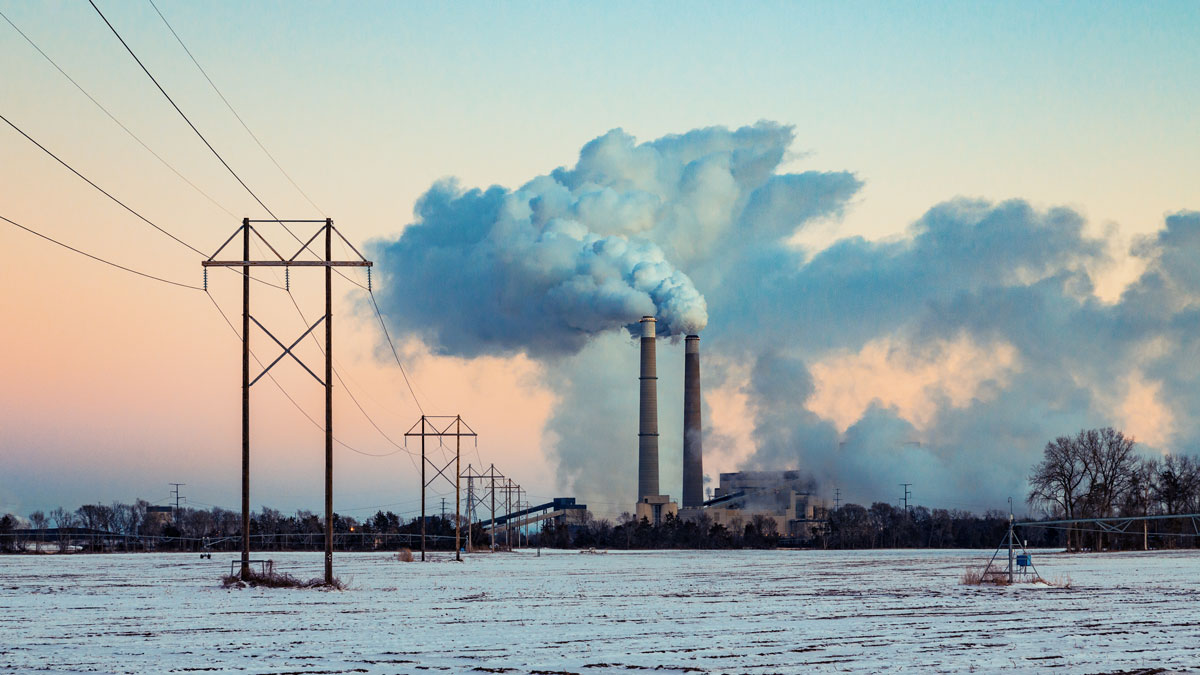
According to the 2024 Global Carbon Budget, coal is responsible for 41% of global fossil carbon dioxide emissions. It also emits chemicals that are harmful to human health, such as sulfur dioxides and heavy metals. Reliance on coal in the United Staes has been falling for decades: In 2001, about 51% of the country’s net electricity generation came from coal. By 2023, the figure had dropped to 16.2%.
However, a boom in building artificial intelligence data centers, supported by the administration, threatens to reverse the decline, E&E News reported.
An April executive order focused on reviving the coal industry laid out plans to enable coal mining on federal lands and revise regulations aimed at transitioning the country away from coal production. The order also designated coal as a critical mineral.
The same month, the administration exempted at least 66 coal plants from Biden era requirements to reduce emissions of toxins such as mercury and arsenic.
Georgia resident Andrea Goolsby told E&E News she was relieved when Georgia Power announced the retirement of a nearby coal plant in 2022. But in January, the utility company announced that the plant would stay open until 2039, and in April, it became one of the 66 plants exempted from emission reduction requirements.
“It feels like we’re going back in time…I don’t understand why they are giving pollution passes that affect people’s health.”
“It feels like we’re going back in time,” Goolsby told E&E. “I don’t understand why they are giving pollution passes that affect people’s health.”
In November, the EPA proposed delaying the closure of coal ash ponds—which are leaking materials such as arsenic and lead into surrounding groundwater—at 11 coal power plants until October 2031.
A March executive order demanded action to increase production of minerals more generally, including uranium, potash, gold, and critical minerals. In November, that list of critical minerals grew by 10, bringing the total to 60. Among the additions were copper, lead, silver, and uranium.
The administration has also worked to expand the scope of where mining occurs.
A provision in the OBBB, for instance, aimed to end a 20-year moratorium on mining in Minnesota’s popular Boundary Waters Canoe Area Wilderness. The language was removed by a House committee before the OBBB was signed into law, but the Trump administration announced plans to end the moratorium anyway.
The Trump administration’s efforts to expand mining stretch beyond land and, indeed, beyond the borders of the United States. An April executive order called for expediting the permitting process for companies to mine the deep sea in areas both within and beyond national jurisdiction. In late December, the administration announced it was formally considering permit applications for seafloor mining and that it would hold public hearings on the applications in late January 2026.
Looking Ahead
The Trump administration announces changes to environmental policy almost daily, and their effects often don’t manifest immediately.
In November, the Energy Department posted a revised organizational chart that among other changes, no longer displays the Office of Clean Energy Demonstrations. It remains to be seen how this cut will affect the mission of the department, which has seen a roughly 20% reduction in its workforce over the past year, according to The New York Times. The same month, the Interior Department proposed opening up the coastal waters of California and Florida to offshore oil drilling, a plan that was met with opposition by the governors of both states. Potential health and economic costs aside, scientists and other stakeholders are concerned that the “continued politicization of science-based policy making threatens our environmental resilience, particularly in the face of climate change,” wrote hydrologist Adam Ward.
Curated Links
Key resources for this report and people interested in this topic:
Center for Western Priorities (2025), Comment analysis finds over 99% opposition to repealing 2001 roadless rule, 19 Sept., westernpriorities.org/2025/09/comment-analysis-finds-over-99-opposition-to-repealing-2001-roadless-rule/.
Daly, M. (2025), Trump exempts nearly 70 coal plants from Biden-era rule on mercury and other toxic air pollution, Associated Press, 15 April, apnews.com/article/trump-coal-power-plants-epa-exemptions-zeldin-2cd9f2697b5f46a88ab9882ab6fd1641.
Environmental Integrity (2025), Cuts to State Environmental Agencies Compound Damage from
Trump’s Dismantling of EPA, 10 Dec., https://environmentalintegrity.org/news/cuts-to-state-environmental-agencies-compound-damage-from-trumps-dismantling-of-epa/
Gardner, E. (2025), Judge stops shutdown-related RIFs indefinitely, Eos, 28 Oct., eos.org/research-and-developments/judge-stops-shutdown-related-rifs-indefinitely.
Gelles, D. (2025), Trump’s environmental claims ignore decades of climate science, New York Times, 29 Oct., www.nytimes.com/2024/10/29/climate/donald-trump-climate-change-claims.html.
Gladstone, S. (2025), Trump’s 2026 budget plan nearly eliminates federal funding for clean water in America, Food & Water Watch, 2 May, www.foodandwaterwatch.org/2025/05/02/trumps-2026-budget-plan-nearly-eliminates-federal-funding-for-clean-water-in-america/.
Liptak, A. (2025), Supreme Court curbs scope of environmental reviews, New York Times, 29 May, www.nytimes.com/2025/05/29/us/politics/supreme-court-environmental-reviews.html.
Moreno, I. (2025), New tools show how Trump EPA funding cuts harms communities, Natural Resources Defense Council, 16 Sept., www.nrdc.org/press-releases/new-tools-show-how-trump-epa-funding-cuts-harms-communities.
U.S. Environmental Protection Agency (2025), EPA & Army Corps unveil clear, durable WOTUS proposal, 17 Nov., www.epa.gov/newsreleases/epa-army-corps-unveil-clear-durable-wotus-proposal.
van Deelen, G. (2025), EPA to abandon stricter PM2.5 air pollution limits, Eos, 26 Nov., eos.org/research-and-developments/epa-to-abandon-stricter-pm2-5-air-pollution-limits.
Vought, R.T. (2025), FY2026 budget recommendations, Office of Management and Budget, Washington, D.C., 2 May, www.whitehouse.gov/wp-content/uploads/2025/05/Fiscal-Year-2026-Discretionary-Budget-Request.pdf.
—Eos (@eos.org)