Research & Developments is a blog for brief updates that provide context for the flurry of news regarding law and policy changes that impact science and scientists today.
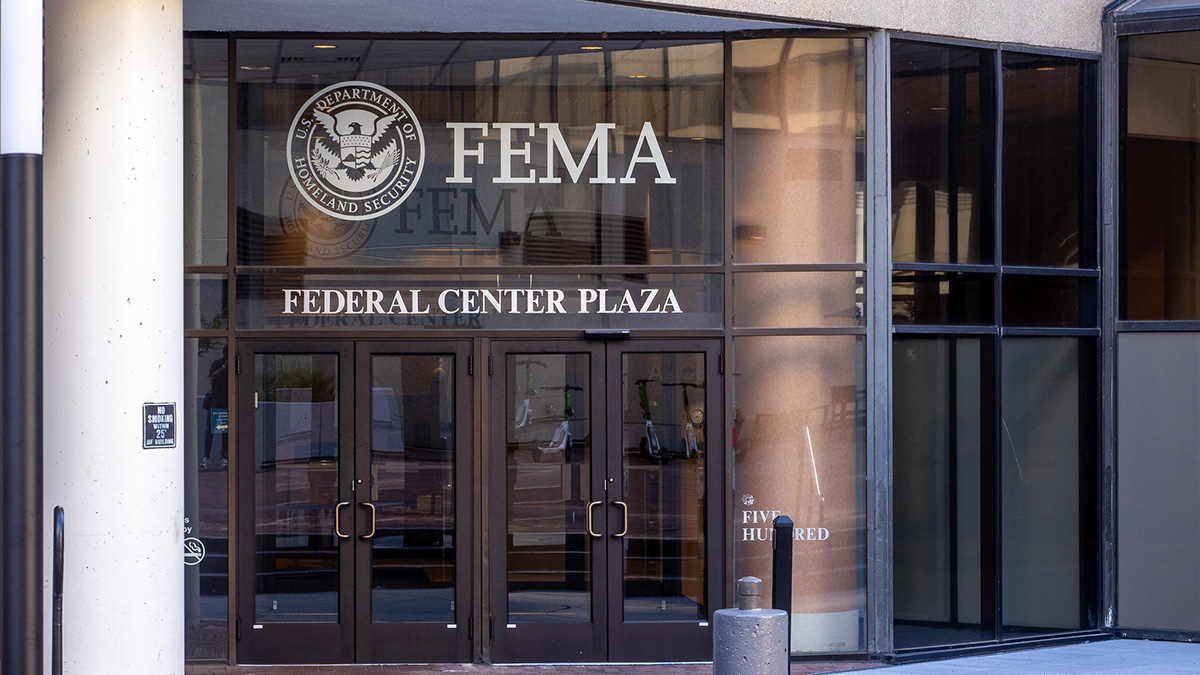
Last week, FEMA administrator Cameron Hamilton issued a memorandum outlining the agency’s scope and essentially redefining “emergency management.”
“Effective immediately, FEMA defines emergency management as the strategic coordination of emergency services to protect life, property, and continuity of operations,” Hamilton said in a video announcement.
A previous definition on the FEMA website defined the phrase as “the managerial function charged with creating the framework within which communities reduce vulnerability to hazards and cope with hazards.” Samantha Montano, an associate professor at the Massachusetts Maritime Academy who researches emergency management, explained that this previous definition was developed by a focus group of emergency management researchers and practitioners.
It’s unclear whether any experts were involved in developing the new definition.
Montano said she was disturbed by the new definition’s emphasis on “emergency services.”
“I know it looks like a really small change, but that term ‘emergency services’ is a total, total recalibration of what emergency management is, does, and who we work with, in a way that is deeply concerning,” she told Eos.
In the field of emergency management, “emergency services” refers to fire, police, and emergency medical services—what people typically mean when they refer to first responders, she explained. This means the new definition does not involve emergency managers coordinating with other government agencies, nonprofits such as the Red Cross, or private entities—including utility companies. The new definition also seems to preclude providing funding for disaster mitigation or recovery.
Montano also noted that the new definition seemed to be in line with suggestions made in the right-wing policy initiative Project 2025 as well as the FEMA Review Council report released in May. Those documents proposed a shift of many current FEMA responsibilities to states and localities.
What’s In a Name?
Hamilton was ousted as acting head of FEMA in May 2025 after suggesting that the agency should continue to exist, but was confirmed as the agency’s new leader in August 2026.
His new memo, titled in part “We Must Return to Basics,” frames the redefinition as an effort to clarify FEMA’s mission. It argues that the field of emergency management has expanded beyond its original scope, “which has diluted our credibility, capability, and professional development.”
Montano agreed that there is value in clarifying the definition of some terms within the field of emergency management, and that she has been involved with such efforts herself. However, this redefinition struck her as “bizarre.” Hamilton himself doesn’t have a background in emergency management, and the new definition doesn’t engage with the decades of work experts have put into developing a definition of the field, she said.
It’s unclear exactly what implications the new definition carries, but the memo seems to imply changes could be sweeping, noting that all “doctrine, policies, guidance, training, websites, workforce materials, planning and exercise products, publications, presentations, and other internal and public-facing materials” will be updated to align with the new definition.
The memo also identifies 12 core areas for the agency to focus on, some of which seem to contradict the new definition of emergency management—including risk analysis and hazard vulnerability assessments, planning and plan development, and cross-functional coordination.
“If, as the memo implies, [Hamilton] is expecting FEMA to start operating under this definition, then everything at FEMA would change,” Montano said. “There’s a real potential here for a complete overturning of what we think of as being emergency management.”
—Emily Gardner, Deputy Editor (@emfurd.bsky.social)
These updates are made possible through information from the scientific community. Do you have a story about how changes in law or policy are affecting scientists or research? Send us a tip at [email protected].