Research & Developments is a blog for brief updates that provide context for the flurry of news that impacts science and scientists today.
Updated 3 July 2026: NASA successfully launched an aircraft from Kwajalein Atoll, which climbed to about 40,000 feet (12,192 meters) and dropped the Pegasus XL rocket carrying the LINK robotic servicing spacecraft. Now that LINK has reached orbit, the team’s first step is to acquire a signal from the spacecraft, confirming its solar panels have deployed and the power systems are working. Follow the mission with NASA’s Swift blog.
Updated 1 July 2026: NASA has delayed the launch of the Swift rescue mission due to poor weather at the launch site in the Marshall Islands. The mission is now set to launch no earlier than 5:09 a.m. EDT on 2 July.
The Neil Gehrels’ Swift Observatory is plummeting toward Earth, and NASA is spending $30 million to try to stop it.
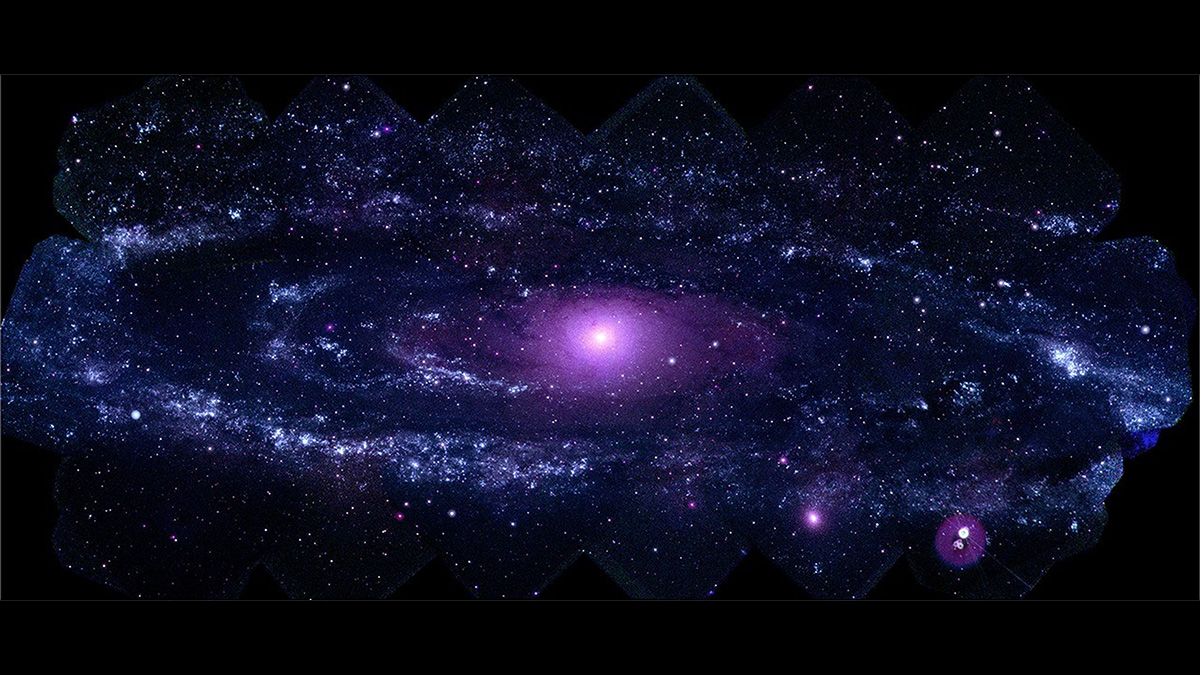
So-named for its ability to swiftly reposition its instruments to point almost anywhere in the night sky, the three-telescope observatory has detected thousands of gamma-ray bursts since it entered low Earth orbit (LEO) in 2004.
But in recent years, a rise in solar activity “puffed up” Earth’s atmosphere, increasing drag on the satellite and many other objects in LEO, explained Shawn Domagal-Goldman, astrophysics division director at NASA HQ, in a 17 June NASA press conference. The spacecraft began sinking, from an orbit about 600 kilometers (373 miles) above Earth to about 360 kilometers (224 miles) above Earth. Left to its own devices, the observatory would simply burn up when reentering Earth’s atmosphere, a fate faced by many spacecraft.
“But this was not just any spacecraft,” Domagal-Goldman said. “This is an observatory with unique capabilities for astrophysics… that can quickly pivot across the night sky to find things that go boom in the night.”
Replacing the observatory, which Swift principal investigator Brad Cenko described as “NASA’s first responder,” could take years and hundreds of millions of dollars. Instead, NASA awarded a $30 million contract to the commercial aerospace company Katalyst Space to design a robot that could give Swift a little pick-me-up back into LEO, something that has never been done before. Katalyst created LINK, which will launch aboard a Northrop Grumman Pegasus XL rocket from the Kwajalein Atoll in the South Pacific Ocean no earlier than Wednesday, 1 July at 9:43 p.m. local time (5:43 a.m. EDT).
“Over the last 9 months, we have gone from a clean sheet to a spacecraft that is currently integrated on a rocket, on an airplane, ready to go to Kwajalein for launch,” said Kieran Wilson, principal investigator for LINK, describing the program’s “absolutely unprecedented development timeline.”
For a boost to have the best shot at working, Swift needs to stay about 300 kilometers (186 miles) above Earth, but late 2025 projections suggested the spacecraft could sink this low as early as July. (A ground team has since adjusted the spacecraft’s operations to slow its descent.)
“One of the very few requirements from the NASA team was, ‘You must launch before it’s too late,’” Wilson said.
Swift wasn’t originally designed to be serviced, so designing the wind beneath its wings was no small feat. LINK, about 5 feet tall and 880 pounds (1.5 meters tall and 399 kilograms), is equipped with three ion thrusters, a trio of robotic arms, and solar panels about 20 feet (6 meters) long. Pegasus will launch LINK into an orbit near Swift, where mission control will spend several weeks making sure everything is in order. LINK will then take about a month to approach Swift, robotic arms outstretched. Over the course of several more months, LINK will slowly push the observatory upward before detaching.
“Swift has been a key player in NASA’s efforts to understand how the universe works, and we’re looking forward to getting back to that work after the boost is complete,” Cenko said.
—Emily Gardner (@emfurd.bsky.social), Associate Editor
These updates are made possible through information from the scientific community. Do you have a story about science or scientists? Send us a tip at [email protected].