• About
  • Special Reports
  • Topics
    • Climate
    • Earth Science
    • Oceans
    • Space & Planets
    • Health & Ecosystems
    • Culture & Policy
    • Education & Careers
    • Opinions
  • Projects
    • Postcards From the Field
    • ENGAGE
    • Editors’ Highlights
    • Editors’ Vox
    • Eos en Español
    • Eos 简体中文版
    • Print Archive: 2015–2025
  • Policy Tracker
  • Blogs
    • Research & Developments
    • The Landslide Blog
  • Newsletter
  • Submit to Eos
  • AGU.org
  • Career Center
  • Join AGU
  • Give to AGU
  • About
  • Special Reports
  • Topics
    • Climate
    • Earth Science
    • Oceans
    • Space & Planets
    • Health & Ecosystems
    • Culture & Policy
    • Education & Careers
    • Opinions
  • Projects
    • Postcards From the Field
    • ENGAGE
    • Editors’ Highlights
    • Editors’ Vox
    • Eos en Español
    • Eos 简体中文版
    • Print Archive: 2015–2025
  • Policy Tracker
  • Blogs
    • Research & Developments
    • The Landslide Blog
  • Newsletter
  • Submit to Eos
Skip to content
  • AGU.org
  • Career Center
  • Join AGU
  • Give to AGU
Eos

Eos

Science News by AGU

Support Eos
Sign Up for Newsletter
  • About
  • Special Reports
  • Topics
    • Climate
    • Earth Science
    • Oceans
    • Space & Planets
    • Health & Ecosystems
    • Culture & Policy
    • Education & Careers
    • Opinions
  • Projects
    • Postcards From the Field
    • ENGAGE
    • Editors’ Highlights
    • Editors’ Vox
    • Eos en Español
    • Eos 简体中文版
    • Print Archive: 2015–2025
  • Policy Tracker
  • Blogs
    • Research & Developments
    • The Landslide Blog
  • Newsletter
  • Submit to Eos

Arctic

Posted inEditors' Vox

AOMIP and FAMOS for Enhancing Understanding of Arctic Changes

by A. Proshutinsky 15 June 201612 January 2022

This community-based approach to modeling provides a unique forum for coordination, investigation, and synthesis.
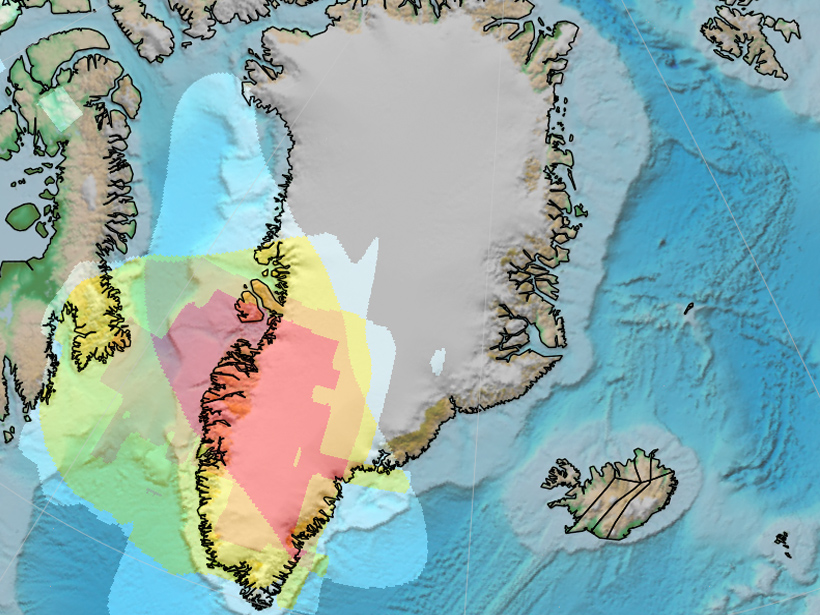
Topography and bathymetry around Greenland overlain with ancient slab material projected from 1400 kilometers depth.
Posted inResearch Spotlights

Evidence of an Extinct Ocean Basin Detected Beneath Greenland

by Terri Cook 25 May 201611 January 2022

An analysis of a seismic and gravity anomaly discovered in the middle mantle sheds new light on ancient oceans, the mantle's evolution, and ancient magmatism in the Arctic.

A flock of king eiders flies over the sea ice off Barrow, Alaska.
Posted inScience Updates

What Does the Pacific Arctic's New Normal Mean for Marine Life?

by L. Sheffield Guy, S. E. Moore and P. J. Stabeno 9 May 20166 January 2023

Climate change has reconfigured Arctic ecosystems. A 5-year project focuses on the relationships among oceanographic conditions and the animals and other life-forms in this region.
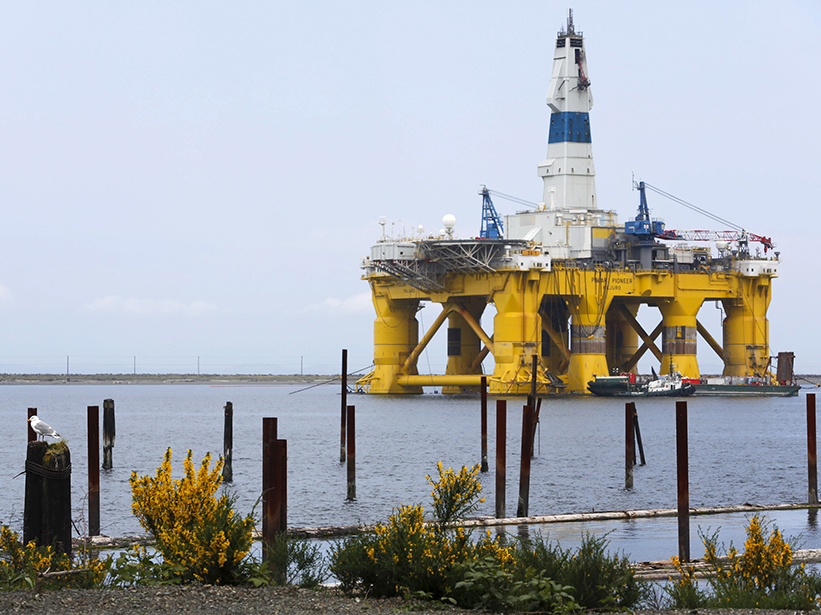
Shell Oil had used the Polar Pioneer rig during a drilling campaign off Alaska before deciding last fall to cease offshore exploration activities in the Arctic.
Posted inNews

U.S. Arctic Leader: With Shell Oil out, Arctic Lost Attention

by Randy Showstack 2 May 201625 April 2023

Shell's drilling activities in the Arctic drew the world's eyes to the far north and to issues like climate change and oil spills, the U.S. special representative for the Arctic said in a recent talk.
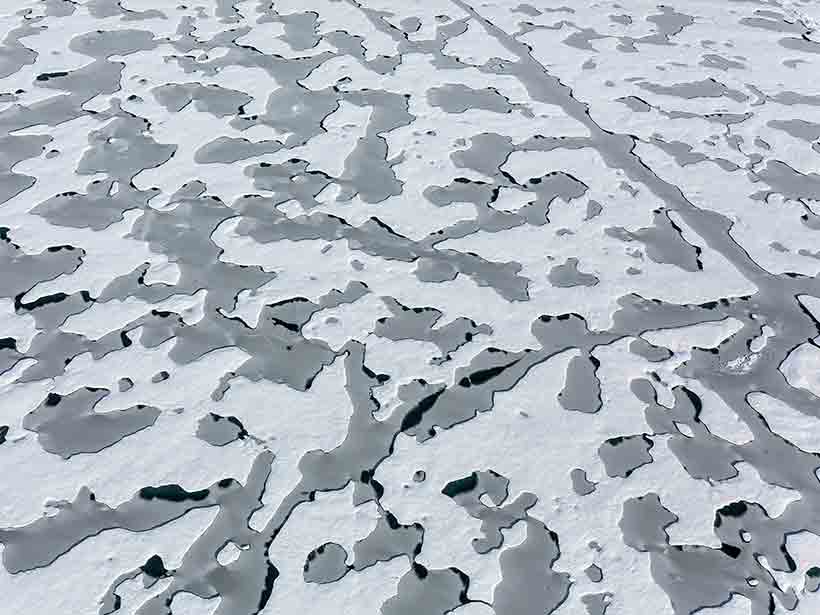
Sea ice in the central Arctic Ocean during summer 2015, when Arctic sea ice was exceptionally thin.
Posted inNews

Arctic Sea Ice Extent May Shrink Below 2012 Record Low

by M. Gannon 22 April 201625 April 2023

Satellite data, field measurements, and readings from "snow buoys" reveal ice thickness patterns similar to those preceding the lowest recorded sea ice extent, which was reached nearly 4 years ago.

Posted inNews

Upcoming Arctic Summit to Include Focus on Climate Change

by Randy Showstack 24 March 201625 April 2023

U.S. initiatives aim to protect the marine environment and address climate change in the Arctic, U.S. ambassador says.

Posted inScience Updates

Unmanned Platforms Monitor the Arctic Atmosphere

by G. de Boer, M. D. Ivey, B. Schmid, S. McFarlane and R. Petty 22 February 20163 February 2022

In the Arctic, drones and tethered balloons can make crucial atmospheric measurements to provide a unique perspective on an environment particularly vulnerable to climate change.

Posted inResearch Spotlights

Detecting Black Carbon in the Arctic Atmosphere

Sarah Stanley, Science Writer by Sarah Stanley 17 February 201613 February 2023

Measurements of light-absorbing carbon particles made during an Arctic research expedition could improve understanding of their effects on the Arctic climate.

Posted inResearch Spotlights

Building New Ways to Think About Arctic Freshwater

by David Shultz 5 February 20169 December 2021

A new literature review summarizes the complex role of freshwater in the Arctic and its impact on climate and biogeochemical systems as a whole.

Posted inResearch Spotlights

Climate Models Predict Diverse Arctic Ocean Shipping Routes

Sarah Stanley, Science Writer by Sarah Stanley 27 January 20168 November 2022

As ice melts, multiple models yield more detailed route predictions than any single model alone.

Posts pagination

Newer posts 1 … 24 25 26 27 28 29 Older posts
Over a dark blue-green square appear the words Special Report: The State of the Science 1 Year On.

Features from AGU Publications

Research Spotlights

Did Ocean Motion Carve Enceladus’s Tiger Stripes?

26 August 202626 August 2026
Editors' Highlights

Long-Term Datasets are Essential to Understanding Coastal Change

26 August 202618 August 2026
Editors' Vox

Climate Model Benchmarking: Building Trust and Advancing Science

24 August 202624 August 2026
Eos logo at left; AGU logo at right

About Eos
ENGAGE
Awards
Contact

Advertise
Submit
Career Center
Sitemap

© 2026 American Geophysical Union. All rights reserved Powered by Newspack