• About
  • Sections
  • Topics
    • Climate
    • Earth Science
    • Oceans
    • Space & Planets
    • Health & Ecosystems
    • Culture & Policy
    • Education & Careers
    • Opinions
  • Projects
    • Postcards From the Field
    • ENGAGE
    • Editors’ Highlights
    • Editors’ Vox
    • Eos en Español
    • Eos 简体中文版
    • Print Archive: 2015–2025
  • Science Policy Tracker
  • Blogs
    • Research & Developments
    • The Landslide Blog
  • Newsletter
  • Submit to Eos
  • AGU.org
  • Career Center
  • Join AGU
  • Give to AGU
  • About
  • Sections
  • Topics
    • Climate
    • Earth Science
    • Oceans
    • Space & Planets
    • Health & Ecosystems
    • Culture & Policy
    • Education & Careers
    • Opinions
  • Projects
    • Postcards From the Field
    • ENGAGE
    • Editors’ Highlights
    • Editors’ Vox
    • Eos en Español
    • Eos 简体中文版
    • Print Archive: 2015–2025
  • Science Policy Tracker
  • Blogs
    • Research & Developments
    • The Landslide Blog
  • Newsletter
  • Submit to Eos
Skip to content
  • AGU.org
  • Career Center
  • Join AGU
  • Give to AGU
Eos

Eos

Science News by AGU

Support Eos
Sign Up for Newsletter
  • About
  • Sections
  • Topics
    • Climate
    • Earth Science
    • Oceans
    • Space & Planets
    • Health & Ecosystems
    • Culture & Policy
    • Education & Careers
    • Opinions
  • Projects
    • Postcards From the Field
    • ENGAGE
    • Editors’ Highlights
    • Editors’ Vox
    • Eos en Español
    • Eos 简体中文版
    • Print Archive: 2015–2025
  • Science Policy Tracker
  • Blogs
    • Research & Developments
    • The Landslide Blog
  • Newsletter
  • Submit to Eos

Asia

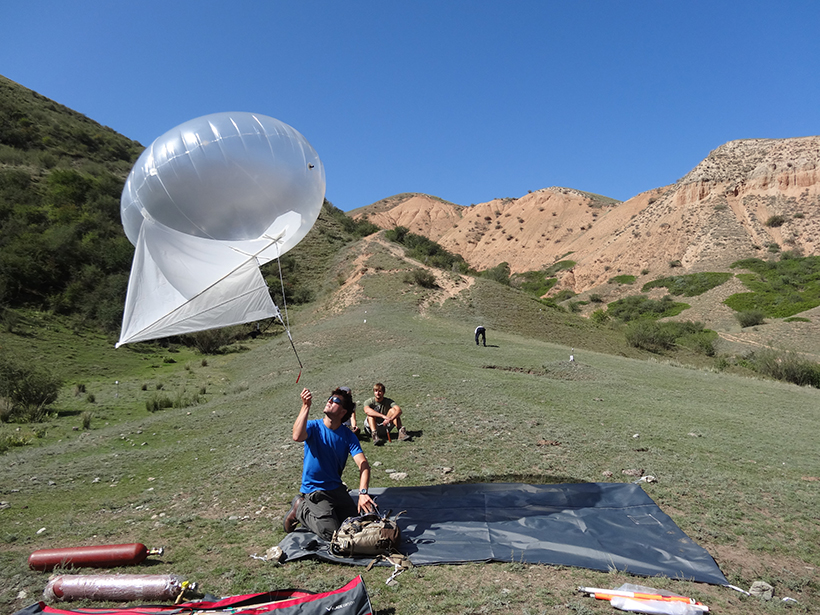
David Mackenzie with a balloon and a camera to survey 1889 earthquake ruptures.
Posted inResearch Spotlights

Tracking Down Elusive Origins of Kazakhstan's 1889 Chilik Quake

Sarah Stanley, Science Writer by Sarah Stanley 22 July 20165 October 2022

New fieldwork and satellite data suggest that three faults may have caused a large earthquake near Almaty, Kazakhstan, more than a century ago.
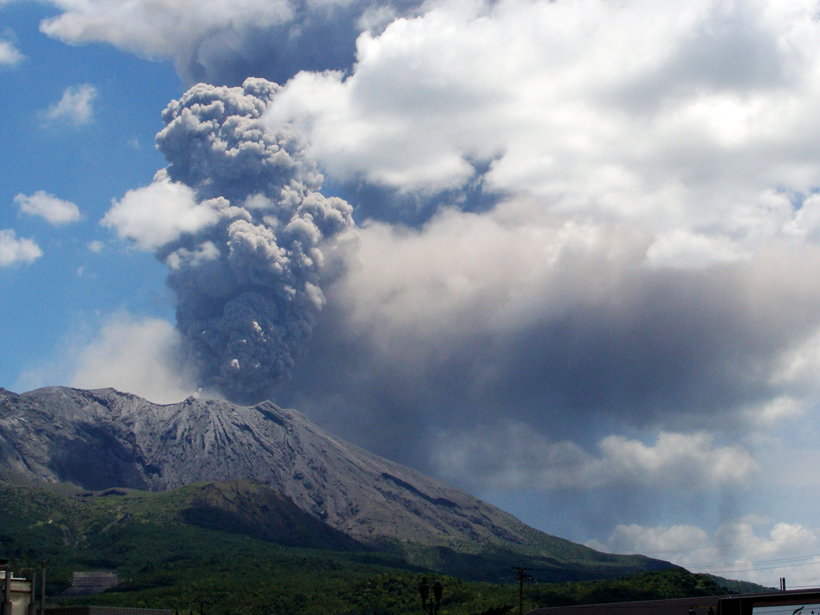
18 July 2013 eruption of Sakurajima volcano in Japan.
Posted inResearch Spotlights

Japan's Volcanic History, Hidden Under the Sea

by W. Yan 24 June 20166 December 2021

Scientists investigate marine tephra layers for clues to Japan's volcanic past.

Posted inResearch Spotlights

Tsunami Forecast System Could Provide Early Warnings in Japan

by David Shultz 4 February 20167 July 2025

New simulations show that an array of sensors mounted to the ocean floor can capture tsunami size and wavelength.

Posted inScience Updates

Implications of Future Changes in the Asian Monsoon's Intensity

by P. D. Clift, G. N.-C. Lau, B. V. Rolett and J. R. Gibson 3 February 20167 March 2023

AGU Chapman Conference on the Evolution of the Asian Monsoon and Its Impact on Landscape, Environment, and Society; Hong Kong, China, 14–18 June 2015

Posted inNews

Mercury in Rain Increasing in Western and Central United States

Cody Sullivan by C. Sullivan 2 February 201613 March 2023

Despite tightening emissions rules, mercury concentrations are rising in rainfall wetting western and central regions of the United States. The pollutant may waft in from Asia, scientists speculate.

Posted inResearch Spotlights

Improving Indian Summer Monsoon Prediction

by L. Strelich 20 November 201514 June 2022

A new study analyzes temperature and moisture variations in different layers of the atmosphere to improve forecasting of Indian summer monsoon precipitation patterns.

Posted inResearch Spotlights

Satellite Imaging Improves Study of Sinking River Deltas

JoAnna Wendel, freelance science writer and illustrator by JoAnna Wendel 10 January 201519 September 2023

Researchers know that the Ganges-Brahmaputra river delta is sinking. Now they have an accurate reading on the rate of subsidence.

Posted inNews

China’s Push for Energy Raises Regional Security Concerns

by Randy Showstack 30 September 201428 February 2022

Efforts by China to bolster its energy resources include internal development efforts but also raises regional security concerns.

Posted inFeatures

Crop Residue Burning: A Threat to South Asian Air Quality

by R. P. Singh and D. G. Kaskaoutis 16 September 201420 October 2021

Smoke from the residues, burned during October and November to ready fields for next year’s planting, emanate from Punjab, a region spanning northwestern India and eastern Pakistan.

Posts pagination

Newer posts 1 … 8 9 10
A view of a bridge, with the New Orleans skyline visible in the distance between the bridge and the water. A purple tint, a teal curved line representing a river, and the text “#AGU25 coverage from Eos” overlie the photo.

Features from AGU Publications

Research Spotlights

Denitrification Looks Different in Rivers Versus Streams

16 January 202616 January 2026
Editors' Highlights

ALMA’s New View of the Solar System

16 January 202616 January 2026
Editors' Vox

Bridging the Gap: Transforming Reliable Climate Data into Climate Policy

16 January 202616 January 2026
Eos logo at left; AGU logo at right

About Eos
ENGAGE
Awards
Contact

Advertise
Submit
Career Center
Sitemap

© 2026 American Geophysical Union. All rights reserved Powered by Newspack