• About
  • Special Reports
  • Topics
    • Climate
    • Earth Science
    • Oceans
    • Space & Planets
    • Health & Ecosystems
    • Culture & Policy
    • Education & Careers
    • Opinions
  • Projects
    • Postcards From the Field
    • ENGAGE
    • Editors’ Highlights
    • Editors’ Vox
    • Eos en Español
    • Eos 简体中文版
    • Print Archive: 2015–2025
  • Policy Tracker
  • Blogs
    • Research & Developments
    • The Landslide Blog
  • Newsletter
  • Submit to Eos
  • AGU.org
  • Career Center
  • Join AGU
  • Give to AGU
  • About
  • Special Reports
  • Topics
    • Climate
    • Earth Science
    • Oceans
    • Space & Planets
    • Health & Ecosystems
    • Culture & Policy
    • Education & Careers
    • Opinions
  • Projects
    • Postcards From the Field
    • ENGAGE
    • Editors’ Highlights
    • Editors’ Vox
    • Eos en Español
    • Eos 简体中文版
    • Print Archive: 2015–2025
  • Policy Tracker
  • Blogs
    • Research & Developments
    • The Landslide Blog
  • Newsletter
  • Submit to Eos
Skip to content
  • AGU.org
  • Career Center
  • Join AGU
  • Give to AGU
Eos

Eos

Science News by AGU

Support Eos
Sign Up for Newsletter
  • About
  • Special Reports
  • Topics
    • Climate
    • Earth Science
    • Oceans
    • Space & Planets
    • Health & Ecosystems
    • Culture & Policy
    • Education & Careers
    • Opinions
  • Projects
    • Postcards From the Field
    • ENGAGE
    • Editors’ Highlights
    • Editors’ Vox
    • Eos en Español
    • Eos 简体中文版
    • Print Archive: 2015–2025
  • Policy Tracker
  • Blogs
    • Research & Developments
    • The Landslide Blog
  • Newsletter
  • Submit to Eos

carbon emissions

Diagram showing the key interactions between reservoirs of the global carbon cycle.
Posted inEditors' Vox

Mysteries of the Global Carbon Cycle

by David Crisp, Han Dolman, Toste Tanhua, Galen A. McKinley, Judith Hauck, Ana Bastos and Stephen Sitch 22 June 202221 July 2022

Less than half of the anthropogenic carbon dioxide remains in the atmosphere to drive climate change. The rest is being removed by mysterious processes in the land, biosphere, and ocean.

Image of Earth with a blue halo.
Posted inNews

Fossil Fuels Drive Increase in Atmospheric Helium

by Jennifer Schmidt 9 June 202219 July 2022

After decades of uncertainty, scientists have finally shown that fossil fuel extraction has flooded the atmosphere with 4He.
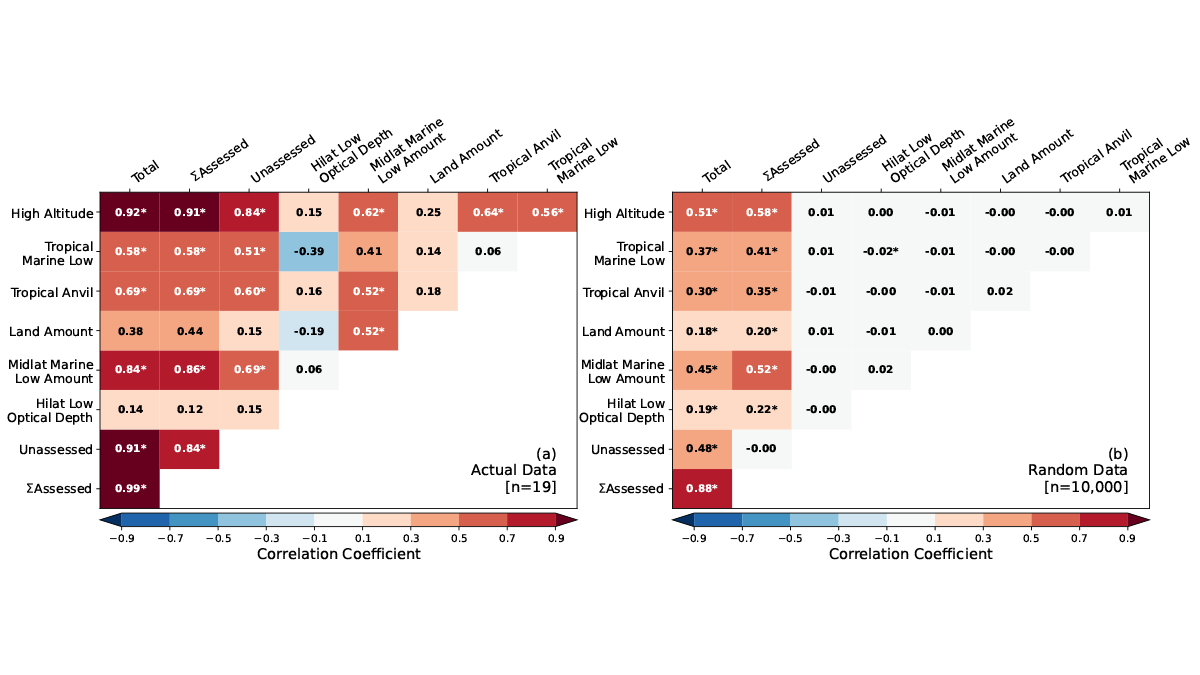
Diagrams showing cross correlation of cloud-feedback components in the multi-model ensemble.
Posted inEditors' Highlights

Cloud Feedbacks in CMIP6 Models Versus Expert Synthesis

by Minghua Zhang 6 June 202214 September 2022

Models with smallest feedback errors are found to have moderate cloud feedbacks and equilibrium climate sensitivity of 3 to 4 degrees of warming when the concentration of carbon dioxide is doubled.
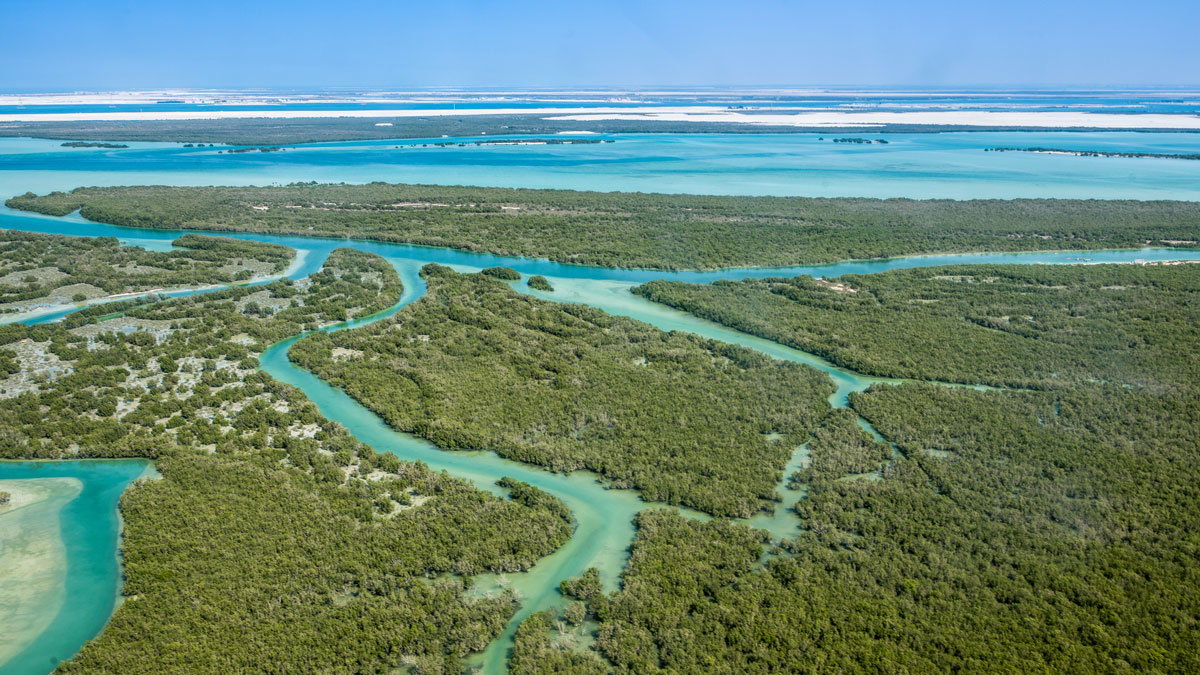
Aerial view of a coastal mangrove wetland in Abu Dhabi.
Posted inNews

Planting Wetlands Could Help Stave Off Climate Catastrophe

by Jennifer Schmidt 1 June 20221 June 2023

A shift in priority and approach to wetland restoration could reduce atmospheric carbon.

Image of people carrying umbrellas, walking on a flooded street in Mumbai.
Posted inNews

Climate Action Plans Tailored to Indian Cities

by Deepa Padmanaban 6 May 20221 June 2023

The plans identify localized vulnerabilities, as well as adaptations to climate change risks.

Posted inEditors' Highlights

Less Air Travel May Partially Contribute to Global Warming

by Tong Zhu 14 April 20221 June 2023

Decrease in aircraft soot emission, as shown by COVID-19 lockdown, leads to a significant increase in ice crystal number in cirrus clouds, and results in a small global positive radiative effect.

A collage of methane sources
Posted inNews

A Climate Mystery Warns Us to Heed the Unknown

Jenessa Duncombe, Staff Writer by Jenessa Duncombe 7 April 202226 April 2023

The Curve is a series charting the mysterious rise of methane in our atmosphere and the quest to find its source.

Protestors hold signs for climate action.
Posted inNews

Greenhouse Gases Must Begin to Fall by 2025, Says U.N. Climate Report

Jenessa Duncombe, Staff Writer by Jenessa Duncombe 4 April 202217 May 2023

Emissions rates are still growing every year, though that growth has slowed. The world needs to reach negative growth soon to prevent a potential 3.2°C rise by the end of the century.

A meadow of the seagrass Posidonia oceanica
Posted inNews

Mortality of Seagrass Meadows May Not Kill Their Methane Release

by Derek Smith 31 March 202231 March 2022

New research indicates that seagrasses continue to release methane even after they die, complicating blue carbon initiatives.

Brown river water rushes through a downtown area with industrial and residential buildings in the background.
Posted inNews

U.S. Businesses May Be Required to Report Emissions, Climate Risk

Kimberly M. S. Cartier, News Writing and Production Intern for Eos.org by Kimberly M. S. Cartier 22 March 20221 June 2023

The proposed rules seek to give investors more complete and standardized climate risk information. The move would bring U.S. policy closer to international standards.

Posts pagination

Newer posts 1 … 9 10 11 12 13 … 24 Older posts
Over a dark blue-green square appear the words Special Report: The State of the Science 1 Year On.

Features from AGU Publications

Research Spotlights

As Wildfires Increase in the West, So Does Suppression Spending

10 June 202610 June 2026
Editors' Highlights

Multi-Scale Fault Roughness Encapsulated in a Friction Law

11 June 202611 June 2026
Editors' Vox

Small-Scale Indian Ocean Dynamics Underpin Marine Ecology and Climate

4 June 20263 June 2026
Eos logo at left; AGU logo at right

About Eos
ENGAGE
Awards
Contact

Advertise
Submit
Career Center
Sitemap

© 2026 American Geophysical Union. All rights reserved Powered by Newspack