

Changing climate in the Arctic leads to a shorter snow season but deeper snow in the depths of winter. Under the insulating snow, biological processes are accelerated leading to higher nutrient availability and carbon losses.
carbon
Posted inEditors' Highlights
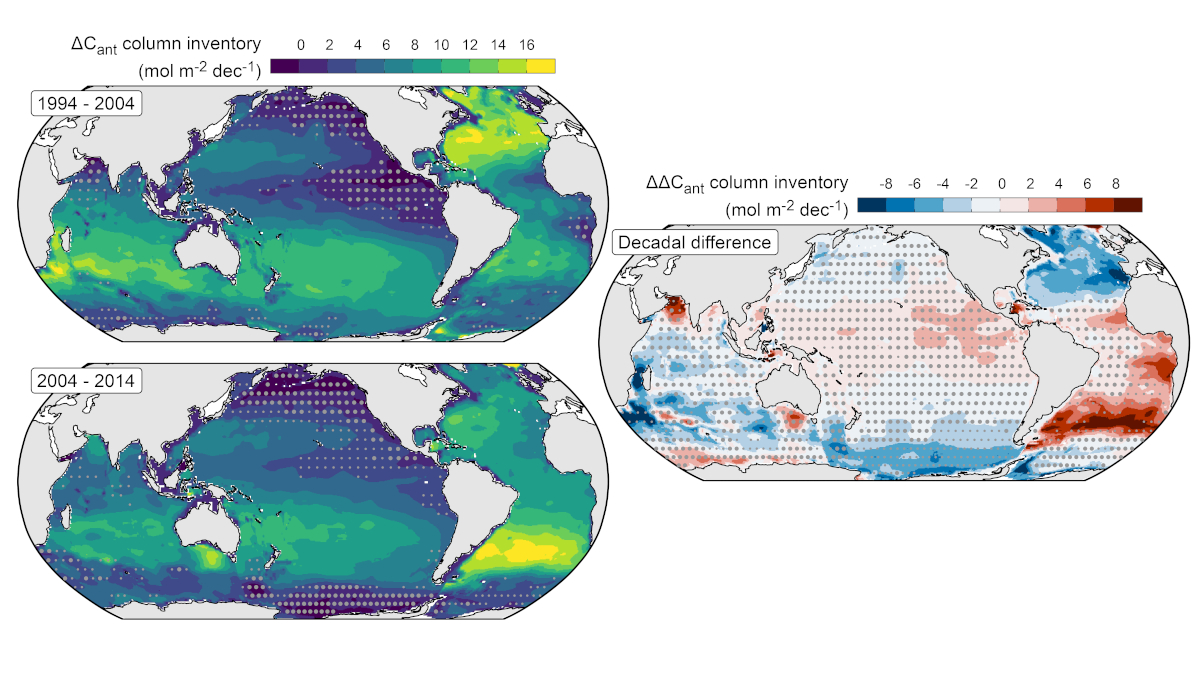
A Multidecadal View of Oceanic Storage of Anthropogenic Carbon
A decline in the ratio of ocean carbon accumulation to atmospheric carbon dioxide growth between 1994-2004 and 2004-2014 suggests a reduction in the sensitivity of the ocean carbon sink.

Posted inResearch Spotlights
Biogeochemical Insights from a Major Amazonian River

Underrepresented in global carbon budgets, tropical rivers like Brazil’s Tocantins are in need of study to establish their baseline characteristics in the face of increasing global change.

Posted inEditors' Highlights
Inductive Approach Reveals Controls on Dissolved Organic Carbon
Machine learning leverages large data sets to reveal hidden patterns explaining when, where, and why dissolved organic carbon moves from hillslopes to streams.
Posted inEditors' Highlights
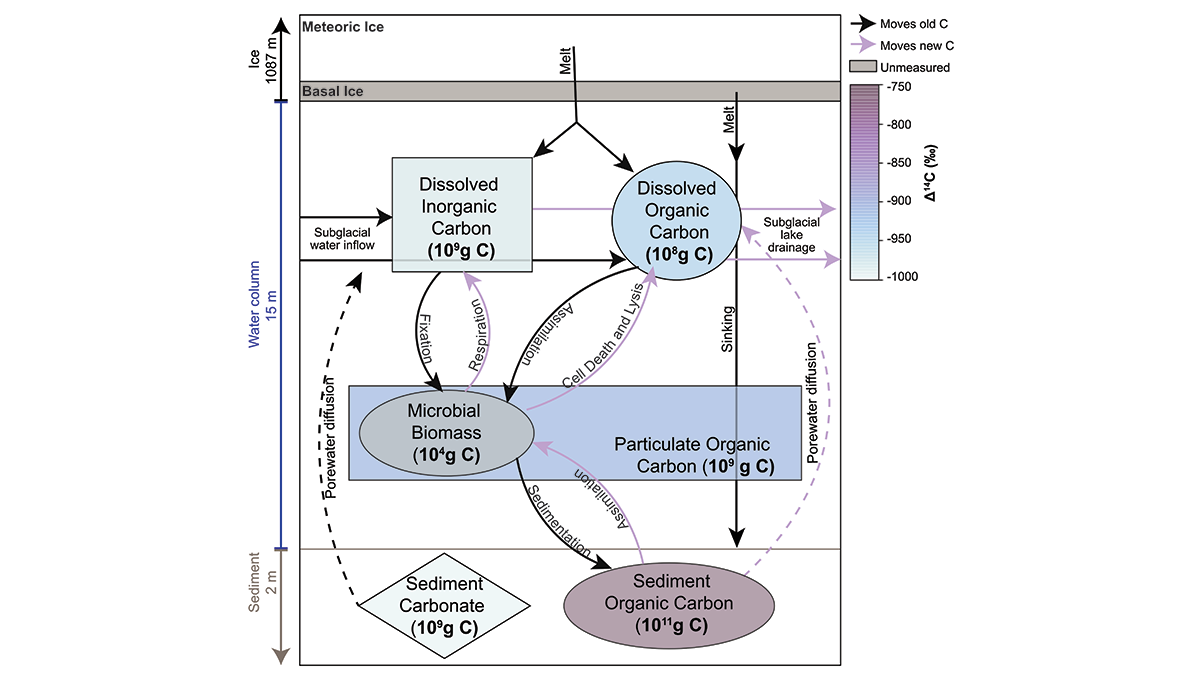
Clues from a Subglacial Lake for Holocene Grounding Line Change
Organic carbon sampled in the lake contained radiocarbon, indicating connection to the ocean in the mid-Holocene, when the grounding line was up to 260 kilometers inland of its current position.

Posted inEditors' Highlights
Bio-Argo Floats Reveal Phytoplankton Increase at Ocean Fronts
Bio-Argo floats and satellite altimeter data reveal that upwelling caused by confluent flow on the warm side of ocean fronts increases phytoplankton carbon and chlorophyll.

Posted inResearch Spotlights
The World’s Roots Are Getting Shallower
Root-filled soils are hot spots of nutrient cycling and carbon storage. New research finds that the world has lost millions of cubic meters of rooted soil volume—and we’re on track to lose much more.

Posted inENGAGE, News
Una explosión de radiocarbono del pasado
El fechamiento por radiocarbono es un pilar de la climatología y la arqueología. Sin embargo, esta metodología se encuentra amenazada por las emisiones de combustibles fósiles, que invalidan una señal útil proveniente de pruebas nucleares.

Posted inENGAGE, News
Radiocarbon’s Blast from the Past
Radiocarbon dating is a cornerstone of climate and archaeological sciences. But the method is under threat as fossil fuel emissions negate a useful signal from atomic tests.

Posted inResearch Spotlights
Impact of Climate on River Chemistry Across the United States

Findings of a new study have implications for water quality, aquatic ecosystem health, and water treatment and management as the world warms.