• About
  • Special Reports
  • Topics
    • Climate
    • Earth Science
    • Oceans
    • Space & Planets
    • Health & Ecosystems
    • Culture & Policy
    • Education & Careers
    • Opinions
  • Projects
    • Postcards From the Field
    • ENGAGE
    • Editors’ Highlights
    • Editors’ Vox
    • Eos en Español
    • Eos 简体中文版
    • Print Archive: 2015–2025
  • Policy Tracker
  • Blogs
    • Research & Developments
    • The Landslide Blog
  • Newsletter
  • Submit to Eos
  • AGU.org
  • Career Center
  • Join AGU
  • Give to AGU
  • About
  • Special Reports
  • Topics
    • Climate
    • Earth Science
    • Oceans
    • Space & Planets
    • Health & Ecosystems
    • Culture & Policy
    • Education & Careers
    • Opinions
  • Projects
    • Postcards From the Field
    • ENGAGE
    • Editors’ Highlights
    • Editors’ Vox
    • Eos en Español
    • Eos 简体中文版
    • Print Archive: 2015–2025
  • Policy Tracker
  • Blogs
    • Research & Developments
    • The Landslide Blog
  • Newsletter
  • Submit to Eos
Skip to content
  • AGU.org
  • Career Center
  • Join AGU
  • Give to AGU
Eos

Eos

Science News by AGU

Support Eos
Sign Up for Newsletter
  • About
  • Special Reports
  • Topics
    • Climate
    • Earth Science
    • Oceans
    • Space & Planets
    • Health & Ecosystems
    • Culture & Policy
    • Education & Careers
    • Opinions
  • Projects
    • Postcards From the Field
    • ENGAGE
    • Editors’ Highlights
    • Editors’ Vox
    • Eos en Español
    • Eos 简体中文版
    • Print Archive: 2015–2025
  • Policy Tracker
  • Blogs
    • Research & Developments
    • The Landslide Blog
  • Newsletter
  • Submit to Eos

carbonates

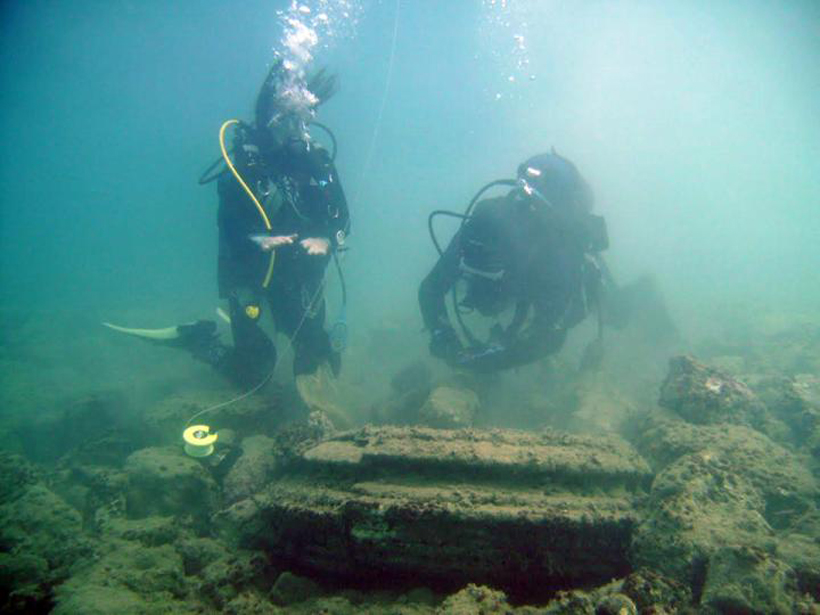
Divers examine faux ancient pillar base.
Posted inNews

"Sunken City" Was Really Made by Microbes

by E. Deatrick 13 June 201611 October 2022

What scientists thought was a sunken Greek city turns out to be the fossils of an ancient hydrocarbon seep from several million years ago.

Unnamed crater in eastern Hesperia Planum, Mars.
Posted inResearch Spotlights

Martian Carbonates Spotted by the Orbiter

Kate Wheeling, freelance science writer by Kate Wheeling 3 May 201628 July 2022

The minerals identified by the Mars Reconnaissance Orbiter provide more evidence that the planet may have once been habitable.
Posted inResearch Spotlights

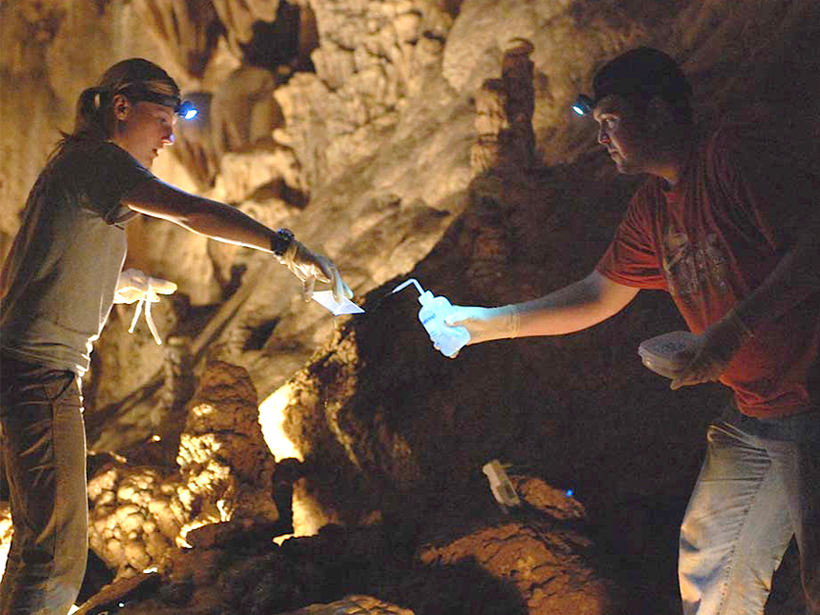
Cave "Breathing" Affects Mineral Growth and Climate Clues

by J. Calderone 30 September 201518 October 2022

A new global model suggests how and where air flow in caves affects the growth of cave mineral deposits that scientists use to reconstruct ancient climates.

Posted inScience Updates

Reading History From Afar

by B. Atnafu, T. Kidane, A. Foubert, D. Jaramillo-Vogel, J.-C. Schaegis and J.-P. Henriet 30 January 201525 October 2022

A look at the sedimentary record in northern Ethiopia tells the story of oceans past—and maybe future.

Posts pagination

Newer posts 1 2 3 4
Over a dark blue-green square appear the words Special Report: The State of the Science 1 Year On.

Features from AGU Publications

Research Spotlights

As Wildfires Increase in the West, So Does Suppression Spending

10 June 202610 June 2026
Editors' Highlights

Multi-Scale Fault Roughness Encapsulated in a Friction Law

11 June 202611 June 2026
Editors' Vox

Small-Scale Indian Ocean Dynamics Underpin Marine Ecology and Climate

4 June 20263 June 2026
Eos logo at left; AGU logo at right

About Eos
ENGAGE
Awards
Contact

Advertise
Submit
Career Center
Sitemap

© 2026 American Geophysical Union. All rights reserved Powered by Newspack