• About
  • Special Reports
  • Topics
    • Climate
    • Earth Science
    • Oceans
    • Space & Planets
    • Health & Ecosystems
    • Culture & Policy
    • Education & Careers
    • Opinions
  • Projects
    • Postcards From the Field
    • ENGAGE
    • Editors’ Highlights
    • Editors’ Vox
    • Eos en Español
    • Eos 简体中文版
    • Print Archive: 2015–2025
  • Policy Tracker
  • Blogs
    • Research & Developments
    • The Landslide Blog
  • Newsletter
  • Submit to Eos
  • AGU.org
  • Career Center
  • Join AGU
  • Give to AGU
  • About
  • Special Reports
  • Topics
    • Climate
    • Earth Science
    • Oceans
    • Space & Planets
    • Health & Ecosystems
    • Culture & Policy
    • Education & Careers
    • Opinions
  • Projects
    • Postcards From the Field
    • ENGAGE
    • Editors’ Highlights
    • Editors’ Vox
    • Eos en Español
    • Eos 简体中文版
    • Print Archive: 2015–2025
  • Policy Tracker
  • Blogs
    • Research & Developments
    • The Landslide Blog
  • Newsletter
  • Submit to Eos
Skip to content
  • AGU.org
  • Career Center
  • Join AGU
  • Give to AGU
Eos

Eos

Science News by AGU

Support Eos
Sign Up for Newsletter
  • About
  • Special Reports
  • Topics
    • Climate
    • Earth Science
    • Oceans
    • Space & Planets
    • Health & Ecosystems
    • Culture & Policy
    • Education & Careers
    • Opinions
  • Projects
    • Postcards From the Field
    • ENGAGE
    • Editors’ Highlights
    • Editors’ Vox
    • Eos en Español
    • Eos 简体中文版
    • Print Archive: 2015–2025
  • Policy Tracker
  • Blogs
    • Research & Developments
    • The Landslide Blog
  • Newsletter
  • Submit to Eos

cities

Community forests that provide numerous ecological, social, and economic benefits are being threatened by climate change.
Posted inFeatures

Community Forests Prepare for Climate Change

by C. L. Peterson, L. A. Brandt, E. H. Elias and S. R. Hurteau 11 February 20215 November 2021

Cities across the United States are feeling the heat as they struggle to integrate climate science into on-the-ground decisionmaking regarding urban tree planting and management.
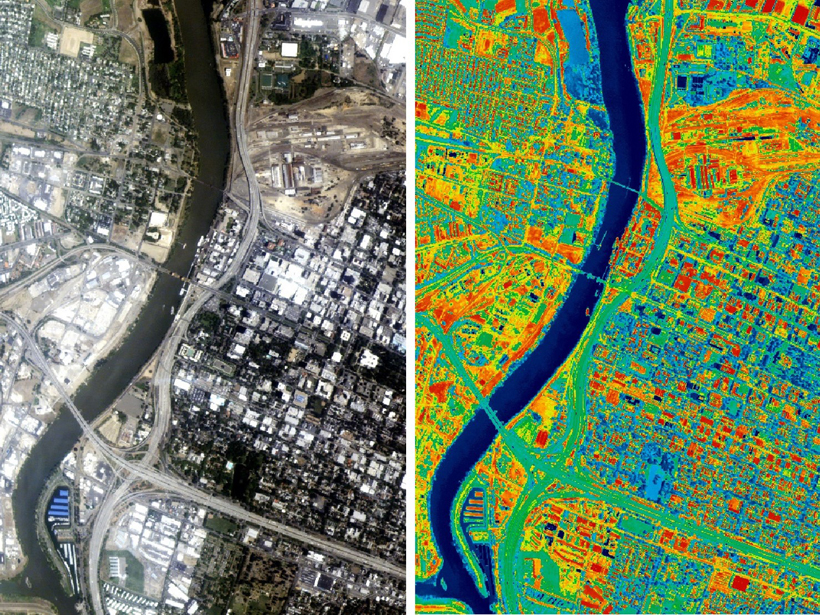
Visible-light and thermal-infrared photos of Sacramento showing heat distribution
Posted inEditors' Highlights

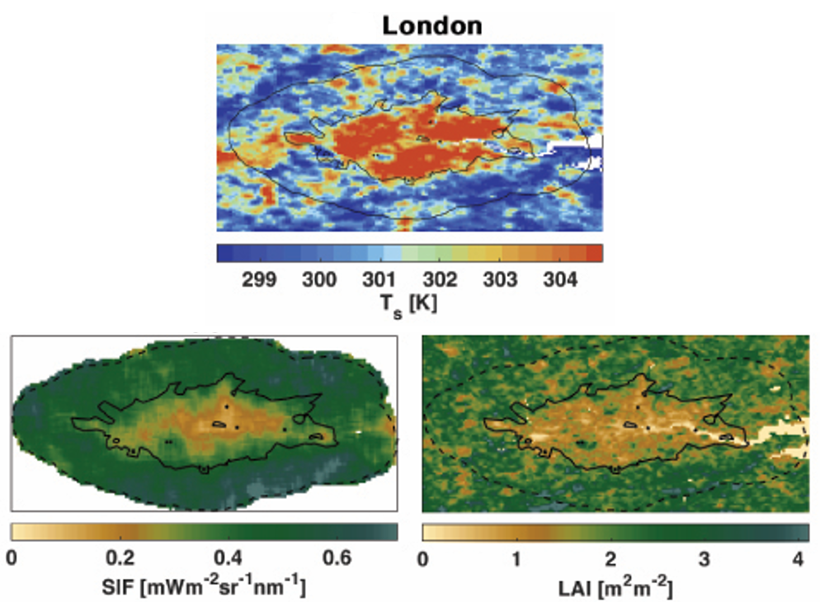
Modeling Interactions Between Cities and Climate Across Scales

by Susan Trumbore 26 January 202122 April 2022

With more than half of humanity living in cities, the ability to model urban-climate interactions at relevant spatial scales is increasingly important.
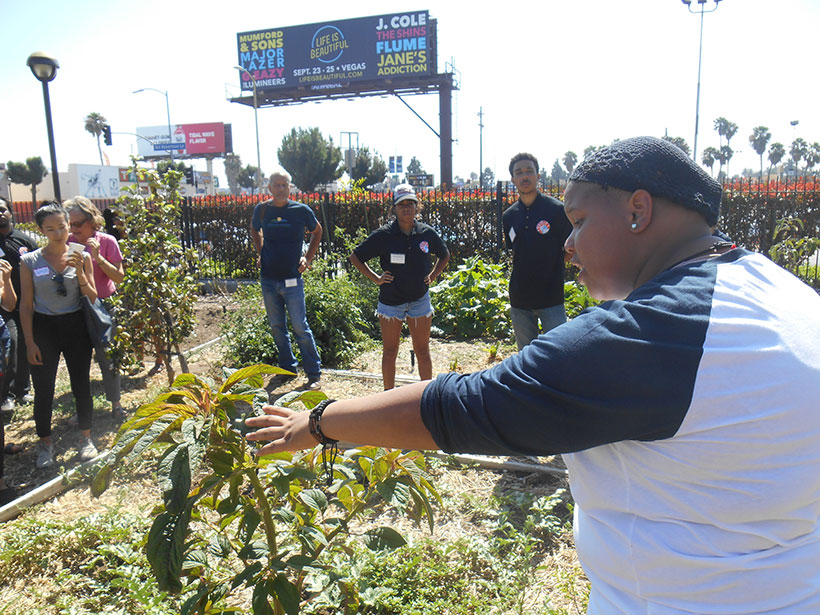
A youth farmer in Los Angeles County gives a tour of an urban farm
Posted inNews

Urban Agriculture Combats Food Insecurity, Builds Community

by DJ McCauley 25 January 202121 February 2023

Innovations in urban agriculture—from creative reuse of stormwater to soil rehabilitation—can help fight food insecurity and prevent further food issues.

Living walls line Milan’s Bosco Verticale apartment building
Posted inNews

Cómo convertir nuestras ciudades en Treetopias

by Alan Simson 15 January 20216 September 2022

Estamos y seguiremos plantando más árboles callejeros, arboledas urbanas y cúmulos informales de árboles en nuestros parques y espacios verdes. La Treetopia ha comenzado.
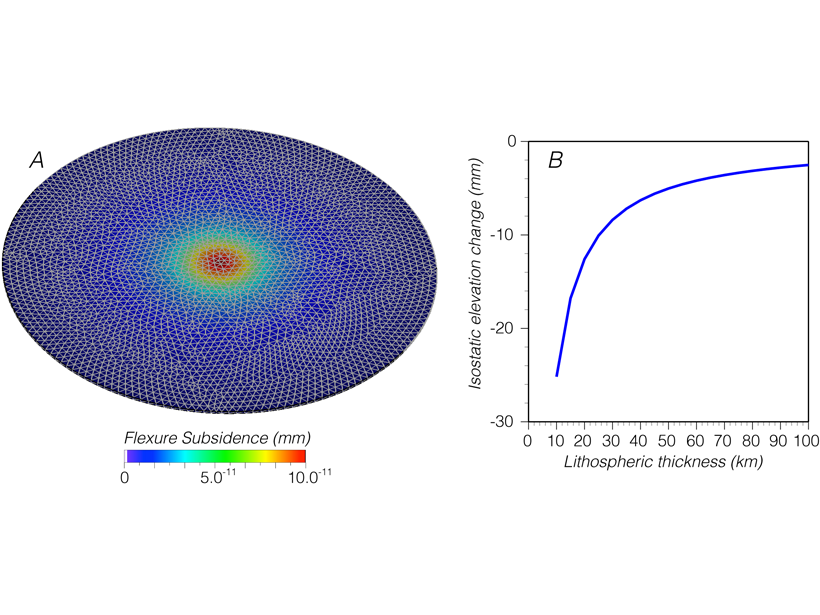
Posted inEditors' Highlights

Going Down: How Do Cities Carry That Weight?

by Peter Zeitler 14 January 202114 January 2022

Calculations show that the added weight of growing cities can lead to tens of millimeters of subsidence, an effect that needs to be considered for coastal cities under threat by sea-level rise.

Stream surrounded by grassland.
Posted inNews

Waterways Change as Cities Grow Nearby

Katherine Kornei, Science Writer by Katherine Kornei 17 December 20206 September 2022

Using multidecadal data sets, researchers have traced how urbanization affects streamflow across the continental United States.

Black-legged ticks, also known as deer ticks, are responsible for transmitting Lyme disease in the United States and Canada.
Posted inNews

Lyme Disease and the Dangers of the Forest Edge

Hannah Thomasy, Science Writer by Hannah Thomasy 8 December 20209 September 2024

Living near a forest edge may be an important risk factor for Lyme disease; these liminal spaces provide the perfect habitat for one of the black-legged tick’s favorite hosts.

3D rendering of a sustainable modern apartment building with blueprints
Posted inNews

Europe Targets 100 Climate-Neutral Cities by 2030

by James Dacey 17 November 202018 April 2022

Europe is launching an ambitious mission to decarbonize many of its urban areas within a decade. But is it realistic?

Plot showing distribution of iron species at three locations
Posted inEditors' Highlights

Zero-valent Iron in the Oxidizing Atmosphere?

by Jonathan H. Jiang 26 October 20205 May 2022

A comparative study of urban, semi-urban, and rural sites reveals that the species of atmospheric iron varies depending on location.

A partial view of the Chicago skyline seen from the water on a sunny day
Posted inScience Updates

Converging on Solutions to Plan Sustainable Cities

by D. Wuebbles, A. Sharma, A. Ando, L. Zhao and C. Rigsbee 7 October 202029 September 2021

Climate change will exacerbate the food, energy, water, health, and equity challenges that urban communities face, but cities also have opportunities to improve sustainability and outcomes.

Posts pagination

Newer posts 1 … 10 11 12 13 14 … 17 Older posts
Over a dark blue-green square appear the words Special Report: The State of the Science 1 Year On.

Features from AGU Publications

Research Spotlights

Seismic Attenuation Techniques Reveal What Lies Beneath Taiwan

11 May 202611 May 2026
Editors' Highlights

A Digital Twin for Arctic Permafrost Beneath Roads

8 May 202612 May 2026
Editors' Vox

The Impact of Advocacy: American Geophysical Union’s Days of Action

14 May 202613 May 2026
Eos logo at left; AGU logo at right

About Eos
ENGAGE
Awards
Contact

Advertise
Submit
Career Center
Sitemap

© 2026 American Geophysical Union. All rights reserved Powered by Newspack