• About
  • Special Reports
  • Topics
    • Climate
    • Earth Science
    • Oceans
    • Space & Planets
    • Health & Ecosystems
    • Culture & Policy
    • Education & Careers
    • Opinions
  • Projects
    • Postcards From the Field
    • ENGAGE
    • Editors’ Highlights
    • Editors’ Vox
    • Eos en Español
    • Eos 简体中文版
    • Print Archive: 2015–2025
  • Policy Tracker
  • Blogs
    • Research & Developments
    • The Landslide Blog
  • Newsletter
  • Submit to Eos
  • AGU.org
  • Career Center
  • Join AGU
  • Give to AGU
  • About
  • Special Reports
  • Topics
    • Climate
    • Earth Science
    • Oceans
    • Space & Planets
    • Health & Ecosystems
    • Culture & Policy
    • Education & Careers
    • Opinions
  • Projects
    • Postcards From the Field
    • ENGAGE
    • Editors’ Highlights
    • Editors’ Vox
    • Eos en Español
    • Eos 简体中文版
    • Print Archive: 2015–2025
  • Policy Tracker
  • Blogs
    • Research & Developments
    • The Landslide Blog
  • Newsletter
  • Submit to Eos
Skip to content
  • AGU.org
  • Career Center
  • Join AGU
  • Give to AGU
Eos

Eos

Science News by AGU

Support Eos
Sign Up for Newsletter
  • About
  • Special Reports
  • Topics
    • Climate
    • Earth Science
    • Oceans
    • Space & Planets
    • Health & Ecosystems
    • Culture & Policy
    • Education & Careers
    • Opinions
  • Projects
    • Postcards From the Field
    • ENGAGE
    • Editors’ Highlights
    • Editors’ Vox
    • Eos en Español
    • Eos 简体中文版
    • Print Archive: 2015–2025
  • Policy Tracker
  • Blogs
    • Research & Developments
    • The Landslide Blog
  • Newsletter
  • Submit to Eos

deltas

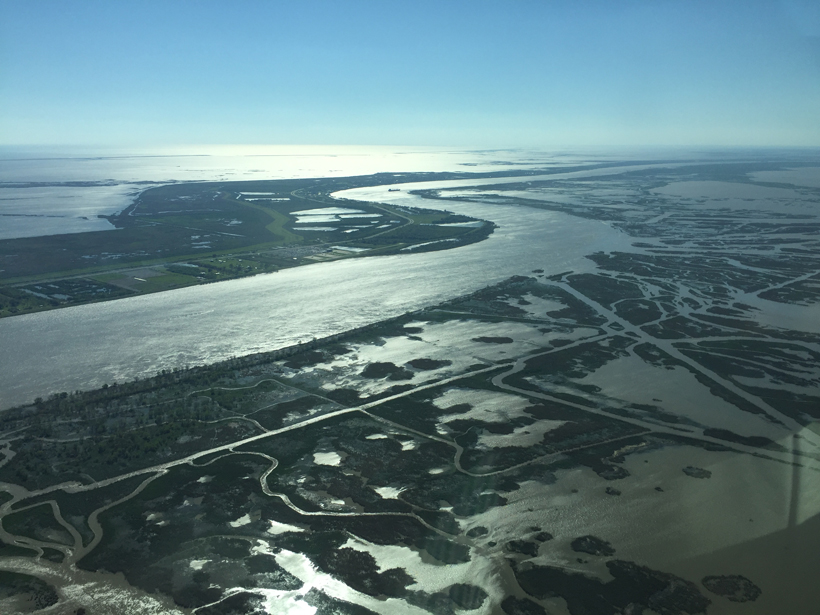
The Mississippi River with the Fort St. Philip Crevasse complex shown to the right.
Posted inFeatures

Rethinking the River

by A. S. Kolker, A. M. Dausman, M, A. Allison, G. L. Brown, P. Y. Chu, K. de Mutsert, C. E. Fitzpatrick, J. R. Henkel, D. Justic, B. A. Kleiss, E. McCoy, E. Meselhe and C. P. Richards 19 June 201819 September 2023

The Mississippi River and its delta and plume provide insights into research-informed approaches to managing river-dominated coastal zones.

Researchers use satellite data to calculate how fast the Nile Delta is sinking
Posted inResearch Spotlights

How Fast Is the Nile Delta Sinking?

by E. Underwood 24 April 201819 September 2023

New study calculates the delta’s subsidence on the basis of satellite data.
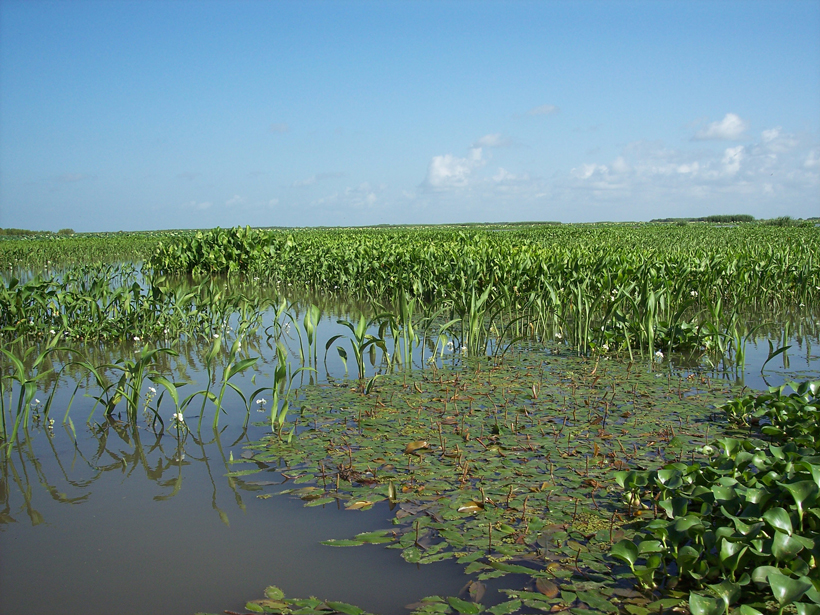
Researchers use a laboratory experiment to assess how nonflood river flow influences delta growth.
Posted inResearch Spotlights

Nonflood Flow May Be Major Driver of Delta Growth

Sarah Stanley, Science Writer by Sarah Stanley 12 December 201719 September 2023

Plants and fluctuating river flow work together to balance vertical sediment buildup with sediment delivery to the delta’s edge.

Posted inResearch Spotlights

Satellite Imaging Improves Study of Sinking River Deltas

JoAnna Wendel, freelance science writer and illustrator by JoAnna Wendel 10 January 201519 September 2023

Researchers know that the Ganges-Brahmaputra river delta is sinking. Now they have an accurate reading on the rate of subsidence.

Posts pagination

Newer posts 1 2 3
Over a dark blue-green square appear the words Special Report: The State of the Science 1 Year On.

Features from AGU Publications

Research Spotlights

New Method Could Improve U.S. Forecasting of West Nile Virus

20 February 202620 February 2026
Editors' Highlights

Why More Rain Doesn’t Mean More Erosion in Mountains

20 February 202620 February 2026
Editors' Vox

A Double-Edged Sword: The Global Oxychlorine Cycle on Mars

10 February 202610 February 2026
Eos logo at left; AGU logo at right

About Eos
ENGAGE
Awards
Contact

Advertise
Submit
Career Center
Sitemap

© 2026 American Geophysical Union. All rights reserved Powered by Newspack