• About
  • Special Reports
  • Topics
    • Climate
    • Earth Science
    • Oceans
    • Space & Planets
    • Health & Ecosystems
    • Culture & Policy
    • Education & Careers
    • Opinions
  • Projects
    • Postcards From the Field
    • ENGAGE
    • Editors’ Highlights
    • Editors’ Vox
    • Eos en Español
    • Eos 简体中文版
    • Print Archive: 2015–2025
  • Policy Tracker
  • Blogs
    • Research & Developments
    • The Landslide Blog
  • Newsletter
  • Submit to Eos
  • AGU.org
  • Career Center
  • Join AGU
  • Give to AGU
  • About
  • Special Reports
  • Topics
    • Climate
    • Earth Science
    • Oceans
    • Space & Planets
    • Health & Ecosystems
    • Culture & Policy
    • Education & Careers
    • Opinions
  • Projects
    • Postcards From the Field
    • ENGAGE
    • Editors’ Highlights
    • Editors’ Vox
    • Eos en Español
    • Eos 简体中文版
    • Print Archive: 2015–2025
  • Policy Tracker
  • Blogs
    • Research & Developments
    • The Landslide Blog
  • Newsletter
  • Submit to Eos
Skip to content
  • AGU.org
  • Career Center
  • Join AGU
  • Give to AGU
Eos

Eos

Science News by AGU

Support Eos
Sign Up for Newsletter
  • About
  • Special Reports
  • Topics
    • Climate
    • Earth Science
    • Oceans
    • Space & Planets
    • Health & Ecosystems
    • Culture & Policy
    • Education & Careers
    • Opinions
  • Projects
    • Postcards From the Field
    • ENGAGE
    • Editors’ Highlights
    • Editors’ Vox
    • Eos en Español
    • Eos 简体中文版
    • Print Archive: 2015–2025
  • Policy Tracker
  • Blogs
    • Research & Developments
    • The Landslide Blog
  • Newsletter
  • Submit to Eos

dust

Carbon dioxide frost presence at sunrise on Mars integrated over 1 year; note CO2 frost at low latitudes.
Posted inResearch Spotlights

Carbon Dioxide Frost May Keep Martian Soil Dusty

by David Shultz 8 July 201612 October 2022

Temperature readings acquired from orbit show that Mars's surface gets cold enough at night to allow layers of solid carbon dioxide frost up to several hundred micrometers thick to build up near the equator.

800-meter-tall dust devil above northern Mars.
Posted inResearch Spotlights

A (Dust) Devil of a Time—on Mars

Sarah Stanley, Science Writer by Sarah Stanley 23 June 201621 March 2022

New computer simulations of Martian dust devils could aid Red Planet weather forecasts.

Posted inEditors' Vox

Blowin’ in the Wind: Observing Stratospheric Aerosols

by Alan Robock 21 April 20162 February 2022

New observations and understanding of stratospheric particles are crucial for evaluating their role in climate change.
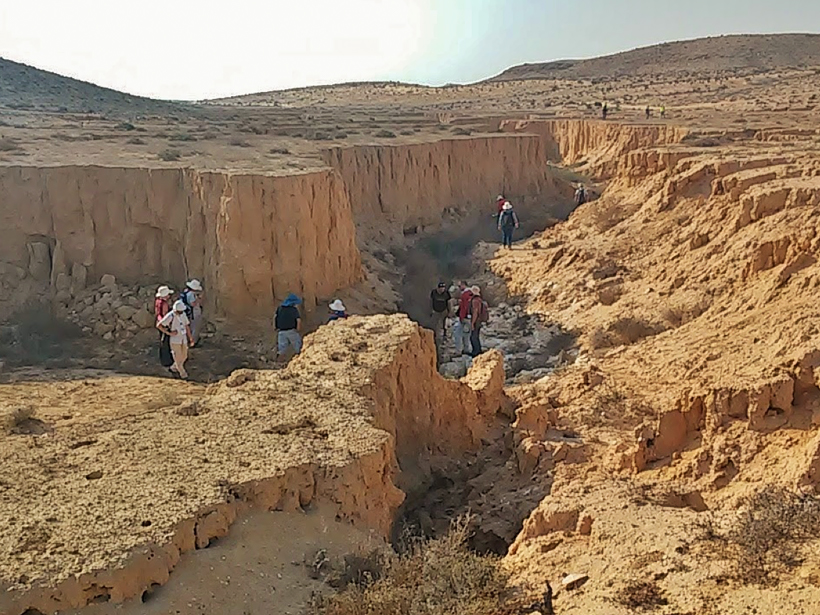
Negev-dune-field-sediment.jpg
Posted inScience Updates

Seeking Knowledge in the Dust

by O. Crouvi, R. Amit and Y. Enzel 8 April 20162 February 2022

The Batsheva de Rothschild Seminar on Atmospheric Dust, Dust Deposits (Loess) and Soils in Deserts and Desert Fringe: The Sahara-Sinai-Negev as an Analogue for the Global Arid Regions; Jerusalem and the Negev Desert, 14–19 October 2015
Posted inScience Updates

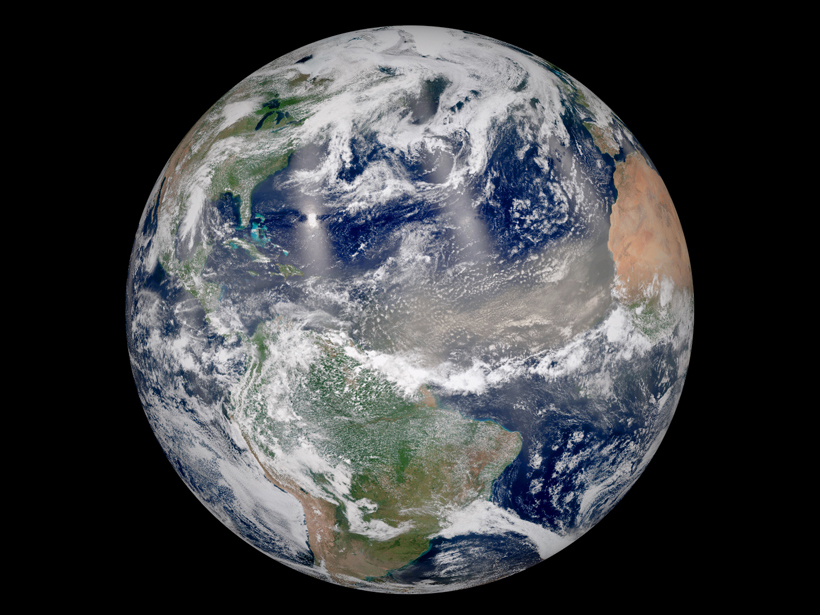
The Impact of African Dust on Air Quality in the Caribbean Basin

by J. M. Prospero and Henry F. Diaz 21 January 20167 March 2023

Symposium on Airborne Dust, Climate Change, and Human Health; Miami, Florida, 19–21 May 2015

Posted inResearch Spotlights

Amazon Rain Forest Nourished by African Dust

by Terri Cook 22 June 201529 April 2022

New satellite data highlight the important role African dust plays in maintaining the rain forest's long-term health.
Posted inResearch Spotlights

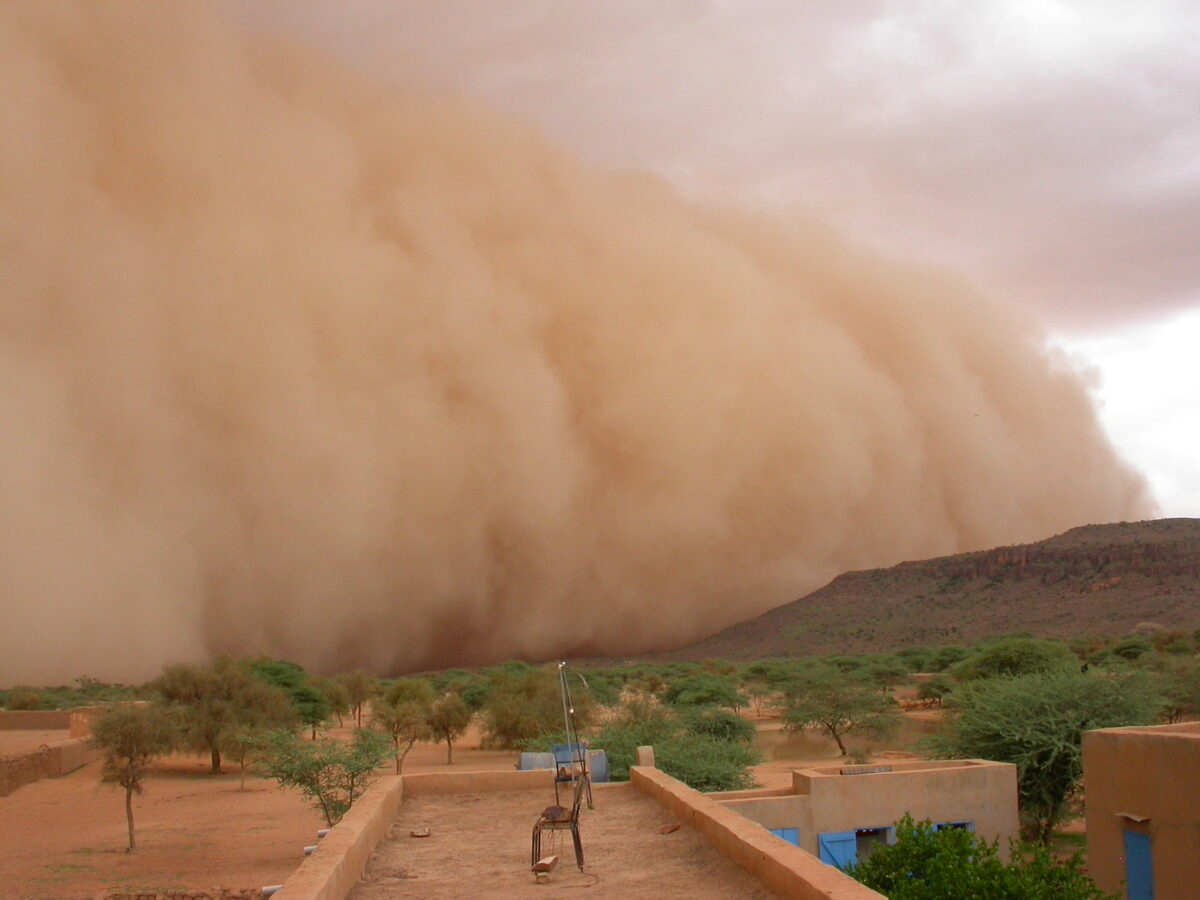
Comparing Models for Soil Erosion Due to Wind

by S. Palus 29 December 201410 September 2025

Researchers investigate the impact of vegetation on erosion.

Posts pagination

Newer posts 1 … 6 7 8
Over a dark blue-green square appear the words Special Report: The State of the Science 1 Year On.

Features from AGU Publications

Research Spotlights

Mapping Childhood Lead Exposure Risk in the United States, Neighborhood by Neighborhood

8 October 20268 October 2026
Editors' Highlights

Limits of Satellite Detection of Extreme Carbon Cycle Events

7 October 20267 October 2026
Editors' Vox

Where Fire Ends, Chemistry Begins

30 September 202630 September 2026
Eos logo at left; AGU logo at right

About Eos
ENGAGE
Awards
Contact

Advertise
Submit
Career Center
Sitemap

© 2026 American Geophysical Union. All rights reserved Powered by Newspack