• About
  • Sections
  • Topics
    • Climate
    • Earth Science
    • Oceans
    • Space & Planets
    • Health & Ecosystems
    • Culture & Policy
    • Education & Careers
    • Opinions
  • Projects
    • ENGAGE
    • Editors’ Highlights
    • Editors’ Vox
    • Eos en Español
    • Eos 简体中文版
    • Print Archive: 2015–2025
  • Science Policy Tracker
  • Blogs
    • Research & Developments
    • The Landslide Blog
  • Newsletter
  • Submit to Eos
  • AGU.org
  • Career Center
  • Join AGU
  • Give to AGU
  • About
  • Sections
  • Topics
    • Climate
    • Earth Science
    • Oceans
    • Space & Planets
    • Health & Ecosystems
    • Culture & Policy
    • Education & Careers
    • Opinions
  • Projects
    • ENGAGE
    • Editors’ Highlights
    • Editors’ Vox
    • Eos en Español
    • Eos 简体中文版
    • Print Archive: 2015–2025
  • Science Policy Tracker
  • Blogs
    • Research & Developments
    • The Landslide Blog
  • Newsletter
  • Submit to Eos
Skip to content
  • AGU.org
  • Career Center
  • Join AGU
  • Give to AGU
Eos

Eos

Science News by AGU

Support Eos
Sign Up for Newsletter
  • About
  • Sections
  • Topics
    • Climate
    • Earth Science
    • Oceans
    • Space & Planets
    • Health & Ecosystems
    • Culture & Policy
    • Education & Careers
    • Opinions
  • Projects
    • ENGAGE
    • Editors’ Highlights
    • Editors’ Vox
    • Eos en Español
    • Eos 简体中文版
    • Print Archive: 2015–2025
  • Science Policy Tracker
  • Blogs
    • Research & Developments
    • The Landslide Blog
  • Newsletter
  • Submit to Eos

ENSO

An aerial view of Seoul, South Korea, bathed in orange light at sunrise
Posted inNews

“Exceptional” Global Warming Spike Continued in 2024

Kimberly M. S. Cartier, News Writing and Production Intern for Eos.org by Kimberly M. S. Cartier 10 January 202510 January 2025

More than 3 billion people experienced their hottest year ever in 2024 because of anthropogenic climate change. The world is speeding toward its 1.5°C warming target.

Clouds over the ocean as viewed from space.
Posted inNews

Darker, Less Cloudy Earth Contributed to Record Heat

by Nathaniel Scharping 8 January 20258 January 2025

Decreases to our planet’s albedo caused by fewer low-lying clouds helped push temperatures to historic highs in 2023, according to new research.

The Sun sets beyond a rice field where young rice plants sprout from cracked soil.
Posted inOpinions

Earth Scientists Are Crucial to International Development

by Noel G. Brizuela 17 December 202428 January 2025

Global development agencies traditionally hire experts in human systems. As these agencies focus more on climate and environmental initiatives, they need informed guidance from Earth system scientists.

Layers of rock visible in a cliff in Nanliang, Shanxi, China.
Posted inNews

Mega El Niño May Have Led to Major Mass Extinction 252 Million Years Ago

by Rebecca Owen 11 October 20244 August 2025

The extreme climate conditions wrought by a decades-long ENSO pattern could be the culprit in the Great Dying, which wiped out nearly 90% of life on Earth.

A bird’s-eye view of an Amazon forest with a mix of green and leafless trees
Posted inResearch Spotlights

Amazonian Drought May Have Long-Lasting Effects on Carbon Cycle

by Rebecca Owen 19 August 202419 August 2024

Dry conditions stemming from the 2015–2016 El Niño caused significant carbon loss.

Viewed from below, three sharks swim beneath a dense school of smaller fish in the ocean, all in shades of blue.
Posted inResearch Spotlights

In Hot Water and Beyond: Marine Extremes Escalate

Sarah Stanley, Science Writer by Sarah Stanley 28 June 202428 June 2024

A new study suggests marine life is increasingly faced with triple-threat events in which extreme water temperature, low oxygen levels, and acidification converge.

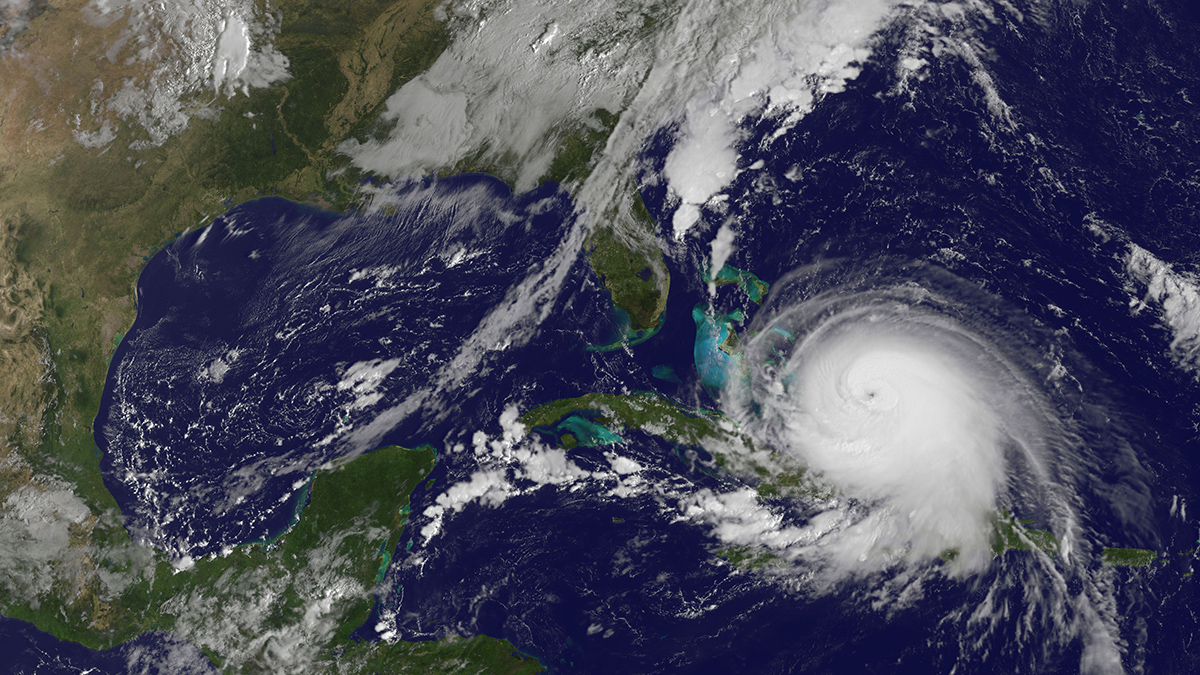
A satellite image of Hurricane Edouard over the Atlantic Ocean
Posted inNews

2024 Could Be Among Most Active Hurricane Seasons Ever

by Grace van Deelen 23 May 202423 May 2024

A new NOAA report predicts an extraordinarily active Atlantic hurricane season spurred by record ocean temperatures and a shift to La Niña conditions.

Un Sol anaranjado se eleva sobre un banco de nubes.
Posted inNews

Temperaturas récord posiblemente continuarán ante la persistencia de El Niño

by Grace van Deelen 17 April 202417 April 2024

Es probable que las temperaturas globales superficiales del aire se mantengan elevadas durante el comienzo del verano debido a la persistencia del evento de El Niño.

Large smoke clouds swell behind trees.
Posted inNews

Forecasters Expect Slow Start to U.S. Wildfire Season

by Grace van Deelen 11 April 202411 April 2024

A wet spring in the United States will dampen early fires, but some regions will see elevated risk this summer.

Dry riverbed of Solimões River, in the upper Amazon basin.
Posted inNews

Quase um Ano depois, a Seca na Amazônia Está Longe de Terminar

by Meghie Rodrigues 3 April 20243 April 2024

Fortalecido pelas mudanças climáticas, o período de seca no norte do Brasil poderá durar mais que o originalmente previsto e ter consequências econômicas e ecológicas prolongadas.

Posts pagination

Newer posts 1 2 3 4 … 9 Older posts
A view of a bridge, with the New Orleans skyline visible in the distance between the bridge and the water. A purple tint, a teal curved line representing a river, and the text “#AGU25 coverage from Eos” overlie the photo.

Features from AGU Publications

Research Spotlights

Marine Heat Waves Can Exacerbate Heat and Humidity over Land

2 January 20262 January 2026
Editors' Highlights

Frictional Properties of the Nankai Accretionary Prism

11 December 20259 December 2025
Editors' Vox

Hydrothermal Circulation and Its Impact on the Earth System

3 December 20253 December 2025
Eos logo at left; AGU logo at right

About Eos
ENGAGE
Awards
Contact

Advertise
Submit
Career Center
Sitemap

© 2026 American Geophysical Union. All rights reserved Powered by Newspack