


In a coordinated monitoring effort, scientists have uncovered the timing and triggering of high-energy lightning events in the sky.
everything atmospheric
Posted inResearch Spotlights
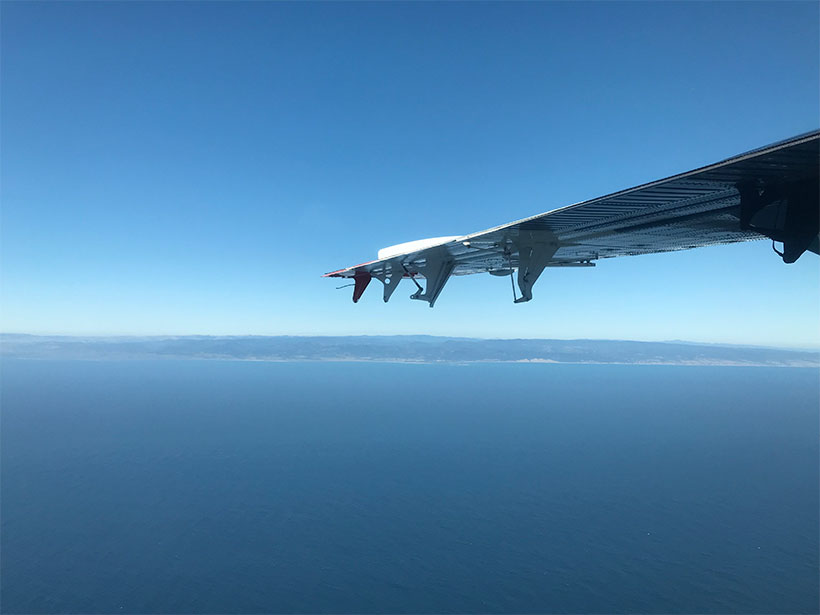
Mejorando el presupuesto mundial para el metanol atmosférico
Nuevos datos de exploración con aeronaves muestran que aunque la química atmosférica sobre regiones oceánicas remotas es una fuente considerable de producción de metanol, la emisión neta de metanol del océano es menor.

Posted inNews
Climate Clues from One of the Rainiest Places on Earth
One of the world’s rainiest places lies off Colombia’s Pacific coast. New field research sheds light on the Chocó low-level jet, a phenomenon responsible for the region’s precipitation.

Posted inFeatures
Chasing Cyclones from Space
The pioneering use of satellite-based synthetic aperture radar to characterize tropical cyclones in near-real time has provided a crucial new tool with which to forecast powerful storms.
Posted inEditors' Highlights
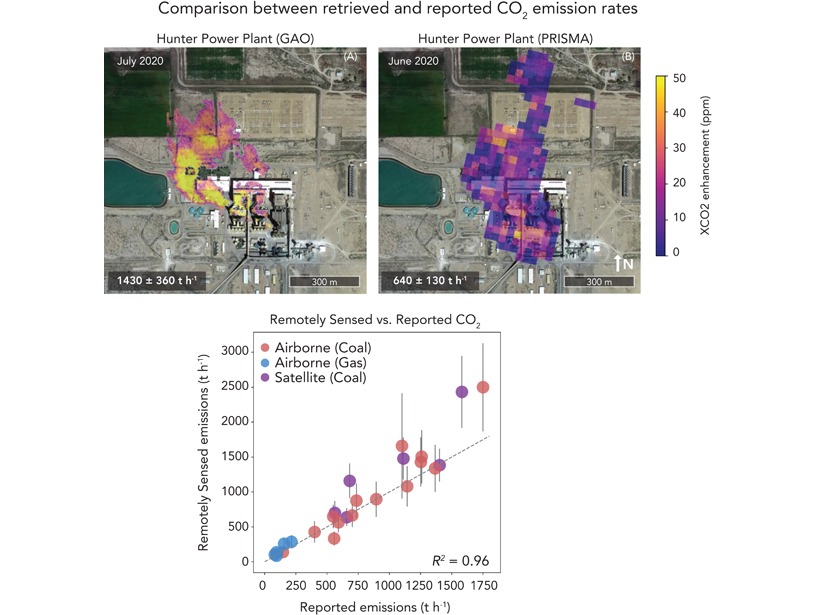
Constraining Global Power Plant Emissions of Carbon Dioxide
Airborne and satellite imaging spectrometers provide accurate quantifying of CO2 emissions at the facility scale, which is important to emission budgets and policy constraints.

Posted inNews
Fifteen Years of Radar Reveal Venus’s Most Basic Facts

Venus’s heavy atmosphere tugs the planet’s surface enough to change the length of its day by up to 21 minutes.

Posted inEditors' Highlights
Earthquake Rupture Solution is Up in the Air
Perhaps the most complex earthquake rupture ever studied is further constrained by signals from Earth’s ionosphere.
Posted inAGU News
Subimal Ghosh Receives 2020 Devendra Lal Memorial Medal
Subimal Ghosh was awarded the 2020 Devendra Lal Memorial Medal at the virtual AGU Fall Meeting in December. The medal is for “outstanding Earth and/or space sciences research by a scientist belonging to and working in a developing country.”

Posted inNews
Scientists Hope Atmospheric Modeling Can Predict Meteotsunamis

The first extensively documented air pressure–driven meteotsunami on one of the Great Lakes presents an opportunity to use existing weather models to predict when these potentially deadly waves will strike.

Posted inScience Updates
Taking Flight to Study Clouds and Climate
A new mission involving synchronized aircraft observations is collecting data vital for improving our understanding of how aerosol particles and clouds influence each other.