• About
  • Special Reports
  • Topics
    • Climate
    • Earth Science
    • Oceans
    • Space & Planets
    • Health & Ecosystems
    • Culture & Policy
    • Education & Careers
    • Opinions
  • Projects
    • Postcards From the Field
    • ENGAGE
    • Editors’ Highlights
    • Editors’ Vox
    • Eos en Español
    • Eos 简体中文版
    • Print Archive: 2015–2025
  • Policy Tracker
  • Blogs
    • Research & Developments
    • The Landslide Blog
  • Newsletter
  • Submit to Eos
  • AGU.org
  • Career Center
  • Join AGU
  • Give to AGU
  • About
  • Special Reports
  • Topics
    • Climate
    • Earth Science
    • Oceans
    • Space & Planets
    • Health & Ecosystems
    • Culture & Policy
    • Education & Careers
    • Opinions
  • Projects
    • Postcards From the Field
    • ENGAGE
    • Editors’ Highlights
    • Editors’ Vox
    • Eos en Español
    • Eos 简体中文版
    • Print Archive: 2015–2025
  • Policy Tracker
  • Blogs
    • Research & Developments
    • The Landslide Blog
  • Newsletter
  • Submit to Eos
Skip to content
  • AGU.org
  • Career Center
  • Join AGU
  • Give to AGU
Eos

Eos

Science News by AGU

Support Eos
Sign Up for Newsletter
  • About
  • Special Reports
  • Topics
    • Climate
    • Earth Science
    • Oceans
    • Space & Planets
    • Health & Ecosystems
    • Culture & Policy
    • Education & Careers
    • Opinions
  • Projects
    • Postcards From the Field
    • ENGAGE
    • Editors’ Highlights
    • Editors’ Vox
    • Eos en Español
    • Eos 简体中文版
    • Print Archive: 2015–2025
  • Policy Tracker
  • Blogs
    • Research & Developments
    • The Landslide Blog
  • Newsletter
  • Submit to Eos

everything atmospheric

Posted inResearch Spotlights

What Causes Nitric Oxide to Infiltrate the Ozone Layer?

JoAnna Wendel, freelance science writer and illustrator by JoAnna Wendel 9 December 201420 January 2023

Processes in the polar atmosphere can cause nitric oxide (NO)-enriched air to descend and destroy stratospheric ozone. Scientists explore one cause of these NO fluxes, stratospheric sudden warming.

Posted inResearch Spotlights

Upper Atmosphere Has Cooled Steadily for Three Decades

JoAnna Wendel, freelance science writer and illustrator by JoAnna Wendel 25 November 201423 January 2023

Scientists projected that the upper atmosphere would continue to cool and contract with rising greenhouse gas emissions. Now, these projections have been confirmed for the first time.
Posted inResearch Spotlights

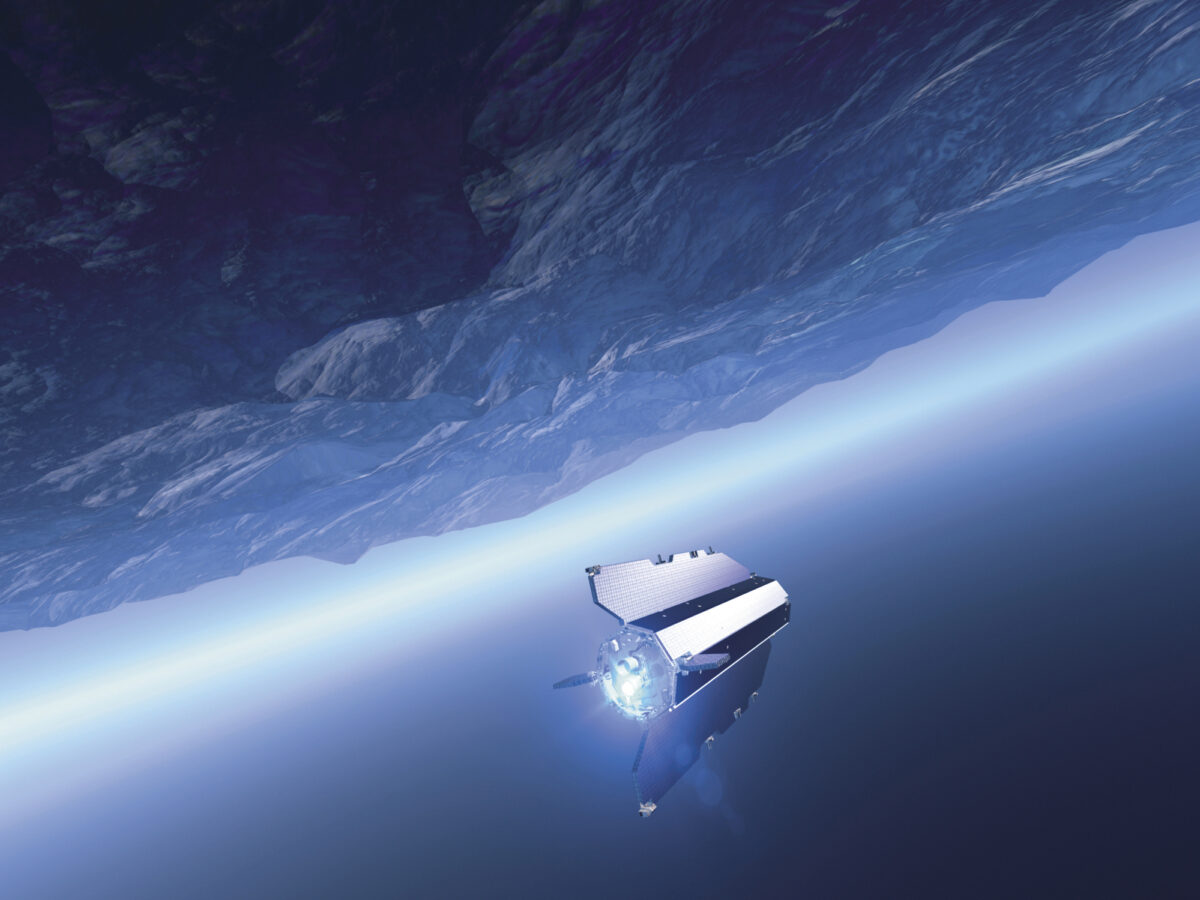
Role of Lunar Atmospheric Tides in Thermosphere Density

by S. Palus and Faith Ishii 25 November 201423 January 2023

Researchers explored how lunar gravity affects the density of the thermosphere. The study could help improve the accuracy of satellite orbit predictions.
Posted inResearch Spotlights

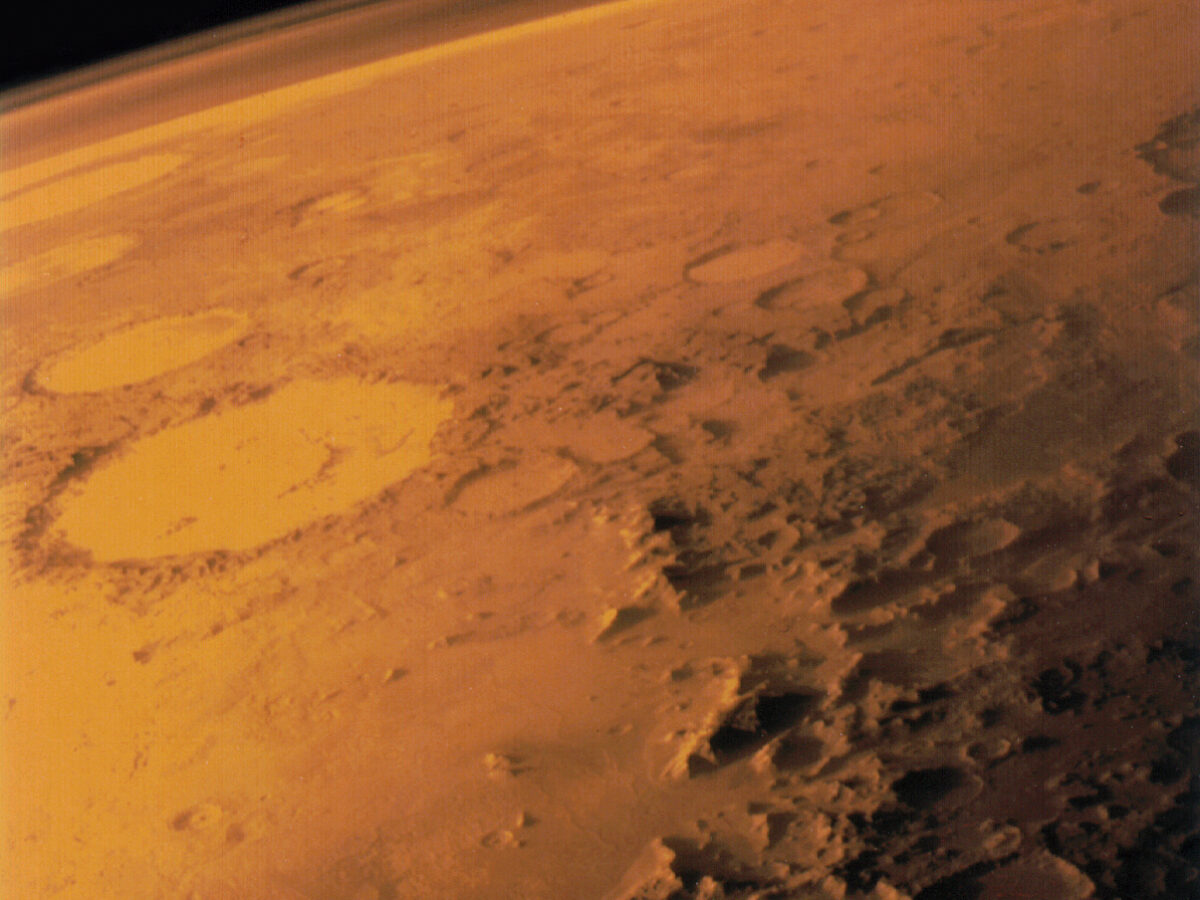
Measuring Solar Wind Interactions in Mars’s Exosphere

by C. Schultz 18 November 201410 March 2022

An updated analytical technique gave researchers a new look at ion cyclotron waves in Mars’s extended hydrogen exosphere.

Posted inScience Updates

Exploring the Origin of High-­Energy Particle Beams in the Atmosphere

by A. A. Chilingarian 18 November 201427 January 2022

Thunderstorms and Elementary Particle Acceleration; Yerevan, Armenia, 22–26 September 2014
Posted inResearch Spotlights

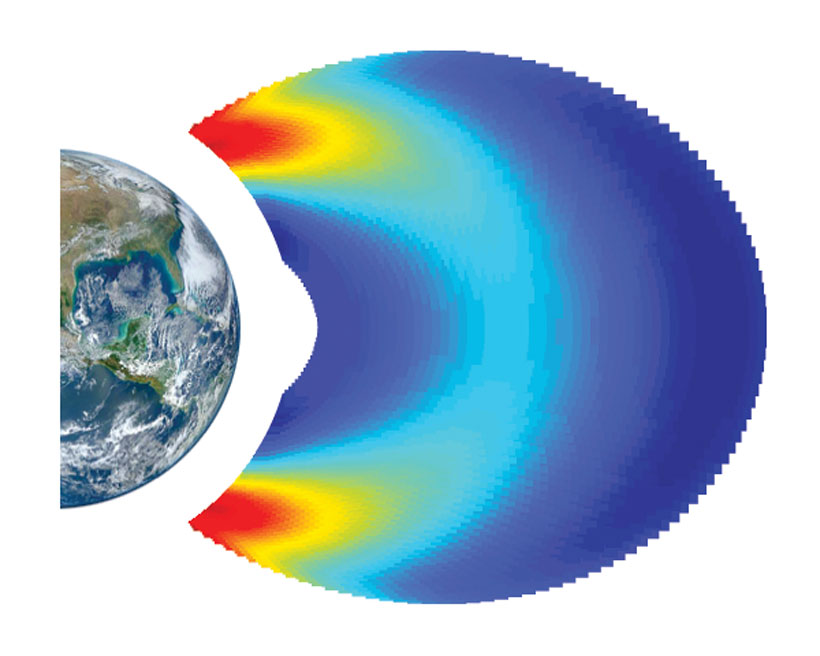
Model of Earth's Plasmasphere Is Incompatible with Measurements

by E. Balcerak 11 November 201410 February 2023

Researchers find that a model of the Earth’s plasmasphere developed in the 1960s is outdated and inaccurate.

Posted inResearch Spotlights

Minerals in Martian Meteorite Illuminate Magnetic Mysteries

JoAnna Wendel, freelance science writer and illustrator by JoAnna Wendel 11 November 20144 October 2021

What causes the magnetic anomalies found on Mars? Scientists find revealing analogues in a tiny sample of Martian rock that could help answer this question.
Posted inResearch Spotlights

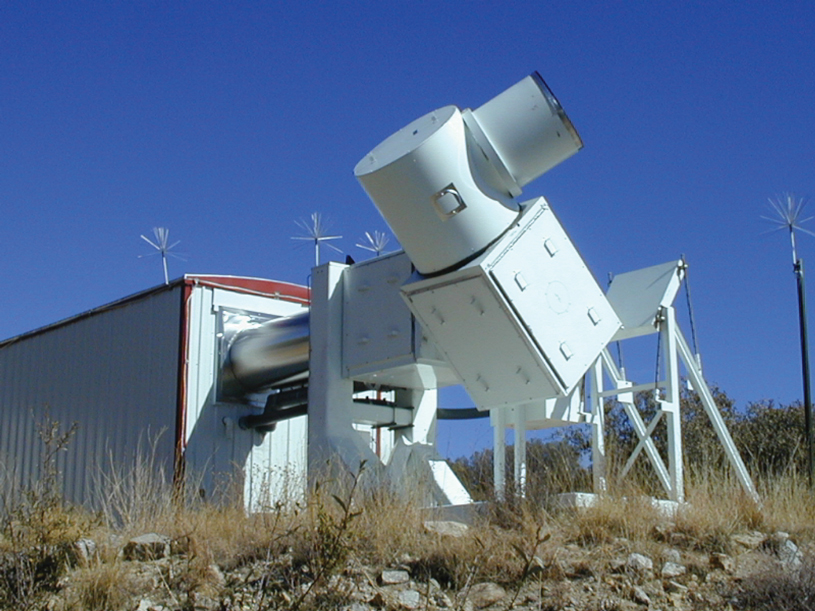
Measuring the Faint Glow of the Earth's Thin Exosphere

by C. Schultz 21 October 201426 October 2021

Scientists attempting to understand the Earth’s exosphere use a spectrometer to study different types of hydrogen atoms energized by the sun.

Posted inScience Updates

The Impact of Coronagraphs

by O. C. St. Cyr, B. Fleck, J. M. Davila and Faith Ishii 14 October 201427 January 2022

Observations of the Sun’s extended atmosphere with coronagraphs have become indispensable to both basic and applied research.

Posted inNews

Natalia Andronova (1953–2014)

by J. E. Penner 30 September 201410 September 2025

Atmospheric scientist Natalia Andronova passed away on 1 June 2014.

Posts pagination

Newer posts 1 … 91 92 93 94 Older posts
Over a dark blue-green square appear the words Special Report: The State of the Science 1 Year On.

Features from AGU Publications

Research Spotlights

How Fine Can Global Storm Models Get?

4 November 20264 November 2026
Editors' Highlights

Deltas Retain 28% of Global River Sediment, the Rest Enters the Ocean

4 November 20264 November 2026
Editors' Vox

Opening Access to Earth Observation Data for Disaster Mitigation

21 October 202620 October 2026
Eos logo at left; AGU logo at right

About Eos
ENGAGE
Awards
Contact

Advertise
Submit
Career Center
Sitemap

© 2026 American Geophysical Union. All rights reserved Powered by Newspack