
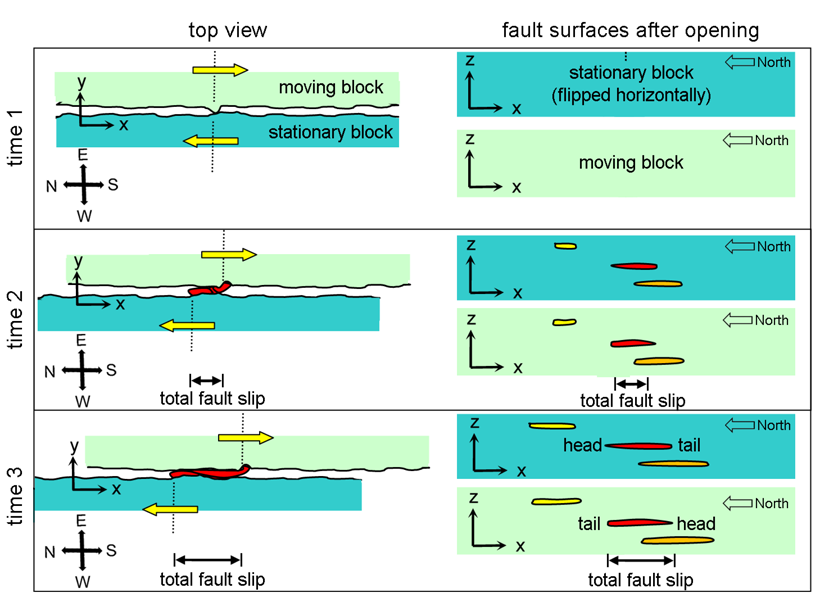
Rock sliding experiments on meter scales show groove patterns which are controlled by normal stress. This may help better understand earthquake source conditions from exhumed faults.
faults
Posted inAGU News
Chester Receives 2019 Paul G. Silver Award for Outstanding Scientific Service
Judith Savaso Chester received the 2019 Paul G. Silver Award for Outstanding Scientific Service at AGU’s Fall Meeting 2019, held 9–13 December in San Francisco, Calif. The award is given annually and recognizes “significant contributions to the fields of geodesy, seismology, or tectonophysics from a mid-career or senior scientist” through “mentorship of early-career scientists, leadership on community research initiatives, or other collaborative research efforts.”
Posted inEditors' Highlights
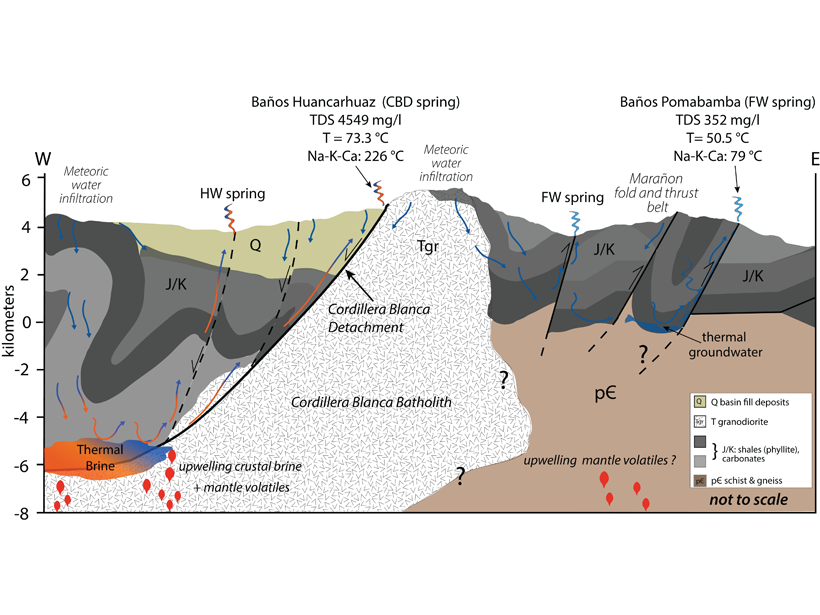
Structural Style Controls Crustal Fluid Circulation in Andes
Variations in hot spring geochemistry from adjacent mountain ranges with different styles of faulting highlight the influence of crustal-scale structures on circulating fluids in the Peruvian Andes.
Posted inEditors' Highlights
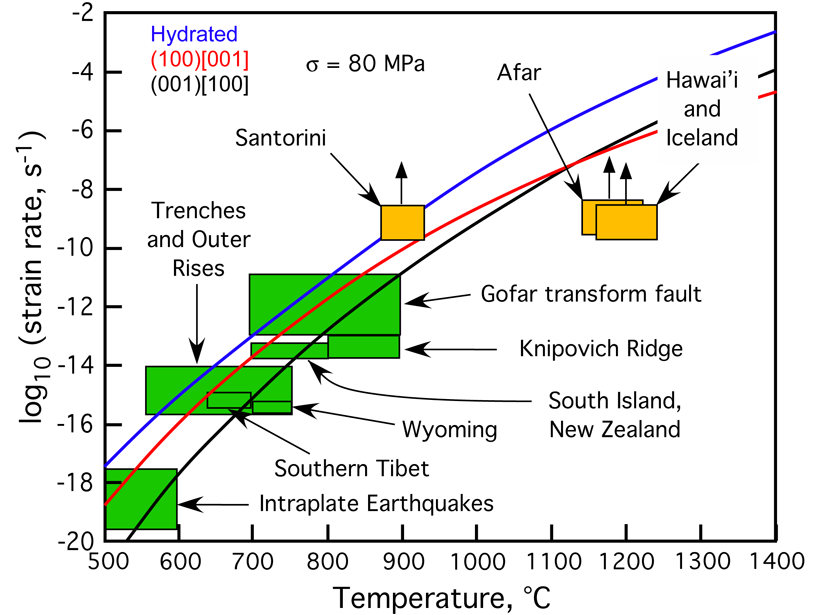
Strain Rate: The Overlooked Control on Earthquake Depth
Regional strain rate may play as significant a role as temperature in governing the depth distribution of earthquakes in mantle lithosphere.
Posted inEditors' Highlights
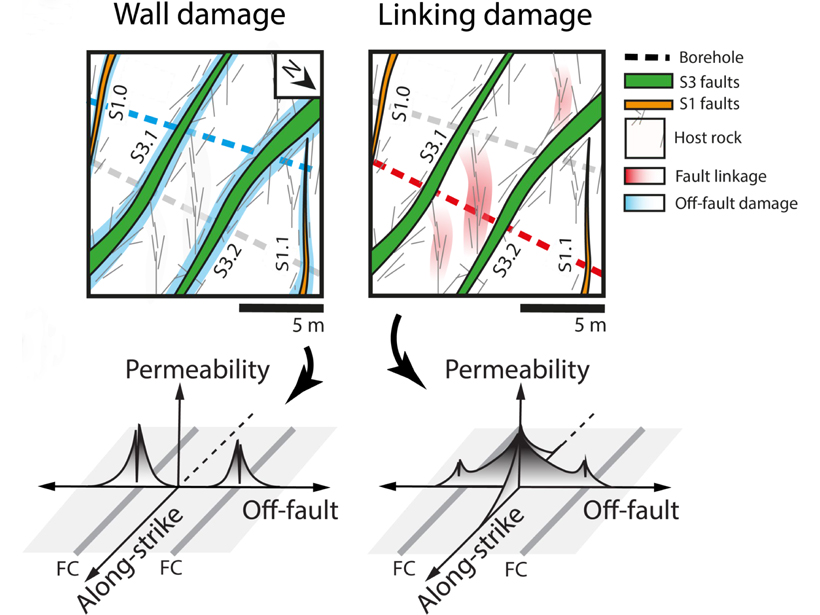
Fluctuating Fluid Flows in a Fractured Fault
Fault damage zones can focus fluid transport near faults.
Posted inEditors' Highlights
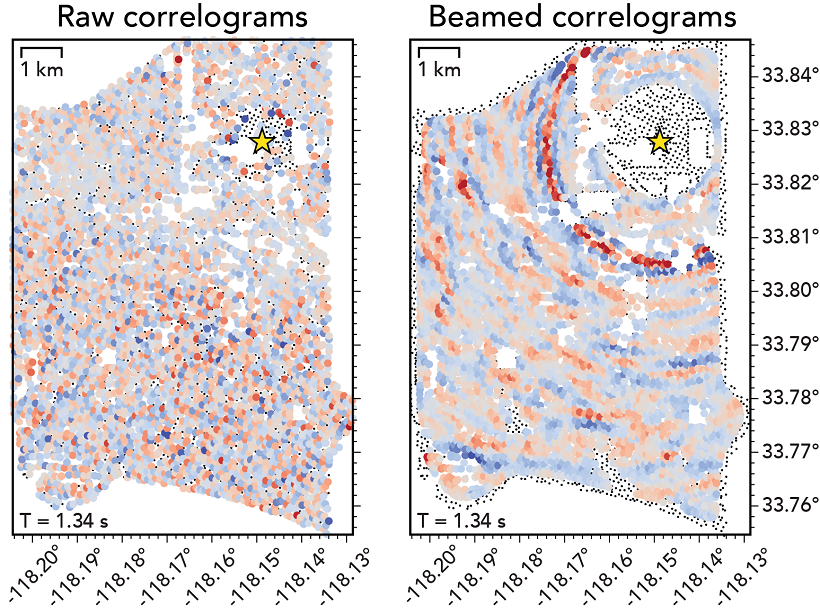
Fine-scale Structure Mapped by Body Waves Extracted from Noise
A novel processing scheme was used to extract refracted body waves from ambient seismic noise and investigate the small-scale structure around a fault at Long Beach, California.

Posted inEditors' Highlights
Ultrahigh Speed Movies Catch Growing Earthquake Ruptures
Comparing successive frames from ultrahigh speed videos of propagating fractures allowed laboratory researchers for the first time to capture the fine details of of a propagating earthquake rupture.

Posted inEditors' Highlights
Slow Slip By Any Other Name
Earth’s faults slip most catastrophically as earthquakes. The rise of geodesy reveals an array of slower slip events, meaning faults are nearly always active. Are these behaviors really so different?

Posted inResearch Spotlights
Fault Dips Figured in Kīlauea’s Caldera Collapse
Large-volume volcanic eruptions can create instabilities in the ground above magma chambers, leading to massive collapses and telltale calderas.
Posted inFeatures
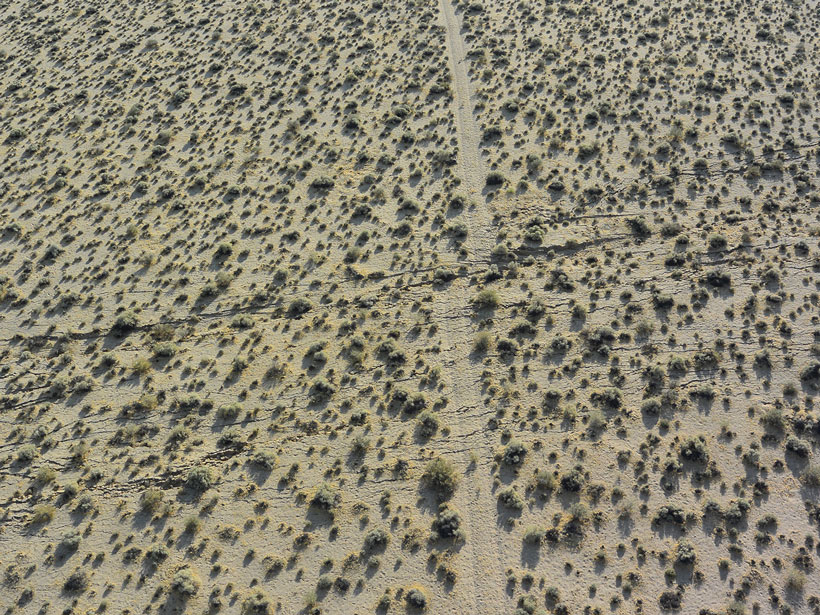
Scientists Scramble to Collect Data After Ridgecrest Earthquakes

Ground shaking in Southern California, including a magnitude 7.1 temblor, triggered a massive mobilization effort to collect seismological, geological, and geodetic data.