• About
  • Special Reports
  • Topics
    • Climate
    • Earth Science
    • Oceans
    • Space & Planets
    • Health & Ecosystems
    • Culture & Policy
    • Education & Careers
    • Opinions
  • Projects
    • Postcards From the Field
    • ENGAGE
    • Editors’ Highlights
    • Editors’ Vox
    • Eos en Español
    • Eos 简体中文版
    • Print Archive: 2015–2025
  • Policy Tracker
  • Blogs
    • Research & Developments
    • The Landslide Blog
  • Newsletter
  • Submit to Eos
  • AGU.org
  • Career Center
  • Join AGU
  • Give to AGU
  • About
  • Special Reports
  • Topics
    • Climate
    • Earth Science
    • Oceans
    • Space & Planets
    • Health & Ecosystems
    • Culture & Policy
    • Education & Careers
    • Opinions
  • Projects
    • Postcards From the Field
    • ENGAGE
    • Editors’ Highlights
    • Editors’ Vox
    • Eos en Español
    • Eos 简体中文版
    • Print Archive: 2015–2025
  • Policy Tracker
  • Blogs
    • Research & Developments
    • The Landslide Blog
  • Newsletter
  • Submit to Eos
Skip to content
  • AGU.org
  • Career Center
  • Join AGU
  • Give to AGU
Eos

Eos

Science News by AGU

Support Eos
Sign Up for Newsletter
  • About
  • Special Reports
  • Topics
    • Climate
    • Earth Science
    • Oceans
    • Space & Planets
    • Health & Ecosystems
    • Culture & Policy
    • Education & Careers
    • Opinions
  • Projects
    • Postcards From the Field
    • ENGAGE
    • Editors’ Highlights
    • Editors’ Vox
    • Eos en Español
    • Eos 简体中文版
    • Print Archive: 2015–2025
  • Policy Tracker
  • Blogs
    • Research & Developments
    • The Landslide Blog
  • Newsletter
  • Submit to Eos

GeoHealth (journal)

Visit the journal.

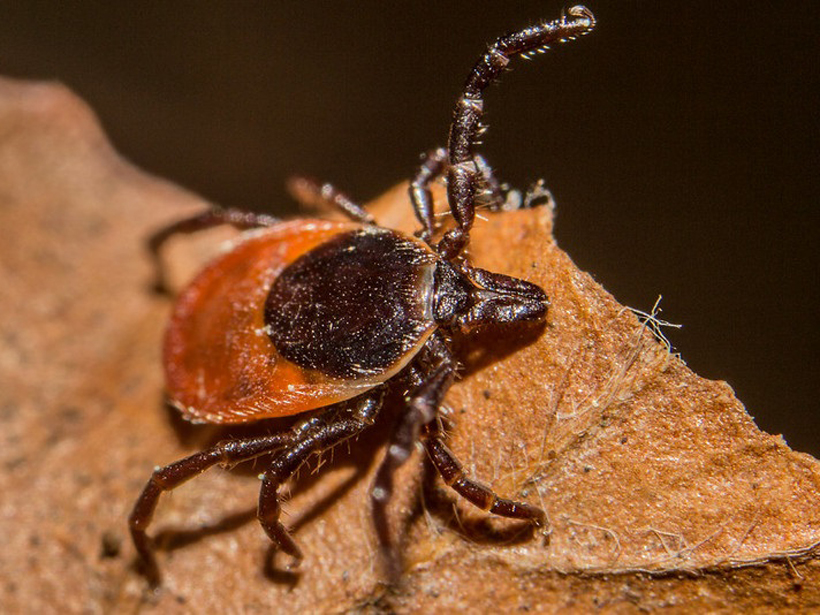
A female blacklegged tick
Posted inEditors' Vox

Putting a Price on the Costs of Climate Related Health Impacts

by J. Balbus, V. Limaye and K. Knowlton 9 October 20199 November 2022

Using examples from the year 2012, a new study estimates the health costs of deaths and illnesses associated with climate-sensitive events.
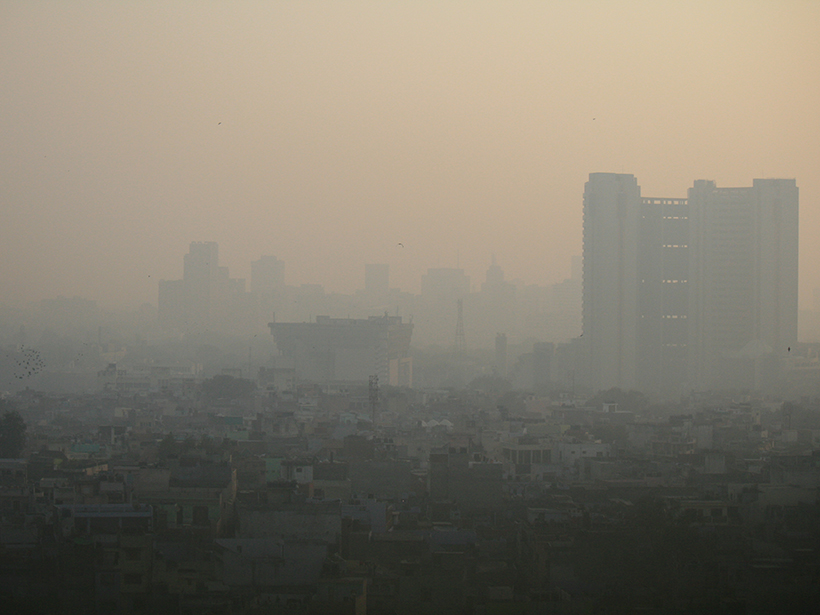
A view of poor air quality in Delhi, India.
Posted inResearch Spotlights

Aerosol Particle Size May Contribute to Varying Health Responses

Aaron Sidder, freelance science writer by Aaron Sidder 4 April 201923 March 2023

Particulate matter in the atmosphere derives from industrial and environmental sources. The size of the particle determines how it deposits in the body and leads to different health challenges.
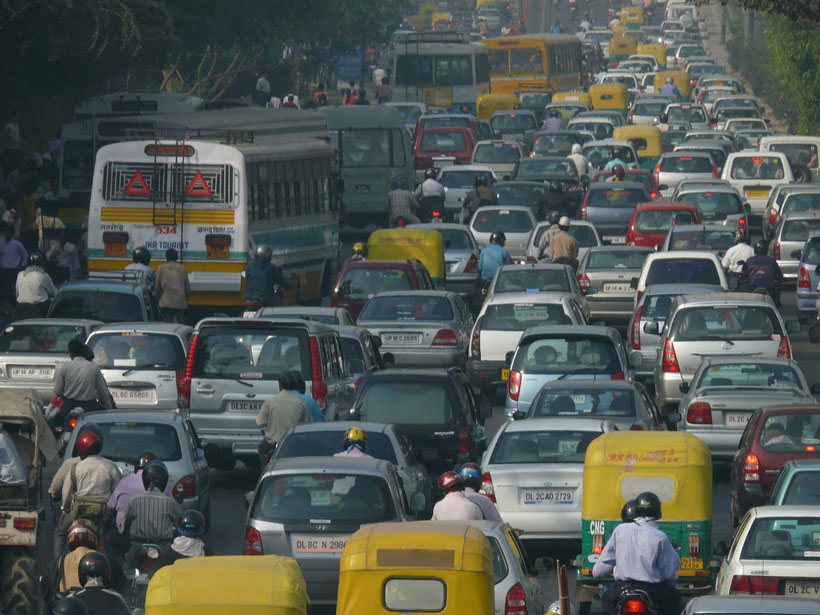
A traffic jam in Delhi, India
Posted inResearch Spotlights

Ozone Pollution Deaths in India Higher Than Previously Thought

by E. Underwood 19 March 20199 September 2024

Reducing emissions could avert more than 300,000 deaths per year by 2050.
Posted inEditors' Highlights

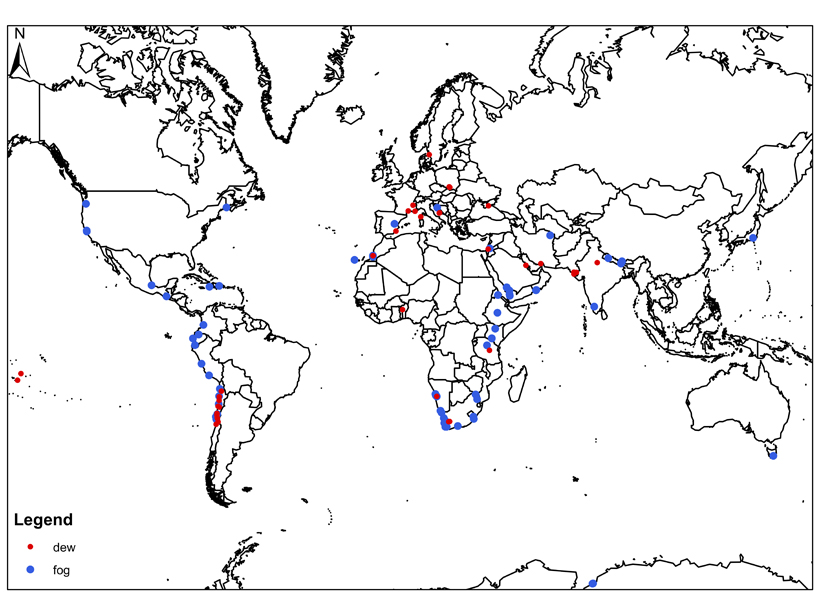
Fog Catching for Thirsty Locales

by Gabriel Filippelli 15 November 20187 February 2024

Many arid and semi-arid regions experience very little rainfall, but quite a bit of fog, which might be a viable source of drinking water.

A comparison between dolphins (circle) and humans (square and triangle) for urine concentrations of a phthalate metabolite commonly added to plastic.
Posted inEditors' Highlights

Dolphins in Florida Show Exposure to Phthalate Contaminants

by P. A. Sandifer 7 November 20182 June 2025

Scientists have detected exposure to phthalates among a majority of bottlenose dolphins sampled in Sarasota Bay, Florida (2016–2017), including some with levels comparable to those observed in humans.

People walking a tree-lined street during extreme smog conditions in New Delhi, India.
Posted inResearch Spotlights

Improving Air Quality Could Prevent Thousands of Deaths in India

by E. Underwood 7 August 20189 September 2024

More stringent emission controls are key to the country’s future health.

Researchers assess the data gaps that obscure scientific understanding of how solid-fuel use can harm human health
Posted inResearch Spotlights

Solid-Fuel Use Puts Human Health at Risk

by S. Witman 15 March 201820 September 2022

Data gaps obscure the full extent of deaths caused by heating homes with wood and other solid fuels.

Posted inEditors' Vox

Introducing a New Editor in Chief for GeoHealth

by Gabriel Filippelli 4 August 201731 October 2022

Find out how the person in charge of AGU’s newest journal became interested in geohealth and his vision for the journal over the coming years.

Posted inScience Updates

Exploring the Impact of a Changing Climate on Tribal Communities

by N. B. Watts and D. M. Dalbotten 20 October 20158 October 2021

GA3: A Changing Climate's Effect on Rivers, Estuaries, Oceans, First Foods, and Tribal Health; Portland, Oregon, 21–23 March 2015

Posts pagination

Newer posts 1 … 4 5 6
Over a dark blue-green square appear the words Special Report: The State of the Science 1 Year On.

Features from AGU Publications

Research Spotlights

As Wildfires Increase in the West, So Does Suppression Spending

10 June 202610 June 2026
Editors' Highlights

Multi-Scale Fault Roughness Encapsulated in a Friction Law

11 June 202611 June 2026
Editors' Vox

Small-Scale Indian Ocean Dynamics Underpin Marine Ecology and Climate

4 June 20263 June 2026
Eos logo at left; AGU logo at right

About Eos
ENGAGE
Awards
Contact

Advertise
Submit
Career Center
Sitemap

© 2026 American Geophysical Union. All rights reserved Powered by Newspack