• About
  • Special Reports
  • Topics
    • Climate
    • Earth Science
    • Oceans
    • Space & Planets
    • Health & Ecosystems
    • Culture & Policy
    • Education & Careers
    • Opinions
  • Projects
    • Postcards From the Field
    • ENGAGE
    • Editors’ Highlights
    • Editors’ Vox
    • Eos en Español
    • Eos 简体中文版
    • Print Archive: 2015–2025
  • Policy Tracker
  • Blogs
    • Research & Developments
    • The Landslide Blog
  • Newsletter
  • Submit to Eos
  • AGU.org
  • Career Center
  • Join AGU
  • Give to AGU
  • About
  • Special Reports
  • Topics
    • Climate
    • Earth Science
    • Oceans
    • Space & Planets
    • Health & Ecosystems
    • Culture & Policy
    • Education & Careers
    • Opinions
  • Projects
    • Postcards From the Field
    • ENGAGE
    • Editors’ Highlights
    • Editors’ Vox
    • Eos en Español
    • Eos 简体中文版
    • Print Archive: 2015–2025
  • Policy Tracker
  • Blogs
    • Research & Developments
    • The Landslide Blog
  • Newsletter
  • Submit to Eos
Skip to content
  • AGU.org
  • Career Center
  • Join AGU
  • Give to AGU
Eos

Eos

Science News by AGU

Support Eos
Sign Up for Newsletter
  • About
  • Special Reports
  • Topics
    • Climate
    • Earth Science
    • Oceans
    • Space & Planets
    • Health & Ecosystems
    • Culture & Policy
    • Education & Careers
    • Opinions
  • Projects
    • Postcards From the Field
    • ENGAGE
    • Editors’ Highlights
    • Editors’ Vox
    • Eos en Español
    • Eos 简体中文版
    • Print Archive: 2015–2025
  • Policy Tracker
  • Blogs
    • Research & Developments
    • The Landslide Blog
  • Newsletter
  • Submit to Eos

geology

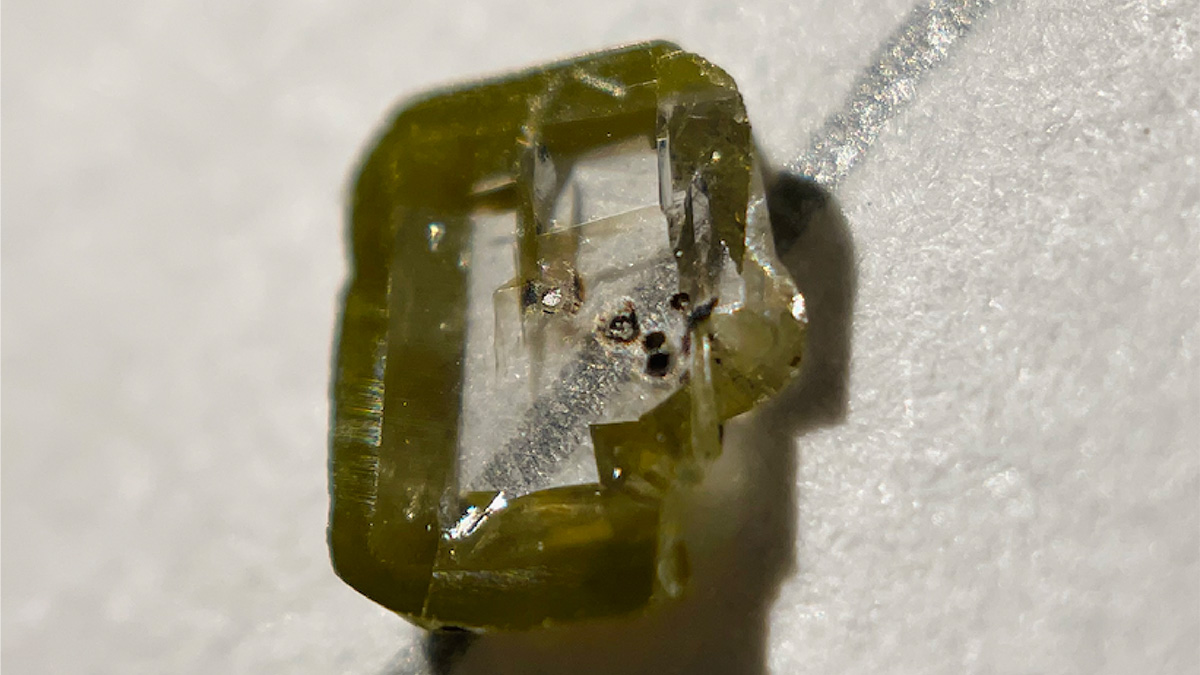
Image of the diamond from Botswana containing davemaoite as an inclusion
Posted inENGAGE, News

Diamond Discovery Unearths Secrets of the Deep

by Clarissa Wright 23 December 202130 September 2023

A diamond inclusion has revealed a new mineral, davemaoite, as well as hints about the workings of our planet’s interior.

Map centered on the North Pole plotting archived data from multiple sources.
Posted inEditors' Highlights

American Legacy Paleosecular Variation Data Unlocked

by Mark J. Dekkers 3 December 202120 December 2021

The geomagnetic field changes regionally on centennial time scales. A recent study unlocks three historical archives from the “Four Corners” region (southwest USA) reconciling previous discrepancies.
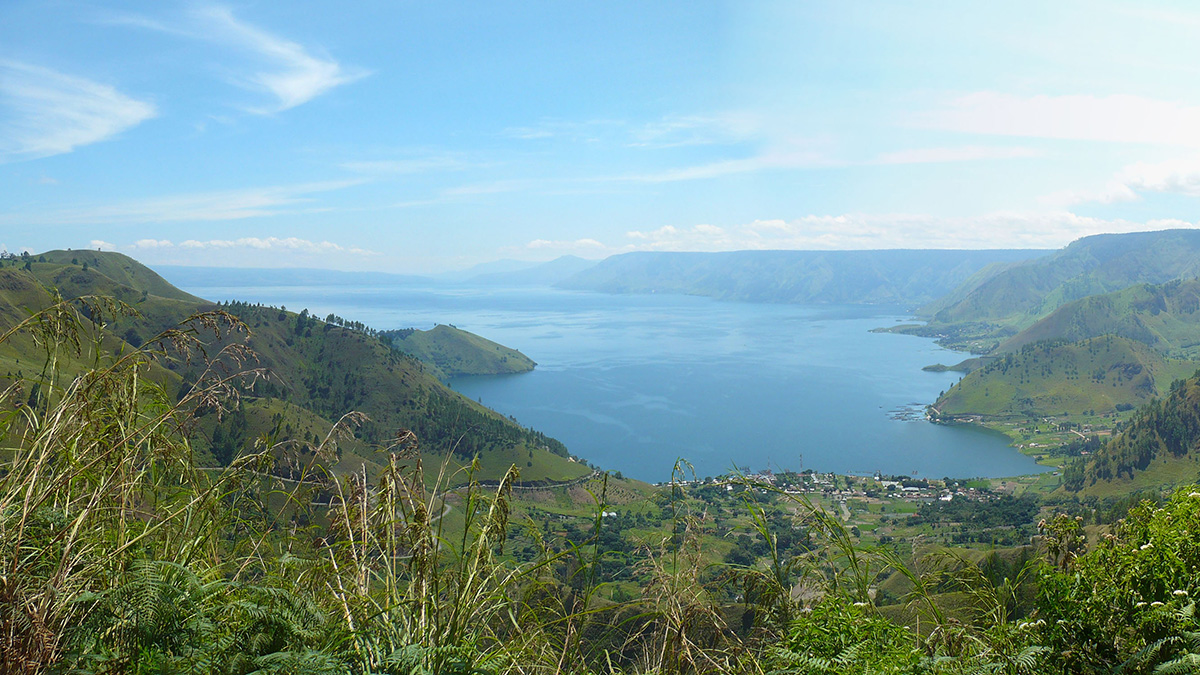
An inlet of Lake Toba in Indonesia, surrounded by tropical vegetation
Posted inNews

La vida después de una super erupción

by Danielle Beurteaux 9 November 202116 March 2022

Una vez que una erupción volcánica masiva termina, el sistema subyacente puede mantenerse activo por miles de años. Una nueva investigación vislumbra cómo funcionan los ciclos de super erupciones.

Painting depicting the surface of Earth during the Hadean eon, with a liquid water ocean, volcanoes, and meteors streaking through the sky
Posted inScience Updates

A Simple Recipe for Making the First Continental Crust

by Anastassia Y. Borisova and Anne Nédélec 5 November 202116 May 2022

Laboratory experiments serendipitously revealed a rock-forming process that might explain how the first continental crust formed on Earth—and possibly on Mars.

An inlet of Lake Toba in Indonesia, surrounded by tropical vegetation
Posted inNews

Life After a Supereruption

by Danielle Beurteaux 27 October 202116 March 2022

Once a massive volcanic eruption is finished, the underlying system can remain active for thousands of years. New research illuminates how supereruption cycles work.

Tree roots growing through rocks
Posted inENGAGE, News

Thirsty Plants Pull Water from Bedrock

Katherine Kornei, Science Writer by Katherine Kornei 18 October 202129 March 2023

Shrubs and trees across the United States routinely sip water stored in bedrock, a discovery that has implications for the terrestrial water cycle.

Plot showing a compilation the virtual dipole moment of the geomagnetic field during the Ediacaran and Cambrian periods.
Posted inEditors' Highlights

A Dipole Field from the Ediacaran-Cambrian Transition Onward?

by Mark J. Dekkers 14 October 202114 March 2023

The Ediacaran features an instable magnetic field complicating paleogeographic reconstructions; a new paleointensity study on late Ediacaran rocks indicates a weak but stable dipolar field.

Dense green pine trees form the foreground. Gray rocks forming low-relief hills are in the middle distance, dotted with green trees, with a hazy blue sky in the background.
Posted inResearch Spotlights

Extinct Style of Plate Tectonics Explains Early Earth’s Flat Mountains

by Rebecca Dzombak 7 October 202117 February 2023

The geologic record suggests that despite Earth’s hot, thin crust during the Proterozoic, mountains were still able to form thanks to an extinct style of crustal deformation.

Several charts showing the results of hydrothermal flow modelling along a 26 km-long line located on 7-million-year-old Atlantic oceanic crust.
Posted inEditors' Highlights

Mechanisms of Hydrothermal Ocean Plate Cooling Revealed

by V. Sallarès 28 September 202127 January 2023

A combination of waveform tomography and hydrothermal modelling allows characterizing the mechanisms and reach of fluid flux and ocean plate cooling near mid-ocean ridges with unprecedented detail.

The Sun sets at Stonehenge
Posted inENGAGE, News

State-of-the-Art Technology, Serendipity, and Secrets of Stonehenge

Richard Sima, freelance science writer by Richard J. Sima 8 September 202129 March 2023

The first comprehensive analysis of what the sarsen stones are made of came about with new technology—and good old-fashioned luck.

Posts pagination

Newer posts 1 … 9 10 11 12 13 … 28 Older posts
Over a dark blue-green square appear the words Special Report: The State of the Science 1 Year On.

Features from AGU Publications

Research Spotlights

As Wildfires Increase in the West, So Does Suppression Spending

10 June 202610 June 2026
Editors' Highlights

A Snapshot of Continental Crust in the Making

17 June 202616 June 2026
Editors' Vox

Small-Scale Indian Ocean Dynamics Underpin Marine Ecology and Climate

4 June 20263 June 2026
Eos logo at left; AGU logo at right

About Eos
ENGAGE
Awards
Contact

Advertise
Submit
Career Center
Sitemap

© 2026 American Geophysical Union. All rights reserved Powered by Newspack