• About
  • Special Reports
  • Topics
    • Climate
    • Earth Science
    • Oceans
    • Space & Planets
    • Health & Ecosystems
    • Culture & Policy
    • Education & Careers
    • Opinions
  • Projects
    • Postcards From the Field
    • ENGAGE
    • Editors’ Highlights
    • Editors’ Vox
    • Eos en Español
    • Eos 简体中文版
    • Print Archive: 2015–2025
  • Policy Tracker
  • Blogs
    • Research & Developments
    • The Landslide Blog
  • Newsletter
  • Submit to Eos
  • AGU.org
  • Career Center
  • Join AGU
  • Give to AGU
  • About
  • Special Reports
  • Topics
    • Climate
    • Earth Science
    • Oceans
    • Space & Planets
    • Health & Ecosystems
    • Culture & Policy
    • Education & Careers
    • Opinions
  • Projects
    • Postcards From the Field
    • ENGAGE
    • Editors’ Highlights
    • Editors’ Vox
    • Eos en Español
    • Eos 简体中文版
    • Print Archive: 2015–2025
  • Policy Tracker
  • Blogs
    • Research & Developments
    • The Landslide Blog
  • Newsletter
  • Submit to Eos
Skip to content
  • AGU.org
  • Career Center
  • Join AGU
  • Give to AGU
Eos

Eos

Science News by AGU

Support Eos
Sign Up for Newsletter
  • About
  • Special Reports
  • Topics
    • Climate
    • Earth Science
    • Oceans
    • Space & Planets
    • Health & Ecosystems
    • Culture & Policy
    • Education & Careers
    • Opinions
  • Projects
    • Postcards From the Field
    • ENGAGE
    • Editors’ Highlights
    • Editors’ Vox
    • Eos en Español
    • Eos 简体中文版
    • Print Archive: 2015–2025
  • Policy Tracker
  • Blogs
    • Research & Developments
    • The Landslide Blog
  • Newsletter
  • Submit to Eos

hydrothermal systems

This relatively recent impact crater photographed last year spans a little more than a kilometer in the Sirenum Fossae region of Mars.
Posted inNews

Impacts Might Have Made Ancient Mars Briefly Hospitable to Life

Shannon Hall by S. Hall 28 April 201628 January 2022

A bombardment of the Red Planet 4 billion years ago could have created hot springs that allowed life to flourish.

Richard P. Von Herzen examining a gamma ray attenuation porosity evaluation machine aboard the drilling ship Glomar Challenger during Leg 3 of the Deep Sea Drilling Project in 1968.
Posted inNews

Richard P. Von Herzen (1930–2016)

by K. Becker and J. G. Sclater 27 April 20161 October 2021

Richard P. Von Herzen, a pioneer of marine heat flow studies who helped validate plate tectonics and discover oceanic hydrothermal vents, passed away on 28 January 2016. He was 85.
Posted inNews

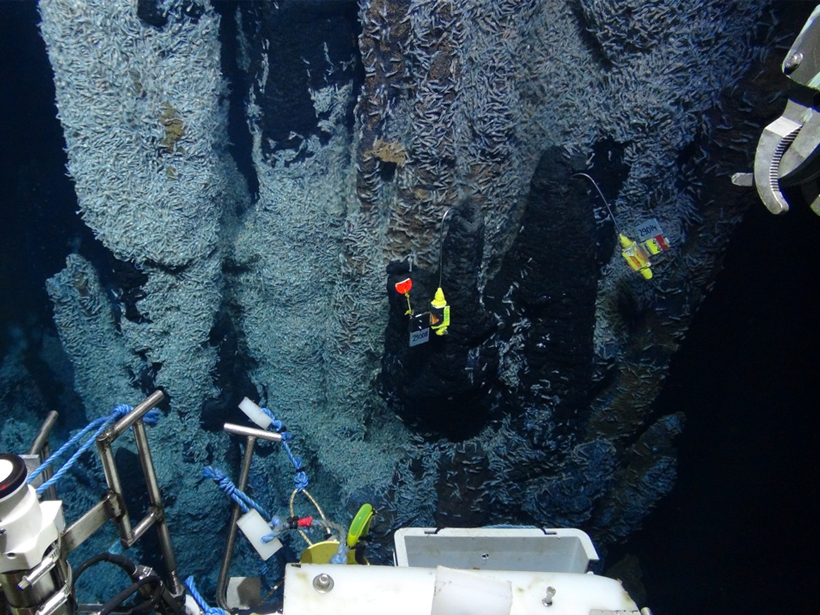
Novel Vents Built from Talc Found Far from Mid-Ocean Rift

by S. Kelleher 5 January 20161 October 2021

Researchers discovered the first new variety of hydrothermal vents in a decade—a finding that may give clues to how oceanic crust cools.

Posted inScience Updates

Team Gets Firsthand Look at the New Holuhraun Eruption Site

by C. W. Hamilton 16 December 201510 October 2021

Iceland 2015: Field Workshop on Active Lava–Water Interactions; Holuhraun, Iceland, 20–28 August 2015

Posted inScience Updates

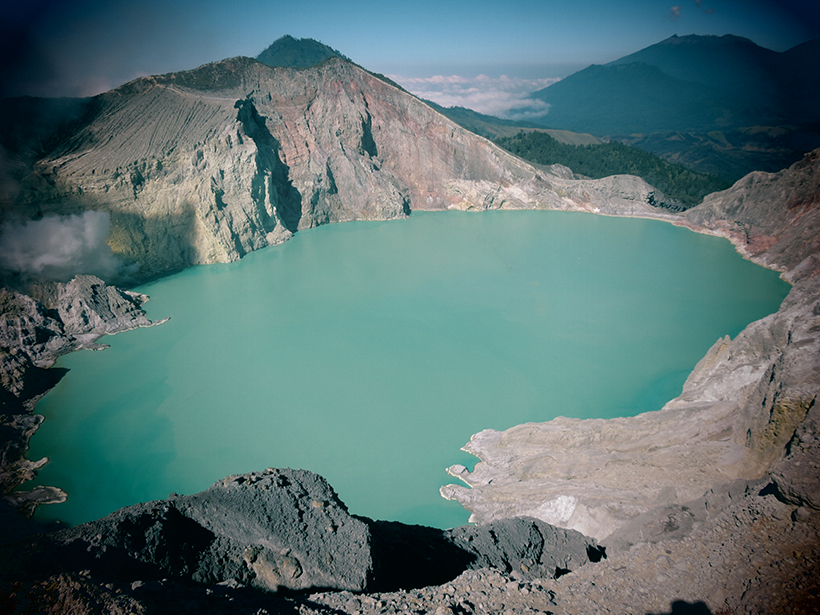
Multidisciplinary Monitoring Experiments at Kawah Ijen Volcano

by H. Gunawan, J. Pallister and Corentin Caudron 2 December 20142 May 2022

Cities on Volcanoes “Wet Volcanoes” Workshop;
Yogyakarta, Indonesia, 14–21 September 2014

Posts pagination

Newer posts 1 … 6 7 8
Over a dark blue-green square appear the words Special Report: The State of the Science 1 Year On.

Features from AGU Publications

Research Spotlights

Io’s Hidden Heat Revealed for the First Time

24 July 202623 July 2026
Editors' Highlights

Redesigning Farmland Through Community Collaboration in California

22 July 202621 July 2026
Editors' Vox

Why Healthy Soils Matter More Than Ever

22 July 202622 July 2026
Eos logo at left; AGU logo at right

About Eos
ENGAGE
Awards
Contact

Advertise
Submit
Career Center
Sitemap

© 2026 American Geophysical Union. All rights reserved Powered by Newspack