• About
  • Special Reports
  • Topics
    • Climate
    • Earth Science
    • Oceans
    • Space & Planets
    • Health & Ecosystems
    • Culture & Policy
    • Education & Careers
    • Opinions
  • Projects
    • Postcards From the Field
    • ENGAGE
    • Editors’ Highlights
    • Editors’ Vox
    • Eos en Español
    • Eos 简体中文版
    • Print Archive: 2015–2025
  • Policy Tracker
  • Blogs
    • Research & Developments
    • The Landslide Blog
  • Newsletter
  • Submit to Eos
  • AGU.org
  • Career Center
  • Join AGU
  • Give to AGU
  • About
  • Special Reports
  • Topics
    • Climate
    • Earth Science
    • Oceans
    • Space & Planets
    • Health & Ecosystems
    • Culture & Policy
    • Education & Careers
    • Opinions
  • Projects
    • Postcards From the Field
    • ENGAGE
    • Editors’ Highlights
    • Editors’ Vox
    • Eos en Español
    • Eos 简体中文版
    • Print Archive: 2015–2025
  • Policy Tracker
  • Blogs
    • Research & Developments
    • The Landslide Blog
  • Newsletter
  • Submit to Eos
Skip to content
  • AGU.org
  • Career Center
  • Join AGU
  • Give to AGU
Eos

Eos

Science News by AGU

Support Eos
Sign Up for Newsletter
  • About
  • Special Reports
  • Topics
    • Climate
    • Earth Science
    • Oceans
    • Space & Planets
    • Health & Ecosystems
    • Culture & Policy
    • Education & Careers
    • Opinions
  • Projects
    • Postcards From the Field
    • ENGAGE
    • Editors’ Highlights
    • Editors’ Vox
    • Eos en Español
    • Eos 简体中文版
    • Print Archive: 2015–2025
  • Policy Tracker
  • Blogs
    • Research & Developments
    • The Landslide Blog
  • Newsletter
  • Submit to Eos

Iceland

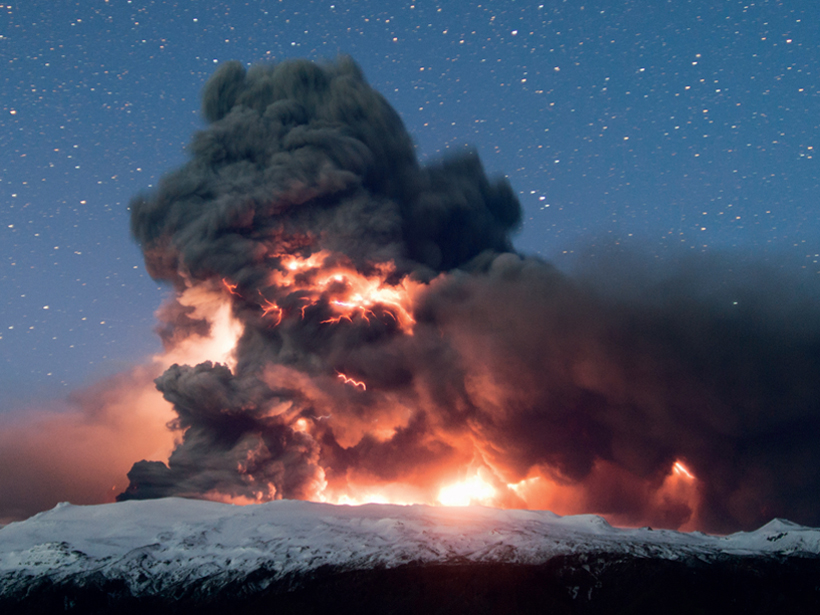
Photograph of the eruption of Eyjafjallajökull in 2010
Posted inEditors' Vox

A Geologist’s Guide to Exploring and Understanding Iceland

by Tamie J. Jovanelly 5 November 202010 November 2021

A new book explores the geophysical processes that have shaped Iceland over 30 million years and continue to influence the landscape.

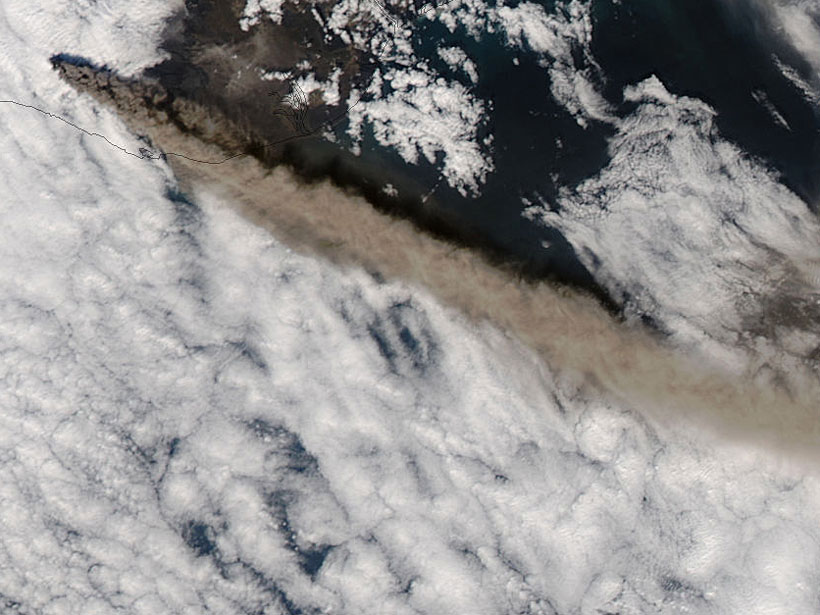
Satellite image of a long plume of ash extending from Eyjafjallajökull, Iceland
Posted inNews

The Art of Volcanic Ash Modeling 10 Years After Eyjafjallajökull

Jane Palmer, Science Writer by Jane Palmer 15 April 202018 November 2022

The ash plumes from the eruption of the Icelandic volcano in 2010 disrupted air travel in Europe for several weeks. Since then, scientists have developed models to mitigate ash’s impacts.

Hellisheiði Geothermal Power Station with steam plumes sitting amid green hills
Posted inNews

Basalts Turn Carbon into Stone for Permanent Storage

Kimberly M. S. Cartier, News Writing and Production Intern for Eos.org by Kimberly M. S. Cartier 20 March 202022 November 2021

Scientists have shown that mineral carbonation can permanently capture and store carbon quickly enough and safely enough to rise to the challenge of climate change.
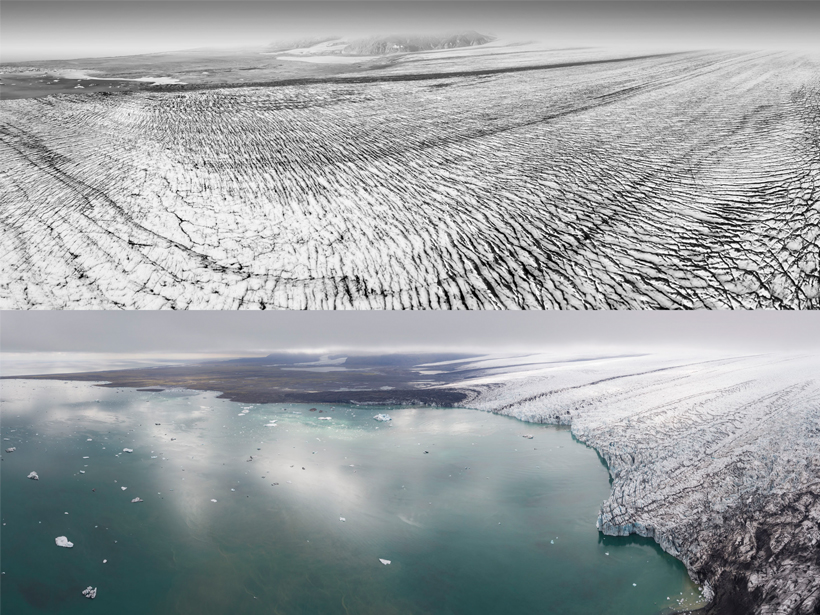
Aerial images of Breiðamerkurjökull glacial tongue taken in 1989 (top) and 2019 (bottom)
Posted inNews

Drones Capture Iceland’s Shrinking Glaciers

Jenessa Duncombe, Staff Writer by Jenessa Duncombe 8 November 201911 January 2022

Photographs of Iceland’s southern glaciers show pools of water where walls of ice once stood.

Aerial photo of a green volcanic landscape with cars
Posted inResearch Spotlights

Did a Volcanic Eruption in 1783 Change the Climate in Europe?

by David Shultz 17 May 201915 November 2022

A new model of the Laki eruption in Iceland suggests that normal climate variability was to blame for the anomalously warm summer.
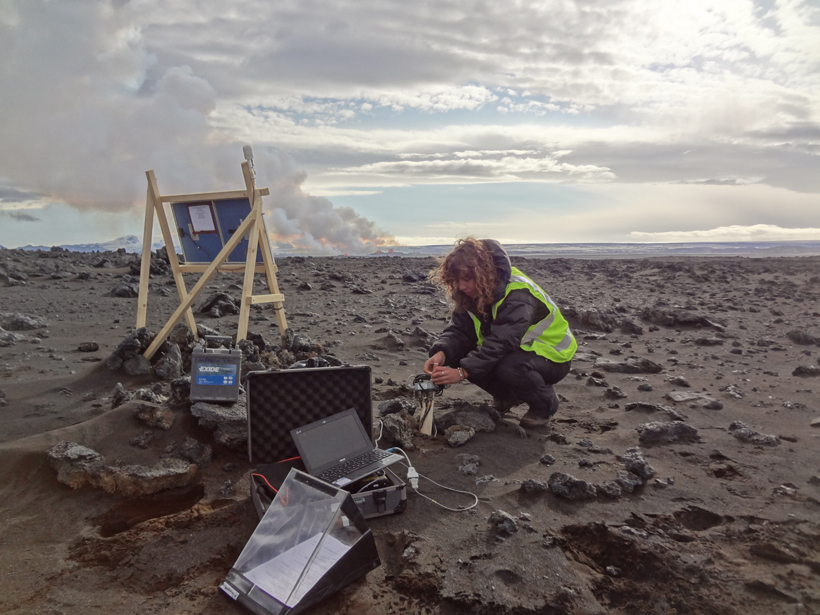
A woman conducts experiments with a laptop in a lava field while volcanoes erupt in the distance.
Posted inNews

More Than 30,000 Earthquakes Trace the Movement of Magma

Katherine Kornei, Science Writer by Katherine Kornei 14 May 201927 October 2021

Seismometers near Iceland’s Bárðarbunga volcanic system pinpointed thousands of earthquakes in 2014–2015, revealing where molten rock was moving underground before any eruptions occurred.
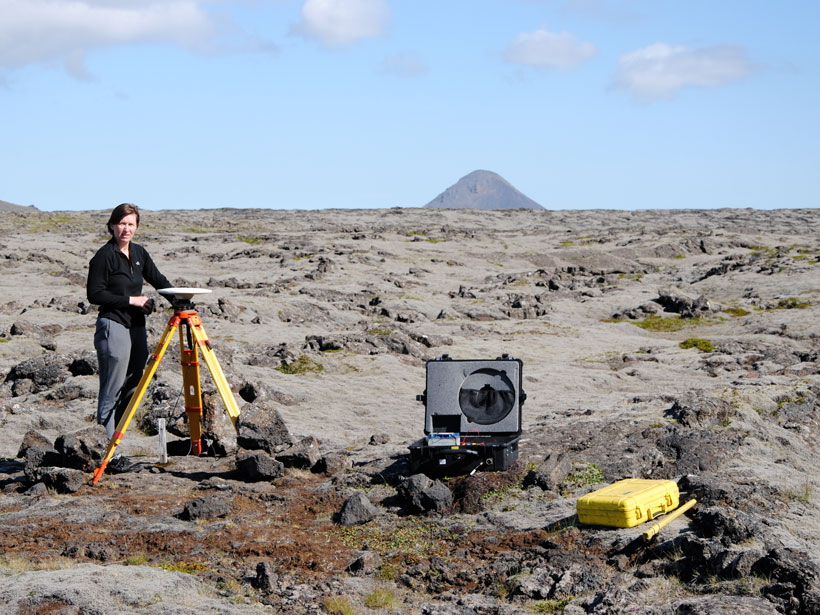
Thóra Árnadóttir setting up GPS instrument in Iceland
Posted inResearch Spotlights

A New Way of Visualizing Iceland’s Crustal Deformation

by Terri Cook 24 April 20196 October 2021

A novel method of calculating strain rates from GPS data shows the South Iceland Seismic Zone is experiencing rapid deformation, including inflation near the island’s most active volcano.

An aerial view of the massive Katla glacier, which might be a bigger source of CO2 than previously estimated
Posted inResearch Spotlights

Volcano in Iceland Is One of the Largest Sources of Volcanic CO2

by Terri Cook 8 November 201815 November 2022

High-precision airborne measurements, in combination with atmospheric modeling, suggest that the Katla subglacial caldera may be one of the planet’s biggest sources of volcanic carbon dioxide.
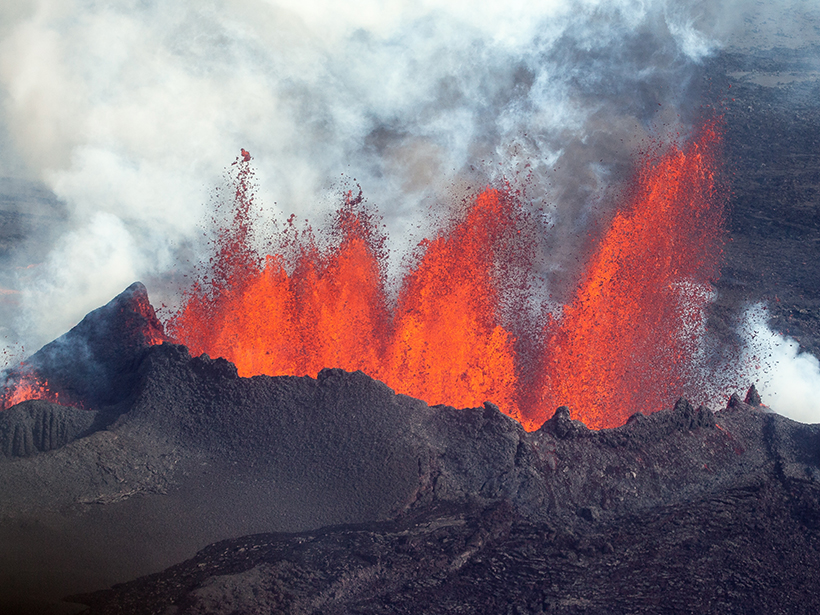
Researchers model magma flow under Iceland’s Bárðarbunga volcano to spot previously undetected eruptions
Posted inResearch Spotlights

Magma Flow in a Major Icelandic Eruption

Sarah Stanley, Science Writer by Sarah Stanley 23 May 20181 November 2021

Mechanical modeling suggests that previous, undetected eruptions released tectonic stress near the ice-covered Bárðarbunga volcano.

Researchers compare observations and modeling to track the growth of drumlins beneath a surge-type glacier
Posted inResearch Spotlights

A New Model of Drumlin Formation

by Terri Cook 8 February 201823 March 2023

Observations from the surge-type glacier Múlajökull in Iceland underpin new modeling results that suggest the glacier’s drumlins grow during quiet intervals of normal flow between glacial surges.

Posts pagination

Newer posts 1 2 3 4 5 Older posts
Over a dark blue-green square appear the words Special Report: The State of the Science 1 Year On.

Features from AGU Publications

Research Spotlights

Sea Turtles, Shrinking Beaches, and Rising Seas

16 March 202616 March 2026
Editors' Highlights

Next Generation Fluid Flow Solver for Earth System Modeling

17 March 202612 March 2026
Editors' Vox

How Frozen Ground Controls Water in a Warming World

17 March 202617 March 2026
Eos logo at left; AGU logo at right

About Eos
ENGAGE
Awards
Contact

Advertise
Submit
Career Center
Sitemap

© 2026 American Geophysical Union. All rights reserved Powered by Newspack