• About
  • Special Reports
  • Topics
    • Climate
    • Earth Science
    • Oceans
    • Space & Planets
    • Health & Ecosystems
    • Culture & Policy
    • Education & Careers
    • Opinions
  • Projects
    • Postcards From the Field
    • ENGAGE
    • Editors’ Highlights
    • Editors’ Vox
    • Eos en Español
    • Eos 简体中文版
    • Print Archive: 2015–2025
  • Policy Tracker
  • Blogs
    • Research & Developments
    • The Landslide Blog
  • Newsletter
  • Submit to Eos
  • AGU.org
  • Career Center
  • Join AGU
  • Give to AGU
  • About
  • Special Reports
  • Topics
    • Climate
    • Earth Science
    • Oceans
    • Space & Planets
    • Health & Ecosystems
    • Culture & Policy
    • Education & Careers
    • Opinions
  • Projects
    • Postcards From the Field
    • ENGAGE
    • Editors’ Highlights
    • Editors’ Vox
    • Eos en Español
    • Eos 简体中文版
    • Print Archive: 2015–2025
  • Policy Tracker
  • Blogs
    • Research & Developments
    • The Landslide Blog
  • Newsletter
  • Submit to Eos
Skip to content
  • AGU.org
  • Career Center
  • Join AGU
  • Give to AGU
Eos

Eos

Science News by AGU

Support Eos
Sign Up for Newsletter
  • About
  • Special Reports
  • Topics
    • Climate
    • Earth Science
    • Oceans
    • Space & Planets
    • Health & Ecosystems
    • Culture & Policy
    • Education & Careers
    • Opinions
  • Projects
    • Postcards From the Field
    • ENGAGE
    • Editors’ Highlights
    • Editors’ Vox
    • Eos en Español
    • Eos 简体中文版
    • Print Archive: 2015–2025
  • Policy Tracker
  • Blogs
    • Research & Developments
    • The Landslide Blog
  • Newsletter
  • Submit to Eos

IODP

International Ocean Discovery Program
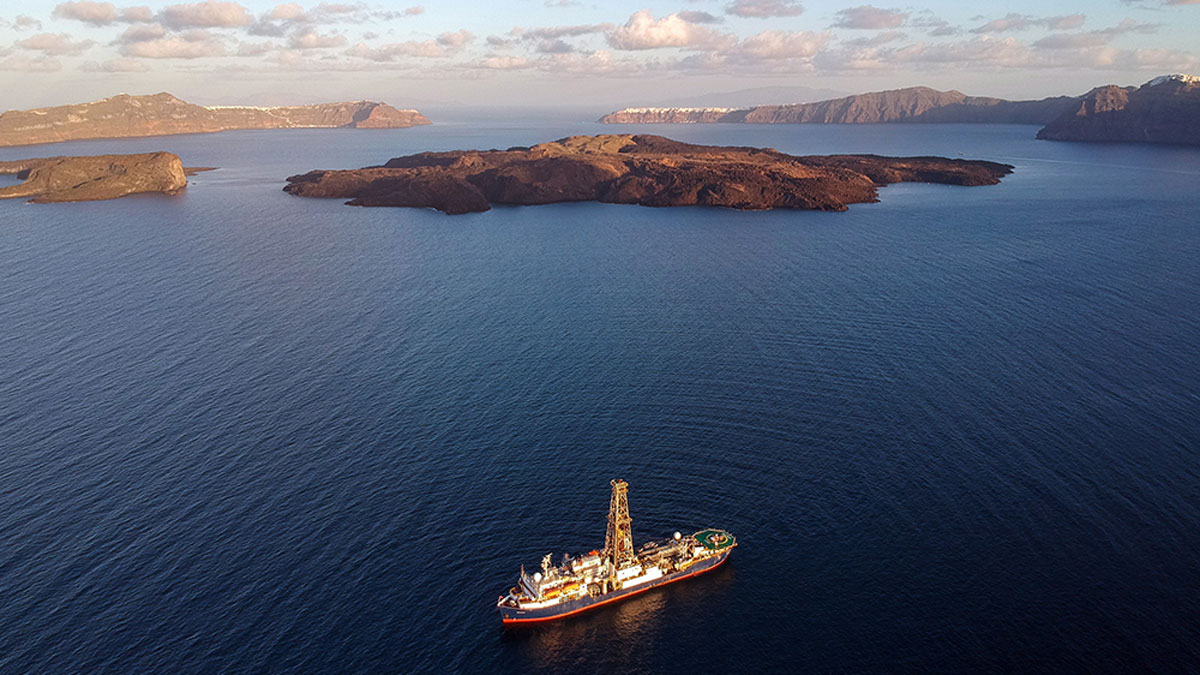
A large ship on the ocean, with various islands in the background
Posted inNews

Tracing the Eruption History of a Volcano in a Tourist Hot Spot

Katherine Kornei, Science Writer by Katherine Kornei 13 March 202613 March 2026

Sediment cores extracted from deep under the Aegean Sea reveal the timing of explosive eruptions of Kolumbo Volcano and a potential link to neighboring Santorini.

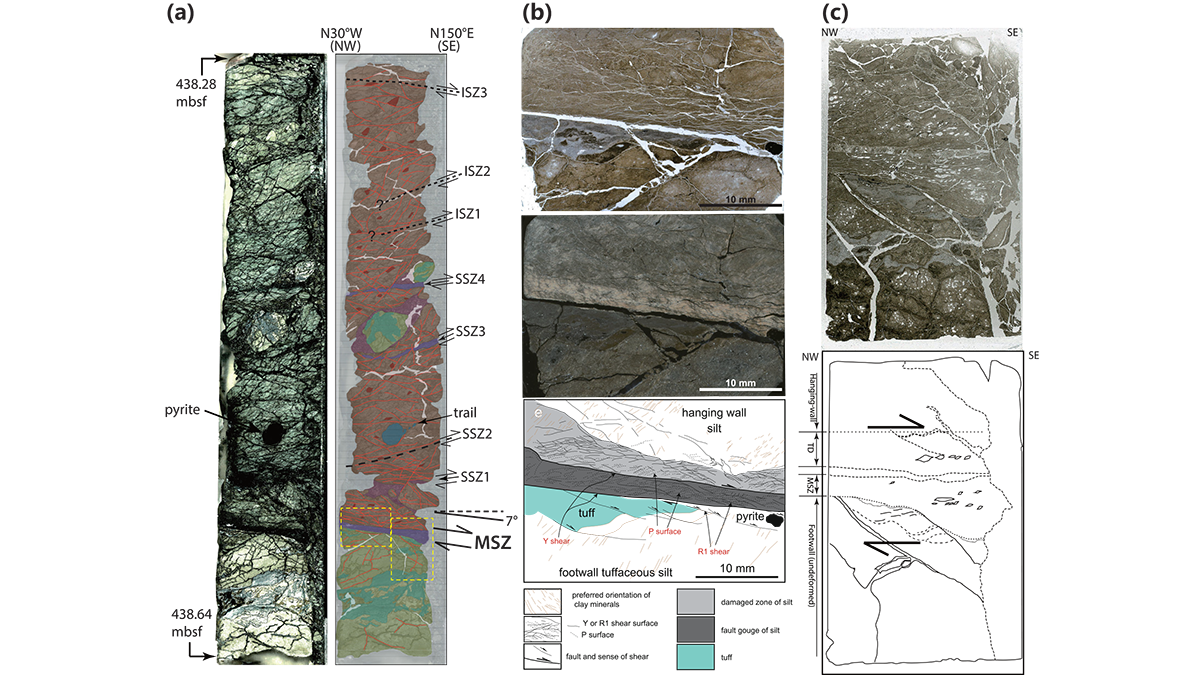
Photos and sketches of samples from the study.
Posted inEditors' Highlights

Frictional Properties of the Nankai Accretionary Prism

by Alexandre Schubnel 11 December 20259 December 2025

A database of frictional properties from IODP drilling materials explores the range of slip spectrum and the generation of slow to fast earthquakes in the Nankai subduction zone in light of mineralogy.
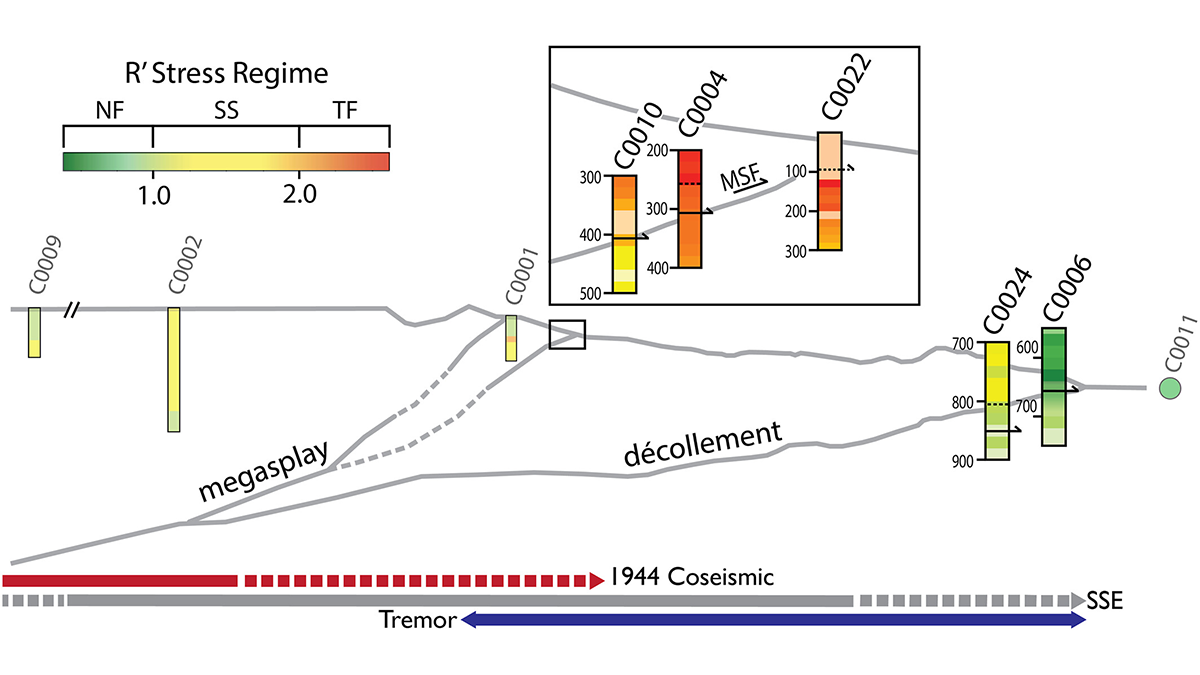
Diagram from the study.
Posted inEditors' Highlights

The State of Stress in the Nankai Subduction Zone

by Alexandre Schubnel 4 August 202531 July 2025

The Nankai subduction zone, in southern Japan, has hosted several large magnitude 8+ earthquakes during the last three hundred years. But, how stressed is it right now? 
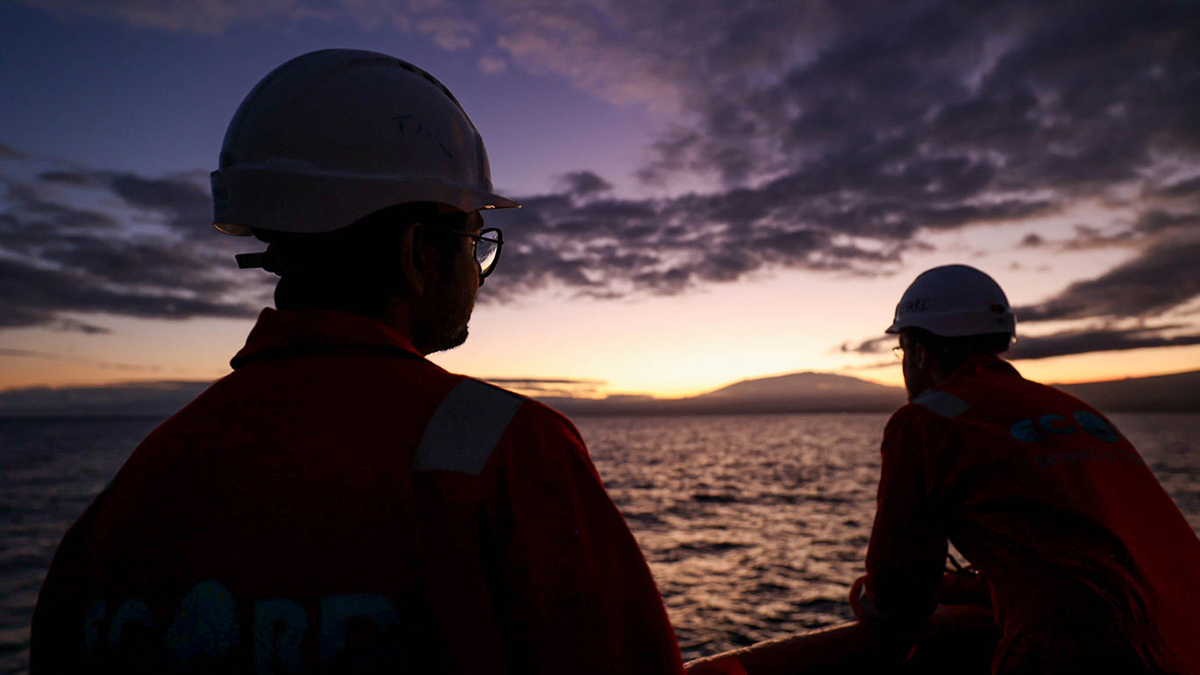
Two people wearing hard hats are silhouetted by the Sun rise in the distance as they look out over the ocean from a research vessel.
Posted inScience Updates

Unlocking Climate Secrets of Hawai‘i’s Drowned Reefs

by Jody M. Webster and Christina Ravelo 11 April 202511 April 2025

Researchers set sail to study sea levels, climate, ecosystem responses, and volcanic histories over the past 500,000 years, using an innovative seabed drill to sample fossilized reefs off Hawai‘i.
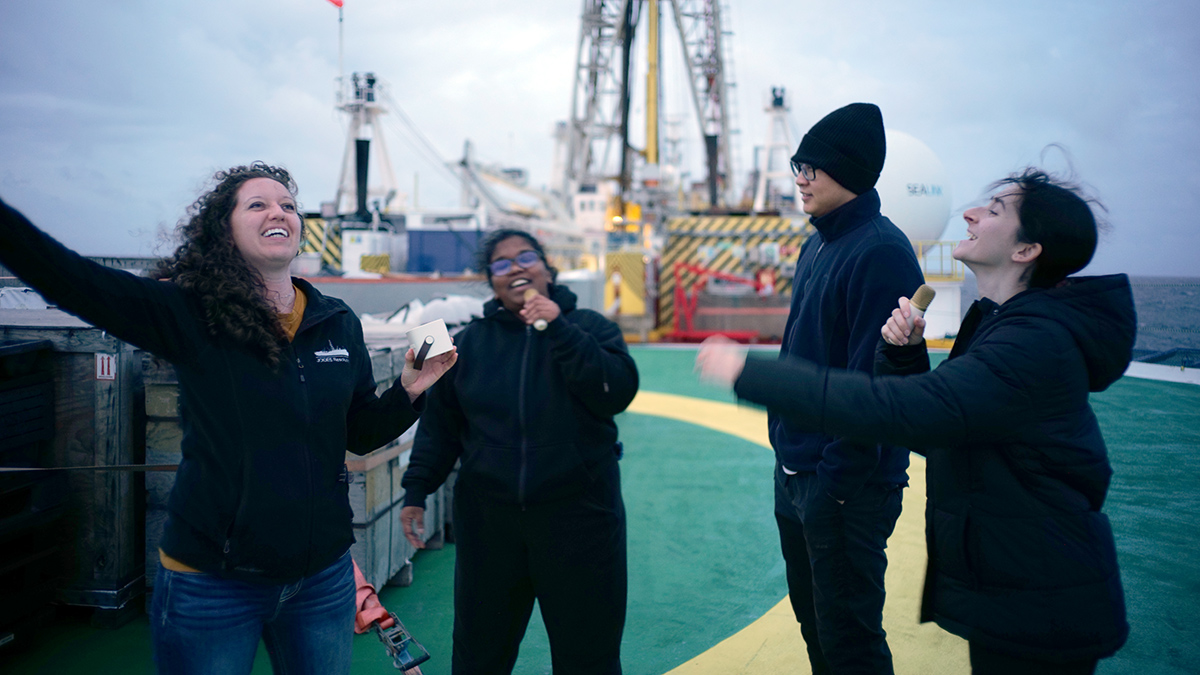
Four scientists celebrate with karaoke on the deck of the JOIDES Resolution.
Posted inOpinions

Expedition 403: Sailing the Last Expedition of the JOIDES Resolution

by Adriane Lam, Gryphen Goss and Nicole Greco 28 February 202528 February 2025

Early-career geoscientists share melancholy memories about hard science and intangible networks of collaboration.

A cross section of a core taken from Earth’s mantle, is seen under a microscope.
Posted inNews

Lost City’s Plumbing Exposed by the Longest Mantle Core Ever Drilled

by Nathaniel Scharping 12 September 202412 September 2024

The core, which is 71% complete, reveals millions of years of geologic history and the plumbing underlying hydrothermal vents.
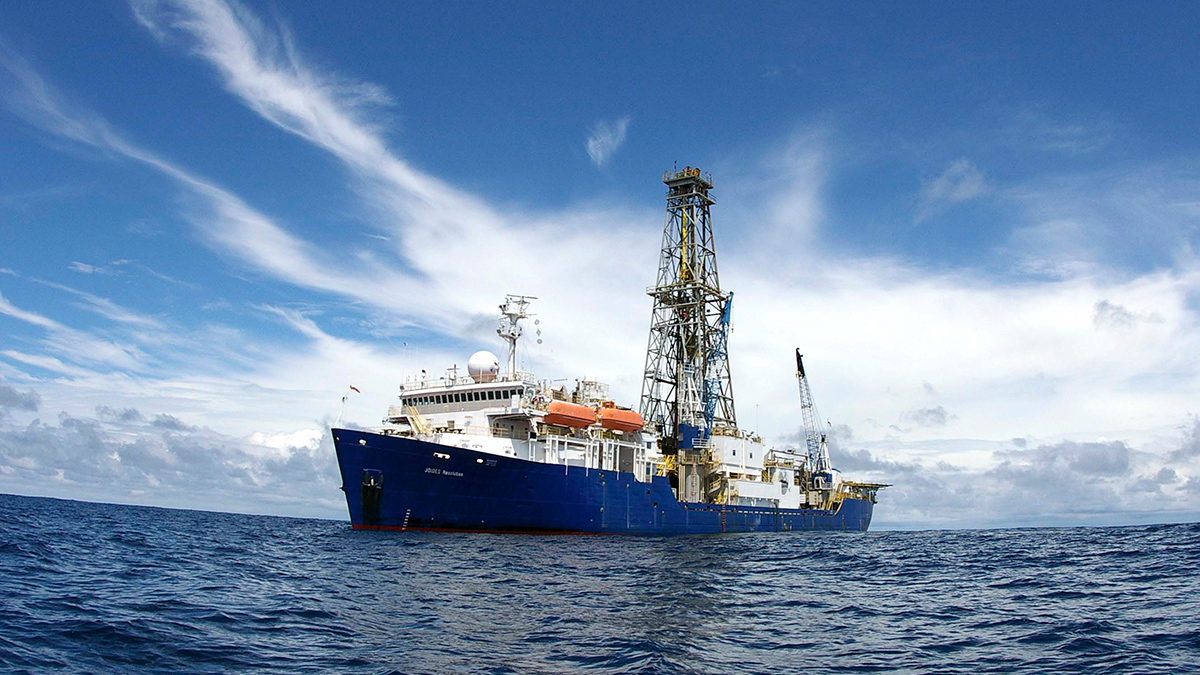
A large research vessel on the ocean on a sunny day
Posted inNews

The JOIDES Resolution Embarks on Its Final Expedition

by Grace van Deelen 6 June 20246 June 2024

On the ship’s last cruise, scientists will collect data to help predict future effects of climate change.

Sunset from the ocean drilling communitiy’s scientific workhorse, the Joides Resolution.
Posted inFeatures

There is No JOIDES in Mudville

Damond Benningfield, Science Writer by Damond Benningfield 15 November 202328 August 2024

After almost 4 decades of research, the JOIDES Resolution will retire in 2024, leaving the ocean floor in peace (for now).
Photo of an ocean with snow-capped mountains in the background.
Posted inEditors' Vox

Marine Sediments Reveal Past Climate Responses to CO2 Changes

by Sze Ling Ho and Erin McClymont 21 September 202320 September 2023

Climate records stored in marine sediments reveal different ice sheet and ocean responses to falling atmospheric CO2 concentrations from the warm Pliocene to the ice ages of the Pleistocene.
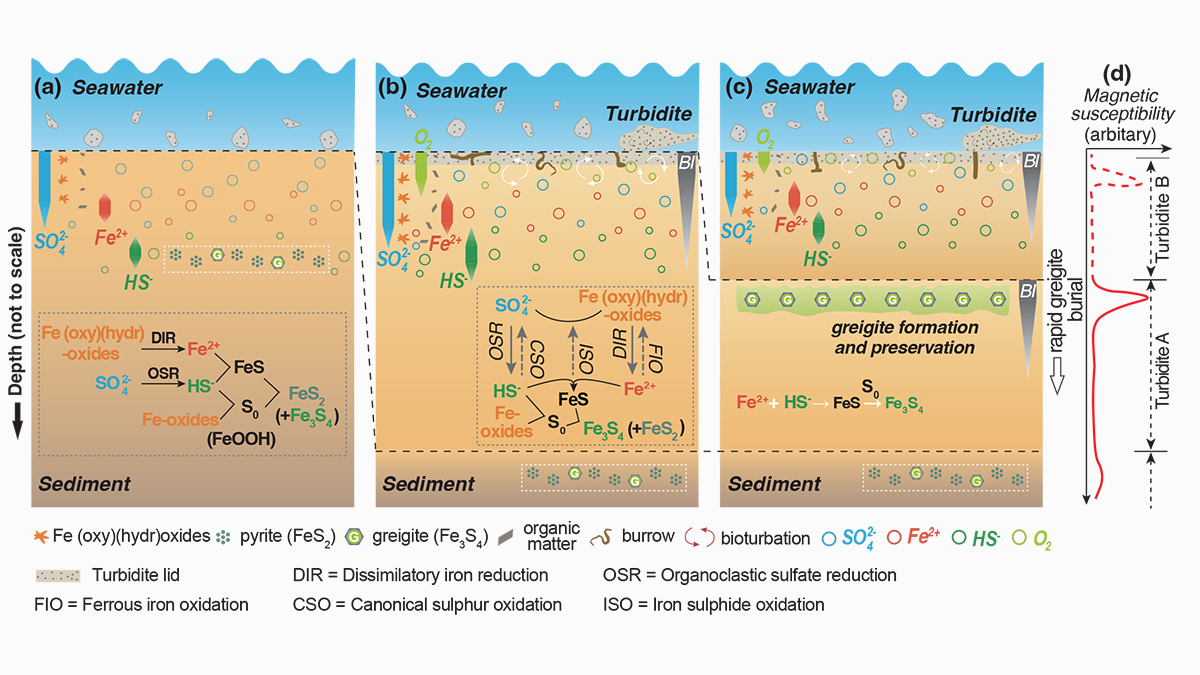
Diagram showing the formation and preservation of the iron sulfide greigite in bioturbidated anoxic sediments.
Posted inEditors' Highlights

New Mechanism for “Giant” Greigite Growth in Deep-Sea Sediments

by Agnes Kontny 2 December 202214 March 2024

Understanding greigite formation pathways in sediments is a prerequisite for assessing the marine iron-sulfur-carbon cycle and yield reliable near-syn-sedimentary paleomagnetic records.

Posts pagination

1 2 3 Older posts
Over a dark blue-green square appear the words Special Report: The State of the Science 1 Year On.

Features from AGU Publications

Research Spotlights

Stealth Superstorms Reveal Lightning on Jupiter: Beyond the Superbolt

23 March 202623 March 2026
Editors' Highlights

Trees Shed Their Leaves to Adapt to Droughts

20 March 202620 March 2026
Editors' Vox

The Future of Earth’s Future

24 March 202624 March 2026
Eos logo at left; AGU logo at right

About Eos
ENGAGE
Awards
Contact

Advertise
Submit
Career Center
Sitemap

© 2026 American Geophysical Union. All rights reserved Powered by Newspack