
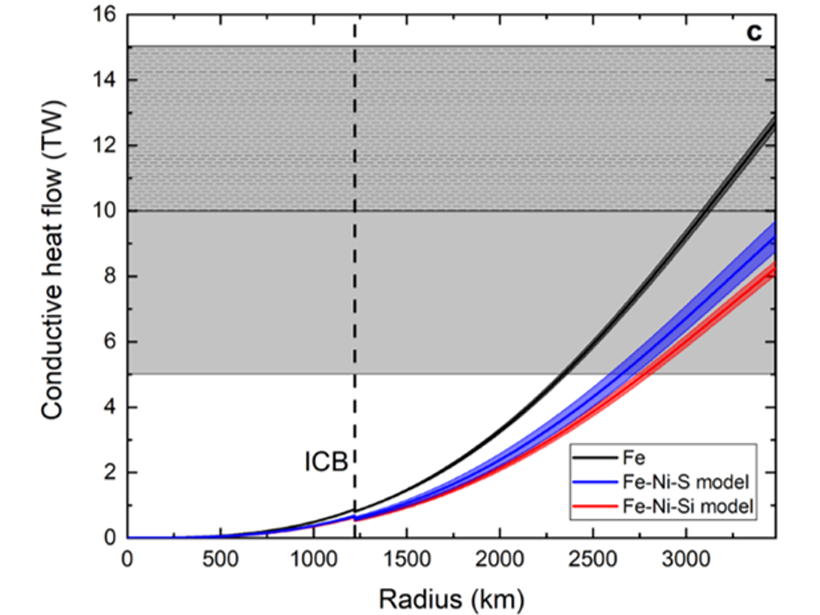
New high-pressure experiments on fluid iron suggest thermal convection without compositional buoyancy is sufficient to drive the dynamo generating Earth’s magnetic field.
iron
Posted inNews
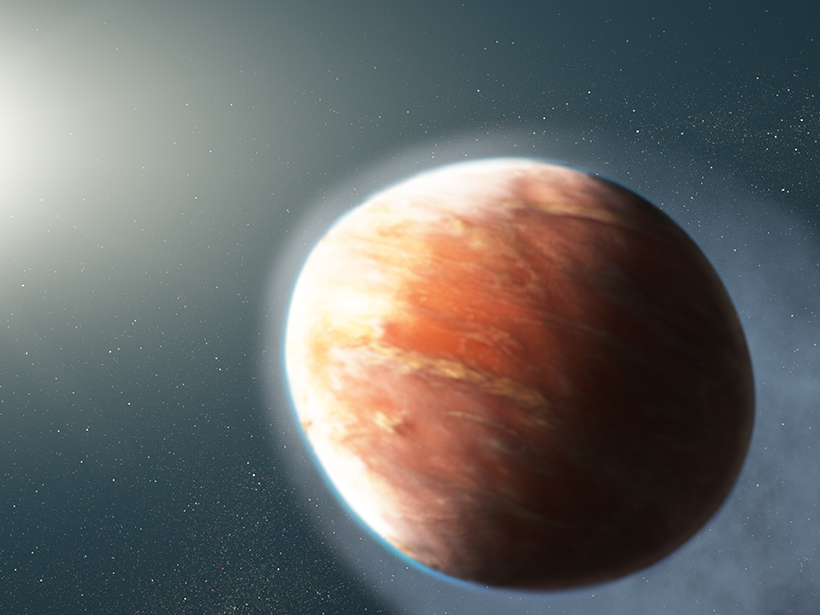
Ultrahot Exoplanet Bleeds Heavy Metals into Space

The planet is also shaped like a football (the American kind).

Posted inResearch Spotlights
Antarctica’s Seasonal Streams Contribute Iron to the Ross Sea

Analysis of nutrient concentrations in four streams that discharge to the Southern Ocean indicates they are important sources of iron and phosphorous for coastal phytoplankton communities.
Posted inNews
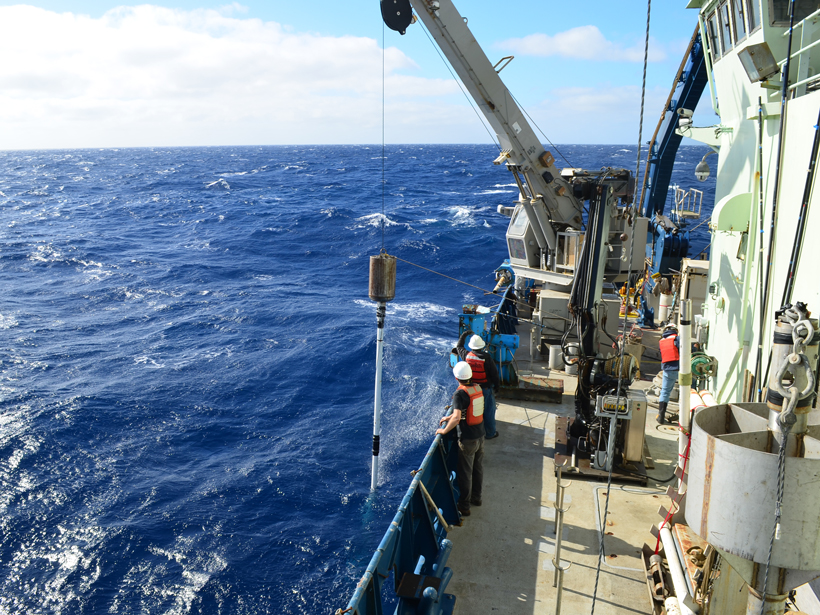
Iron Readings Hint That Ocean Depth Influences Seabed Volcanism
Water pressure on mid-ocean ridges may affect magma production kilometers beneath the ocean floor.

Posted inResearch Spotlights
Tiny Creatures Form Massive, Bright Ring Around Antarctica

Dense algae populations in the Great Calcite Belt could cause carbon dioxide release from the ocean into the atmosphere.
Posted inNews
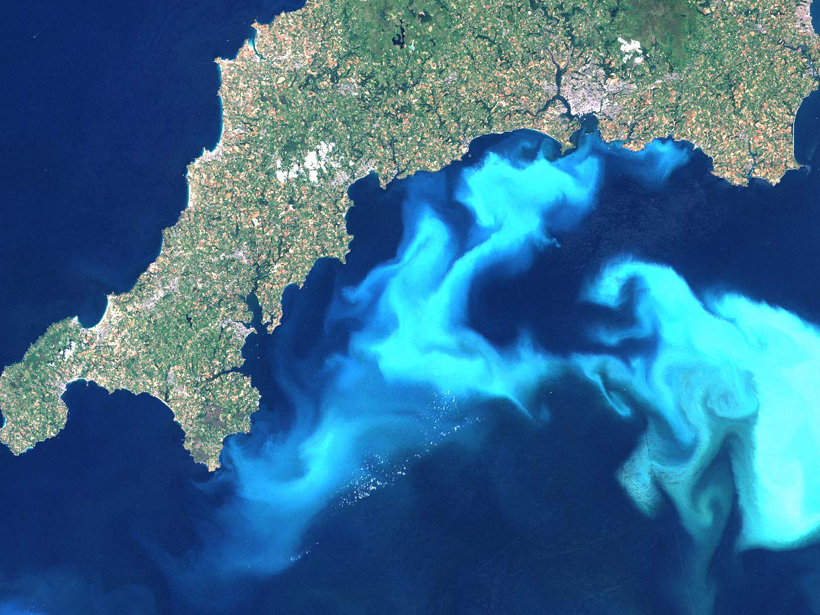
Iron Fertilization Might Not Make Oceans Better Carbon Sinks
New research suggests more iron during the last ice age did not mean more algae production in the equatorial Pacific, pointing to possible futility of a controversial geoengineering idea.

Posted inNews
Cave-Dwelling "Slime Curtains" Cycle Nitrogen and Iron

In a cave accessible only by daredevil divers, extraordinary microbial colonies metabolize nitrogen and iron nutrients and possibly remove pollutants from water.
Posted inResearch Spotlights
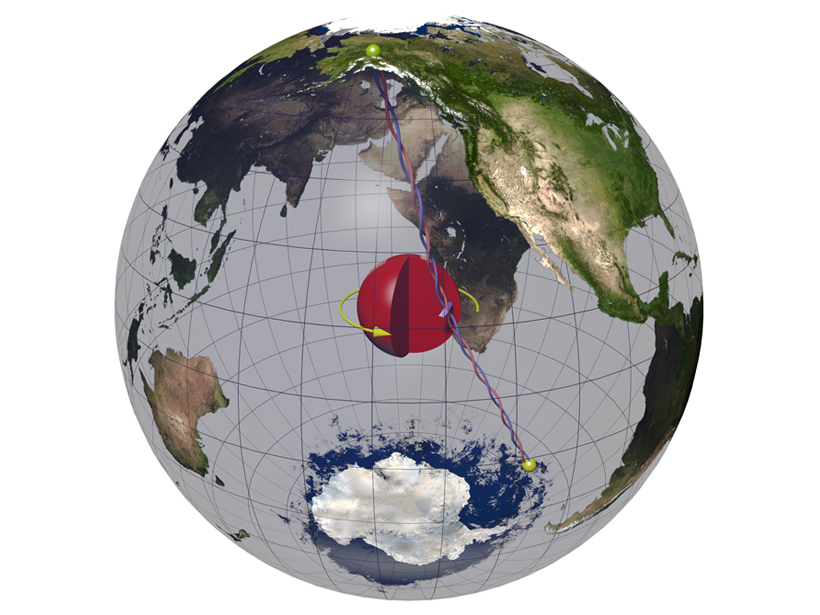
The Enigmatic Core Properties of the Inner Earth
A new study explores the possibility of cubic iron alloy structure at our planet's core.
Posted inResearch Spotlights
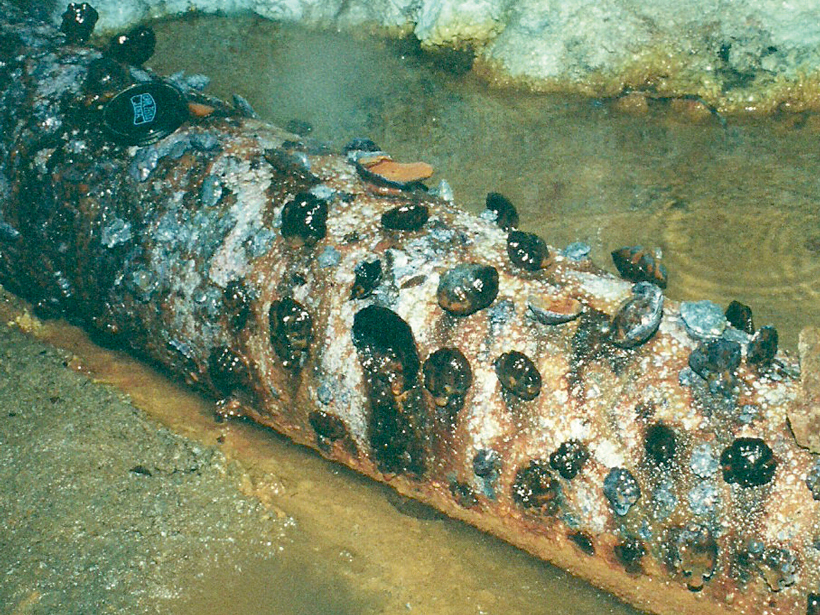
Microbial Communities Form Iron Shells in Abandoned Mines
Fungi and bacteria deposit metal ions on steel objects left behind by miners. These metals form strange clam-like shells on the steel surfaces.
Posted inAGU News
McKnight Receives 2014 Hydrologic Sciences Award
Diane McKnight received the 2014 Hydrologic Sciences Award at the 2014 American Geophysical Union Fall Meeting, held 15–19 December in San Francisco, Calif. The award is for outstanding contributions to the science of hydrology.