• About
  • Special Reports
  • Topics
    • Climate
    • Earth Science
    • Oceans
    • Space & Planets
    • Health & Ecosystems
    • Culture & Policy
    • Education & Careers
    • Opinions
  • Projects
    • Postcards From the Field
    • ENGAGE
    • Editors’ Highlights
    • Editors’ Vox
    • Eos en Español
    • Eos 简体中文版
    • Print Archive: 2015–2025
  • Policy Tracker
  • Blogs
    • Research & Developments
    • The Landslide Blog
  • Newsletter
  • Submit to Eos
  • AGU.org
  • Career Center
  • Join AGU
  • Give to AGU
  • About
  • Special Reports
  • Topics
    • Climate
    • Earth Science
    • Oceans
    • Space & Planets
    • Health & Ecosystems
    • Culture & Policy
    • Education & Careers
    • Opinions
  • Projects
    • Postcards From the Field
    • ENGAGE
    • Editors’ Highlights
    • Editors’ Vox
    • Eos en Español
    • Eos 简体中文版
    • Print Archive: 2015–2025
  • Policy Tracker
  • Blogs
    • Research & Developments
    • The Landslide Blog
  • Newsletter
  • Submit to Eos
Skip to content
  • AGU.org
  • Career Center
  • Join AGU
  • Give to AGU
Eos

Eos

Science News by AGU

Support Eos
Sign Up for Newsletter
  • About
  • Special Reports
  • Topics
    • Climate
    • Earth Science
    • Oceans
    • Space & Planets
    • Health & Ecosystems
    • Culture & Policy
    • Education & Careers
    • Opinions
  • Projects
    • Postcards From the Field
    • ENGAGE
    • Editors’ Highlights
    • Editors’ Vox
    • Eos en Español
    • Eos 简体中文版
    • Print Archive: 2015–2025
  • Policy Tracker
  • Blogs
    • Research & Developments
    • The Landslide Blog
  • Newsletter
  • Submit to Eos

Journal of Geophysical Research: Machine Learning and Computation
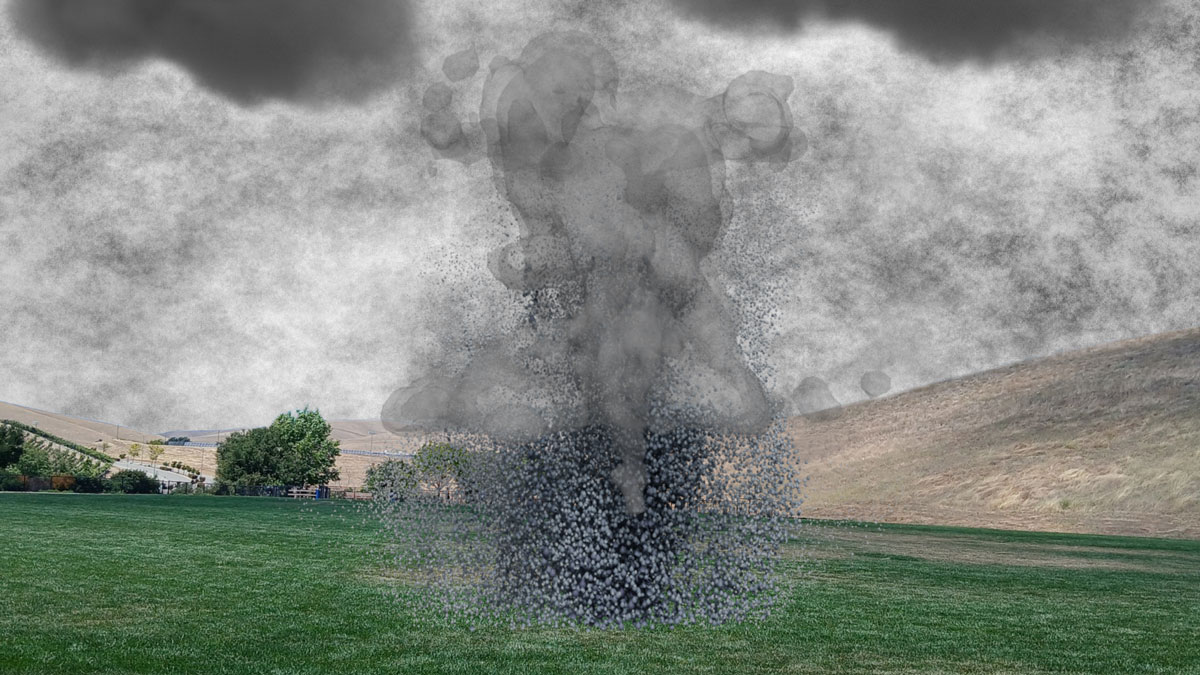
A collection of gray dots and watercolor-like droplets is clustered over the grass in a public park. The park background is a photo, and the cloud of dots was added with editing software.
Posted inResearch Spotlights

Comparing Machine Learning Models of Raindrop Formation

by Nathaniel Scharping 8 July 20268 July 2026

The simplest model, based on polynomials, yields the best performance.
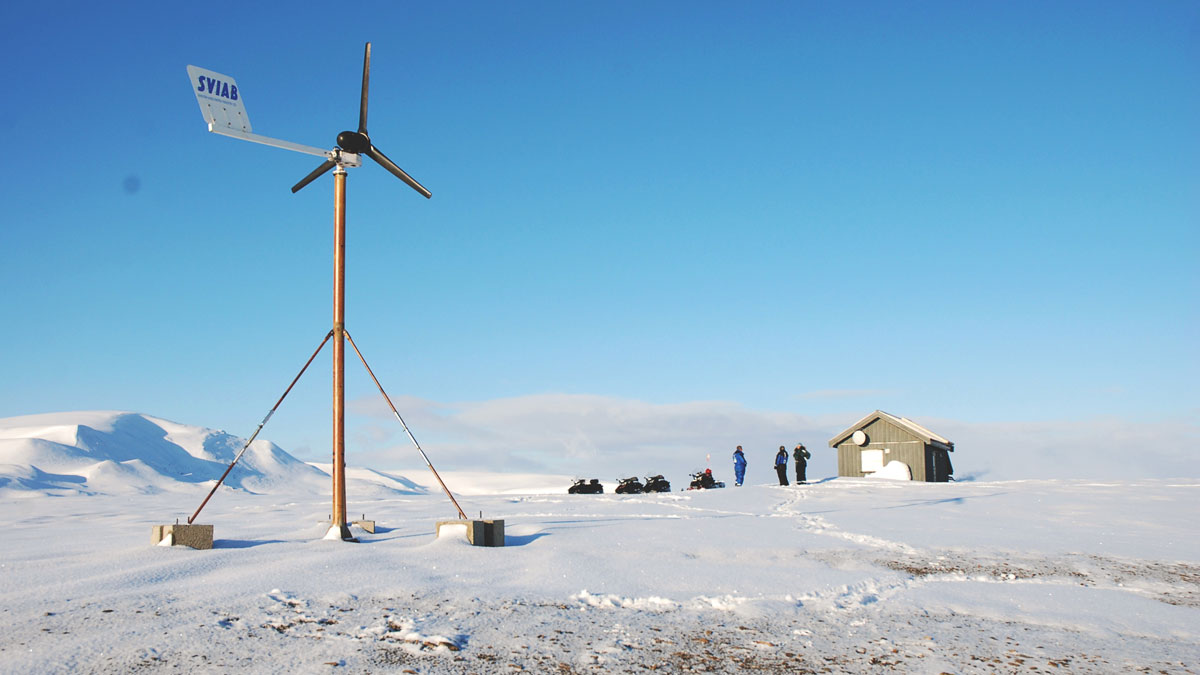
A tall windmill is in the foreground of a barren snowy landscape. Just behind it is a small building with three people outside of it.
Posted inResearch Spotlights

AI Improves Earthquake Detection

by Saima May Sidik 2 July 20262 July 2026

A new study shows the pros and cons of different model training methods.
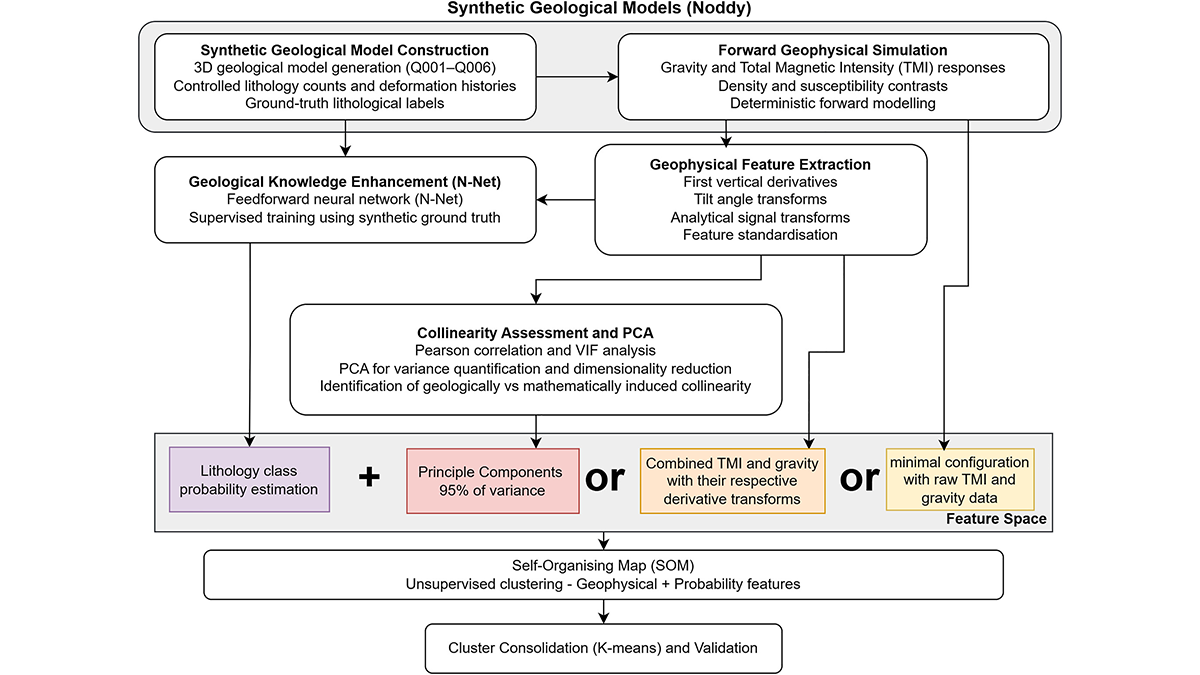
A flowchart.
Posted inEditors' Highlights

Collinearity is Not Always a Problem in Machine Learning

by Cedric John 10 March 20269 March 2026

Collinearity is not always a showstopper for statistical machine learning (at least not for self-organizing maps).
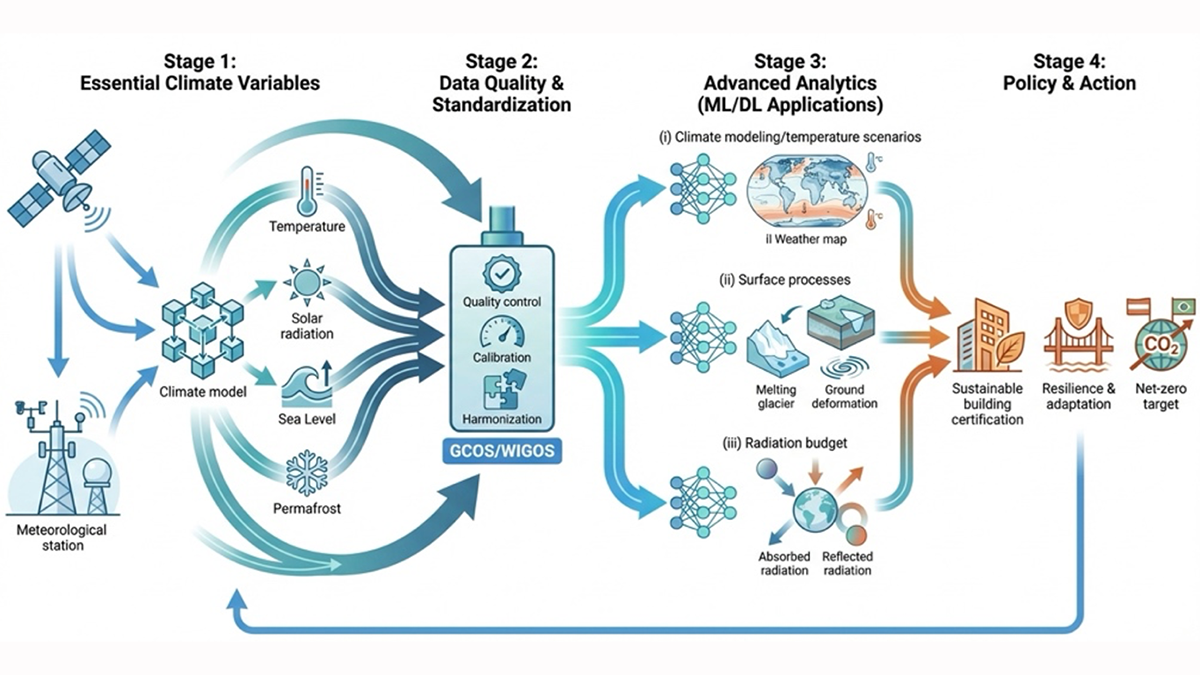
Diagram
Posted inEditors' Vox

Bridging the Gap: Transforming Reliable Climate Data into Climate Policy

by Jean-Philippe Montillet, Graziella Caprarelli, Gaël Kermarrec, CK Shum, Ehsan Forootan, Jan Sedlacek, Elizabeth Weatherhead, Orhan Akyilmaz, Wolfgang Finsterle, Yu Zhang, Enrico Camporeale and Kelly Caylor 16 January 202616 January 2026

A new special collection welcomes research that bridges the gap between rigorous Essential Climate Variable (ECV) monitoring, AI analytics, and climate policy.
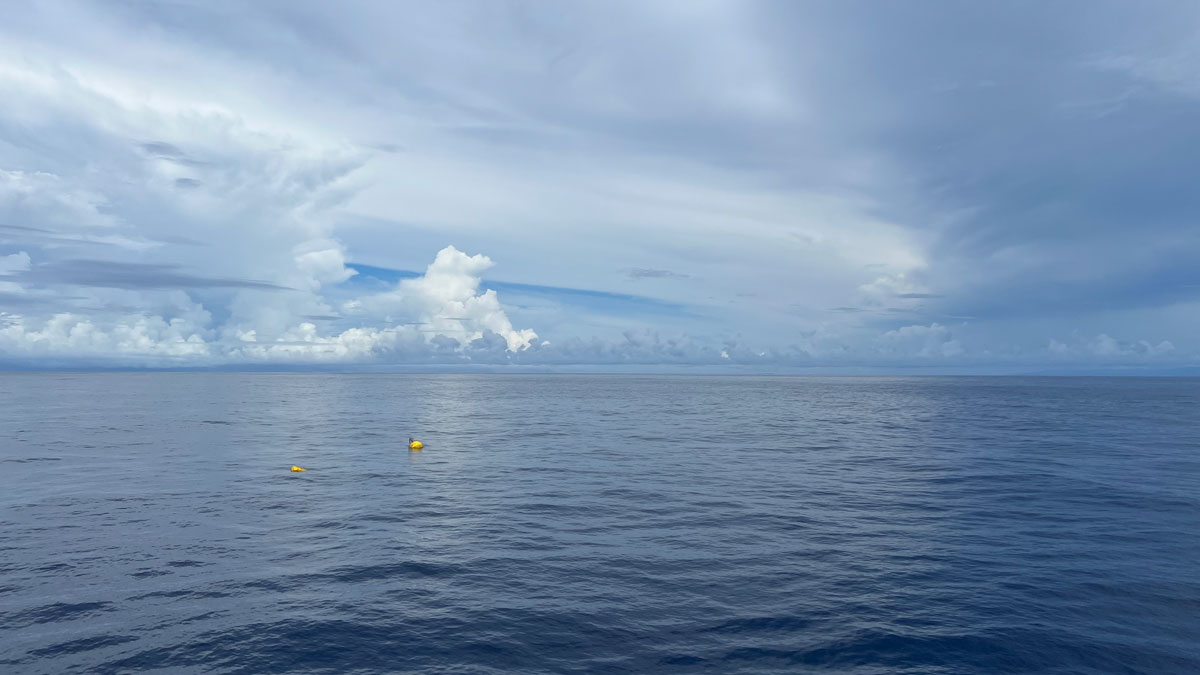
Two yellow buoys float in the ocean, which extends off to the horizon of a blue sky lined with clouds.
Posted inResearch Spotlights

AI Sheds Light on Hard-to-Study Ocean Currents

by Saima May Sidik 14 January 202614 January 2026

The Maluku Strait is a key predictor of conditions in the Indonesian Throughflow, modeling shows.
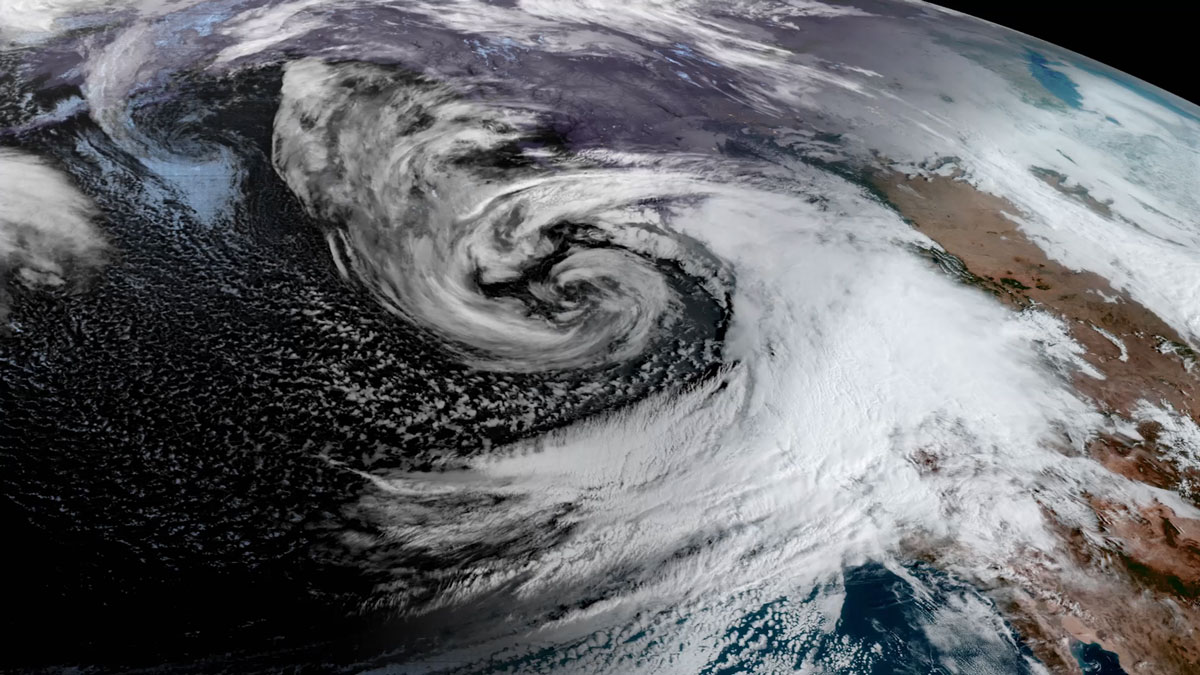
A satellite image shows a swirl of clouds off the western coast of the United States.
Posted inResearch Spotlights

A Step Toward AI Modeling of the Whole Earth System

by Saima May Sidik 9 October 20259 October 2025

Coupling an AI-driven model of the atmosphere with a model of the ocean could help scientists create highly efficient emulations of the entire Earth system.
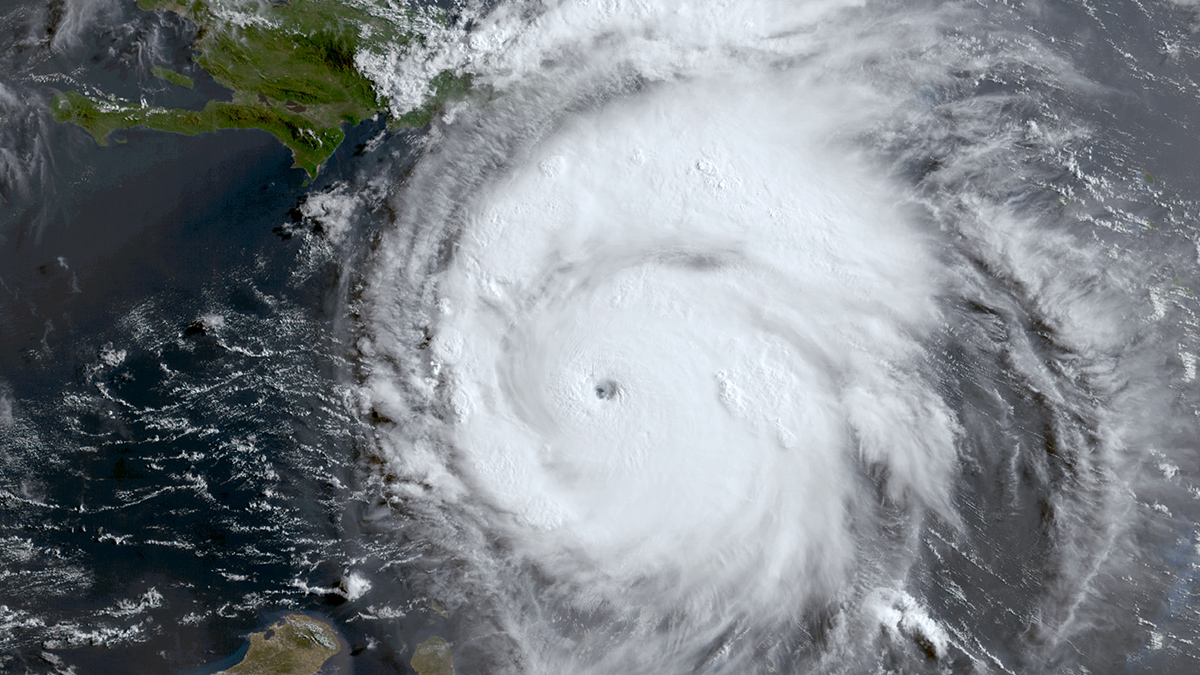
A hurricane rotates over the Caribbean Sea in a satellite image.
Posted inResearch Spotlights

Unveiling What’s Under the Hood in AI Weather Models

Sarah Stanley, Science Writer by Sarah Stanley 30 September 202530 September 2025

Artificial intelligence models have improved weather forecasting, but their inner workings are largely opaque. A new approach could make their predictions more interpretable by scientists.
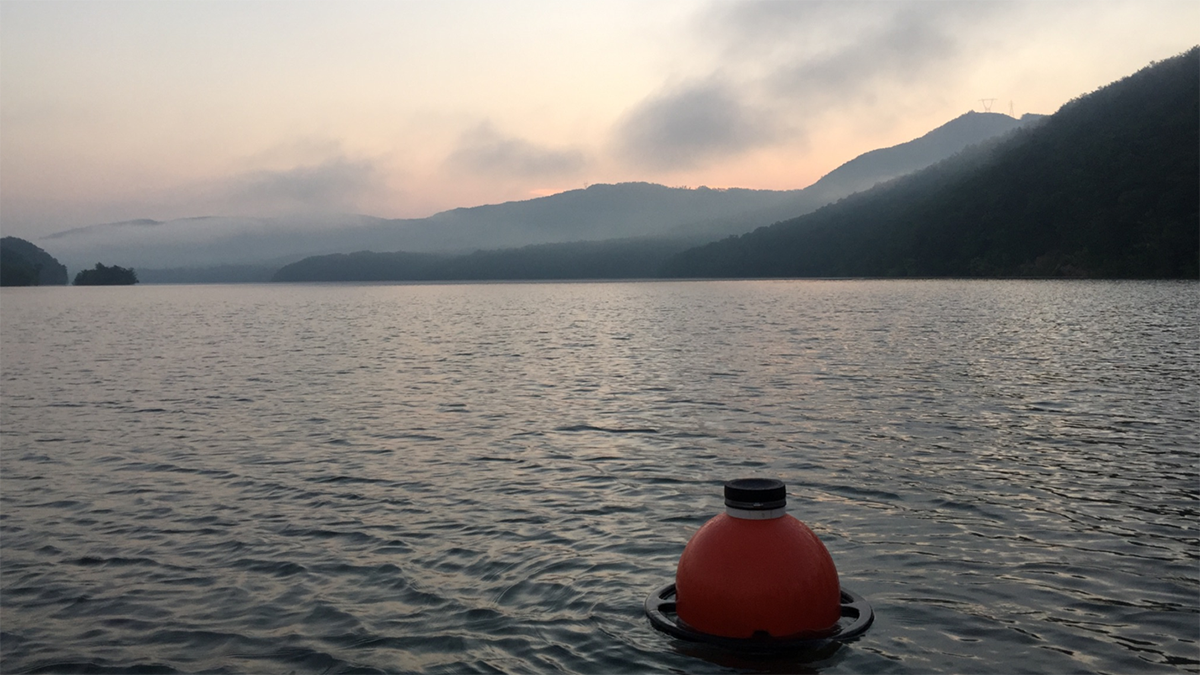
Photo of a buoy in a lake with mountains in the background.
Posted inEditors' Vox

Advances in Ecological Forecasting

by R. Quinn Thomas, Cayelan C. Carey, Eric R. Sokol, Melissa A. Kenney, Michael C. Dietze and Marguerite A. Xenopoulos 4 August 202531 July 2025

AGU and ESA invite contributions to a cross-society special collection on ecological forecasting across ecosystems and scales.
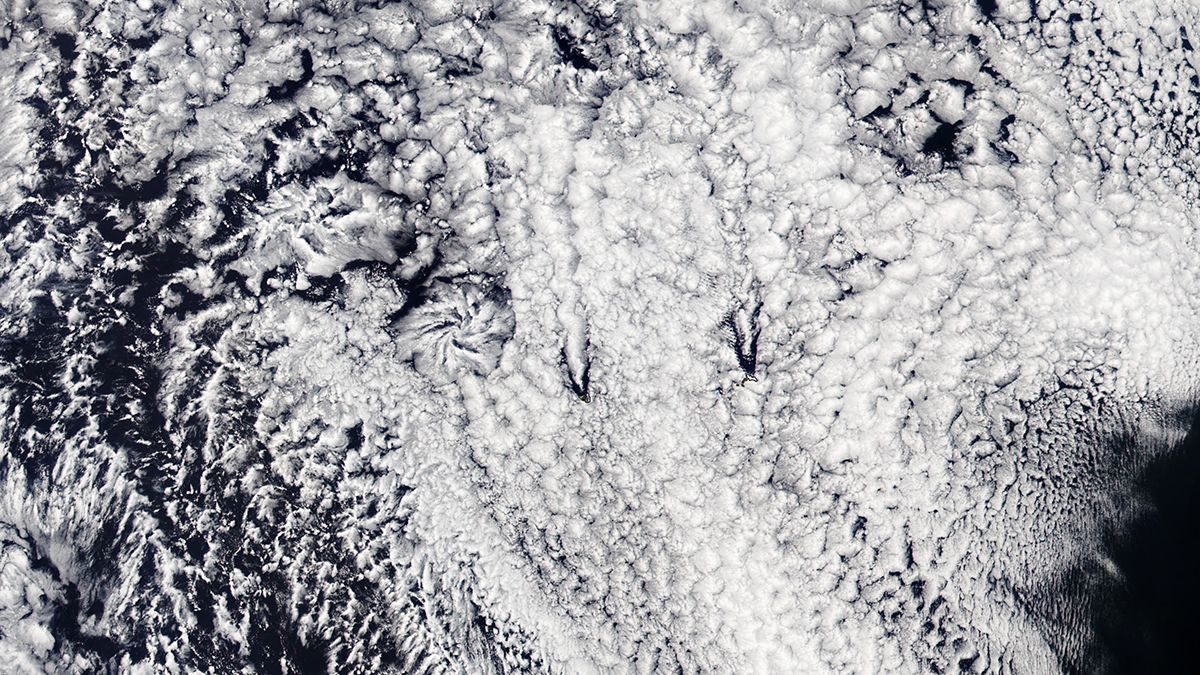
Satellite image of clouds.
Posted inEditors' Highlights

Machine Learning Provides a New Perspective of Low-level Clouds

by Doris Folini 28 March 202527 March 2025

Low-level clouds over the oceans, extensively studied for their role in climate change, are re-examined from a new perspective that applies machine learning to radar observations.

5 AGU journal covers in front of a sunrise.
Posted inEditors' Vox

Announcing New AGU Journal Editors-in-Chief Starting in 2025

by AGU Publications 14 November 202413 November 2024

AGU is excited to welcome new Editors-in-Chief for five of our journals in 2025.

Posts pagination

1 2 Older posts
Over a dark blue-green square appear the words Special Report: The State of the Science 1 Year On.

Features from AGU Publications

Research Spotlights

Comparing Machine Learning Models of Raindrop Formation

8 July 20268 July 2026
Editors' Highlights

A Satellite-Based Global Carbon Flux Product is Sensitive to Droughts 

8 July 20266 July 2026
Editors' Vox

Small-Scale Indian Ocean Dynamics Underpin Marine Ecology and Climate

4 June 20263 June 2026
Eos logo at left; AGU logo at right

About Eos
ENGAGE
Awards
Contact

Advertise
Submit
Career Center
Sitemap

© 2026 American Geophysical Union. All rights reserved Powered by Newspack