• About
  • Special Reports
  • Topics
    • Climate
    • Earth Science
    • Oceans
    • Space & Planets
    • Health & Ecosystems
    • Culture & Policy
    • Education & Careers
    • Opinions
  • Projects
    • Postcards From the Field
    • ENGAGE
    • Editors’ Highlights
    • Editors’ Vox
    • Eos en Español
    • Eos 简体中文版
    • Print Archive: 2015–2025
  • Policy Tracker
  • Blogs
    • Research & Developments
    • The Landslide Blog
  • Newsletter
  • Submit to Eos
  • AGU.org
  • Career Center
  • Join AGU
  • Give to AGU
  • About
  • Special Reports
  • Topics
    • Climate
    • Earth Science
    • Oceans
    • Space & Planets
    • Health & Ecosystems
    • Culture & Policy
    • Education & Careers
    • Opinions
  • Projects
    • Postcards From the Field
    • ENGAGE
    • Editors’ Highlights
    • Editors’ Vox
    • Eos en Español
    • Eos 简体中文版
    • Print Archive: 2015–2025
  • Policy Tracker
  • Blogs
    • Research & Developments
    • The Landslide Blog
  • Newsletter
  • Submit to Eos
Skip to content
  • AGU.org
  • Career Center
  • Join AGU
  • Give to AGU
Eos

Eos

Science News by AGU

Support Eos
Sign Up for Newsletter
  • About
  • Special Reports
  • Topics
    • Climate
    • Earth Science
    • Oceans
    • Space & Planets
    • Health & Ecosystems
    • Culture & Policy
    • Education & Careers
    • Opinions
  • Projects
    • Postcards From the Field
    • ENGAGE
    • Editors’ Highlights
    • Editors’ Vox
    • Eos en Español
    • Eos 简体中文版
    • Print Archive: 2015–2025
  • Policy Tracker
  • Blogs
    • Research & Developments
    • The Landslide Blog
  • Newsletter
  • Submit to Eos

Opinion

Illustration of points of light in a web connecting to Earth
Posted inOpinions

Improving Reproducibility in Earth Science Research

by Zhong Liu, J. Wang, S. Pan and David Meyer 30 October 20195 May 2022

Earth scientists need software technology that better integrates legacy data with current and future processing capabilities so they can assess and reproduce their colleagues’ results.

Two paths merging
Posted inOpinions

Does Our Vision of Diversity Include Social Conservatives?

by B. W. Abbott, J. Radebaugh and J. L. Jensen 23 October 201924 November 2025

Achieving our goals of advancing science and benefitting society depends on ideological diversity. Cultivating relationships and dialogue with ideological opponents creates compassion and progress.

Before choosing an appropriate artificial intelligence approach for an Earth science application, key questions must be considered
Posted inOpinions

Thoughtfully Using Artificial Intelligence in Earth Science

by I. Ebert-Uphoff, S. M. Samarasinghe and E. A. Barnes 11 October 201915 October 2019

Deriving scientific insights from artificial intelligence methods requires adhering to best practices and moving beyond off-the-shelf approaches.
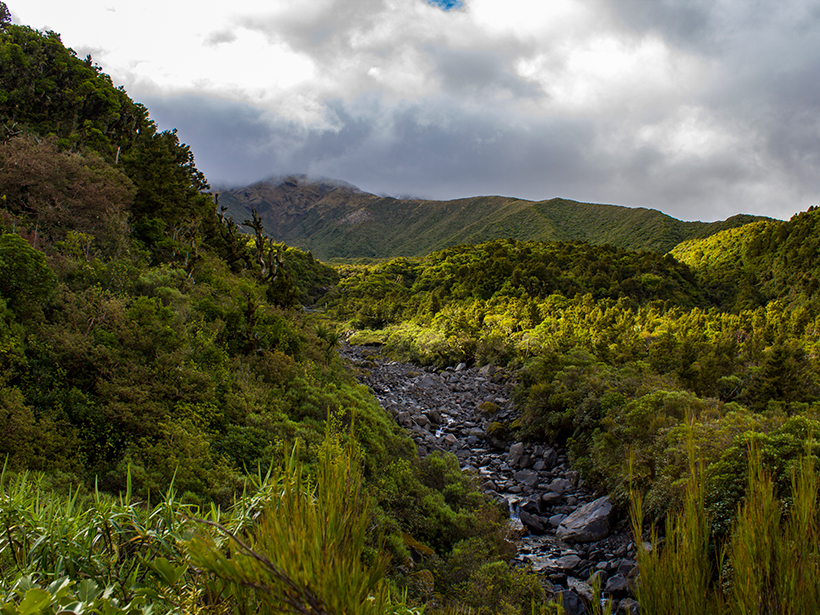
River through a green mountain valley
Posted inNews

Dry Rivers Offer a Preview of Climate Change

by S. Larned 19 September 20198 November 2022

As the climate warms, many rivers that are currently perennial may become intermittent.
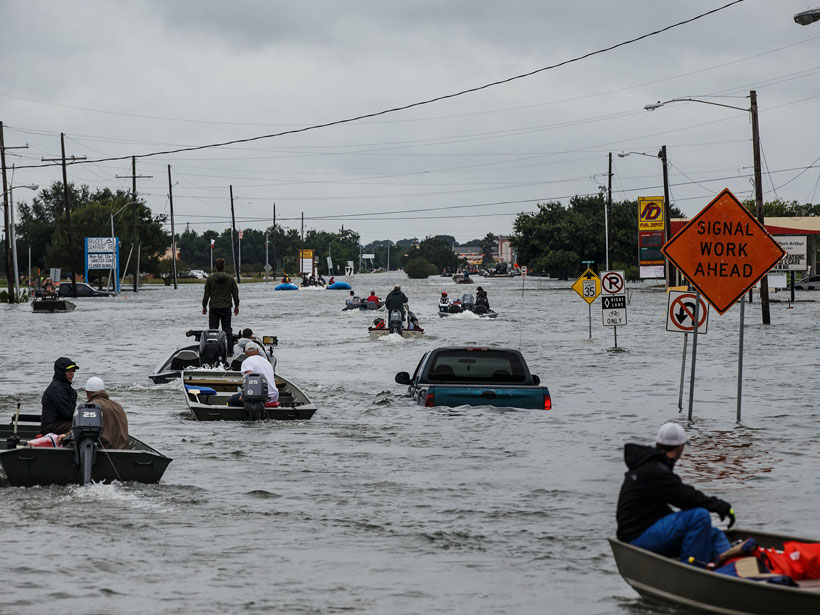
Rescuers motor down a badly flooded road in Port Arthur, Texas, on 30 August 2017 following heavy rainfall from Hurricane Harvey.
Posted inOpinions

Climate Science Needs Professional Statisticians

by D. Cooley and M. Wehner 19 September 201914 January 2022

Climate science needs its own specialized “climostatisticians” as integral members of multidisciplinary research teams.

A fishing boat sits at sea with urban skyline in the background
Posted inOpinions

Ocean Observations for Everyone

by S. Cooley and A.Trice 12 September 201914 January 2022

As the ocean observation community expands its research enterprise, it needs to better engage the end users of its data.

Close up view of the head of a statue of Alexander von Humboldt in Berlin, Germany
Posted inOpinions

The Scientist Who Connected It All

by Thorsten W. Becker and Claudio Faccenna 11 September 20195 October 2021

Approaching the 250th anniversary of Alexander von Humboldt’s birth, we look back at the life and legacy of “the most scientific man of his age.”

A U.S. flag flies over the NOAA logo at the National Hurricane Center in Miami, Fla.
Posted inOpinions

Altered Forecasts and Threatened Firings at the National Weather Service

by D. J. Baker, Jane Lubchenco and K. D. Sullivan 10 September 201910 January 2022

In the wake of statements made by the president and his appointees during Hurricane Dorian, three former NOAA chiefs insist on the return of scientific integrity.

The Norfolk skyline as seen from across the Elizabeth River in 2016
Posted inOpinions

Investing in Science to Improve Climate Risk Management

by V. Srikrishnan, R. Alley and K. Keller 16 August 20191 March 2023

Integrating Earth science research and observations into adaptation planning helps identify effective strategies to manage climate risks.

Clouds and rainbows hang over a broad beach on Britain’s west coast.
Posted inOpinions

When Does Weather Become Climate?

by O. Bothe 14 August 201913 February 2023

Flexible definitions of the word “climate” may impede policy discussions on climate change. Closing apparent gaps between “climate” and “weather” may help reduce the ambiguity.

Posts pagination

Newer posts 1 … 14 15 16 17 18 … 30 Older posts
Over a dark blue-green square appear the words Special Report: The State of the Science 1 Year On.

Features from AGU Publications

Research Spotlights

How Rising Air Plumes Help Spike Moist Heat

27 August 202627 August 2026
Editors' Highlights

Long-Term Datasets are Essential to Understanding Coastal Change

26 August 202618 August 2026
Editors' Vox

Climate Model Benchmarking: Building Trust and Advancing Science

24 August 202624 August 2026
Eos logo at left; AGU logo at right

About Eos
ENGAGE
Awards
Contact

Advertise
Submit
Career Center
Sitemap

© 2026 American Geophysical Union. All rights reserved Powered by Newspack