
The Landslide Blog is written by Dave Petley, who is widely recognized as a world leader in the study and management of landslides.
In the last few days, two really interesting and useful updates have been published covering the 3-4 October 2023 GLOF in the Teesta Valley in India and the 26 August 2026 landslide in Nepal and Tibet.
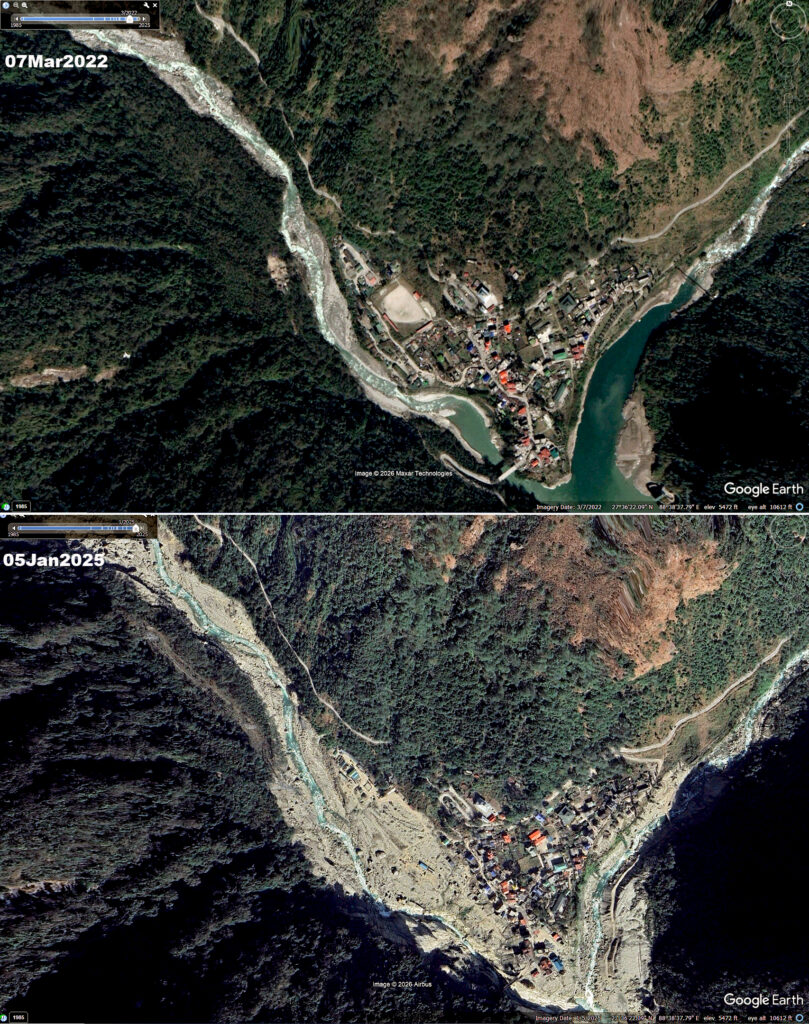
Regarding the 3-4 October GLOF in the Teesta Valley in India, the ever-impressive Praful Rao has posted an article on the Save The Hills blog that uses satellite imagery to chronicle the impact of the flood. As Praful puts it:
“…these images provide an important historical record of the largest GLOF in the Himalayas. When juxtaposed with earlier images of the same areas from 2022, they reveal the extraordinary scale and humongous power of nature as the GLOF swept down the Teesta Valley.”
To give you an idea of the scale of this piece of work, here is one of the image pairs that Praful has posted:-
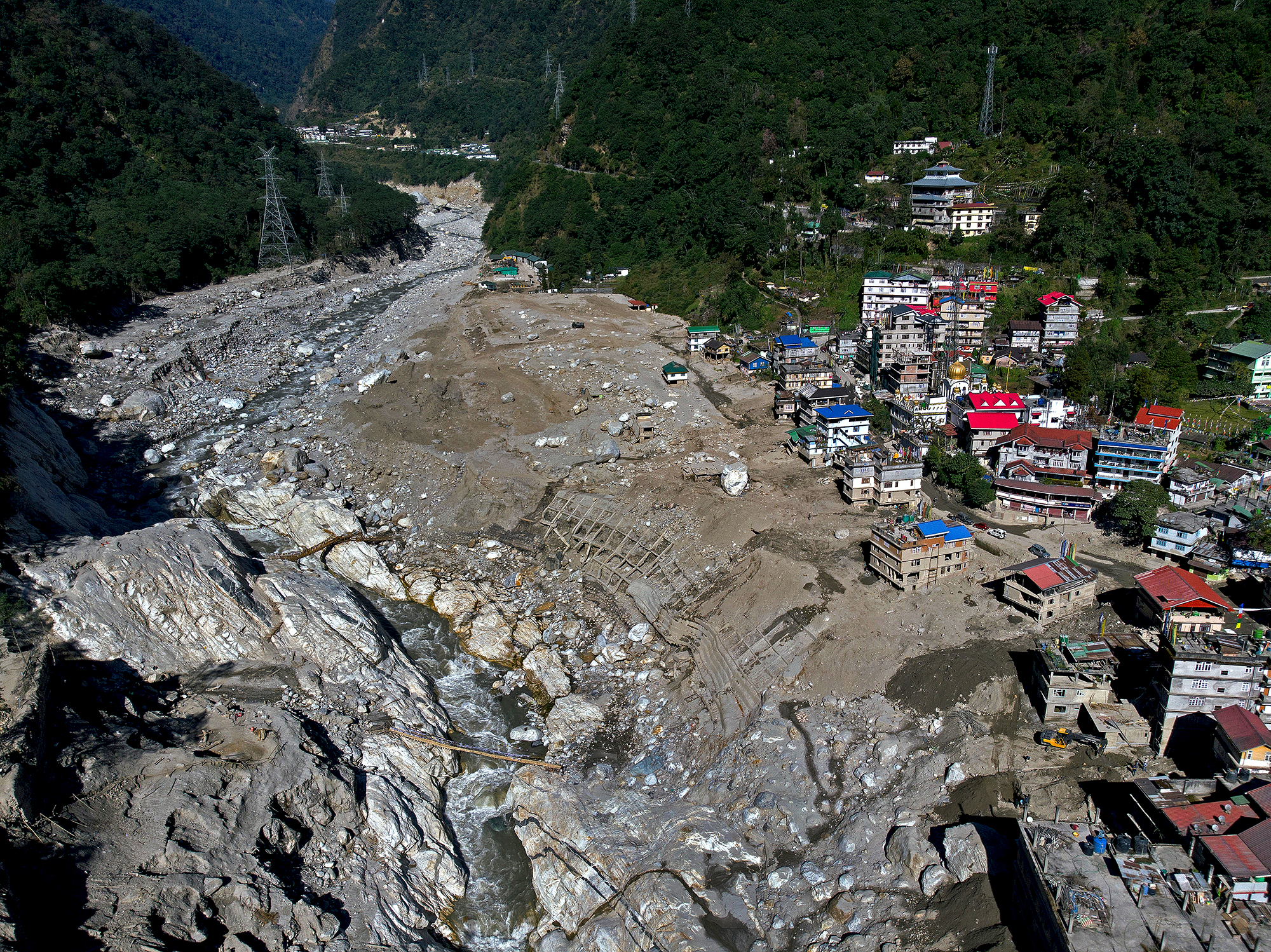
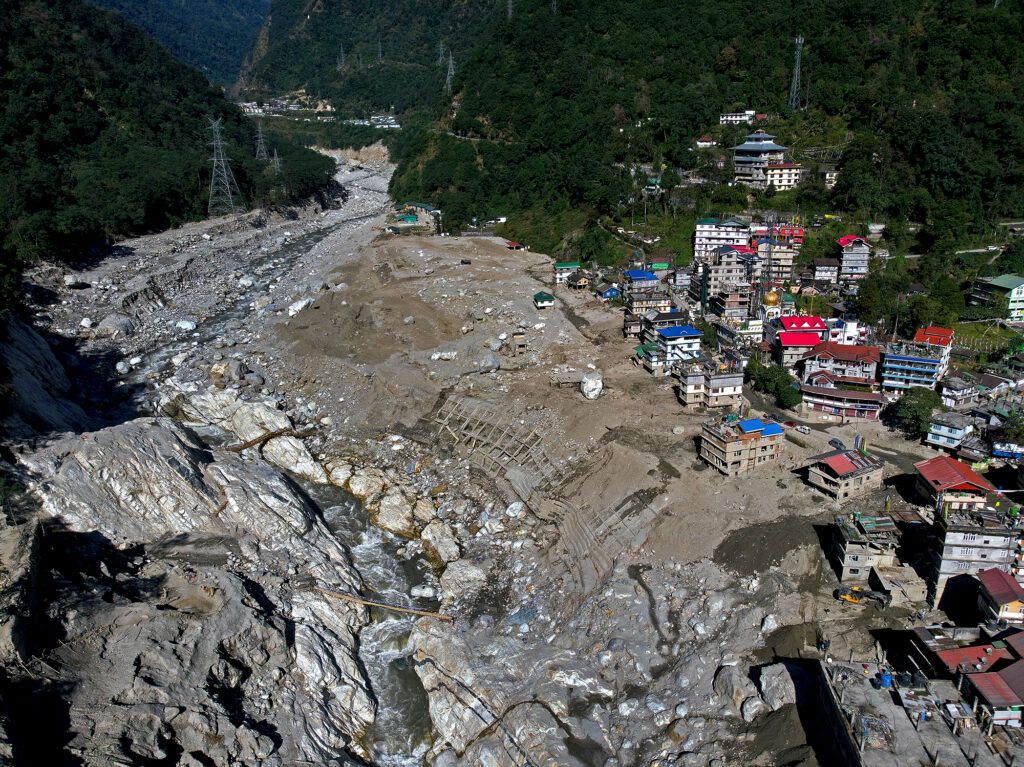
And here is a photo, also posted by Praful, of the aftermath of the GLOF in that town, Chungthang:-
Turning now to the 26 August 2026 landslide in Nepal and Tibet, the Youth Innovation Lab in Nepal has posted a very interesting review of the event – the document is here as a PDF.
This reports on a workshop convened a couple of weeks after the event by the Youth Innovation Lab with the Red Cross Red Crescent Climate Centre, Kathmandu University and the University of Twente, with the Ministry of Energy, Water Resources and Irrigation. It included local and international experts and it examines the event itself, the response and early lessons learnt.
For example, it provides an initial analysis of the range of parameters involved in the landslide, debris flow and debris flood provided by different analyses:-
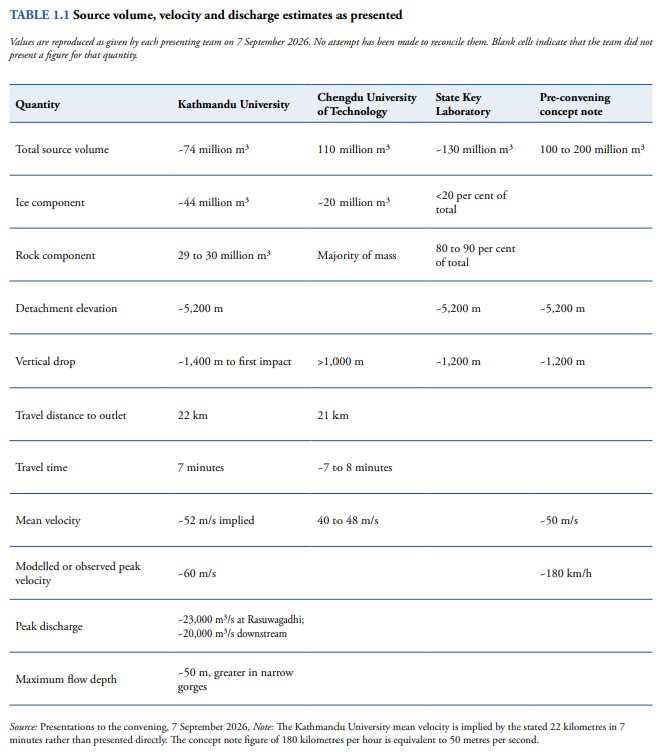
There is a huge range of information in this report, including an examination of the potential role of the rapidly changing climate in these high elevation Himalayan regions. It is well worth a read.