
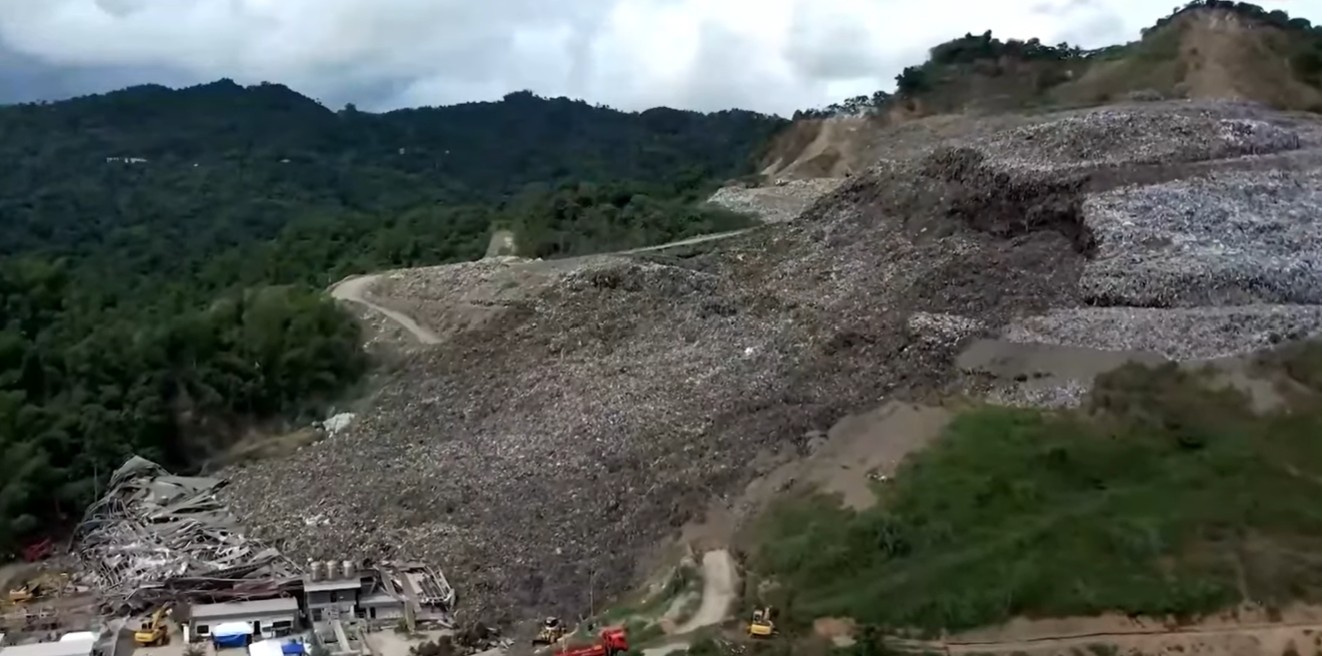
Recovery operations continue for the 36 victims of the 8 January 2026 garbage landslide in the Philippines.

Recovery operations are continuing at the site of the 8 January 2026 landslide at Binaliw in Cebu, the Philippines. At the time of writing, it is reported that the bodies of eight victims have been recovered, whilst 28 more remain missing. Whilst there were some reports yesterday of signs of life in the debris, the reality is that this is unlikely to be a rescue operation. A further 18 people were injured in the failure.
The location of the landslide is [10.41609, 123.92159].
Recovery operations have been hindered by heavy rainfall and the potential for a further failure at the site. Garbage also generates methane, which represents an additional risk.
There is some footage of the landslide as it occurred posted to Youtube:-
There is also a really good set of drone footage of the aftermath:-
This image, from the drone footage, captures the situation well:-
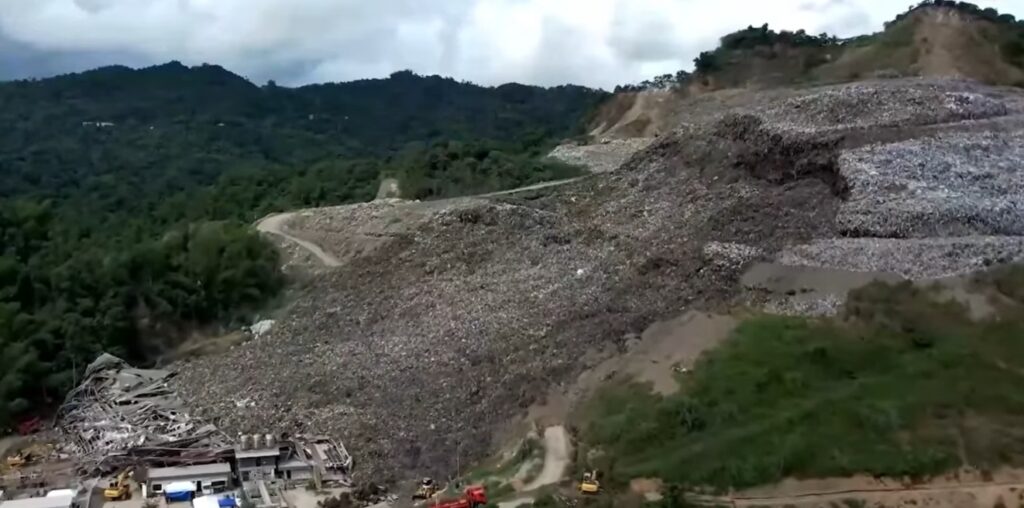
The victims are believed to be located in the destroyed building at the foot of the Binaliw landslide.
Note the very steep rear scarp of the landslide. It appears that the failure mechanism at the crown was rotational – the remains of a rotated block can be seen forming a bench across the site – with the lower portion transitioning into a flow.
Rotational landslides typically occur in relatively homogenous materials (which at the scale of the landslide, will often be the case for garbage). At the most simple level, it is likely that the garbage pile was over-steepened, perhaps compounded by poor management of water. Work will be needed to understand how that can have occurred, but the processes through which tipping of wate at the top of the pile will be a focus. I would also consider carefully the road that appears to have crossed the waste upslope of the building (now buried). Did that cause local oversteepening?
I have written about garbage landslides repeatedly over the years. In 2011, I highlighted an event at Baguio in the Philippines. In every case, the losses were preventable.