
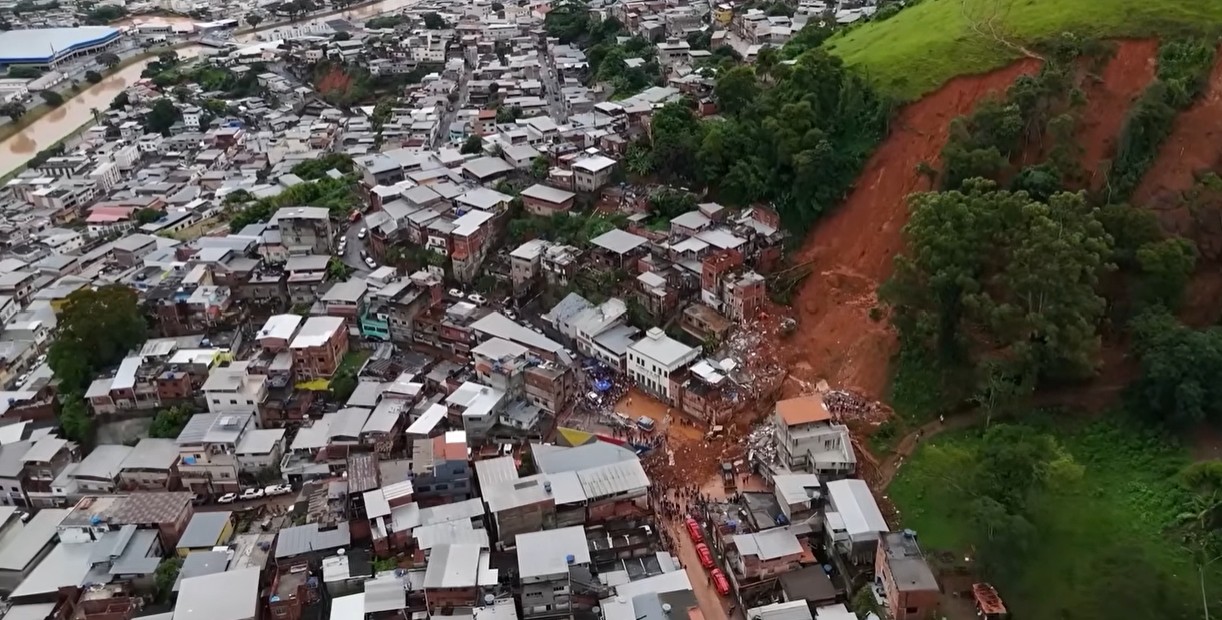
Heavy rainfall in the Zona da Mata area of Brazil has triggered multiple landslides. Over 50 people have been killed.
Over the period of 23 and 24 February 2026, extremely intense rainfall struck the Zona da Mata area of Minas Gerais (MG), Brazil, triggering landslides and flooding. The most seriously affected area was the city of Juiz de Fora, but Uba also suffered extensive flooding.
It is clear that the majority of fatalities occurred as a consequence of landslides, although the mainstream media persists in describing the event as flooding. Reports suggest that 54 people have been killed with a further 14 still missing.
Poder360 has posted some drone footage of the aftermath of this disaster to Youtube:-
This footage includes two damaging landslide sites. This is the first:-
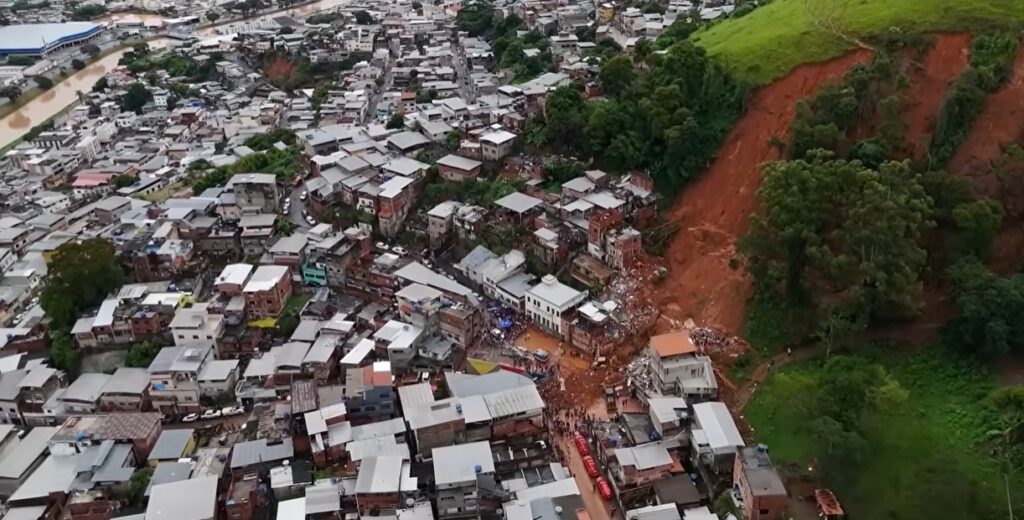
There are three landslides here, all in close proximity. The crown of the landslides appears to be in less steep, deforested terrain. The landslides appear to be in deeply weathered soil, and they are shallow in nature. The proximity of the houses to the foot of the slope is notable – and there are many other houses built on the slope.
The second site is somewhat different:-
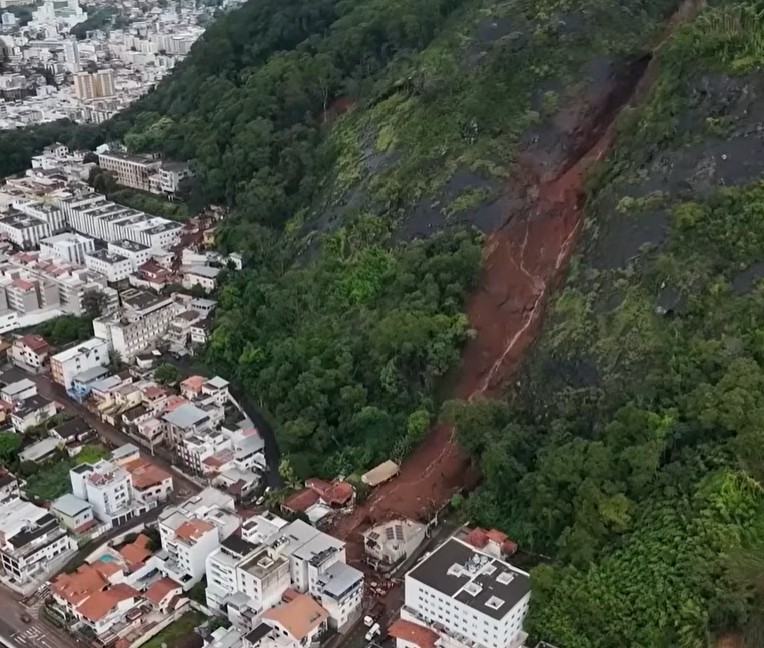
In this case, it appears that a flow down a gully on the upper slope has expanded onto the lower slope, entraining a large amount of material to form a significant landslide. Again, the landslide appears to involve a considerable volume of weathered material.
Judging by media images, there are many more landslides across the city.
That there is a high level of landslide risk in Juiz de Fora is well established. Indeed, in 2021 the Geological Survey of Brazil (CPRM) published a report (in Portugese) whose translated title is “Diagnosis of the population in areas of geological risk, Juiz de Fora“. This identified 304 locations of high or very high landslide risk, comprising 16,436 households.
Given that the rainfall on 23-24 February 2026 was at a record level, the disaster was all but inevitable.
Reference
Lana, J.C and Marcussi, M.C.R. 2021. “Diagnóstico da população em áreas de risco geológico, Juiz de Fora, MG”. Publicação do Serviço Geológico do Brasil – CPRM. 15 pp.