• About
  • Special Reports
  • Topics
    • Climate
    • Earth Science
    • Oceans
    • Space & Planets
    • Health & Ecosystems
    • Culture & Policy
    • Education & Careers
    • Opinions
  • Projects
    • Postcards From the Field
    • ENGAGE
    • Editors’ Highlights
    • Editors’ Vox
    • Eos en Español
    • Eos 简体中文版
    • Print Archive: 2015–2025
  • Policy Tracker
  • Blogs
    • Research & Developments
    • The Landslide Blog
  • Newsletter
  • Submit to Eos
  • AGU.org
  • Career Center
  • Join AGU
  • Give to AGU
  • About
  • Special Reports
  • Topics
    • Climate
    • Earth Science
    • Oceans
    • Space & Planets
    • Health & Ecosystems
    • Culture & Policy
    • Education & Careers
    • Opinions
  • Projects
    • Postcards From the Field
    • ENGAGE
    • Editors’ Highlights
    • Editors’ Vox
    • Eos en Español
    • Eos 简体中文版
    • Print Archive: 2015–2025
  • Policy Tracker
  • Blogs
    • Research & Developments
    • The Landslide Blog
  • Newsletter
  • Submit to Eos
Skip to content
  • AGU.org
  • Career Center
  • Join AGU
  • Give to AGU
Eos

Eos

Science News by AGU

Support Eos
Sign Up for Newsletter
  • About
  • Special Reports
  • Topics
    • Climate
    • Earth Science
    • Oceans
    • Space & Planets
    • Health & Ecosystems
    • Culture & Policy
    • Education & Careers
    • Opinions
  • Projects
    • Postcards From the Field
    • ENGAGE
    • Editors’ Highlights
    • Editors’ Vox
    • Eos en Español
    • Eos 简体中文版
    • Print Archive: 2015–2025
  • Policy Tracker
  • Blogs
    • Research & Developments
    • The Landslide Blog
  • Newsletter
  • Submit to Eos

life as we know it

An illustration depicts a meteorite impacting Earth, causing a large explosion.
Posted inNews

Planetary Perturbations May Strengthen Gaia

by Grace van Deelen 27 November 202416 January 2025

Large-scale disruptions to life may ultimately increase ecological complexity over geologic timescales, though the risk of extinction always looms.

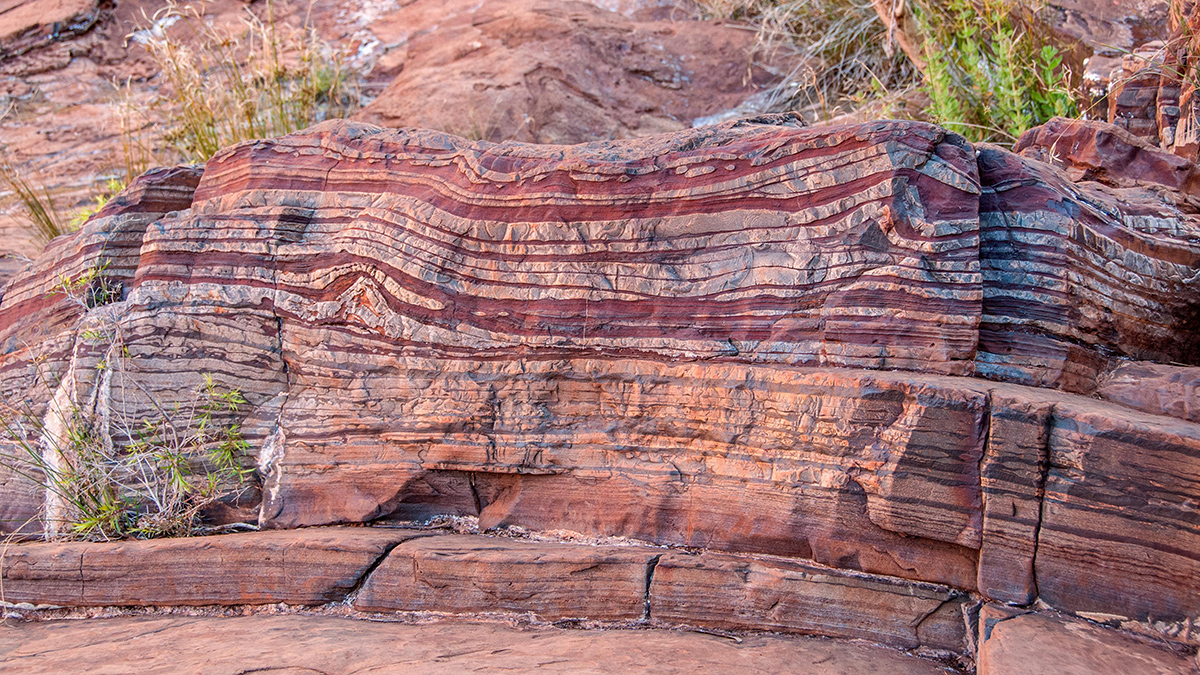
A cliff face with pink and red layers
Posted inNews

Bacteria Battled for Iron in Earth’s Early Oceans

by Caroline Hasler 15 November 202416 January 2025

Billions of years ago, iron-oxidizing microbes may have competed for dissolved iron in the ocean, with some strains producing toxic gases that smothered their rivals.

Spacecraft with large solar panels flies in front of Jupiter
Posted inENGAGE, News

Clipper Sets Sail for an Ocean Millions of Miles Away

Kimberly M. S. Cartier, News Writing and Production Intern for Eos.org by Kimberly M. S. Cartier 11 October 202415 October 2024

Europa Clipper will assess whether Jupiter’s moon has the right ingredients to host life, and could illuminate the mysteries of icy worlds throughout the solar system.
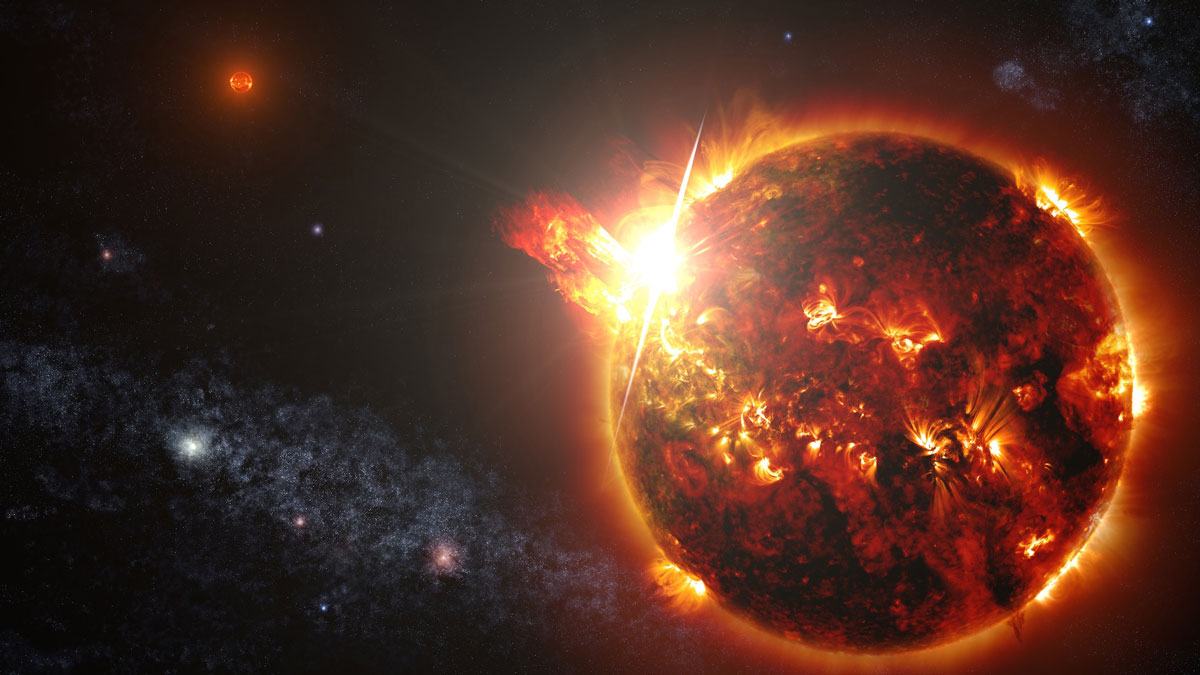
A strong flare explodes from a red-orange star.
Posted inNews

Small Stars Produce Mighty UV Flares

Kimberly M. S. Cartier, News Writing and Production Intern for Eos.org by Kimberly M. S. Cartier 6 September 20246 September 2024

Stronger-than-expected ultraviolet flares could either provide exoplanets the sparks of life or prevent them from having life at all.

Rocas saliendo del océano en una costa
Posted inNews

Circones de 4,000 millones de años podrían contener nuestras evidencias más antiguas de la existencia de agua dulce

by Nathaniel Scharping 4 September 20244 September 2024

Cristales australianos apuntan a la existencia de agua dulce, así como de continentes que se elevaban sobre el océano Hadeano de la Tierra.

A sand-filled gully carves through layers of rocks on Mars
Posted inNews

Curiosity Digs Up Evidence of a Cold, Wet Martian Past

Damond Benningfield, Science Writer by Damond Benningfield 21 August 202421 August 2024

Amorphous materials, which are rarely studied on Earth, yield insights into the history of Gale Crater and the early Martian environment.

Red-tinted water flows in a shallow stretch of river, with a rocky shoreline and forested hillslope in the background.
Posted inScience Updates

How Great was the “Great Oxidation Event”?

by Aubrey Zerkle 30 July 202416 January 2025

Geochemical sleuthing amid acid mine runoff suggests that scientists should rethink an isotope signal long taken to indicate low levels of atmospheric oxygen in Earth’s deep past.

Rocks sticking out of the ocean on the shore
Posted inNews

Four-Billion-Year-Old Zircons May Contain Our Earliest Evidence of Fresh Water

by Nathaniel Scharping 16 July 20244 September 2024

Australian crystals hint at fresh water, as well as land rising above Earth’s Hadean ocean.
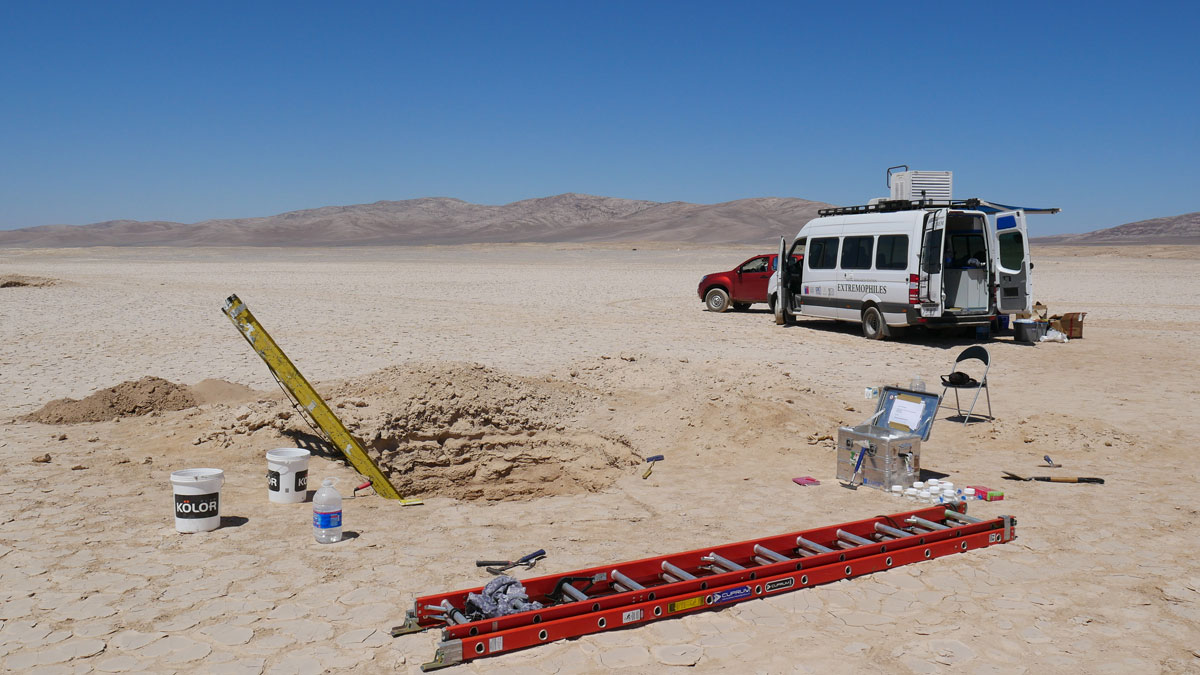
A van labeled “Extremophiles” stands next to ladders extending into a small, deep pit dug into the Atacama Desert.
Posted inNews

Researchers Find Bacterial Communities Deep Beneath the Atacama

by Alejandro Pardo 12 July 202411 July 2024

Extremophile microbes exist in the gypsum-rich “fringes” of the driest place on Earth.

Three images of two-lobed Arrokoth in varying clarity and color.
Posted inENGAGE, News

A Sugar Coating for Arrokoth

by Jonathan O’Callaghan 10 July 202410 July 2024

A Kuiper Belt object might contain ribose and glucose on its surface—the same elements that could have seeded life on Earth.

Posts pagination

Newer posts 1 2 3 4 … 16 Older posts
Over a dark blue-green square appear the words Special Report: The State of the Science 1 Year On.

Features from AGU Publications

Research Spotlights

How Internal Waves Transport Energy Thousands of Miles Across the Ocean

26 March 202626 March 2026
Editors' Highlights

Machine Learning Could Enhance Earth System Modeling

10 April 20267 April 2026
Editors' Vox

Synergistic Integration of Flood Inundation Modeling Methods

10 April 202610 April 2026
Eos logo at left; AGU logo at right

About Eos
ENGAGE
Awards
Contact

Advertise
Submit
Career Center
Sitemap

© 2026 American Geophysical Union. All rights reserved Powered by Newspack