
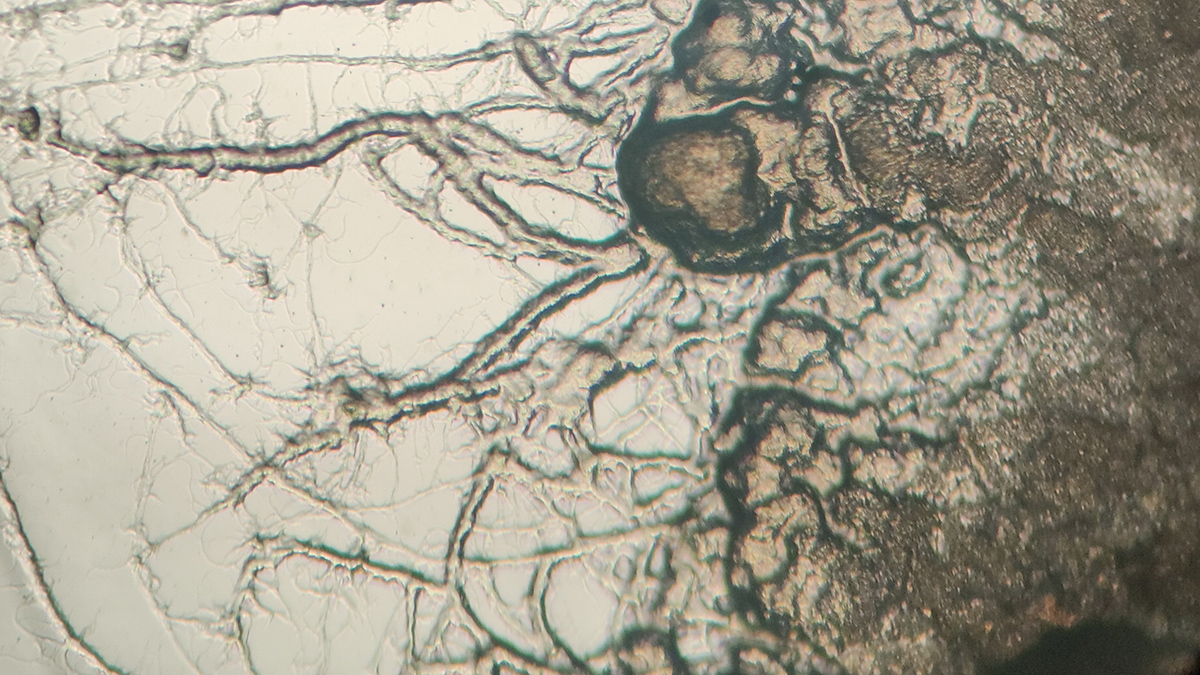
Algae, archaea, fungi, bacteria, and other microbes have an outsize influence on our planet. They’re underground, underwater, in the air we breathe, and even a part of the buildings we construct.
In fact, academic and industry scientists are researching how to get them into more buildings through the study of engineered living materials (ELMs). Proponents say integrating microbes into construction materials provides a more sustainable product than traditional concrete and offers additional functionalities—like the capacity for self-repair. But displacing heavy industry will be no easy task, as James Dacey outlines in “Building the Cities of Tomorrow with Living Materials.”
Microbes in the aerobiome are neither new nor unknown. But as the scientist-authors of this month’s opinion article maintain, a better understanding of the viruses, fungi, pollen, allergens, and other biological particles in the air is essential to a better understanding of Earth systems. Learn why new monitoring capabilities and transdisciplinary research are critical to this undertaking in “Life in the Skies Links Ecosystems Near and Far. It Deserves More Attention.”
High-tech tools and inquiry-based approaches are helping scientists make unseen influencer microbes more visible.
Underwater, microbes can influence both natural habitats and commercial fisheries across breadths and depths. Runoff and other nutrient-rich wastewater can increase the number of single-celled algae in coastal areas, illustrating how “Wastewater Can Take Harmful Algal Blooms from Bad to Worse.” But it’s not all bad. In fact, “Tiny Cyanobacteria May Be the Secret Heroes of Ocean Carbon Sequestration” as they transport tons of carbon to the bottom of the sea as part of the biological carbon pump.
Finally, the mycelia that scientists are experimenting with as an ELM are also being imaged in more detail than ever before. By combining computer tomography with a high-powered particle accelerator, researchers are exposing how “Fungi Are Holding the Food Web Together. New Research Images This Underground Network.” Do yourself a favor, and scroll through this dazzling story.
High-tech tools and inquiry-based approaches are helping scientists make unseen influencer microbes more visible for research opportunities, consumers, and industry. We hope you take a second (and third!) look at these wee beasties this month.
—Caryl-Sue Micalizio, Editor in Chief, Eos