


Seeking Solutions to PFAS Pollution
Chemical Companies Are Churning Out New PFAS. Where in the World Are They Ending Up?
The Persistence of PFAS
A Peculiar Polymer Paired with Sunlight Could Remove PFAS
Tracing the Path of PFAS Across Antarctica
Pollution Is Rampant. We Might As Well Make Use of It.
Because they are used in everything from cosmetics to dental floss to nonstick pans, per- and polyfluoroalkyl substances (PFAS) are frustratingly abundant in our environment, including in our food, rain, and drinking water. They’re persistent, too, earning their nickname “forever chemicals,” and have been linked to health effects ranging from cancers to liver toxicity to reduced fertility.
A new method described in RSC Advances seeks to remove PFAS from drinking water by combining a specialized polymer and a photocatalyst with a resource that is even more abundant than PFAS: sunlight.
Various methods already exist to remove PFAS from water. But many of these techniques use material that filters out or soaks up PFAS, meaning the material itself then needs to be disposed of because it’s full of PFAS. And because PFAS are often present at low concentrations (EPA limits for safe consumption tend to be in the range of 10 parts per trillion), they are almost as difficult to detect as they are to remove.
“The idea was, could we somehow catch the molecule and break it up, so it turns into, say, 20 molecules. And then we have something that’s much easier to detect.”
In photocatalysis, scientists use light combined with a catalyst that speeds up the reaction between light and the molecules it is aimed at to separate PFAS into various components, such as fluoride, which can be detected using commercial sensors.
“The idea was, could we somehow catch the molecule and break it up, so it turns into, say, 20 molecules,” said Frank Marken, a chemist at the University of Bath. “And then we have something that’s much easier to detect.”
To Catch a PFAS
Scientists have been studying the photodegradation of PFAS for more than 20 years. But one part of what makes this process tricky is the first part of the formula Marken mentioned: catching a PFAS molecule in the first place.
“There are known materials which degrade PFAS material,” he said. “But the problem is, if you have a low level of PFAS, you have to bring the PFAS to the catalyst in order for the process to work.”
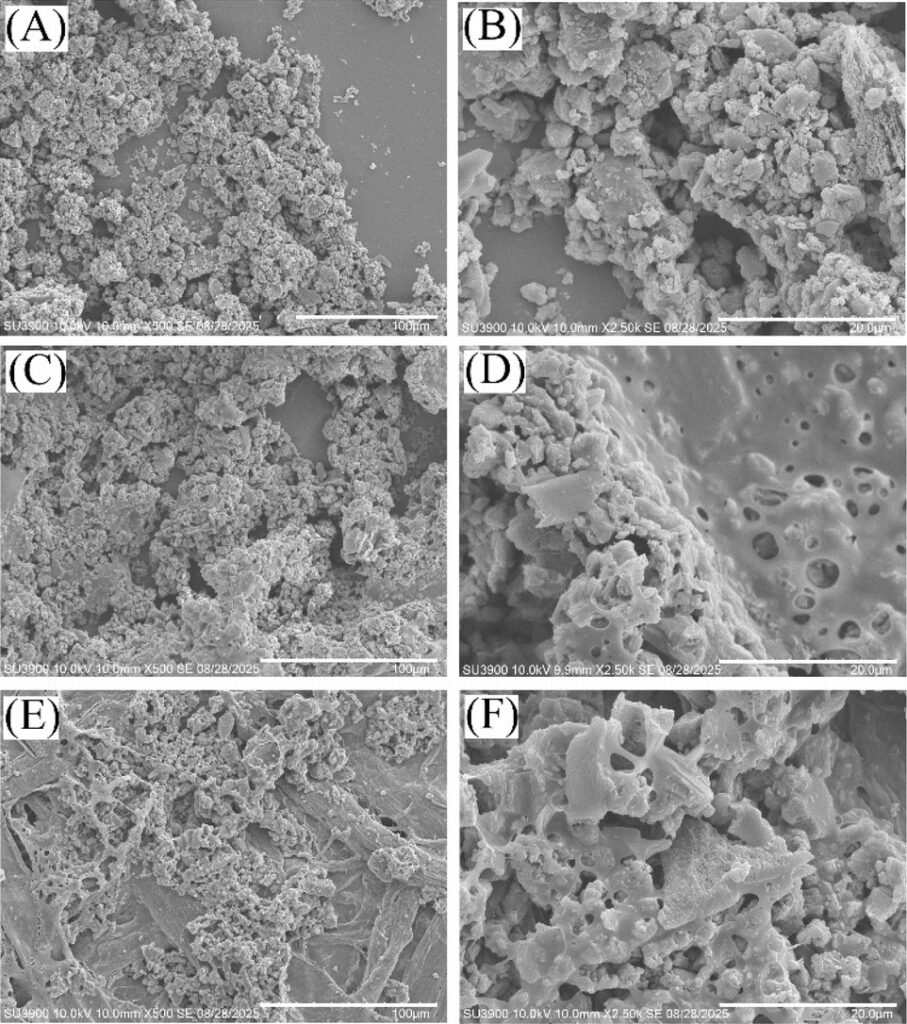
To do this, the team turned to a specialized class of materials known as polymers of intrinsic microporosity (PIMs). PIMs can dissolve in water, but their chemical structure is remarkably porous, giving them massive amounts of surface area. The standard surface area of a PIM is around 700–1,000 square meters per gram.
Another key feature of PIMs is their rigidity. A flexible porous polymer might be able to attract a large amount of a catalyst particle but would then wrap around it, preventing the catalyst from interacting with light.
“If you put anything inside [a PIM], it will stay completely active. Basically, the polymer molecules are really rigid; they can’t twist or bend,” Marken said. “Then we have the particle trapped, we can excite with light, and the PFAS molecules come and interact with the catalyst.”
Here Comes the Sun (and the LED Light)
To test whether a PIM could speed up the photocatalytic breakdown of PFAS, the researchers set up small-scale laboratory experiments using heptadecafluoro-1-nonanol (HDFN). HDFN is not a PFAS but served as a chemically analogous substitute. Each molecule of HDFN breaks down into 17 equivalents of fluoride.
The research team set up a blue LED light similar in intensity to the Sun to shine on 20 milliliters of a solution containing the HDFN and a photocatalyst. Ultimately, Marken said, “it would be much cheaper to use sunlight,” which could be possible if the technique were scaled up for something like wastewater treatment.
As the catalyst broke the HDFN down into fluoride molecules, the researchers could measure how the concentration of fluoride grew.
Once they knew that part of the experiment worked, researchers introduced the polymer: They mixed the photocatalyst together with a PIM and spread it onto filter paper to dry. They then inserted the filter paper into the solution in the path of the beam of light. They found that using a PIM, particularly a type called PIM-1, was more efficient. For instance, in one experiment, immobilizing the catalyst on a PIM resulted in a degradation yield that was nearly 3 times higher than using the catalyst alone.
“If you have contaminated soil and you wanted to measure the PFAS content, you’re not necessarily interested in exactly which molecules are there. It’s just, ‘Is there a lot? And where is it? And does it flow?’”
Peter Budd, a polymer chemist at the University of Manchester who was part of the two-scientist team who first developed PIMs, told Eos via email that the choice to use PIM-1 was intuitive, as it is relatively easy to make compared to other PIMs.
He added that the PIMs’ ability to increase the rate of PFAS photodegradation was not necessarily surprising, as “it is well established that PIM-1 can effectively concentrate up many small hydrophobic molecules, which in combination with a suitable catalyst may enhance the catalytic performance.”
Future research could take many shapes, Marken said. The team could work to improve the binding of PFAS to PIMs, for example, or test the techniques on new model materials. Another option, even though the technique can’t yet detect nuances such as the differences between PFAS types, would be to build a flow system and test it. Something like this could be useful, Marken said, for answering more fundamental, but still important, questions about PFAS.
“If you have contaminated soil and you wanted to measure the PFAS content, you’re not necessarily interested in exactly which molecules are there. It’s just, ‘Is there a lot? And where is it? And does it flow?’”
—Emily Gardner (@emfurd.bsky.social), Associate Editor