• About
  • Special Reports
  • Topics
    • Climate
    • Earth Science
    • Oceans
    • Space & Planets
    • Health & Ecosystems
    • Culture & Policy
    • Education & Careers
    • Opinions
  • Projects
    • Postcards From the Field
    • ENGAGE
    • Editors’ Highlights
    • Editors’ Vox
    • Eos en Español
    • Eos 简体中文版
    • Print Archive: 2015–2025
  • Policy Tracker
  • Blogs
    • Research & Developments
    • The Landslide Blog
  • Newsletter
  • Submit to Eos
  • AGU.org
  • Career Center
  • Join AGU
  • Give to AGU
  • About
  • Special Reports
  • Topics
    • Climate
    • Earth Science
    • Oceans
    • Space & Planets
    • Health & Ecosystems
    • Culture & Policy
    • Education & Careers
    • Opinions
  • Projects
    • Postcards From the Field
    • ENGAGE
    • Editors’ Highlights
    • Editors’ Vox
    • Eos en Español
    • Eos 简体中文版
    • Print Archive: 2015–2025
  • Policy Tracker
  • Blogs
    • Research & Developments
    • The Landslide Blog
  • Newsletter
  • Submit to Eos
Skip to content
  • AGU.org
  • Career Center
  • Join AGU
  • Give to AGU
Eos

Eos

Science News by AGU

Support Eos
Sign Up for Newsletter
  • About
  • Special Reports
  • Topics
    • Climate
    • Earth Science
    • Oceans
    • Space & Planets
    • Health & Ecosystems
    • Culture & Policy
    • Education & Careers
    • Opinions
  • Projects
    • Postcards From the Field
    • ENGAGE
    • Editors’ Highlights
    • Editors’ Vox
    • Eos en Español
    • Eos 简体中文版
    • Print Archive: 2015–2025
  • Policy Tracker
  • Blogs
    • Research & Developments
    • The Landslide Blog
  • Newsletter
  • Submit to Eos

CC BY 2017

Posted inOpinions

Climate Change Indicators Are Not Enough

by A. K. Betts 14 July 201724 February 2023

Extreme events capture the public’s attention, but gradual climate shifts will more profoundly affect civilization and life on Earth. Scientists must get better at conveying this to the public.

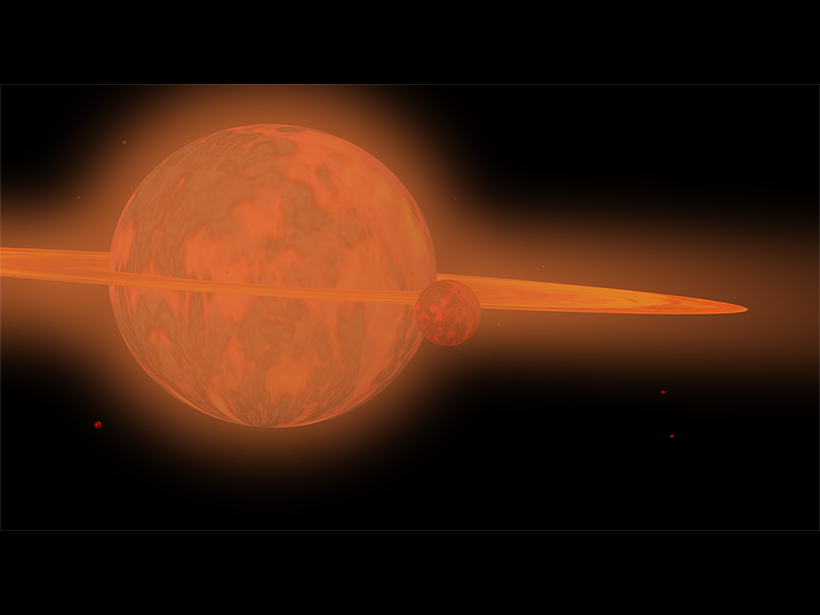
An artist’s rendition of a hot disk surrounding Earth, with the Moon on its fringes.
Posted inScience Updates

Signs of Water in a Moon Rock

by D. M. Hurley, Y. Pendleton and A. Deutsch 13 July 201716 February 2022

NASA Solar System Exploration Research Virtual Institute (SSERVI) Lunar Volatiles Workshop; Laurel, Maryland, 15–17 November 2016
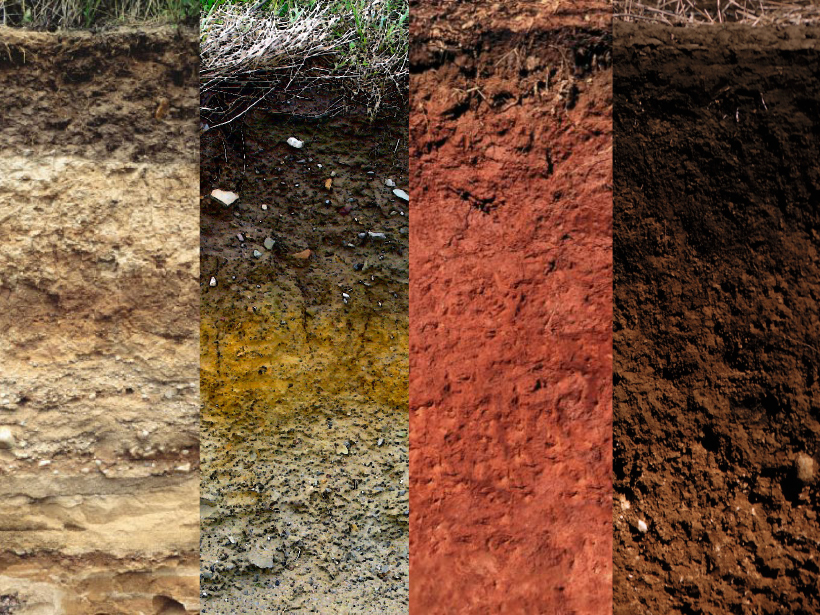
From left to right: soil profiles representing the Antigo, Stagnogley, Cecil, and Clarion soil series.
Posted inScience Updates

Healthy Soils for Healthy Societies

by A. A. Berhe, R. Amundson and A. E. Sztein 6 July 20172 November 2021

Soil: The Foundation of Life; Washington, D. C., 5 December 2016
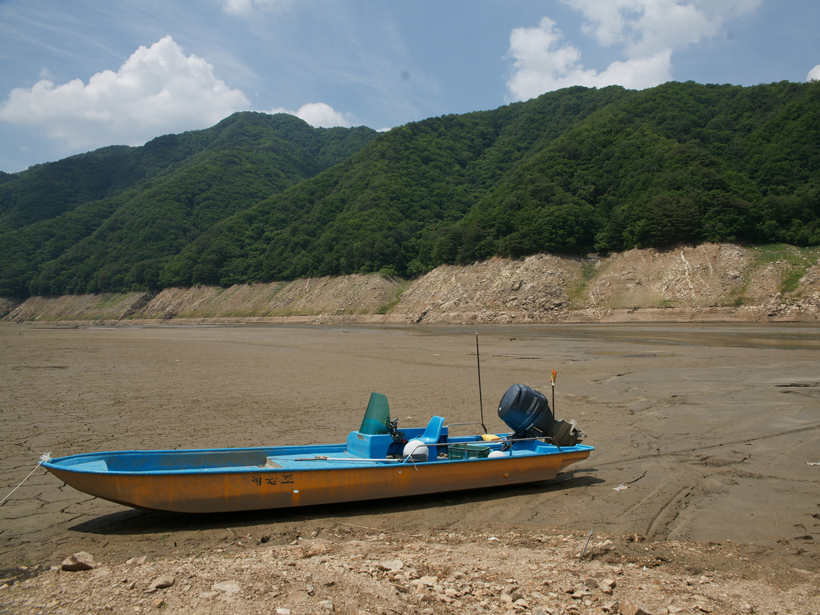
Dry bed of Lake Soyang following a severe drought in South Korea.
Posted inScience Updates

Aquatic Ecosystems in a Changing Climate

by S. Inamdar, J. B. Shanley and William H. McDowell 29 June 201724 February 2023

Chapman Conference on Extreme Climate Event Impacts on Aquatic Biogeochemical Cycles and Fluxes; San Juan, Puerto Rico, 22–27 January 2017

A new volcanic island, within other volcanoes of the South Pacific’s Tonga islands.
Posted inScience Updates

New Volcanic Island Unveils Explosive Past

by S. J. Cronin, M. Brenna, I. E. M. Smith, S. J. Barker, M. Tost, M. Ford, S. Tonga’onevai, T. Kula and R. Vaiomounga 26 June 20175 June 2023

A recent volcanic eruption near Tonga in the southwest Pacific created a new island, giving scientists a rare opportunity to explore the volcanic record of this remote region.
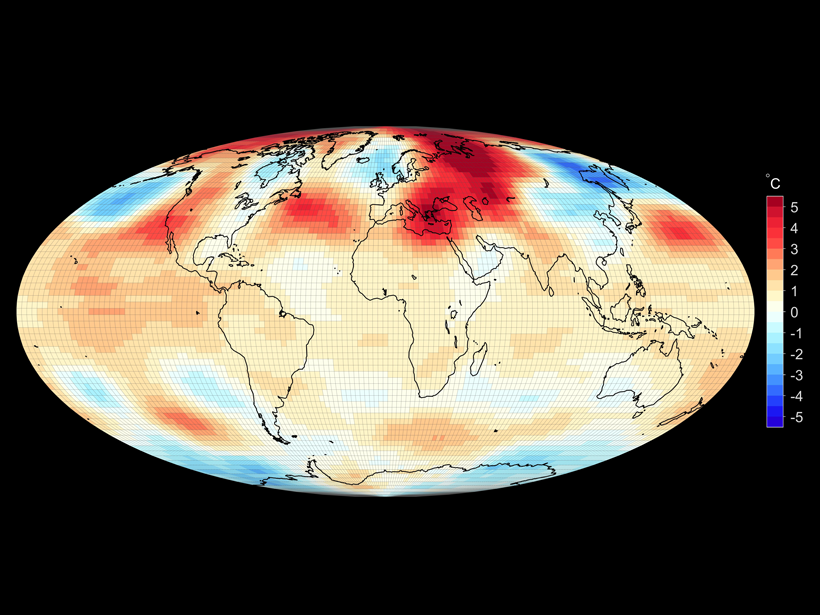
Temperature anomalies (deviations from the 1981–2010 monthly mean in degrees Celsius) estimated from advanced microwave sounding unit data for February 2016
Posted inOpinions

Climate and Other Models May Be More Accurate Than Reported

by C. J. Willmott, S. M. Robeson and K. Matsuura 21 June 201724 February 2023

Replacing a commonly used statistical measure of average error with an alternative measure would give a more meaningful assessment of model performance.

A Pakistani farmer checks his cell phone for weather updates and irrigation water estimates.
Posted inScience Updates

Growing More with Less Using Cell Phones and Satellite Data

by F. Hossain, N. Biswas, M. Ashraf and A. Z. Bhatti 21 June 201719 October 2021

Researchers from the University of Washington and Pakistan are using 21st century technology to revive farming as a profitable profession in the Indus Valley.
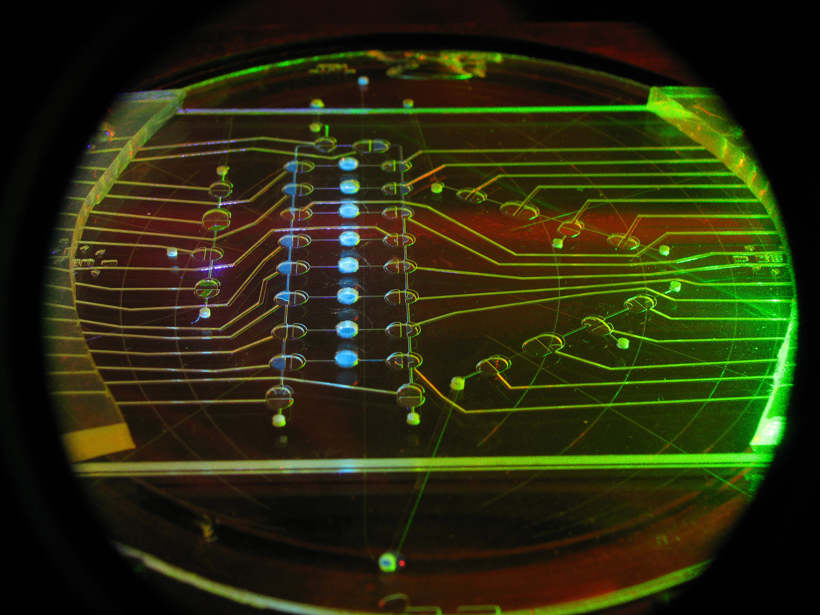
Laser-interrogated microfluidic chip, new planetary instrument technology to search for chemical indicators of life on other worlds.
Posted inScience Updates

Instrument Development Enables Planetary Exploration

by S. M. Feldman, D. Beaty and J. W. Ashley 8 June 201716 February 2022

Third International Workshop on Instrumentation for Planetary Missions; Pasadena, California, 24–27 October 2016
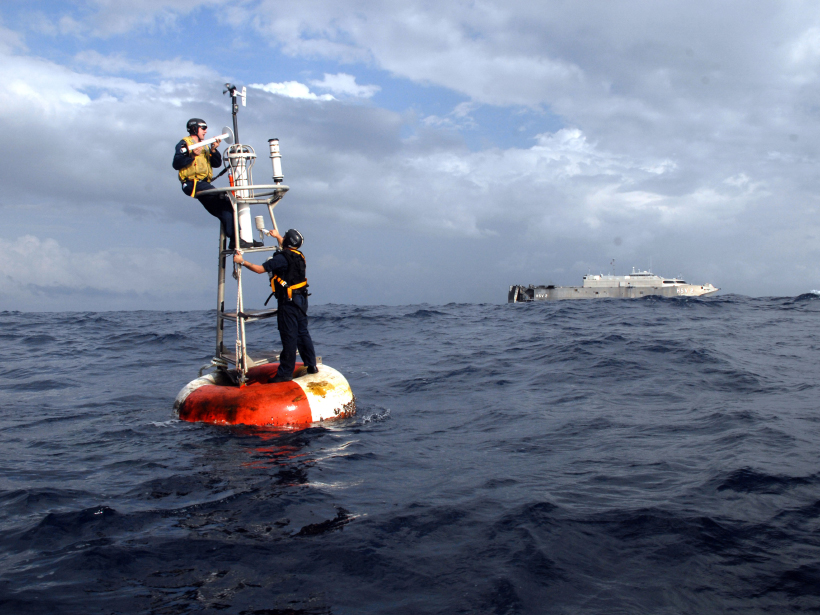
Members of the U.S. Navy repair a NOAA buoy in the Atlantic Ocean on 25 January 2008.
Posted inScience Updates

Deep Trouble! Common Problems for Ocean Observatories

by B. M. Howe and E. McRae 22 May 20179 February 2022

Ocean Observing Infrastructure and Sensing – Technical Lessons Learned and Best Practices; Moss Landing, California, 23–25 September 2016

Posted inScience Updates

Better Tools for Tracing the Thermal History of Rocks

by Peter Zeitler, R. Brown and P. Hackspacher 18 May 201723 February 2023

Thermo2016: The 15th International Conference on Thermochronology; Maresias, Brazil, 18–23 September 2016

Posts pagination

Newer posts 1 2 3 4 5 6 Older posts
Over a dark blue-green square appear the words Special Report: The State of the Science 1 Year On.

Features from AGU Publications

Research Spotlights

As Wildfires Increase in the West, So Does Suppression Spending

10 June 202610 June 2026
Editors' Highlights

Pre-Existing Structure and Stress Shape Geothermal-Induced Seismicity

2 June 20261 June 2026
Editors' Vox

Small-Scale Indian Ocean Dynamics Underpin Marine Ecology and Climate

4 June 20263 June 2026
Eos logo at left; AGU logo at right

About Eos
ENGAGE
Awards
Contact

Advertise
Submit
Career Center
Sitemap

© 2026 American Geophysical Union. All rights reserved Powered by Newspack