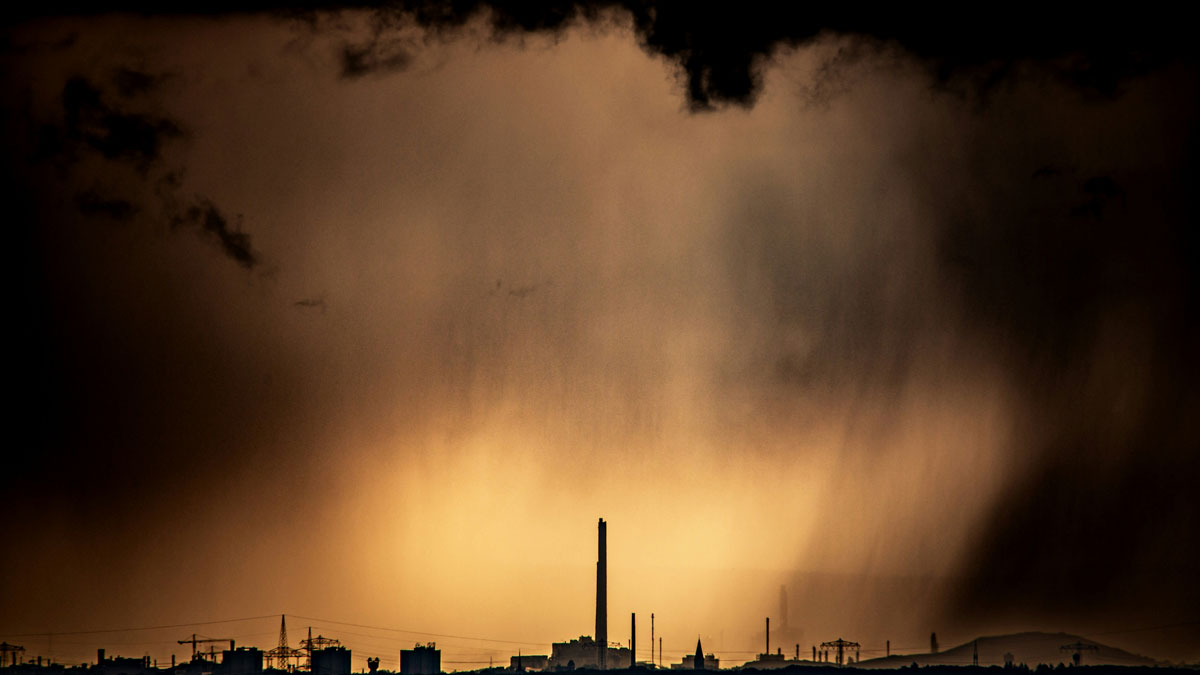
Source: Journal of Geophysical Research: Biogeosciences
Rainwater connects the biogeochemical cycles of the land and the atmosphere. It’s effectively a chemical conveyor belt that delivers compounds to the ground during a process called wet deposition.
For decades, research on airborne chemicals and wet deposition focused on inorganic compounds in rainwater, particularly nitrate and sulfate, which are key drivers of acid rain. Lacking the means to detect volatile organic compounds (VOCs) in rainwater, scientists long assumed that rainwater-based cycling of these compounds, which can be found in some petroleum fuels, paint thinners, and pharmaceuticals, was negligible.
But recent improvements in analytical techniques revealed that VOCs are present in rainwater in higher concentrations than scientists thought. In a new review, Yañez-Serrano et al. estimate that of the roughly 460 teragrams of carbon delivered via wet deposition every year, about 100 teragrams come from wet deposition of VOCs. And climate change and human activities are exacerbating VOC emissions.
The authors argue that dissolved atmospheric volatile organic compounds have been “largely invisible” to the biogeosciences and are a missing link in carbon cycle modeling. VOCs are highly reactive and biologically labile, so even small concentrations can affect water chemistry, plants, and microorganisms at local to regional scales. Particularly in carbon-limited ecosystems, even a small amount of VOC deposition can trigger a rapid biological response.
The authors present key knowledge gaps and suggest next steps for the research community. VOCs pose unique analytical challenges because they are highly reactive and chemically diverse. But both detection and modeling will need to further improve to better assess the role of VOCs in the biogeochemical cycle and in fields like air pollution monitoring, the authors say.
As scientists collect more VOC monitoring data, modeling will need to incorporate it. Most atmospheric carbon budgets currently omit or underestimate water-soluble VOCs and their subsequent oxidized products, leaving this highly reactive form of carbon out of the picture. Modelers will need to explore VOC mechanics and transport and incorporate them into Earth system models.
Finally, observations of and experiments on the effects of VOC wet deposition on terrestrial ecosystems and biogeochemical cycles will be needed to understand the potential damage or disruptions VOCs could be causing and how those may change as climate change continues.
As climate change and human activities exacerbate VOC emissions and change rainwater patterns, understanding VOCs as an overlooked part of Earth’s biogeochemistry has, perhaps, never been more crucial. (Journal of Geophysical Research: Biogeosciences, https://doi.org/10.1029/2026JG009767, 2026)
—Rebecca Dzombak, Science Writer